Breedon Rewires their Dublin Bitumen Terminal for a Lower-Carbon Gas Grid
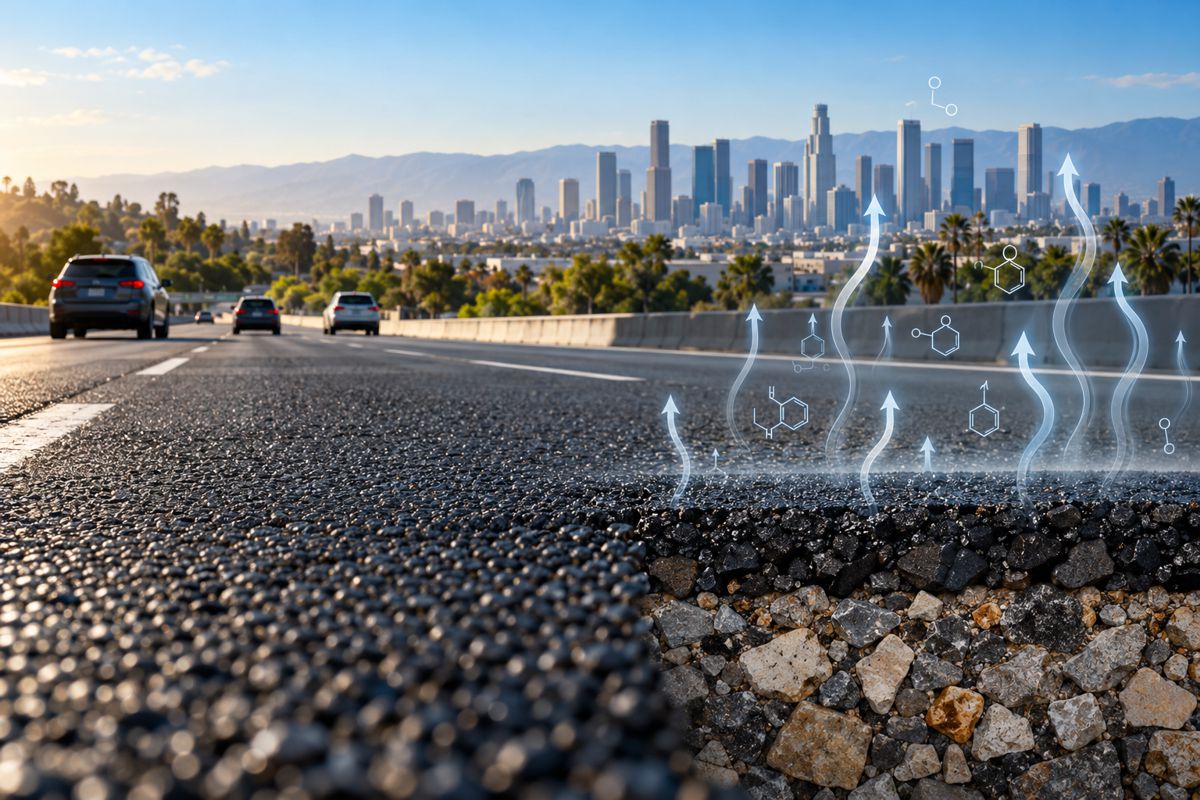
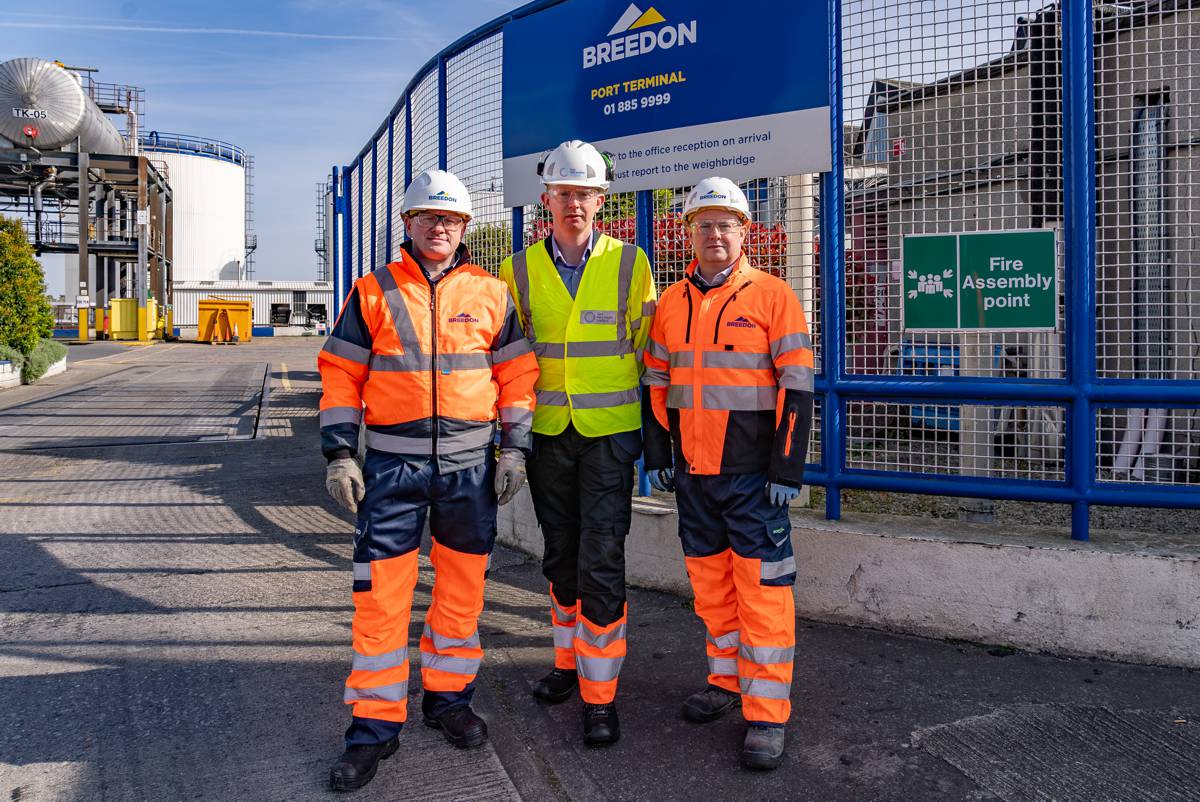
Breedon Group has converted the energy system at its Dublin Port Bitumen Terminal from gas oil to natural gas, a modest piece of capital work in balance-sheet terms that nonetheless carries a lesson the wider materials sector should absorb.
The project is expected to cut roughly 470 tonnes of CO2 a year, about a quarter of the site’s emissions from its previous fuel source, while leaving the terminal better placed to absorb the lower-carbon gases now heading onto Ireland’s network. For an asset whose entire purpose is to keep bitumen molten and moving, that combination of lower emissions, lower fuel-carbon exposure and preserved future optionality is the whole point.
The commercial significance sits less in the headline tonnage than in the logic behind it. Bitumen terminals are among the quieter energy-intensive nodes in the construction supply chain, and their process heat has historically been difficult to shift without disrupting supply.
By moving to grid natural gas rather than reaching straight for electrification or an unproven alternative, Breedon has made a decarbonisation choice that pays back on day one and does not lock the plant out of deeper cuts later. That is a distinction infrastructure owners, materials buyers and investors are increasingly rewarding, because it separates decarbonisation that erodes competitiveness from decarbonisation that quietly protects it.
The timing is telling. Breedon reported first-half 2026 results at the end of July, with revenue up five per cent to £857.9 million and Ireland and the United States carrying the group while Great Britain absorbs a fifth consecutive year of soft residential demand. Tightening the running costs and carbon profile of a strategically important Irish binder asset is exactly the kind of disciplined reinvestment that keeps a vertically integrated materials group competitive through a flat cycle.
Briefing
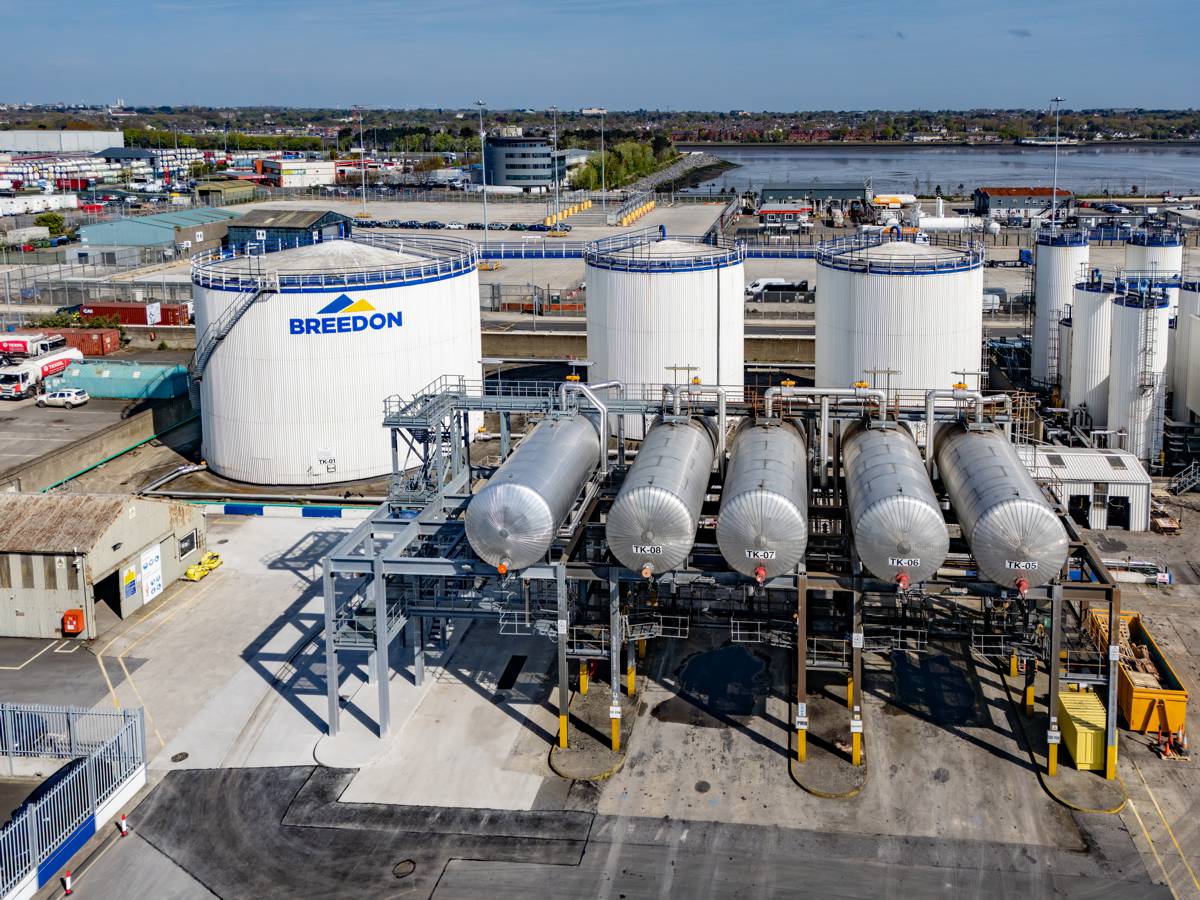
- Breedon has converted its Dublin Port Bitumen Terminal from gas oil to natural gas, installing two modern boilers and new flue gas economisers to raise efficiency across the terminal and the co-located polymer modified bitumen plant.
- The switch is expected to remove approximately 470 tonnes of CO2 a year, equivalent to a 25 per cent reduction against the site’s previous fuel, delivered in close collaboration with suppliers, contractors, Gas Networks Ireland and Dublin Port.
- The move directly reduces Scope 1 combustion emissions and lowers the terminal’s exposure to Ireland’s carbon tax, which reaches €71 per tonne of CO2 in late 2026 and is legislated to climb to €100 per tonne by 2030.
- Because biomethane is chemically interchangeable with natural gas and drop-in compatible with existing equipment, the new boilers can burn progressively greener grid gas as Ireland scales renewable gas towards its 5.7 TWh biomethane target for 2030 and, later, hydrogen blends.
- The project aligns with Breedon’s Science Based Targets initiative pathway, which commits the group to a 23.3 per cent absolute emissions cut by 2030 from a 2022 baseline and net zero across the value chain by 2050.
A Quiet Conversion With Outsized Logic
On the surface this is a boiler replacement, and the industry has seen many of those. What makes it worth reading closely is the fuel economics underneath. Gas oil carries a materially higher carbon intensity per unit of useful heat than natural gas, so swapping one for the other cuts combustion emissions for the same thermal output without touching production volumes or product specification. Breedon’s stated 25 per cent reduction is consistent with that differential, and it lands entirely within Scope 1, the emissions a company controls most directly and is judged on most harshly.
The Dublin terminal is not a marginal facility. Breedon’s Belfast and Dublin bitumen terminals each handle up to 250,000 tonnes of binder a year, feeding the group’s own asphalt plants and external customers, and the Dublin site also runs a polymer modified bitumen plant with capacity of around 100,000 tonnes a year. Reworking the energy system that keeps those operations running therefore touches a meaningful slice of binder supply into the Irish market.
Reliability was clearly a design priority rather than an afterthought, with the two new boilers and economisers specified to ensure the site can operate effectively on natural gas across both the terminal and the modification plant. In a binder operation, uninterrupted heat is not a convenience but a precondition for supply, which is why the engineering emphasis on dependable performance matters as much as the emissions figure.
The Carbon-Tax Arithmetic Behind The Switch
Ireland has built one of Europe’s more predictable carbon-price trajectories, and that predictability is precisely what makes a fuel switch like this bankable. The carbon tax reaches €71 per tonne of CO2 during 2026 and is legislated under the Finance Act 2020 to rise by €7.50 a year until it hits €100 per tonne in 2030.
For non-traded industrial heat that falls outside the EU Emissions Trading System, every tonne of CO2 removed is a tonne no longer taxed, so an emissions cut converts straight into a recurring cost reduction that compounds as the rate climbs.
Applied to the roughly 470 tonnes Breedon expects to avoid, that mechanism is worth on the order of €33,000 a year at the 2026 rate, rising towards €47,000 a year as the tax approaches its 2030 ceiling, before any saving on the fuel itself. Those are not transformative sums against group revenue, and they are illustrative rather than a company figure, but they reframe the project correctly.
This is not sustainability spending justified on reputation alone; it is an operating-cost and carbon-cost hedge that improves the more expensive carbon becomes. For a sector where thin margins and long asset lives reward exactly this kind of durable efficiency, that framing travels well beyond one terminal in Dublin.
Heat Is The Hard Part Of A Bitumen Terminal
To understand why the boilers and economisers matter, it helps to remember what a bitumen terminal actually does with energy. Bitumen must be held molten to be pumped, blended and loaded, and polymer modified grades are typically produced and stored in the region of 160 to 180 degrees Celsius so the binder stays workable and the polymer stays evenly dispersed. That heat demand is continuous and process-critical, which is why the terminal’s energy system is a genuine industrial load rather than a background utility, and why efficiency gains at the boiler have a direct bearing on both cost and carbon.
The flue gas economisers are the understated hero here. By recovering heat from exhaust gases that would otherwise be lost, they lift the useful energy extracted from every unit of gas burned, compounding the carbon saving from the fuel switch itself. The practical effect is a terminal that produces the same molten binder for less energy input and lower emissions, with the modification plant benefiting from the same upgraded system.
Decarbonising high-temperature process heat is one of the harder problems in industry precisely because the alternatives are either immature or disruptive to supply, so extracting more work from cleaner gas is a rational interim step that keeps product quality and delivery reliability intact while the deeper options mature.
A No-Regrets Bet On A Decarbonising Grid
The most forward-looking dimension of the project is what the new gas connection sets up rather than what it delivers today. Gas Networks Ireland has published a Pathway to a Net Zero Carbon Network that envisages a fully renewable gas grid by 2045, moving first through biomethane and then increasingly through hydrogen. Biomethane is structurally identical to natural gas and can flow through existing pipelines and burn in existing equipment without modification, which means the boilers Breedon has just installed are positioned to run on progressively lower-carbon grid gas without a second conversion.
That is the quiet strength of the decision. Ireland is targeting 5.7 TWh of biomethane on the network by 2030, roughly a tenth of national gas demand, with hydrogen blending and clustering to follow, so a plant connected to that grid decarbonises further simply by staying connected.
Matthew Kehoe of Gas Networks Ireland framed the point directly, noting that the conversion “demonstrates how businesses can take practical action today while positioning themselves to benefit from the lower-carbon energy solutions as they become more readily available on the gas network.” For capital that has to last decades, avoiding a stranded-asset outcome is worth as much as the immediate emissions cut, and it is why this reads as a no-regrets bet rather than a stopgap.
Part Of A Bigger Irish Reinvestment Story
The terminal conversion does not sit in isolation. It is one strand of a sustained Breedon reinvestment programme in Ireland that the group’s 2026 numbers put in context. Under its Breedon 3.0 strategy, badged around expanding and improving the business, the company has been directing capital into its Irish platform alongside acquisitive growth, including the Booth aggregates business to serve the Dublin market.
Full-year capital expenditure guidance was lifted to between £125 million and £135 million, with named projects including a replacement Dublin asphalt plant and expanded bitumen storage in the United States, signalling that binder and asphalt infrastructure is a live investment priority rather than a legacy holding.
Brian Downes, Managing Director for Land, Environment and Bitumen at Breedon, tied the terminal work back to that strategic intent, describing it as evidence of a “continued commitment to achieving net-zero carbon emissions and reducing the environmental impact of our operations” and adding that by “modernising key infrastructure at the Bitumen Terminal, we are delivering substantial emissions reductions whilst strengthening the long-term performance and capabilities of the site.” The phrasing matters, because it positions the conversion as performance and capability spending as much as environmental spending. For a group leaning on Ireland and the United States to offset a persistently weak Great Britain market, protecting the efficiency and reliability of a core Irish binder asset is squarely commercial, and the emissions benefit is a genuine dividend rather than the sole rationale.
What It Means For The Wider Materials Sector
Read across the sector and the Dublin project becomes a small worked example of how construction materials businesses can decarbonise energy-intensive process heat without waiting for a perfect solution. Breedon’s Science Based Targets initiative commitments, a 23.3 per cent absolute cut by 2030 from a 2022 baseline and a 95 per cent reduction on the road to net zero by 2050, will ultimately be met through heavier levers such as renewable electricity, the group has a 15-year power purchase agreement with RWE for around 70 GWh a year, biomass fuels and carbon capture in cement.
Fuel switching at sites like the Dublin terminal is the near-term work that keeps a company credibly on that curve while the harder cement chemistry catches up, and it demonstrates progress that customers and investors can actually see today.
There is a competitive dimension too. As public and private buyers begin to weigh the carbon intensity of binders and asphalt alongside price and performance, suppliers that can show lower-emission production gain a procurement advantage that will only sharpen as carbon pricing rises. Breedon’s parallel advocacy through its Back British Cement campaign, pressing for effective carbon border measures so domestic producers are not undercut by higher-emission imports, points to the same underlying contest over where low-carbon materials value accrues.
The direction of travel is clear enough. The materials businesses that treat decarbonisation as a series of pragmatic, cash-positive upgrades to real assets, rather than a distant compliance obligation, are the ones most likely to hold their ground as carbon costs, customer expectations and grid decarbonisation all move in the same direction at once.
Key Industry Questions
- Why switch a bitumen terminal from gas oil to natural gas rather than electrify it? Bitumen terminals need continuous high-temperature heat to keep binder molten and workable, and high-temperature process heat is one of the harder loads to electrify affordably at scale today. Natural gas delivers a lower carbon intensity than gas oil for the same thermal output, so the switch cuts emissions immediately without disrupting supply or product quality. It also preserves optionality, because the same equipment can later burn biomethane and eventually hydrogen blends as the grid decarbonises. Electrification may become the endpoint for some loads, but a proven fuel switch that pays back now and keeps future routes open is a rational interim step for an asset that cannot afford interrupted heat.
- How significant is a 470-tonne annual CO2 reduction in practice? On its own, 470 tonnes is a modest figure against a large materials group’s total footprint, but its significance lies in the type of emission and the mechanism. This is a Scope 1 combustion cut, the category companies control directly and are assessed on most stringently, so it contributes cleanly to Breedon’s near-term science-based target. It also converts into recurring savings, because avoided CO2 is CO2 no longer subject to Ireland’s rising carbon tax. Multiplied across the many comparable process-heat loads in the construction materials sector, incremental cuts of this kind are how energy-intensive industries actually bend their emissions curve before deeper technologies mature.
- What does Ireland’s carbon tax trajectory mean for industrial heat users? Ireland’s carbon tax reaches €71 per tonne of CO2 in 2026 and is legislated to rise to €100 per tonne by 2030, giving industrial energy users unusually clear forward visibility on the cost of emitting. For non-traded heat outside the EU Emissions Trading System, that trajectory steadily widens the cost gap between higher-carbon fuels like gas oil and lower-carbon alternatives. It turns fuel switching into an economic decision rather than a purely environmental one, since every avoided tonne is worth more each year. Users who move early lock in savings that compound, while those who delay carry a rising and predictable carbon-cost penalty on the same production.
- Can the new boilers run on biomethane or hydrogen without further conversion? Biomethane is chemically interchangeable with natural gas and is drop-in compatible with existing pipelines and gas-fired equipment, so the boilers installed at Dublin can burn biomethane blends as they reach the network without additional plant conversion. Hydrogen is more complex and will require network repurposing and equipment considerations over time, but Gas Networks Ireland’s roadmap phases it in gradually alongside biomethane. The practical implication is that a plant connected to the grid today can decarbonise progressively as the gas itself gets greener, which is why connecting to a decarbonising network is described as a no-regrets choice rather than a lock-in to fossil gas.
- Where does this fit within Breedon’s broader net-zero strategy? Breedon has Science Based Targets initiative approval for a 23.3 per cent absolute cut in gross Scope 1, 2 and relevant Scope 3 emissions by 2030 from a 2022 baseline, and a commitment to net zero across its value chain by 2050 with a 95 per cent absolute reduction. The heaviest lifting comes from renewable electricity, biomass fuels and carbon capture in cement, where most of the group’s emissions originate. Site-level fuel switches like the Dublin terminal are the near-term measures that keep the group visibly on its trajectory while the harder cement decarbonisation develops, demonstrating tangible progress that supports both the target pathway and stakeholder confidence.
- Why does the reliability of the energy system matter so much at a binder terminal? Bitumen and polymer modified binder must be held at high temperature continuously to remain pumpable and correctly blended, so any interruption to process heat risks product quality, throughput and downstream asphalt supply. That makes the energy system mission-critical rather than a background utility, which is why the project specified two modern boilers and flue gas economisers to ensure dependable operation on natural gas across both the terminal and the modification plant. In practice, decarbonisation at such a site only succeeds if it maintains or improves reliability, because a lower-carbon plant that cannot guarantee supply is no use to customers. The engineering emphasis on effective, reliable operation is therefore central, not incidental.
- What signal does this send to construction materials buyers and investors? It signals that credible decarbonisation in the materials sector is increasingly built from pragmatic, cash-positive upgrades to real assets rather than distant pledges. For buyers, it points to suppliers that can demonstrate lower-emission production as carbon considerations enter procurement alongside price and performance. For investors, it illustrates disciplined reinvestment that trims operating and carbon costs while protecting core capacity, exactly the behaviour that supports margins through a flat demand cycle. As carbon pricing rises and grids decarbonise, the suppliers treating emissions reduction as ongoing operational improvement are the ones best positioned to defend both their competitiveness and their access to increasingly carbon-conscious markets.
Strategic Takeaways
- Fuel switching from gas oil to natural gas is a proven, low-risk way to cut Scope 1 emissions and carbon-tax exposure at energy-intensive process-heat sites, and it is becoming more valuable each year as Ireland’s carbon price climbs towards €100 per tonne by 2030.
- Connecting an upgraded plant to a decarbonising gas grid preserves optionality, because biomethane’s drop-in compatibility lets the same equipment burn progressively greener gas without a second conversion, turning a fuel switch into a no-regrets capital decision.
- Reliability of process heat is a competitive asset in binder supply, so decarbonisation that maintains or improves dependability protects both emissions performance and customer service, whereas measures that jeopardise supply do not survive commercial scrutiny.
- Near-term site-level efficiency work is how energy-intensive materials businesses stay credibly on science-based trajectories while harder cement and high-temperature decarbonisation technologies mature, and it delivers visible progress that customers and investors can verify.
- As carbon pricing, buyer expectations and grid decarbonisation converge, procurement advantage will increasingly favour materials suppliers that can evidence lower-emission production, making pragmatic asset upgrades a competitive strategy rather than a compliance cost.