Building a New Tungsten Supply Chain Through Vietnam
Tungsten concentrate mined in South Korea is set to travel to Vietnam for conversion into ammonium paratungstate and tungsten oxides under a long-term processing agreement between GB Innovation and Masan High-Tech Materials.
The movement of material across those borders tells a larger story about the tungsten market. Mining the ore is only part of the supply chain. Converting concentrates into the chemical intermediates required by semiconductor, aerospace, automotive, alloy and advanced manufacturing industries demands another layer of specialised infrastructure, and much of that capability remains concentrated in China.
Masan High-Tech Materials, or MSR, is attempting to occupy more of that space from Vietnam. Its Nui Phao operation provides a substantial domestic resource base, while Masan Tungsten Chemicals gives the business processing capacity that can also accept material produced elsewhere. Third-party concentrate, international mining partnerships and eventually recycled tungsten can therefore supplement ore from Nui Phao.
For a tungsten market looking for supply chains outside China, that processing capacity could prove at least as strategically useful as the resource beneath the ground.
Briefing
- Masan High-Tech Materials operates the Nui Phao polymetallic mine and associated tungsten chemical processing capacity in Vietnam.
- South Korea’s GB Innovation has selected MSR to process tungsten concentrate into ammonium paratungstate and tungsten oxide products in Vietnam.
- China’s mines accounted for about 83% of global tungsten mine production in 2023, according to the US Geological Survey.
- The Nui Phao Expansion and Nui Chiem areas are estimated under Vietnam’s National Mineral Master Plan to contain approximately 115 million tonnes of potential polymetallic tungsten resources.
- MSR plans to increase tungsten oxide production capacity to more than 8,000 tonnes of WO₃ annually.
The Processing Gap
China’s position in tungsten extends well beyond the size of its mineral deposits. US Geological Survey analysis published in 2026 found that China accounted for about 83% of global mined tungsten production in 2023, one of 15 mineral commodities for which the country supplied more than 65% of global production.
Developing alternative mines can diversify supply, but ore production alone does not create an independent industrial chain. Tungsten concentrate must pass through chemical processing before it becomes suitable for many downstream applications. Ammonium paratungstate, commonly known as APT, is one of the principal intermediate products and can subsequently be converted into tungsten oxides and other materials used in cemented carbides, speciality alloys and semiconductor production.
That midstream requirement sits behind MSR’s agreement with GB Innovation. GBI is developing tungsten resources in South Korea, but rather than constructing an entire processing chain alongside its mining operation, it has selected MSR to convert its concentrate in Vietnam. Under the agreement announced in July 2026, the material will be processed into APT and tungsten oxide products at MSR’s existing facilities.
The commercial arrangement goes beyond a conventional customer-supplier agreement. MSR says its conversion fees are linked to the APT price index published by Fastmarkets and include a floor mechanism intended to protect processing margins. Third-party material should also increase utilisation of existing refining capacity.
For GBI, the arrangement provides access to established chemical processing without having to reproduce the same industrial capability in South Korea. MSR gains another source of feedstock and can earn revenue from converting tungsten that it did not mine.
Building Around Nui Phao
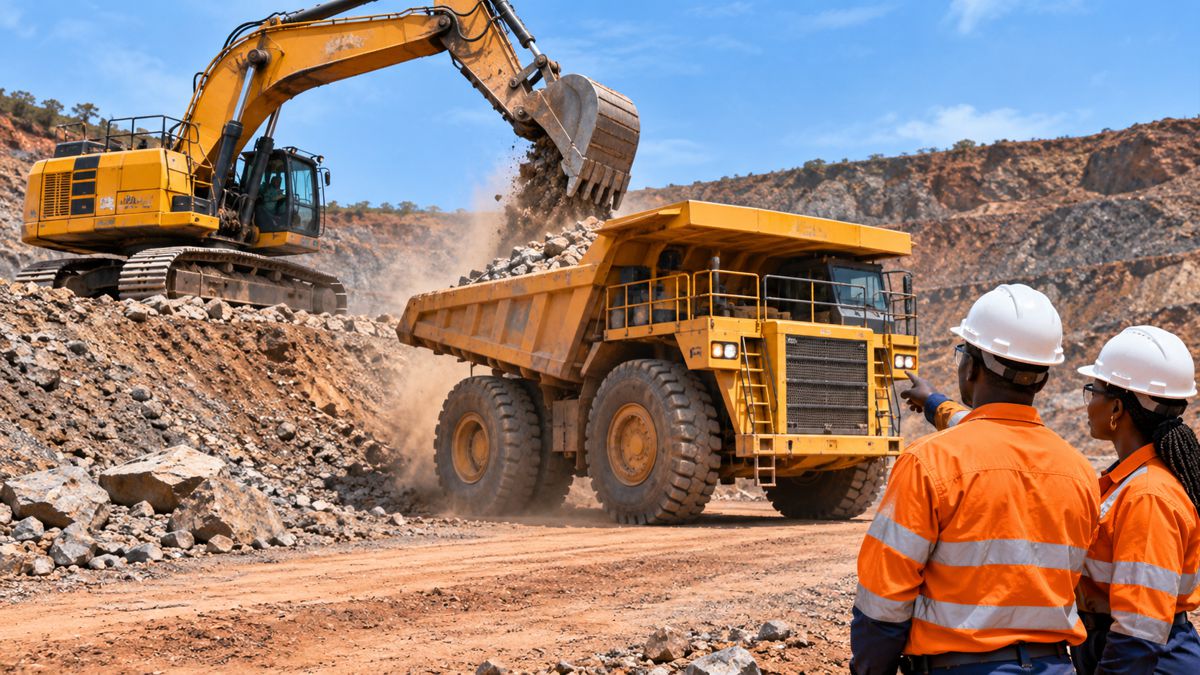
MSR’s processing ambitions remain anchored by Nui Phao in Thai Nguyen province, where the company has spent more than a decade developing an integrated mining and tungsten chemicals operation.
The existing mine is now being accompanied by plans for two potential additions to the resource base. Under Vietnam’s National Mineral Master Plan, the Nui Phao Expansion area is estimated to contain approximately 55.19 million tonnes of tungsten-polymetallic ore, while Nui Chiem is estimated at approximately 60 million tonnes. Together they represent potential resources of roughly 115 million tonnes.
Those figures require an important qualification. They are potential resources identified under the national planning framework rather than 115 million tonnes of newly proven mine reserves available for immediate extraction. Exploration, licensing and other regulatory procedures still have to be completed.
There has nevertheless been regulatory progress. In May 2026, the Nui Phao Expansion area was designated as a non-auction area for mineral exploitation rights, while in June Nui Phao Mining Company was selected as the sole qualified entity to be considered for a mineral exploration licence at Nui Chiem. MSR estimates that, if developed, the two areas could support another 20 to 30 years of mining and processing activity based on the current permitted mining capacity of approximately 3.5 million tonnes of ore per year.
Nearer-term expansion is already taking place within the existing operation. MSR’s 2025 annual report records a February 2026 amendment to the Nui Phao mining licence allowing the pit area to expand from 90 hectares to 151.8 hectares and permitting extraction of an additional 14.6 million tonnes of tungsten-polymetallic ore using a combination of open-cut and underground mining.
The licensed extension provides nearer-term access to ore. Nui Phao Expansion and Nui Chiem represent considerably larger potential additions, but require further exploration and development before they can perform the same role.
Processing Ore From Elsewhere
MSR says it now obtains concentrate from more than 20 mining partners internationally. The agreement with GBI provides a particularly clear example of how that sourcing model can operate across borders: ore is mined in South Korea, concentrate moves to Vietnam, and the resulting tungsten intermediates can then enter downstream manufacturing supply chains.
Its facilities are designed to process concentrates with different grades and impurity profiles, an important capability when third-party material is being introduced because tungsten deposits do not produce chemically identical concentrates.
The company plans to increase tungsten oxide production capacity to more than 8,000 tonnes of WO₃ annually, using much of its existing infrastructure rather than constructing an entirely new processing operation. Additional feedstock from outside suppliers can help support utilisation of that capacity.
Recycling could eventually add another stream. Internally mined ore, third-party concentrates and secondary tungsten would give the plant several potential sources of raw material rather than tying throughput exclusively to the geology and production schedule of Nui Phao. A mine works within the physical limits of its deposit; a processing plant able to accept suitable material from multiple producers has a different ceiling.
The GBI agreement provides an early demonstration of that model rather than proof of its ultimate scale.
Tungsten Beyond the Mine
Tungsten combines exceptional hardness, density, wear resistance and high-temperature performance. Cemented tungsten carbides are widely used in cutting, drilling, mining and construction tools, while tungsten materials also enter aerospace, electronics, speciality alloys and semiconductor manufacturing.
In semiconductor fabrication, tungsten compounds can provide precursor materials used to deposit tungsten structures within advanced devices. MSR has identified semiconductor manufacturing as one of the markets behind its interest in developing non-China supply routes through South Korea and Vietnam.
Governments and manufacturers looking to diversify critical-material supply cannot achieve that simply by identifying deposits outside China. Mining, concentrating, refining, chemical conversion and downstream manufacturing all have to connect. Countries with established infrastructure between the mine and the factory therefore occupy a different position from those exporting concentrates alone.
Vietnam’s role in tungsten could develop along those lines. Nui Phao supplies the geological foundation, while the chemical processing operation allows material from South Korea and other producing regions to pass through Vietnam as part of a wider non-China supply network.
The Economics Begin to Change
The expansion of that model is occurring alongside a substantial improvement in MSR’s financial performance. During the first half of 2026, the company reported VND2,202 billion in net profit after tax before minority interests, compared with a VND216 billion loss during the corresponding period of 2025. Net Debt/EBITDA fell to 2.1 times at the end of the second quarter.
Tungsten market conditions have been supportive, so those numbers should not be attributed solely to the company’s integration strategy. Operating performance and feedstock availability have also contributed to the improvement.
Third-party processing nevertheless introduces an attractive economic characteristic. MSR does not need to own every tonne of tungsten entering its refinery to generate revenue from it. Conversion fees can produce income while additional material improves utilisation of processing infrastructure that has already required substantial investment.
Increasing oxide capacity pushes the operation further downstream, where more processing can add value before the material reaches manufacturers. Growth in the processing business can therefore come partly from increasing the range and volume of feedstock rather than simply extracting more ore from Nui Phao.
A Vietnamese Midstream Hub
There is still a considerable distance between an individual processing agreement and the creation of a major alternative global supply chain. China’s scale in tungsten mining and processing has been built over decades and cannot be replicated quickly by a single mine, refinery or national programme. New resources also have to pass through exploration, permitting, financing and development before potential tonnes become actual production.
MSR does, however, already possess something many emerging resource projects lack: established processing infrastructure operating alongside a substantial producing mine. GBI is effectively separating the location of resource extraction from the location of chemical processing, allowing concentrate produced in South Korea to be upgraded in Vietnam without passing through China’s tungsten processing system.
If similar arrangements are developed with other miners, MSR’s Vietnamese facilities could increasingly operate as regional midstream infrastructure rather than simply as the downstream component of Nui Phao. The proposed 115 million tonnes of additional Vietnamese resources would strengthen the domestic foundation if exploration and approvals ultimately support development, while third-party concentrate and, potentially, recycling can broaden the feedstock base without waiting for those resources to enter production.
In that model, the valuable asset is no longer just the tungsten deposit. It is also the industrial capability to take tungsten from several sources and turn it reliably, at scale, into the materials manufacturers actually need.

Key Industry Questions
- Why is tungsten considered a strategic material? Tungsten combines exceptional hardness, density, wear resistance and high-temperature performance. It is used in applications including cemented carbide tools, speciality alloys, aerospace equipment, electronics and semiconductor manufacturing.
- How dominant is China in global tungsten production? US Geological Survey analysis indicates that China accounted for approximately 83% of global mined tungsten production in 2023. That concentration makes diversification difficult to achieve through new mining projects alone.
- What is ammonium paratungstate? Ammonium paratungstate, or APT, is an important intermediate produced during tungsten processing. It can be converted into tungsten oxides and subsequently into other tungsten materials required by industrial manufacturers.
- What is significant about the GB Innovation agreement? GBI plans to mine tungsten in South Korea while using MSR’s Vietnamese facilities to convert the concentrate into APT and tungsten oxide products. The arrangement separates mining from processing while maintaining a supply route outside China.
- Does MSR have 115 million tonnes of additional tungsten reserves? Not on the evidence currently available. Approximately 115 million tonnes of potential tungsten-polymetallic resources are identified across Nui Phao Expansion and Nui Chiem under Vietnam’s National Mineral Master Plan. Further exploration, licensing and regulatory procedures are required.
- How long could the additional resources support operations? MSR estimates that the potential Nui Phao Expansion and Nui Chiem resources could support an additional 20 to 30 years of mining and processing at its current permitted mining rate. This remains dependent on exploration and development of those resources.
- Can MSR process tungsten that it does not mine? Yes. The company already accepts third-party concentrates and says it sources material from more than 20 mining partners. The GBI agreement specifically provides for South Korean concentrate to be processed in Vietnam.
- How large will MSR’s tungsten oxide capacity become? The company plans to increase tungsten oxide production capacity to more than 8,000 tonnes of WO₃ annually.
- Why does processing capacity matter to tungsten supply security? New mines can provide alternative sources of concentrate, but downstream industries generally require refined chemicals, oxides, powders, metals or other processed tungsten materials. Alternative processing capacity is therefore required alongside alternative mines if supply chains are to become less geographically concentrated.
Strategic Takeaways
- Tungsten supply diversification requires processing capacity as well as new mines.
- MSR’s Vietnamese infrastructure allows the business to process material produced beyond its own Nui Phao resource base.
- The GBI agreement demonstrates a cross-border model in which mining and chemical processing take place in different non-China markets.
- The proposed Nui Phao Expansion and Nui Chiem resources could provide substantial additional domestic feedstock, but remain potential resources rather than developed reserves.
- Third-party concentrate and recycling could allow processing activity to grow without being tied directly to production from a single mine.