GreenVibe Targets Construction’s Biggest Blind Spot with Data-Driven Concrete Verification
The Venezuelan earthquake doublet of 24 June 2026 has done something no engineering conference has managed in a generation. It has pushed a quiet, technical question to the top of the construction industry’s risk register: does the hardened concrete in a finished structure actually match what the drawings specified. The twin magnitude 7.2 and 7.5 events struck within 39 seconds of one another and collapsed hundreds of structures across northern Venezuela, and the official death toll has since climbed above 5,000, far beyond the early estimates issued in the first chaotic days.
Reconstruction financing has grown in step, from an initial state fund into hundreds of millions of dollars in released IMF resources. Much of the expert commentary that followed pointed not at the building code on paper, but at whether anyone had verified that what was built matched what was designed.
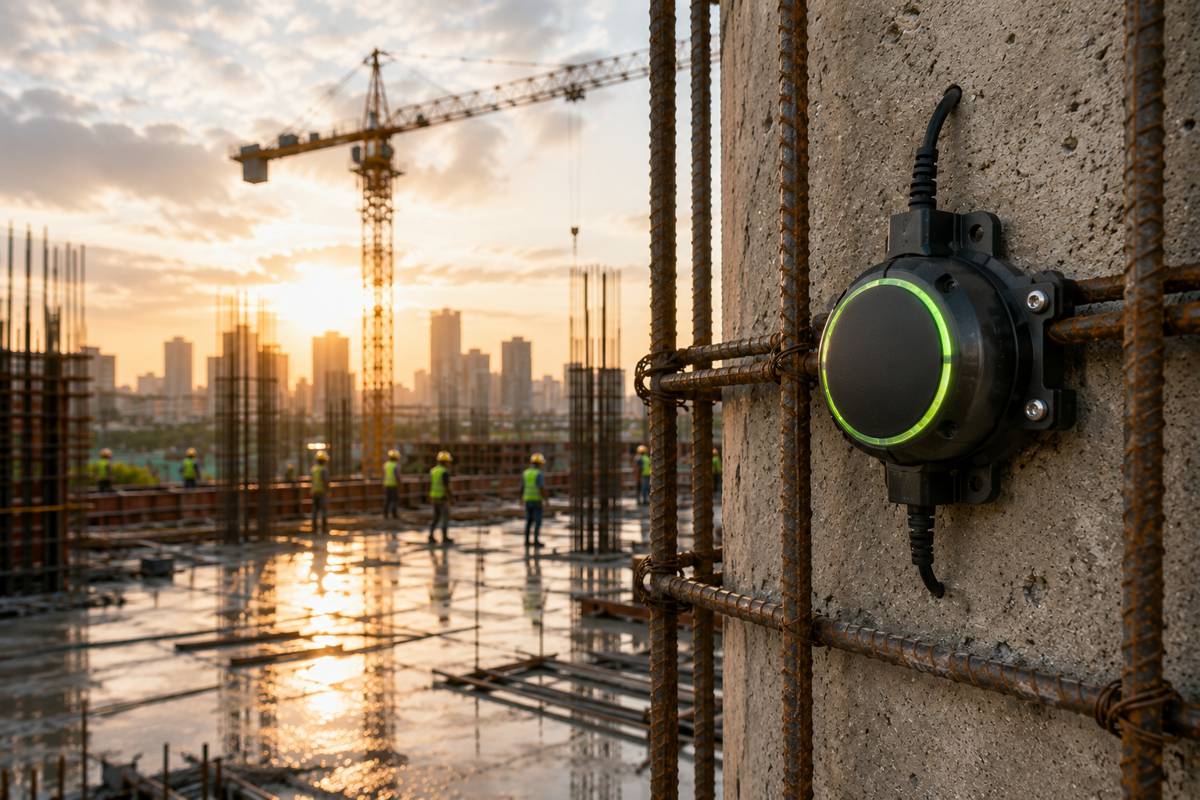
That distinction is where the commercial story sits, and it is the reason GreenVibe’s $12 million funding total has drawn attention well outside its home market. The Israeli firm embeds wireless multi-sensing devices into concrete before the pour and reports strength and structural status roughly every half hour, on mobile or desktop, during and after placement.
The company positions this as a direct answer to the verification gap, and it is now moving to enter the ASTM and Eurocode frameworks that govern how concrete quality is proven worldwide. Read narrowly, this is a single seed-stage raise by one contech vendor. Read in context, it is a signal about where value, capital and purchasing power are beginning to concentrate in concrete quality control, and about who might end up owning the verification baseline itself.
Briefing
- GreenVibe has raised $12 million to date, backed by Insight Partners alongside contractor-investors Tidhar Construction, Israel-Canada and Shikun and Binui, to scale embedded sensors that report concrete strength and status roughly every 30 minutes.
- The platform is deployed across more than 20 projects and labs with over 10,000 sensors, including Israel’s tallest tower, Beyond by Tidhar, and Ferrovial’s Malpartida bridge in Spain, with a completed pilot for US contractor Clark Construction.
- On one live bridge project the cure-wait cycle reportedly fell by around 60 percent, from five or six days to two, and the company cites returns exceeding ten times cost on most deployments.
- Its genuine differentiation is direct measurement using five sensing technologies including ultrasound, rather than the temperature-based inference that underpins standardised maturity sensors such as Giatec’s SmartRock.
- By entering the ASTM and Eurocode frameworks, GreenVibe is contesting the verification baseline rather than launching a single product, which is where the long-term commercial prize lies.
A Failure Of Verification, Not Design
The most useful way to understand the Venezuela disaster, for anyone specifying or buying concrete, is that codes rarely fail on the page. They fail in the gap between specification and delivery, and that gap is largely invisible until a structure is loaded to its limit. A column drawn at 60 megapascals is only worth 60 megapascals if the concrete that reached that location cured to that strength, and the industry’s traditional tools confirm this slowly, indirectly and after the fact.
When a seismic event exposes that gap at scale, the financial and human consequences are catastrophic, and the reconstruction that follows tends to demand something the previous build lacked: evidence that the material actually performs as designed.
This is not a problem confined to countries with weak enforcement, which is the point that gives GreenVibe’s pitch its wider reach. Every large concrete pour, in every market, carries some residual uncertainty about whether the in-place material matches the mix that was ordered and the strength that was specified. The commercial significance of the Venezuela reconstruction is that it converts that uncertainty from an engineering footnote into a procurement requirement.
Owners financing rebuilds with international money will increasingly want auditable, in-element proof of quality, and that demand does not stay contained within one country’s borders once insurers, lenders and multinational contractors begin to expect it as standard practice.
Why The Cylinder Test Keeps Failing Quietly
The century-old cylinder break test remains the backbone of concrete acceptance, and its weaknesses are well documented rather than controversial. The United States alone casts and crushes on the order of 20 million test cylinders a year, each one a small sample cured and handled separately from the structure it is meant to represent.
Field-cured and standard-cured specimens routinely diverge from the concrete actually in place because of differences in curing conditions, sample handling, transport to the laboratory and the sheer surface-to-volume mismatch between a cylinder and a structural element. When results come back low, it is frequently impossible to tell whether the concrete was genuinely weak or the sample was simply mishandled, and by then the pour is long since complete.
GreenVibe frames the resulting uncertainty as an inherent error of 10 to 50 percent, the company’s own characterisation, and illustrates it with the example of a column specified at 60 megapascals that can measure as little as 30 under test. Those specific figures are the vendor’s framing rather than an independently established benchmark, and they should be read as such, but the underlying phenomenon is real and long-acknowledged within concrete engineering.
The deeper commercial cost is not the occasional bad break, it is the schedule. Because acceptance strength is confirmed at 28 days and early decisions depend on lagging or indirect data, contractors build in conservative waiting periods before stripping formwork, applying post-tensioning or moving to the next stage. Those waiting periods are pure schedule float that a reliable in-place reading can compress.
From Temperature Inference To Direct Measurement
The claim that real-time concrete monitoring has never existed does not quite hold, and understanding why is essential to valuing GreenVibe correctly. Wireless maturity sensors have been on jobsites for years, led by Giatec’s SmartRock, which the Ottawa firm describes as the most widely used wireless concrete sensor in the world.
These devices apply the maturity method standardised under ASTM C1074, and now referenced within the updated ACI 318-26 code as well as AASHTO and Canadian standards, which estimates in-place strength from the concrete’s temperature history against a pre-established calibration curve. Many US departments of transportation already accept maturity readings in place of field-cured cylinders, so real-time, in-element strength estimation is an established and code-recognised practice, not a novelty.
GreenVibe’s actual differentiation is the method, and it is a meaningful one. Rather than inferring strength from temperature alone, its sensors combine five sensing technologies including ultrasound to measure the concrete directly, which the company reports reaches 95 percent correlation with the material actually poured. The distinction matters commercially because the maturity method has a structural blind spot: it depends on a calibration curve tied to a specific mix design, so if the wrong mix is delivered, or the material differs from what was calibrated, a temperature-based reading can look perfectly healthy while the real concrete underperforms.
A direct measurement of the in-place material is precisely the tool suited to the question Venezuela reopened, because it does not assume the mix is correct, it checks it. There is an important honesty in how the technology is positioned by its own leadership. Chief executive Roee Reshef has told the trade press that the system replaces some early-stage tests but not the final 28-day acceptance cylinder, and he has predicted that within five years cylinders will disappear from sites in the United States, Europe and Israel. That candour about current scope, rather than a blanket claim to have abolished the cylinder, is what makes the longer-term ambition credible.
The Commercial Case On Live Projects
Where the argument becomes concrete, in every sense, is in the deployment record. GreenVibe reports more than 10,000 sensors across upwards of 20 projects and labs, including a roster of demanding Israeli towers and bridges: Beyond by Tidhar, the country’s tallest building, The Spiral at Azrieli, Toha 2 by Amot, Midtown Jerusalem, Lexus Tower, the Discount Bank Campus and the Herling Bridge among them.
Internationally it has worked with Ferrovial, the Nasdaq-listed infrastructure group, on the Malpartida bridge in Spain, and completed a pilot with the major US contractor Clark Construction. That mix of super-tall buildings and civil structures matters because both are highly sensitive to schedule and to the timing of critical operations such as formwork removal and post-tensioning, which is exactly where a trustworthy in-place reading converts directly into saved days.
The reported returns follow that logic. On one live bridge project the cure-wait cycle fell from five or six days to two, a reduction of roughly 60 percent, and the company cites deployment returns exceeding ten times cost on most projects alongside waste and inefficiency cut by up to half through saved time, fewer quality issues and optimised mix.
A company spokesperson also pointed to a pattern that will resonate with any quality manager who has argued with a laboratory result, stating that “In more than 10 cases where GreenVibe’s reading conflicted with the lab results, GreenVibe was later proven right, and where teams did not act on it, damage followed, including on super-tall building projects.” Reshef frames the underlying philosophy plainly, arguing that “Data driven construction is the only way to be sure that what is poured is what was specified,” and that the platform is built to support mega projects by improving efficiency, accelerating delivery and enhancing quality, before adding the blunt sign-off, “Don’t compromise on quality.”
These are vendor-reported figures rather than audited results, and buyers will rightly seek their own trials, but the operational mechanism behind the savings is straightforward and consistent with how schedule risk actually accrues on site.
Where The Strategic Money Is Moving
The most revealing context for GreenVibe’s raise is not the headline number but the company it keeps in the wider market. Its backers include Insight Partners, a heavyweight technology investor, alongside three construction-sector shareholders in Tidhar, Israel-Canada and Shikun and Binui, which gives the firm both capital and a captive pipeline of real projects on which to prove the technology.
That combination of financial and strategic investment is telling, and it mirrors a broader pattern in concrete-sensing where the building-materials establishment has been quietly buying its way into the category. Giatec counts cement and admixture majors Sika and Heidelberg Materials among its strategic stakeholders, and has drawn substantial government innovation funding in Canada toward AI-driven mix optimisation. Tool giant Hilti, meanwhile, acquired the Boston-based venture Concrete Sensors several years ago, folding embedded monitoring into its own portfolio.
Taken together, these moves show where purchasing power and competitive intent are concentrating. The materials producers want sensing because it protects and differentiates the concrete they sell and helps them decarbonise mix designs with hard data. The contractors want it because it compresses schedule and reduces rework. The tool and equipment groups want it because it extends their footprint on site into the digital layer.
GreenVibe is entering a market that the industry’s largest players have already validated with their own balance sheets, which lowers the strategic risk of the category even as it raises the competitive stakes. The prize each of them is circling is the same: control of the trusted data that says a structure is fit to load, because whoever owns that verification layer sits at the centre of every future quality dispute, insurance claim and lifecycle decision.
The Standards Contest That Will Decide The Winner
The decisive battleground is not the sensor but the standard, which is why GreenVibe’s move to enter the ASTM and Eurocode frameworks is the most strategically significant line in its announcement. The maturity method is already embedded in ASTM C1074, ACI 308 and departmental transport specifications, which is precisely why Giatec’s temperature-based approach enjoys such wide acceptance and DOT recognition.
For direct-measurement sensing to displace or supplement the cylinder as an acceptance tool, rather than merely an early-strength aid, it needs the same formal recognition, and that process is slow, evidence-hungry and contested by design. The company that guides an ultrasound-based verification method into the codes first will set the terms on which every competitor and specifier operates afterwards.
The commercial pull behind that effort is the vast infrastructure-renewal pipeline now taking shape across the United States and beyond, where ageing bridges, decks and structures must be rebuilt and where owners, insurers and lenders increasingly want auditable proof of in-place quality rather than a sheaf of laboratory certificates. For infrastructure owners and contractors, the practical guidance is to treat embedded verification as a procurement variable to trial now rather than a curiosity to watch, because the standards question will be settled during this cycle of investment and the early adopters will shape it.
The industry has spent a century tolerating a verification method that everyone knows is imperfect because nothing better was standardised. The Venezuela reconstruction, the weight of capital moving into concrete-sensing, and the race into the code frameworks together suggest that tolerance is finally running out, and that is a healthy development for anyone who cares about building structures that perform as designed.
Key Industry Questions
- Does GreenVibe’s technology replace the standard 28-day cylinder test? Not yet, and the company is clear about this. GreenVibe’s sensors are designed to replace or reduce reliance on early-stage strength testing, informing decisions such as when to strip formwork or begin post-tensioning, but the 28-day cylinder remains the accepted tool for final acceptance and mix validation in the United States, Europe and Israel. Chief executive Roee Reshef has publicly predicted that cylinders will disappear from those markets within five years, which frames the ambition rather than the current position. For now, contractors should view embedded sensing as a way to compress schedule and gain in-place confidence during curing, while continuing to satisfy acceptance requirements through conventional testing until standards formally recognise direct-measurement alternatives.
- How does direct measurement differ from the maturity method that sensors already use? The maturity method, standardised under ASTM C1074 and used by widely deployed sensors such as Giatec’s SmartRock, estimates strength from the concrete’s temperature history against a calibration curve prepared for a specific mix. It is proven and code-accepted, but it assumes the delivered mix matches the one calibrated. GreenVibe instead measures the in-place material directly using several sensing technologies including ultrasound, which the company says reaches 95 percent correlation with the concrete poured. The practical difference is that direct measurement can flag when the actual material underperforms its specification, whereas temperature inference can read as healthy even if the wrong mix arrives, provided the thermal profile looks normal.
- What does the Venezuela earthquake actually reveal about concrete quality control? Expert commentary following the June 2026 doublet largely pointed to verification and enforcement as the weak links, rather than deficiencies in building codes themselves. The recurring issue in catastrophic structural failures is the gap between what a design specifies and what is actually delivered and cured on site, a gap that traditional sampling confirms slowly and indirectly. The disaster’s commercial consequence is that reconstruction financed by international lenders is likely to demand auditable, in-element evidence of concrete quality, and that expectation tends to spread through insurers, banks and multinational contractors into markets far beyond the affected region, raising the baseline everywhere.
- What is the commercial payback for contractors adopting embedded sensors? The clearest return comes from schedule compression. Reliable in-place strength data lets teams strip formwork, apply post-tensioning and progress to the next stage as soon as the concrete genuinely allows, rather than waiting out conservative buffers built around lagging cylinder results. GreenVibe reports one bridge project where the cure-wait cycle fell from five or six days to two, and cites returns exceeding ten times cost on most deployments with waste cut by up to half. These are vendor figures and warrant independent trials, but the mechanism is sound: on schedule-sensitive towers and civil structures, a few saved days per cycle compound quickly into material cost and programme savings.
- Who are GreenVibe’s main competitors and how well funded is the category? The established leader is Giatec Scientific of Ottawa, whose SmartRock is the most widely used wireless concrete sensor globally and whose backers include cement and admixture majors Sika and Heidelberg Materials, alongside significant Canadian government innovation funding. Denmark’s Maturix is another maturity-based competitor, and tool group Hilti previously acquired the venture Concrete Sensors. The category has therefore already been validated by some of the largest names in building materials and equipment, which reduces adoption risk while intensifying competition. GreenVibe’s own backing from Insight Partners plus three construction-sector shareholders gives it both capital and live projects, positioning it as a credible direct-measurement challenger in a maturing field.
- Will embedded sensors become a code requirement for concrete acceptance? Partly already. The maturity method is standardised under ASTM C1074 and referenced in ACI 308, the updated ACI 318-26 code and various transport-department specifications, and many US DOTs accept it in place of field-cured cylinders. For newer direct-measurement approaches to gain equivalent acceptance as an acceptance tool, rather than an early-strength aid, they must pass through the same evidence-based standardisation, which GreenVibe is now pursuing via ASTM and Eurocode entry. Formal code recognition is the pivotal milestone, because it determines whether a technology can substitute for the cylinder in contractual and regulatory terms rather than merely supplement it during construction.
- How reliable are the accuracy and vindication claims? The 95 percent correlation figure, the 10 to 50 percent cylinder-error range and the accounts of the system being proven right over laboratory results are company-reported, and prudent buyers should treat them as claims to be verified through their own pilots. That said, the reliability problems with cylinder testing are independently well documented across concrete engineering literature, and the logic of direct in-place measurement addressing them is coherent. The most robust validation will come not from case studies but from the standardisation process itself, where methods are scrutinised against defined performance criteria. Independent trials and eventual code recognition, rather than vendor testimonials, are the benchmarks that will settle the accuracy question.
- What does this mean for infrastructure owners, insurers and the renewal pipeline? For asset owners facing large renewal programmes, embedded verification offers auditable evidence that new work meets specification, which strengthens their position in disputes, warranty claims and lifecycle planning. Insurers and lenders financing major rebuilds have a direct interest in that evidence, and their expectations can drive adoption faster than contractor preference alone. As the United States and other markets move through a sustained period of bridge, deck and structural renewal, the owners who specify in-place verification early will help shape the standards that emerge, and will hold better data on the durability and residual life of the assets they are responsible for over decades.
Strategic Takeaways
- The Venezuela reconstruction has reframed concrete verification from an engineering footnote into a procurement and risk requirement, and that expectation will migrate into other markets through insurers, lenders and multinational contractors rather than staying regionally contained.
- GreenVibe’s real differentiation is direct, multi-sensor measurement including ultrasound, which can detect a substituted or underperforming mix that temperature-based maturity sensors, calibrated to an assumed mix, may miss.
- Real-time in-place monitoring is already established and code-recognised through the maturity method, so the competitive contest is about accuracy, method and standardisation, not about introducing sensing to the jobsite for the first time.
- Strategic capital is concentrating around concrete-sensing, with cement majors Sika and Heidelberg backing Giatec and Hilti acquiring Concrete Sensors, signalling that the trusted verification data layer, not the sensor hardware, is the prize worth owning.
- Formal entry into the ASTM and Eurocode frameworks is the decisive battleground, because the technology that reaches code recognition first as an acceptance tool will set the commercial terms for every competitor and specifier during this infrastructure-renewal cycle.