Volvo Electric Machines Put Nuremberg’s Zero-Emission Tender to the Test
Nuremberg has turned the demolition of a former nursery into an unusual test of municipal procurement. The German city required the Sauerbrey site in Westpark to be demolished without conventional combustion-powered machinery, extending the requirement beyond excavators and loaders to the trucks moving material from the site.
The contract was publicly tendered by the City of Nuremberg’s Servicebetrieb Öffentlicher Raum, or SÖR, with electric, hydrogen and other CO₂-free drives permitted. Conventional internal combustion engines were excluded, including hybrids and machines running on alternative fuels, while fossil-fuelled generators could not be used to provide charging power.
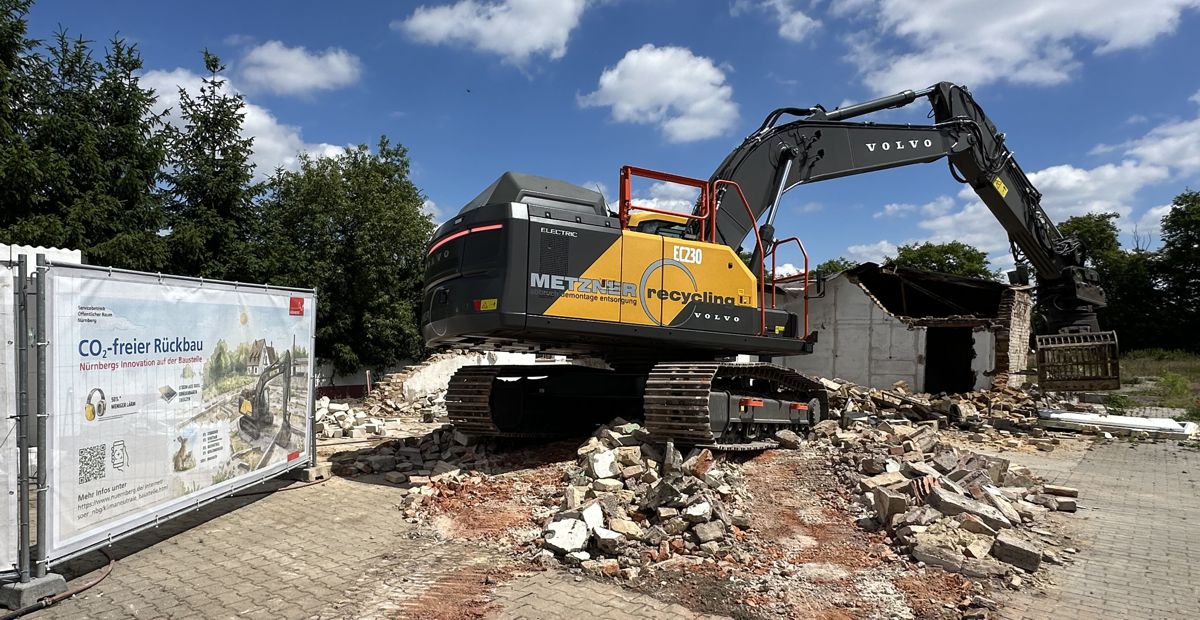
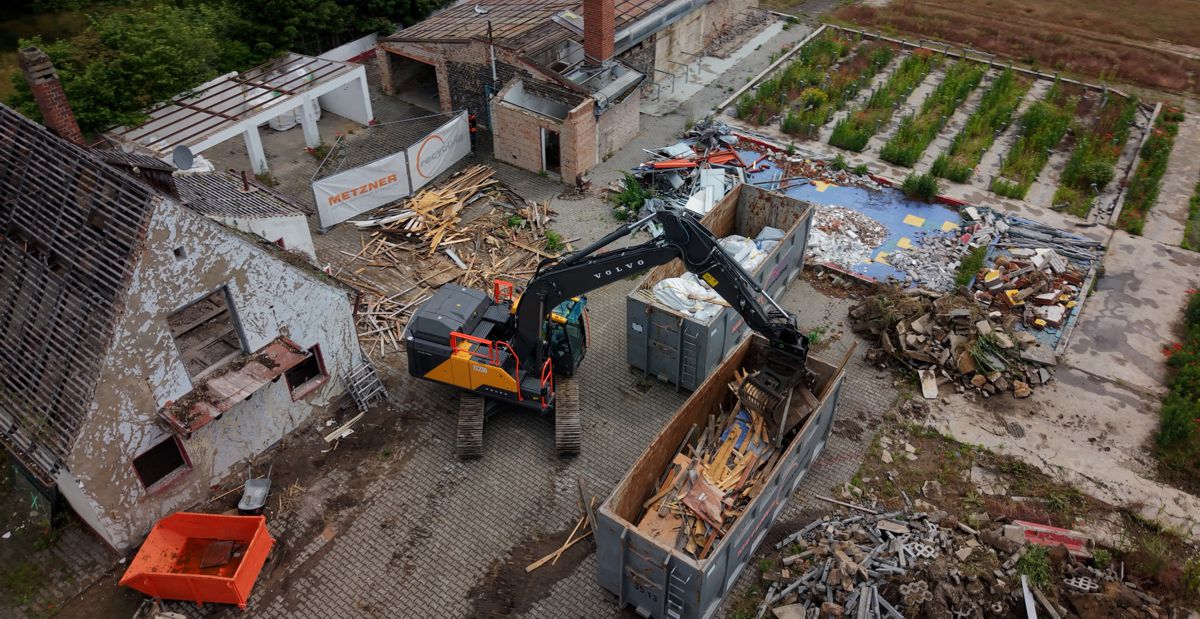
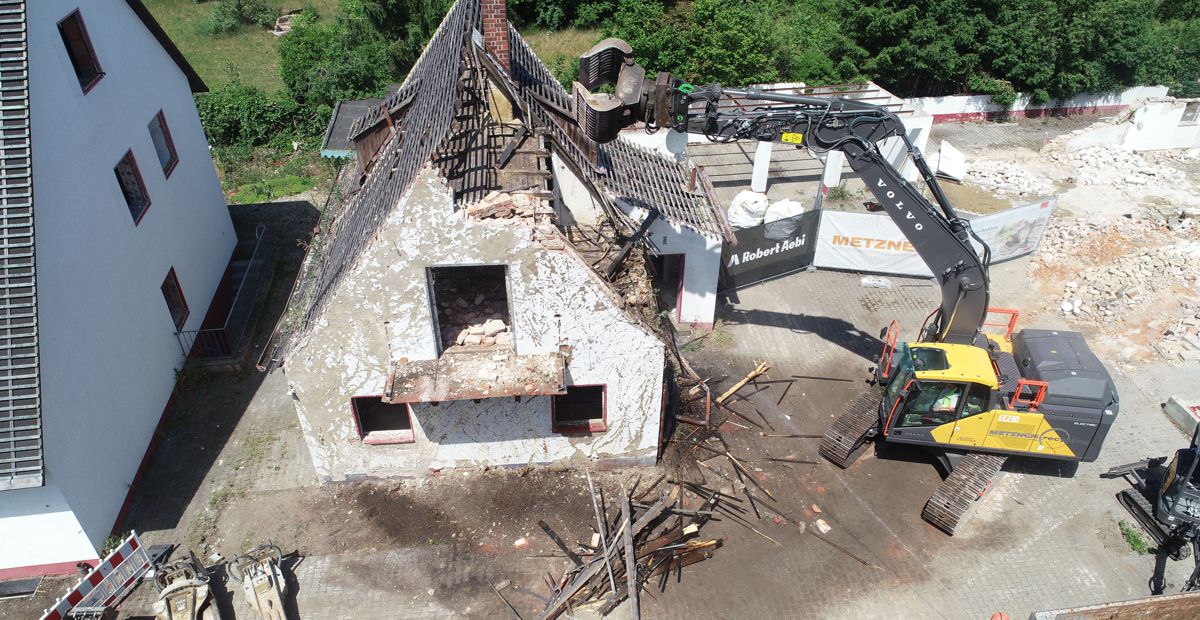
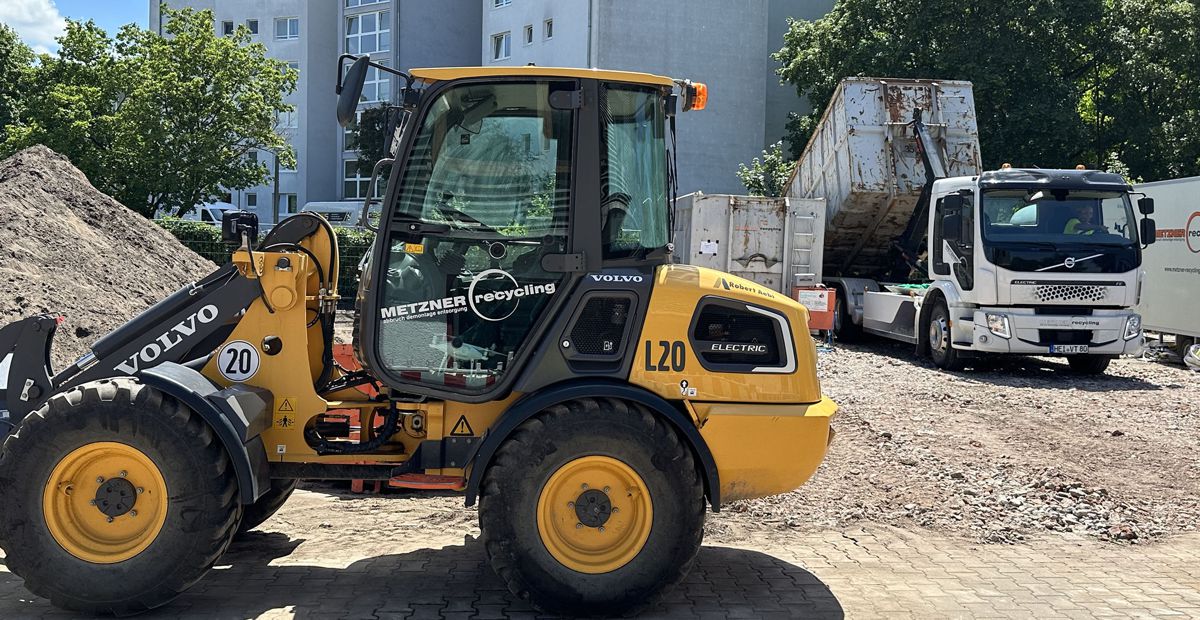
Metzner Recycling GmbH is carrying out the work with electric construction equipment supplied and supported by Robert Aebi Nuremberg. The fleet includes a Volvo EC230 Electric crawler excavator, ECR18 Electric compact excavator and L20 Electric compact wheel loader, together with a Volvo FM Electric hook-lift truck. Rather than installing a dedicated high-capacity charging system, the contractor is using the site’s conventional construction electricity supply.
The combination makes Westpark more interesting than another electric-equipment demonstration. A municipal client has specified the operating requirement through public procurement, while the contractor is attempting to deliver it within recognisable construction-site constraints.
Briefing
- Nuremberg publicly tendered the demolition of the former Sauerbrey nursery with CO₂-free operating requirements.
- Conventional combustion engines, including hybrids and equipment using alternative fuels, were excluded from the works.
- Metzner Recycling is using electric Volvo excavators and a wheel loader alongside a Volvo FM Electric hook-lift truck.
- The equipment is being supplied with ordinary construction-site electricity rather than purpose-built charging infrastructure.
- Materials are being separated and recovered as part of an urban-mining approach before the site becomes part of an expanded Westpark.
From Demonstration to Procurement
Electric construction equipment has already been used on increasingly substantial projects, including another German demolition operation involving many of the same companies. In 2025, Metzner Recycling worked with Volvo Construction Equipment, Volvo Trucks, Siemens and other partners on the deconstruction of buildings at the Siemens Technology Campus in nearby Erlangen.
That operation involved around 25,000 cubic metres of deconstruction using compact, mid-sized and grid-connected electric machines, with electric trucks handling material transport. Around 12,800 tonnes of construction waste were processed, according to Volvo, with 96% recycled into raw materials.
The Erlangen project demonstrated what an electric demolition fleet could achieve when manufacturers, contractors and the project owner worked together to design the operation. Nuremberg has taken the next step by placing the requirement into a public tender.
Manufacturers can demonstrate electric machinery and contractors can volunteer to trial it, but procurement determines whether low-emission equipment becomes something contractors must price, plan and deliver. The Westpark tender also avoided prescribing battery-electric machinery alone. Electric, hydrogen and other CO₂-free drives were permitted, leaving bidders to decide how to meet the requirement while conventional combustion technology was excluded.
Andreas Krieglstein, Mayor of Nuremberg, said: “With the CO₂-free demolition of the former Sauerbrey nursery, the City of Nuremberg is deliberately breaking new ground. This project exemplifies the responsibility municipalities must assume in addressing climate change. Sustainable action does not begin with construction projects; it starts with how we dismantle existing buildings.”
Working With the Available Grid
Electrifying a compact machine used intermittently during a working day is one problem. Supplying a mid-sized excavator performing sustained demolition work, while keeping loaders and road-going trucks productive, places a different demand on site energy planning.
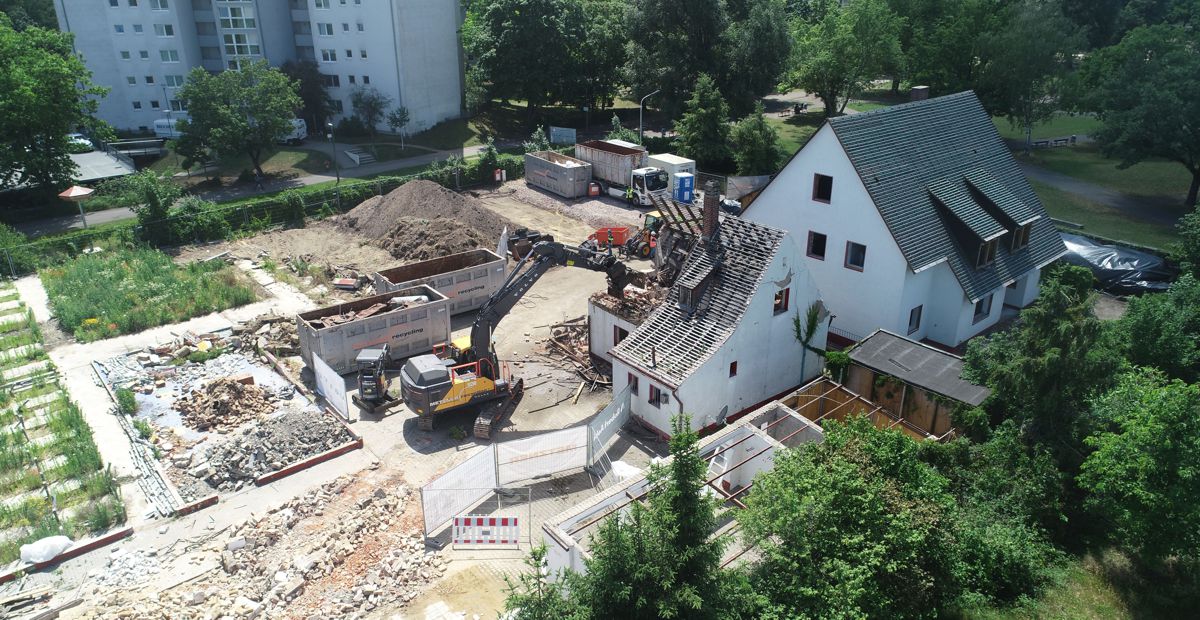
At Westpark, the answer has not been a temporary battery farm or specially installed charging station. The machines and truck are being supplied through the site’s normal construction electricity connection, bringing available grid capacity, charging windows, machine utilisation and vehicle movements into the planning of the operation.
Michael Metzner, Managing Director of Metzner Recycling GmbH, said: “For us as the contractor, it was crucial to plan the project from the outset so that it could operate reliably within normal construction-site routines. This demolition project shows that CO₂-free worksites are entirely achievable when equipment, logistics and energy supply are considered together.”
The experience gained at Erlangen provided a useful precursor. That project used a broader combination of battery and grid-connected equipment and required simultaneous fast charging while demolition continued. Westpark is a smaller municipal operation, but its simpler electrical arrangement is closer to what contractors may encounter on other contained urban projects.
There are limits to what one project can establish. A former nursery does not impose the same energy demands as major structural demolition, heavy civil earthworks or continuous quarrying, while electricity availability differs considerably between sites. Westpark therefore cannot demonstrate that every construction operation can dispense with diesel, but it does show what can be achieved when energy requirements are considered during procurement and work planning rather than after equipment has been selected.
Demolition and Material Recovery
The Sauerbrey site forms part of a wider redevelopment of Westpark in south-west Nuremberg. The city acquired the former commercial nursery to extend the park eastwards by approximately 7,000 square metres, with the old buildings removed before the land is incorporated into the redesigned public space.
Demolition is being combined with material separation and recovery. Contaminated materials are handled separately, while suitable demolition materials are intended for recycling, treating the existing buildings as a source of recoverable material under an urban-mining approach.
Electric equipment also changes conditions around the boundary of an urban site. Removing diesel engines eliminates tailpipe emissions from the machines concerned and can reduce operating noise, an advantage where demolition takes place alongside homes, offices, schools or other occupied buildings. The earlier Erlangen project faced precisely that situation, with demolition taking place while neighbouring offices remained operational.
Building a Procurement Record
For municipal clients considering similar requirements, Westpark provides something more useful than a prototype machine demonstration: a public procurement precedent. Cities already influence construction methods through specifications covering materials, working hours, noise, waste, traffic movements and environmental performance. Equipment emissions can become another contractual condition where the market and local energy infrastructure are capable of supporting it.
Peter Bauer, Segment Leader at Volvo CE, said: “This project proves that CO₂-free demolition works not only in theory, but on real construction sites. One of the key factors is that the machines and vehicles can be operated using standard construction-site electricity. That makes the solution practical, scalable and easy for municipalities to replicate as they work towards their climate targets.”
Replication will still depend on the job. Equipment availability, electrical capacity, charging strategy, contract duration and the productivity required from individual machines all affect the economics. Contractors also need confidence that suitably specified equipment can be obtained for the period of the works, whether owned, leased or rented.
Nuremberg did not wait for every construction machine to become electric before issuing the requirement, nor did it specify a particular manufacturer’s technology. It defined the operating conditions for a project where the available equipment and electricity supply could reasonably meet them.
Westpark is a modest demolition contract compared with the major infrastructure projects on which construction’s largest machines operate, but its scale may be precisely what makes it useful. Municipalities procure thousands of similarly contained projects involving parks, schools, depots, public buildings and urban redevelopment. If electric construction equipment is to progress from occasional demonstration projects into routine fleets, those ordinary contracts are where much of the transition will have to happen.
Key Industry Questions
- What has Nuremberg required from the demolition contractor? The tender excluded conventional combustion-powered machinery and required the relevant demolition operation to use CO₂-free drives. Electric, hydrogen and other qualifying technologies were permitted.
- Which electric machines are working at Westpark? The reported fleet includes a Volvo EC230 Electric crawler excavator, ECR18 Electric compact excavator and L20 Electric compact wheel loader, supported by a Volvo FM Electric hook-lift truck.
- Does the site require dedicated charging infrastructure? No specialist charging installation has been reported. The electric equipment is being supplied using normal construction-site electricity.
- Why is the procurement element unusual? Rather than electrification being introduced voluntarily by a manufacturer or contractor as a demonstration, the City of Nuremberg incorporated the operating requirement into a public demolition tender.
- Can the model be applied to larger demolition projects? The project demonstrates one workable arrangement, but larger sites can have substantially greater power requirements. Grid capacity, machine duty cycles, charging opportunities and logistics would need to be assessed for each project.
- What happens to the demolition material? Materials are separated during deconstruction, including appropriate handling of contaminated material, with recoverable resources intended to return to the material cycle under an urban-mining approach.
- How does the project relate to the Siemens demolition in Erlangen? The earlier Erlangen project involved Metzner Recycling, Volvo CE and other partners and demonstrated electric deconstruction at considerably larger scale. Nuremberg subsequently applied the concept through municipal public procurement.
- Does CO₂-free demolition mean the project has no carbon footprint? No. The description relates principally to the specified operation of machinery and transport rather than establishing that every embodied and upstream emission associated with the project has been eliminated.
Strategic Takeaways
- Public procurement gives municipalities a direct mechanism for creating demand for zero-emission construction equipment where suitable machinery and electrical capacity already exist.
- Technology-neutral emissions requirements give contractors scope to select equipment and energy systems appropriate to individual sites.
- Electrical capacity and work planning become part of equipment planning when battery-electric machines move into heavier applications.
- Smaller municipal projects may provide a practical entry point for electric construction because fleet size, operating radius and energy demand can be easier to define.
- Combining selective demolition, material recovery and electric equipment addresses both operational emissions and resource use rather than treating machinery electrification as an isolated objective.