Yanmar and Hitachi Explore a New Model for Competing in Compact Equipment
When two Japanese manufacturers sign a letter of intent to “explore” a collaboration, the temptation is to file it under industrial courtesy and move on. The agreement signed on 23 July 2026 between Yanmar Holdings and Hitachi Construction Machinery deserves closer reading, because the commercial logic beneath the diplomatic language points to something larger than a bilateral study.
A full-line manufacturer with an openly stated ambition to reach the industry’s top three by 2030 is reaching for a compact-equipment specialist rather than building a range from scratch or absorbing one through acquisition. That choice, made in the fastest-growing and most defensible slice of the earthmoving market, is the story worth telling.
Compact machinery is no longer the low-margin entry rung it was once treated as. Mini and compact excavators alone account for well over 40 per cent of a compact-equipment market heading toward the mid-fifties of billions of dollars over the next decade, with North America supplying roughly a third of global demand. It is the segment where urban infrastructure work, the rental channel and electrification are concentrating, and where brand loyalty and dealer density decide who wins.
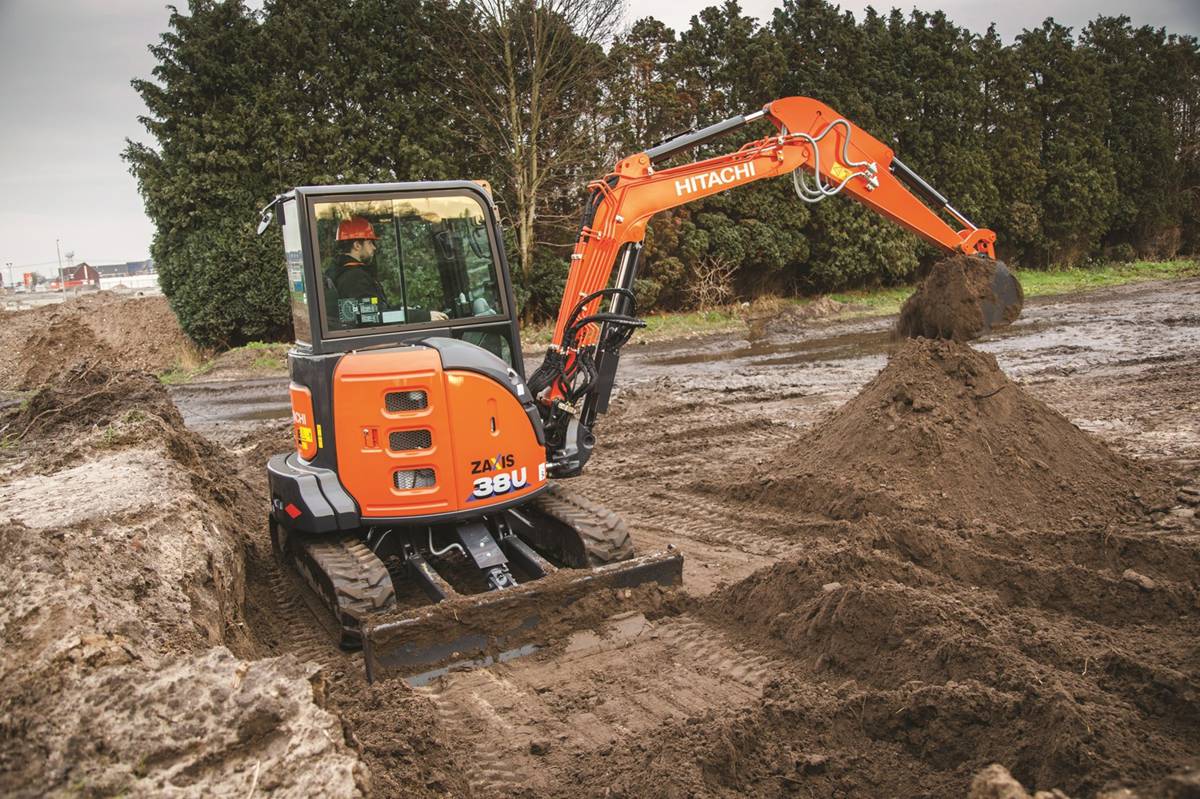
Hitachi’s presence there is comparatively thin, weighted as the company is toward large excavators, wheel loaders and mining equipment, and thinnest of all in the Americas following its separation from John Deere. Yanmar, by contrast, is a recognised leader in mini excavators that has spent recent years assembling a broader compact portfolio, yet lacks the global full-line distribution muscle that Hitachi has spent a century building.
The timing sharpens the point. Hitachi Construction Machinery is preparing to retire its founding brand and become LANDCROS on 1 April 2027, an identity built explicitly around what the company calls open co-creation with external partners. The Yanmar letter of intent is being presented as an early expression of exactly that philosophy.
For construction professionals, infrastructure owners and investors, the practical question is not whether two respected engineering firms admire each other’s craftsmanship. It is whether partnership, rather than merger or organic build, is becoming the default route into compact equipment for the industry’s largest players, and what that means for pricing, product choice and competitive balance.
Briefing
- Yanmar Holdings and Hitachi Construction Machinery signed a non-binding letter of intent on 23 July 2026 to explore collaboration in compact equipment, combining Yanmar Compact Equipment’s specialism with Hitachi’s global construction and mining infrastructure.
- No commercial or financial terms were disclosed, and both companies have committed to preserving separate brand identities and running their independent dealer networks, signalling a partnership model rather than a takeover.
- The move addresses a strategic gap for Hitachi, whose portfolio is weighted toward larger and mining-class machines and whose compact route to market weakened after the 2022 dissolution of its long-running Deere joint venture in the Americas.
- Yanmar gains potential access to Hitachi’s worldwide sales, service and value-chain network to scale a compact range that already leads in mini excavators and has expanded into compact track loaders through the 2019 acquisition of ASV.
- The agreement lands as Hitachi prepares to rebrand as LANDCROS in April 2027 around a philosophy of open co-creation, and it mirrors a wider industry shift toward consolidation through partnership rather than outright acquisition.
Hitachi’s Compact Gap Sets the Terms of the Deal
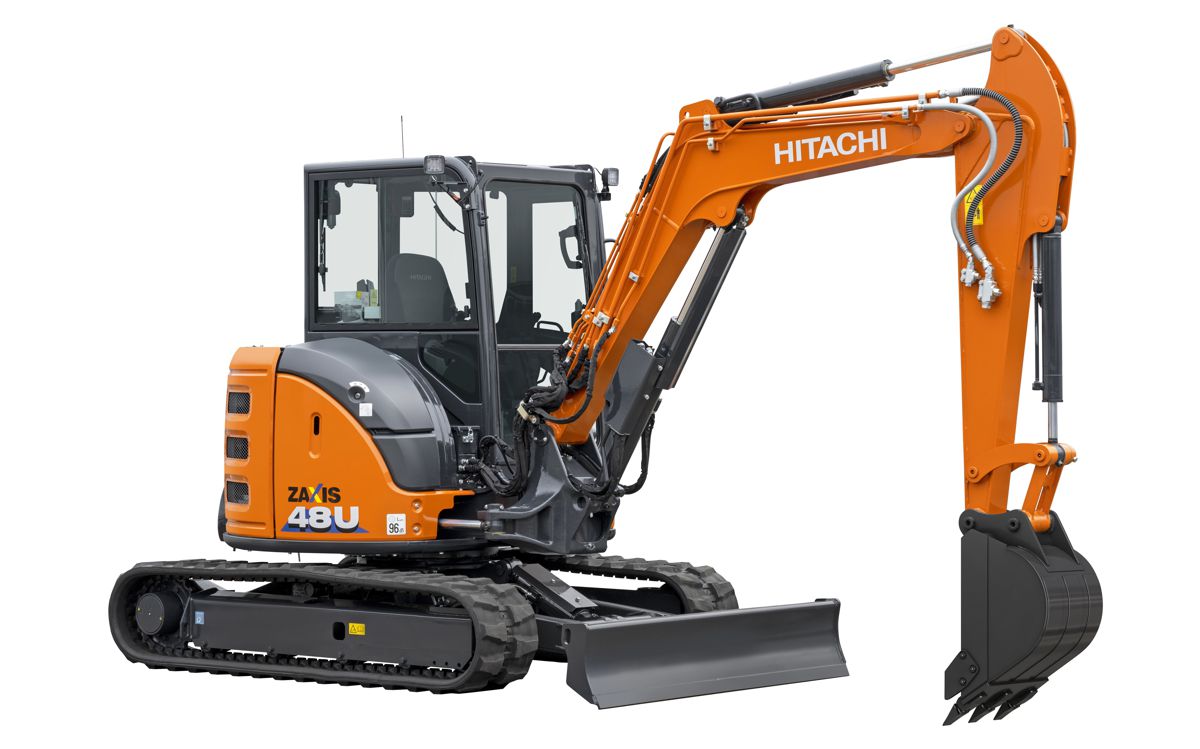
Hitachi Construction Machinery is a heavyweight in the parts of the market where machines are measured in tens and hundreds of tonnes. Its core franchise sits in large hydraulic excavators, rigid dump trucks, wheel loaders and mining equipment, and its stated growth plan leans on precisely those categories.
Masafumi Senzaki, president and executive officer, framed the strategy plainly, describing a company “Focusing on hydraulic excavators, dump trucks, and wheel loaders as our core products,” and “implementing a strategy to offer a wider range of choices to our dealers and customers by partnering with external companies with an open mindset to meet diversifying needs.” The compact end of the range has never been where Hitachi concentrated its firepower, and in the categories that matter most to today’s contractors, compact track loaders and compact wheel loaders in particular, its offer is modest relative to full-line rivals.
That gap becomes a liability against the top-three-by-2030 ambition. Reaching the podium of an industry led by Caterpillar and Komatsu, with Kubota, Volvo, Deere and the fast-rising Chinese majors all pressing, is difficult while ceding ground in the highest-volume segment of all. Building a competitive compact portfolio organically is slow and capital-intensive, and acquiring one outright is expensive and disruptive to dealers and brands on both sides.
A structured partnership with an established compact specialist offers a third path, giving Hitachi credible access to a broader range without the balance-sheet strain or integration risk of a purchase. The parties released no financial terms, which is consistent with an exploratory phase, but the direction of travel is unmistakable.
Why Compact Equipment Now Commands the Strategic High Ground
The commercial gravity of compact machinery has shifted decisively over the past decade, and the numbers explain why full-line manufacturers can no longer treat the segment as an afterthought. Analysts size the global compact construction equipment market at somewhere between the mid-thirties and low-forties of billions of dollars in 2025, with credible forecasts pointing to the mid-fifties by the early 2030s at compound annual growth rates in the region of five to seven per cent.
Mini and compact excavators make up more than 45 per cent of that volume, and compact track loaders have become the single most in-demand category on many jobsites because of their versatility across excavation, material handling and site preparation. Demand is strongest precisely where modern work is concentrated, in dense urban projects that reward manoeuvrable, low-emission machines.
Three forces are compounding that pull. Urban infrastructure and residential construction favour smaller machines that can operate in constrained sites, the rental channel has become a primary route to market and a proving ground for new technology, and electrification is arriving first in the compact classes where battery packages are commercially viable today.
Kubota holds the leading position in United States compact equipment, Bobcat’s smaller excavators remain category benchmarks, and Caterpillar and Kubota are consistently cited for the strongest resale values, a point that matters enormously to fleet economics and total cost of ownership. For a manufacturer positioning itself as a solutions provider rather than a machine seller, absence from this segment is a strategic hole, not a niche omission.
The Long Shadow of the Deere Split
No factor shapes Hitachi’s compact calculus more than the unwinding of its decades-long alliance with John Deere. From 1988 until 28 February 2022, the Deere-Hitachi joint venture manufactured and distributed excavators across North, Central and South America, with Deere handling much of the route to market and the two partners sharing factories in North Carolina, Brazil and British Columbia.
When that relationship dissolved, Deere acquired those plants and Hitachi Construction Machinery Americas set out to stand on its own, importing machines from Japan and rebuilding an independent dealer and service network from a headquarters in Newnan, Georgia. The company has since introduced a wave of new products and describes the split, in its own internal language, as the first of two startups.
The strategic cost of that independence was a thinner, more exposed position in the Americas at exactly the volume-critical compact end. Rebuilding a full-line presence across two continents is a multi-year undertaking, and compact machines, sold in higher unit numbers through broader dealer footprints, are among the hardest categories to cover from a standing start. Yanmar already operates in the region, with its compact business run out of Grand Rapids, Minnesota, and its own dealer relationships in place.
A collaboration therefore offers Hitachi a credible way to strengthen its compact hand in the market where the Deere separation left it most stretched, without reconstructing an entire distribution layer alone. The agreement’s explicit commitment to independent dealer networks suggests both sides intend to add reach rather than force a disruptive consolidation of channels.
What Yanmar Stands to Gain
Yanmar approaches the table from a position of genuine strength in compact machinery, which is what makes the pairing more than a rescue mission for one party. Executive vice-president Tetsuya Yamamoto set out the company’s aim directly, stating that “At Yanmar Compact Equipment, one of our core businesses, we are striving to become the global top in the compact equipment industry.”
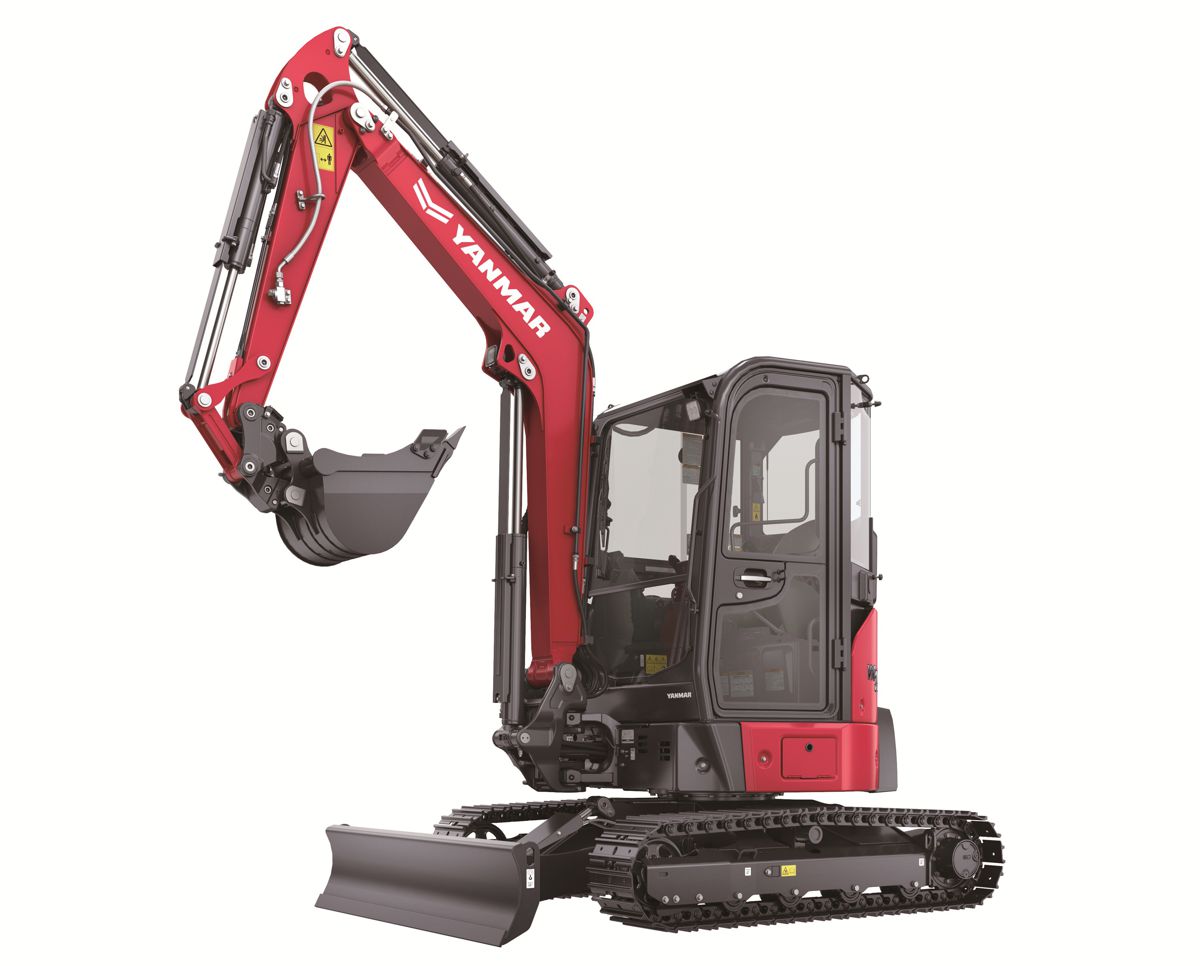
That ambition rests on a real foundation. Yanmar is an award-winning leader in mini excavators, and its 2019 acquisition of ASV brought the respected Posi-Track undercarriage into the fold, giving it a serious platform in compact track loaders. At CONEXPO 2026 the company unified its ASV and Yanmar compact track loader ranges under a single brand and confirmed it had already invested more than US$32 million in its Grand Rapids facility, with a further US$30 million planned over five years to expand compact engineering and production in North America.
What Yanmar does not possess at the same scale is Hitachi’s global full-line infrastructure, its worldwide service reach and its expanding value-chain businesses in parts, remanufacturing, rentals and used equipment. Access to that machinery, without surrendering its own brand or dealers, is the strategic prize.
Yamamoto tied the letter of intent to that logic, saying the companies would “explore synergy-generating collaborations and further enhance the value we provide in our compact equipment business.” For a mini-excavator leader with credible ambitions to lead compact equipment worldwide, a distribution and service partner of Hitachi’s scale addresses the one dimension where specialists typically stall, the leap from category strength to global coverage.
Open Co-Creation and the LANDCROS Reinvention
The deal cannot be separated from the identity shift under way at Hitachi Construction Machinery. The company will change its trade name and corporate brand to LANDCROS on 1 April 2027, a name assembled from LAND together with the values of Customer, Reliable, Open and Solutions. The emphasis on openness is not marketing gloss layered over an unchanged business.
It reflects a structural reality, because Hitachi Ltd has steadily divested its holding, selling down from a majority stake through a 2022 transaction with Itochu and Japan Industrial Partners to roughly a tenth of the shares today, with Itochu now the largest shareholder. Under the parent’s naming conventions, a company that is no longer majority-owned cannot indefinitely carry the Hitachi brand, and the rebrand formalises a genuine independence that management has likened to a second founding.
That independence is being channelled into a partnership-led operating model rather than a purely in-house one. Senzaki linked the Yanmar agreement directly to the new identity, noting that “Our new corporate brand, ‘LANDCROS,’ embodies one of our core desires to openly co-create new businesses and value with our customers and partners, and develop together,” and describing the letter of intent as “one such initiative that embodies this commitment to open co-creation.”
The approach is already visible elsewhere in the group, from a memorandum with autonomous-haulage firm Pronto for mixed-fleet mine automation to an autonomous haulage solution developed with Wenco and investments in technology startups. Compact equipment fits the same template, treating external partnership as the primary mechanism for filling capability gaps and reaching customers, rather than the exception.
Partnership as the New Consolidation Playbook
The Yanmar and Hitachi letter of intent is best understood as part of a broader realignment in how the largest manufacturers grow. The compact market remains only moderately consolidated, and the biggest players are increasingly closing gaps through alliances rather than through the outright mergers that dominated earlier cycles.
Doosan Bobcat and HD Hyundai Infracore strengthened their partnership to broaden compact offerings, Bobcat has committed some US$300 million to a new compact-loader plant in Mexico serving North American demand, and technology tie-ups with autonomy and telematics specialists have become routine across the sector. What links these moves is a preference for capability and coverage over ownership, allowing companies to add range and reach while preserving distinct brands, dealer bases and balance sheets.
For infrastructure owners, contractors and investors, the implication is a market where the boundary between full-line manufacturers and specialists grows more porous, and where the value increasingly sits in networks of partners rather than in single vertically integrated firms. A Hitachi that can offer a competitive compact range alongside its heavy and mining machinery becomes a more complete counterparty for large fleet buyers and rental houses, and a Yanmar with global reach becomes a more serious challenger to the incumbent compact leaders.
The exploratory nature of the agreement counsels against overstating what has been decided, since no products, volumes or financial terms have been confirmed. What has been established is a direction, and it is one that industry leaders assessing their own compact strategies would be unwise to ignore. The manufacturers best placed for the next decade may be those that treat partnership, not acquisition, as the fastest credible route into the segment where the market is growing quickest.
Key Industry Questions
- What exactly have Yanmar and Hitachi agreed, and how binding is it? The two companies signed a letter of intent on 23 July 2026 to explore potential collaboration in compact equipment, combining Yanmar Compact Equipment’s specialism with Hitachi Construction Machinery’s global infrastructure. A letter of intent is an exploratory, generally non-binding framework rather than a completed transaction, and the parties disclosed no products, volumes, financial terms or timelines. Both have committed to preserving separate brand identities and independent dealer networks, which indicates a collaboration model rather than a merger or takeover. In practical terms, the agreement authorises the two firms to study where cooperation could add value, whether in product development, supply, distribution or service, before deciding whether and how to formalise specific arrangements.
- Why does the compact equipment segment matter so much strategically? Compact machinery has become the growth engine of the earthmoving market. Mini and compact excavators alone represent more than 45 per cent of compact-equipment volume, and the overall segment is forecast to climb toward the mid-fifties of billions of dollars by the early 2030s. Demand concentrates in urban infrastructure, residential construction and the rental channel, and electrification is arriving first in these smaller classes where battery packages are commercially viable. High unit volumes, strong dealer dependence and resale-value sensitivity make the segment both lucrative and defensible. For a full-line manufacturer, a weak compact position is a strategic liability rather than a minor gap, which is why partnerships and plant investments are clustering here.
- What does Hitachi gain that it could not readily build alone? Hitachi’s strength lies in large excavators, dump trucks, wheel loaders and mining equipment, leaving its compact range comparatively thin, especially in compact track loaders and compact wheel loaders. Building a competitive compact portfolio organically is slow and capital-intensive, while acquiring one is costly and disruptive. Collaborating with Yanmar offers a faster, lower-risk route to a broader compact offer, supporting Hitachi’s stated ambition to reach the industry’s top three by 2030. It also strengthens the company’s hand in North America, where Yanmar already operates. The arrangement lets Hitachi add credible compact capability without the balance-sheet strain or integration risk of a full acquisition.
- How does the 2022 Deere split shape this deal? The dissolution of the Deere-Hitachi joint venture on 28 February 2022 ended a distribution and manufacturing relationship that had run since 1988 across the Americas. Deere acquired the shared factories, and Hitachi Construction Machinery Americas rebuilt an independent dealer and service network from Newnan, Georgia, importing machines from Japan. That transition left Hitachi more exposed at the high-volume compact end in a critical region. Yanmar’s existing North American presence, run from Grand Rapids, Minnesota, offers a way to strengthen Hitachi’s compact position precisely where the Deere separation left it most stretched, without reconstructing an entire distribution layer from scratch.
- What is Yanmar getting from Hitachi? Yanmar leads in mini excavators and has expanded into compact track loaders through its 2019 acquisition of ASV and the Posi-Track undercarriage, backing that growth with tens of millions of dollars of investment in its Grand Rapids facility. What it lacks at comparable scale is Hitachi’s global full-line distribution, worldwide service reach and expanding value-chain businesses in parts, remanufacturing, rentals and used equipment. Access to that infrastructure, without surrendering its own brand or dealer relationships, would help Yanmar convert category leadership in compact machines into genuine global coverage. For a specialist aiming to lead compact equipment worldwide, that distribution reach addresses the dimension where specialists most often stall.
- Will dealers or customer-facing brands change as a result? Both companies have stated they will maintain and respect the uniqueness of each brand identity and continue to run their independent dealer networks. On the information released, customers should not expect brands to merge or dealer relationships to be consolidated. The likelier outcomes of any eventual collaboration are additional product choice and expanded service coverage rather than disruption to existing sales channels. That said, the agreement remains exploratory, so specific arrangements, including any co-developed products or shared supply, have not been defined. Buyers and dealers will need to watch for concrete announcements before drawing firm conclusions about their own supply relationships.
- What is LANDCROS and why is the rebrand relevant here? Hitachi Construction Machinery will change its trade name and corporate brand to LANDCROS on 1 April 2027, a name combining LAND with Customer, Reliable, Open and Solutions. The change reflects a structural shift, because Hitachi Ltd has divested most of its holding, with Itochu now the largest shareholder, and a company that is no longer majority-owned by Hitachi cannot indefinitely use the Hitachi brand. The emphasis on openness signals a partnership-led strategy, and the Yanmar letter of intent is presented as an early example. Understanding the rebrand explains why the company frames external collaboration as central rather than incidental to its future.
- How does this compare with other consolidation moves in the sector? The agreement fits a wider pattern of consolidation through partnership rather than outright merger. Doosan Bobcat and HD Hyundai Infracore have strengthened cooperation to broaden compact offerings, Bobcat is investing around US$300 million in a Mexican compact-loader plant, and technology tie-ups with autonomy and telematics specialists have become common. The shared logic is a preference for capability and market reach over ownership, adding range while preserving distinct brands and balance sheets. The Yanmar and Hitachi move applies that logic to the compact segment specifically, suggesting that alliances may increasingly be the default route into compact equipment for the industry’s largest full-line players.
Strategic Takeaways
- Compact equipment has become the segment where volume, urban demand, rental adoption and electrification concentrate, and any full-line manufacturer weak there now carries a strategic liability rather than a minor gap.
- Hitachi’s choice to partner rather than acquire or build signals that alliances may become the fastest credible route into compact machinery, a pattern buyers and competitors should expect to see repeated.
- The 2022 Deere separation continues to shape Hitachi’s strategy, and the Yanmar collaboration is best read as part of a multi-year rebuild of its compact position, most acutely in the Americas.
- Yanmar’s trajectory, from mini-excavator leadership through the ASV acquisition to a unified compact range, shows how a specialist can become a global challenger if it secures distribution reach, which is precisely what a Hitachi partnership could supply.
- The LANDCROS rebrand is more than cosmetic, reflecting genuine independence from Hitachi Ltd and a deliberate pivot to open co-creation, and it frames how the company will pursue growth toward its top-three-by-2030 target.