Renewing our Ageing Assets for Better Future Outcomes
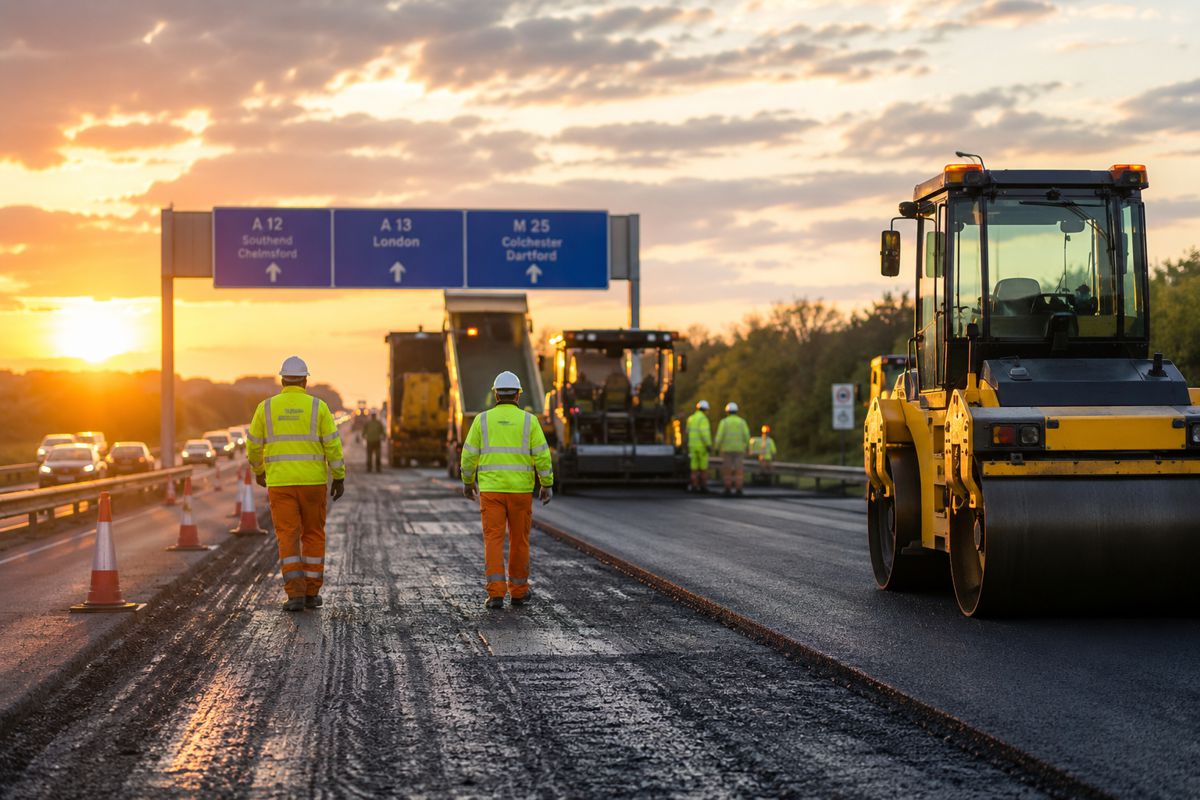
The UK’s road and street networks are under increasing strain, as the number of vehicles on the road now surpasses 40 million. Much modern infrastructure was built around 50 years ago and is now being tested far beyond the conditions it was designed to handle. The result is an urgent and growing need for interventions across many essential parts of the network.
According to the National Engineering Policy Centre, 17% of the UK’s local road network is in poor condition, while congestion and deteriorating road surfacing cost the UK economy an estimated £30 billion each year. These challenges are being compounded by the increasing severity and frequency of climate events, placing further pressure on assets.
In this context, interventions cannot be seen as a short term fix. For asset owners who are likely already planning over the long term through contracts, funding cycles and investment strategies the challenge is ensuring that each of these interventions delivers the greatest possible value over time. This is particularly the case in an environment where funding is constrained and expectations on performance are rising.
A systems approach to renewal
Renewal programmes present an opportunity to think more holistically about how the network functions for people. Rather than focusing on individual assets in isolation, there is growing recognition of the need for a systems approach that considers how roads, users and surrounding infrastructure, communities and the environment integrate and interact.
This starts with the human experience. Roads and streets are not simply engineering assets, they are spaces that support movement, access to services and economic activity. Taking a systems view allows asset owners to plan interventions that not only improve asset longevity and resilience but also enhance connectivity, safety, reliability and accessibility for all users. This approach also supports wider transport objectives..
For example, renewing a major transport corridor can improve surface quality and enhance resilience, which in turn supports more reliable bus services, improves inclusive accessibility, and creates opportunities for increased active travel. Considering these elements together allows investment to deliver multiple outcomes across society, rather than addressing asset infrastructure issues in isolation.
This approach is increasingly being reflected in how major programmes are planned and delivered. Coordinating works across asset classes can help maximise the value of investment and minimise disruption, particularly when multiple interventions are brought together within a single delivery programme. By considering these opportunities upfront, asset owners can achieve a smoother delivery and greater overall benefit. This kind of joined up thinking is now being adopted more widely across highway authorities.
Maximising value from constrained funding
For many asset owners, the central challenge is not whether to invest, but how to make limited funding go further. They must navigate the tension between addressing urgent interventions and pursuing a strategic, long‑term approach, while balancing cost, risk and performance.
This requires a shift away from viewing maintenance, renewals and capacity improvements as separate activities. In reality, they are deeply interconnected. Bringing them together within a single investment strategy helps ensure that each intervention strengthens the network as a whole.
There is also a need to consider how funding models support this approach. By taking a multiyear view, asset owners can prioritise interventions more effectively and deliver better value over time. Ultimately, the goal is to maximise the return on every pound spent. This means planning works in a way that reduces repeat interventions, improves resilience and extends asset life, while also delivering tangible benefits for users.
The role of digital in better decision making
Delivering this level of value depends on having a clear understanding of the network and how it is performing. Having the right data has always been important but it is becoming essential now that digital capability is becoming increasingly important. Digital tools enable asset owners to build a more complete picture of their networks, capturing data on condition, usage and risk. This creates a stronger evidence base for decision making, allowing teams to identify where interventions are needed and when they will have the greatest impact.
They also support scenario testing, helping organisations explore different investment options and understand the long term implications of their choices. For example, digital models can be used to assess how maintenance backlogs evolve, how different funding levels affect asset condition, and how the timing of interventions influences performance.
The insight gained from this data is critical in a constrained funding environment. By improving the accuracy and transparency of decision making, digital tools help ensure that investment is targeted where it will deliver the greatest benefit. They also support more proactive approaches, reducing the risk of failure and avoiding the higher costs associated with reactive interventions.
The opportunity ahead
Renewing the UK’s ageing infrastructure is a significant challenge, particularly in a constrained funding environment, but it is also a chance to reset how we plan and invest.
A systems approach, underpinned by better data and long term planning, allows asset owners to prioritise effectively and make more confident decisions about where limited funding will have the greatest impact. Done well, renewal creates a network that is more resilient, more efficient and better aligned with how people use it.
Article by Lorna Ball, Roads and Streets Leader, Arup UKIMEA
Key Industry Questions
- Why is the UK’s ageing road infrastructure becoming a critical investment priority? Much of the UK’s road infrastructure was built several decades ago and is now operating well beyond its original design assumptions. Increased traffic volumes, heavier vehicles and more frequent extreme weather events are accelerating deterioration across highways, bridges, drainage systems and associated assets. Rather than simply replacing worn-out infrastructure, asset owners increasingly need to consider how every investment improves resilience, network performance and long-term value. The challenge is no longer just maintaining roads, but ensuring transport infrastructure continues to support economic growth, mobility and sustainability despite constrained public funding.
- How can a systems approach improve highway asset management? A systems approach views roads as part of a wider transport ecosystem rather than as isolated engineering assets. Instead of renewing pavements, drainage, bridges or junctions independently, highway authorities can coordinate interventions to improve network resilience, safety, accessibility and user experience simultaneously. Integrating engineering decisions with public transport, active travel, utilities and community needs allows investment to deliver multiple benefits while reducing disruption and avoiding repeated construction work.
- Why is long-term asset planning more effective than reactive maintenance? Reactive repairs often address immediate defects but rarely provide the best value over an asset’s lifetime. Long-term planning enables highway authorities to schedule renewals before failures become critical, reducing emergency repairs, traffic disruption and whole-life costs. Multi-year investment strategies also improve procurement efficiency, allow better contractor planning and help extend asset life while delivering more predictable network performance.
- What role does digital technology play in modern infrastructure renewal? Digital asset management platforms, condition monitoring, predictive analytics and digital twins are transforming infrastructure decision-making. By combining inspection data, traffic information, climate risk and maintenance history, asset owners can identify where investment will have the greatest long-term benefit. Digital modelling also enables scenario testing, allowing authorities to evaluate different funding strategies and understand how maintenance decisions will affect network performance years into the future.
- How can highway authorities maximise value when funding is limited? Limited budgets require investment decisions to focus on whole-life value rather than lowest initial cost. Coordinating maintenance, renewal and capacity improvements within a single programme reduces duplicated work and minimises disruption. Prioritising interventions based on risk, asset condition and user impact allows authorities to direct funding where it delivers the greatest operational, economic and societal return.
- How is climate change changing road renewal strategies? Increasingly frequent flooding, heatwaves and extreme weather events are placing additional pressure on ageing infrastructure. Renewal programmes must therefore improve resilience alongside asset condition. This may include enhanced drainage, more durable materials, improved pavement design and greater consideration of future climate risks. Incorporating resilience into today’s investment decisions reduces future maintenance costs and helps ensure infrastructure remains reliable throughout its design life.
- Why is better data becoming essential for infrastructure investment decisions? Accurate, timely data enables infrastructure owners to move from reactive maintenance towards evidence-based asset management. Information on condition, usage, deterioration rates and operational performance supports more transparent investment decisions and helps justify funding priorities. Better data also improves confidence in long-term planning, allowing organisations to demonstrate measurable value from public investment.
- What does successful infrastructure renewal look like over the next decade? Successful renewal will be measured by far more than resurfaced roads. Future programmes will increasingly focus on delivering resilient, digitally managed transport networks that support economic productivity, reduce maintenance backlogs, improve safety and accommodate changing travel patterns. Investment strategies that integrate engineering excellence with data-driven decision making and long-term planning are likely to deliver the greatest value for both taxpayers and road users.
Strategic Takeaways
- Renewal should be viewed as a strategic investment programme rather than a maintenance exercise.
- A systems approach enables infrastructure investment to deliver wider benefits for mobility, resilience, accessibility and economic growth.
- Digital asset management and predictive analytics are becoming essential tools for prioritising limited investment.
- Coordinated, multi-year renewal programmes reduce lifecycle costs while minimising disruption to road users.
- Future-ready infrastructure will depend on combining engineering expertise, data intelligence and climate resilience within every investment decision.