Best Practices for Managing Asphalt Repairs in Large Industrial Parks
Extensive industrial parks are under constant strain from heavy freight, forklifts, and delivery vehicles. This results in surface wear, causing logistics delays and safety risks.
Since pavement conditions directly impact operational efficiency, facility managers need to move from a reactive patching approach to a structured asset management approach.
Here are three best practices that can help prolong pavement life and maintain smooth operations.
Implement a Preventive Maintenance and Inspection Schedule
Detecting pavement damage early is the most cost-effective way to manage large industrial asphalt surfaces. Parks should conduct regular inspections at least twice annually. This is preferably after winter and summer, when temperature fluctuations accelerate cracking.
Managers must watch for hairline fissures and alligator cracking alongside depressions, pooled water, and edge damage. It’s vital to use a checklist and document each issue with photos, since small cracks from truck traffic spread quickly. Classifying this damage by severity helps prioritize repairs and support budget proposals.
Transforming inspection results into a searchable asset management database enables managers to monitor zone deterioration over time. Facilities can transition from reactive scheduling to predictive budgeting by assessing a localized Pavement Condition Index (PCI) during each semi-annual evaluation.
This ensures maintenance funds are used before surfaces reach structural failure, where costs rise sharply. Establishing baseline data justifies minor interventions to stakeholders and maximizes the long-term value of the park’s infrastructure.
Choose High-Durability Materials and Match Methods to the Situation
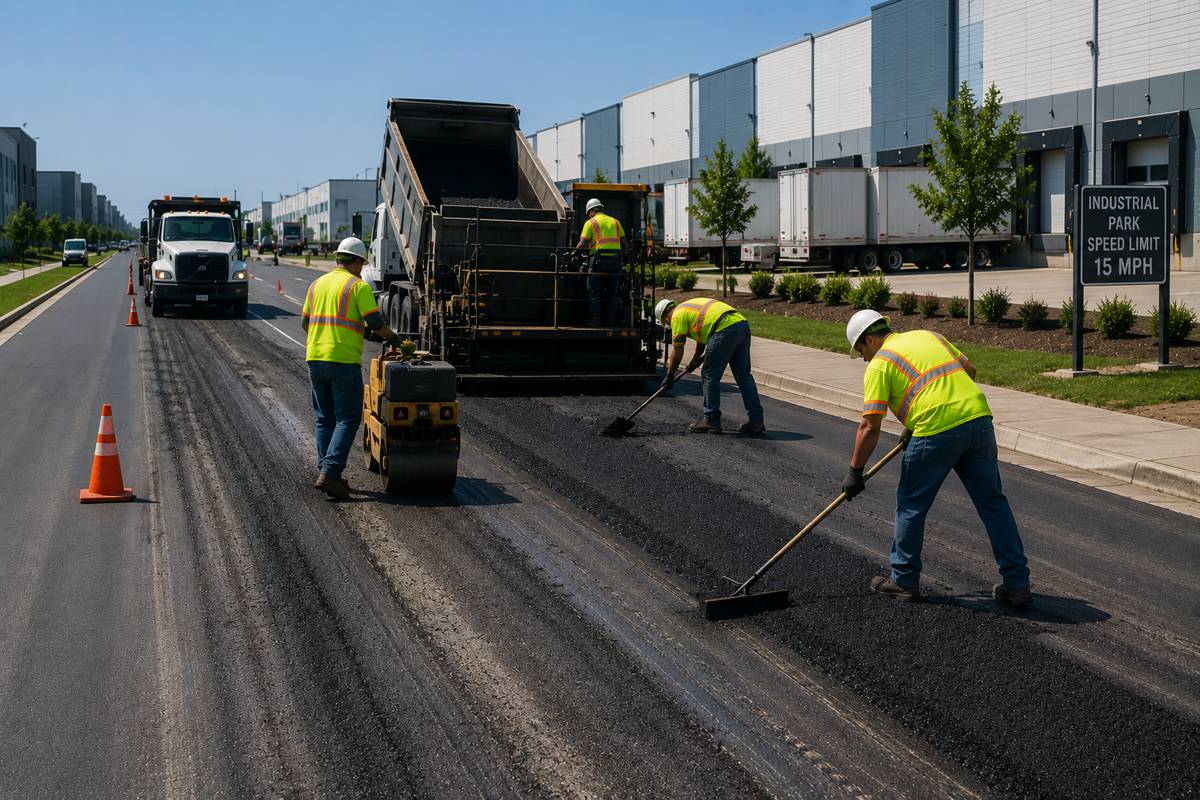
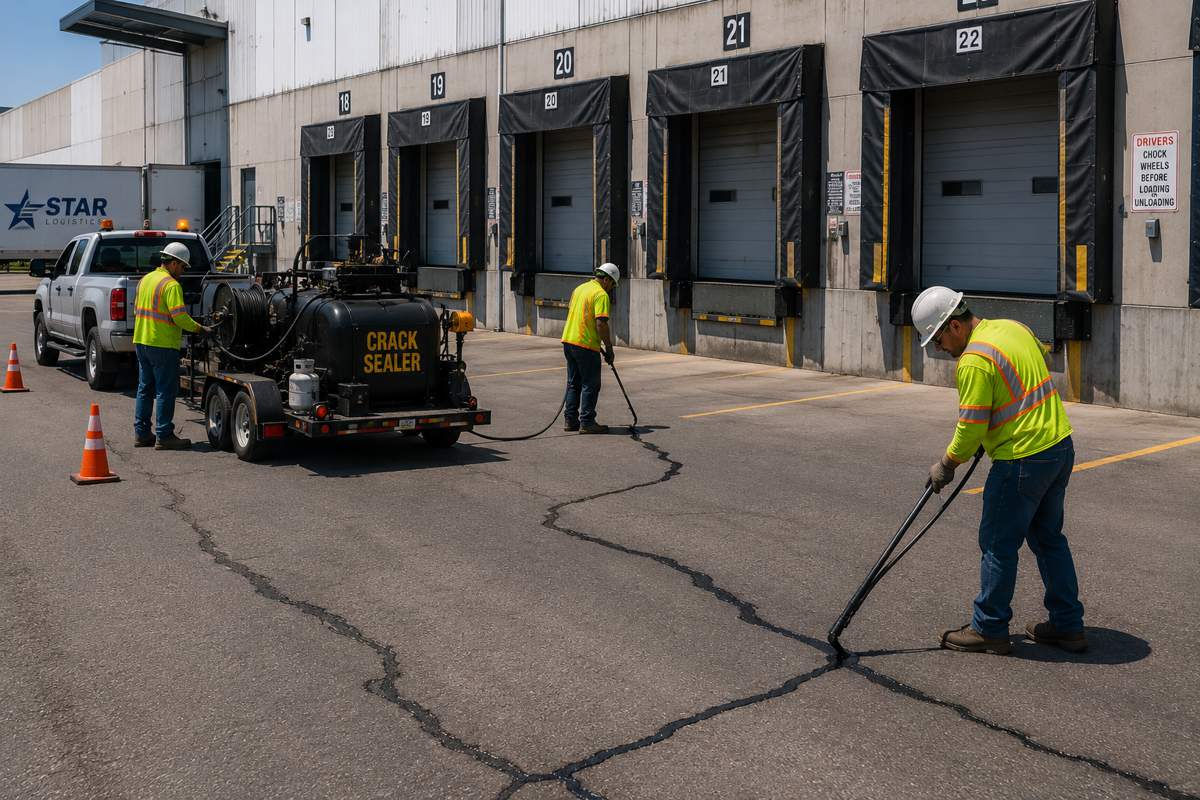
Industrial traffic requires robust solutions that match repair methods to specific traffic loads and damage categories. Crack sealing prevents water from penetrating the base layer of narrow linear cracks less than an inch wide, whereas pothole repairs involve clearing the hole, applying a tack coat, and compacting either hot or cold mix.
To address extensive surface aging, infrared repair warms the existing asphalt to integrate new material flawlessly. High-traffic areas such as container staging locations, conversely, need full-depth patching. This entails removing damaged pavement down to the subgrade and replacing it with a fresh hot mix that lasts years longer than shallow patches, despite higher upfront costs.
The use of more advanced materials and consideration of local climate effects also play an important role in long-term durability. Asphalt mixes modified with polymers, rubberized, or reinforced with fibers offer strong resistance to rutting and deformation. They also withstand fuel spills when subjected to heavy loads.
In regions with freeze-thaw cycles, similar to those that require asphalt repair in Cincinnati, drainage and base strength must be prioritized, as water infiltration is the leading cause of premature failure in colder climates.
Strategize Phased Execution and Traffic Management
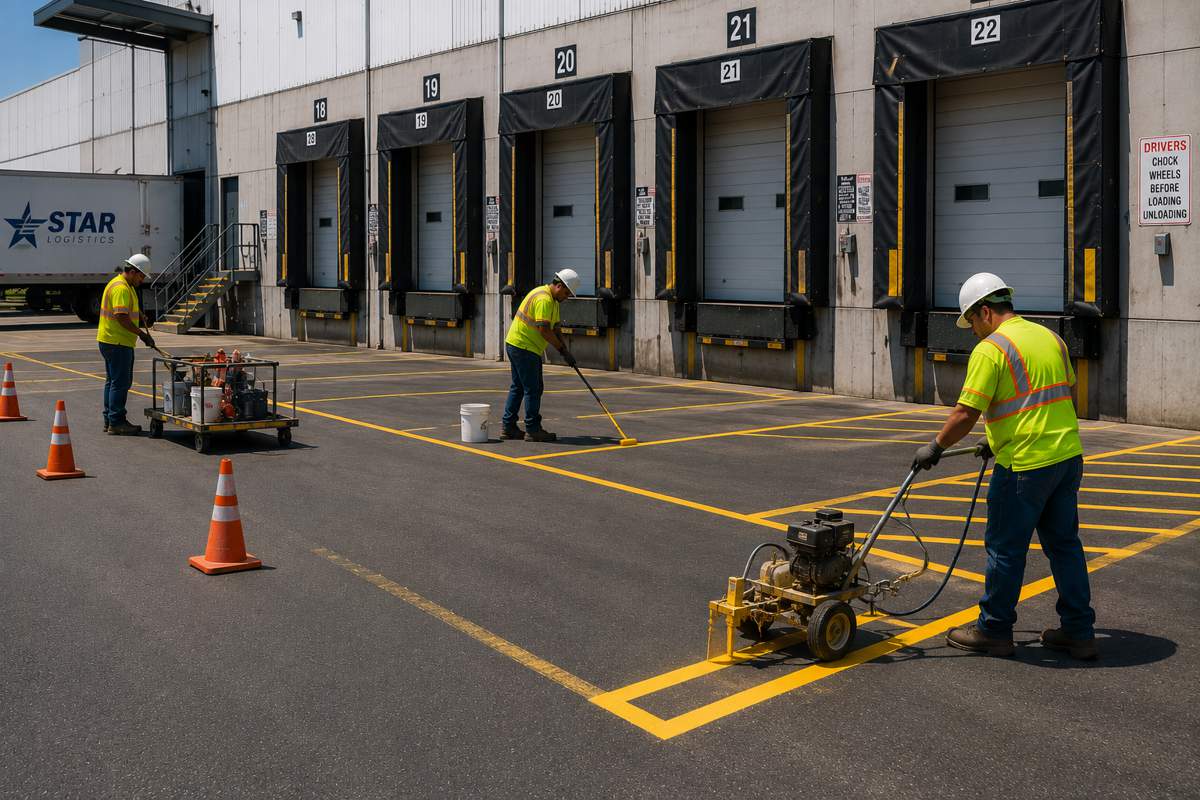
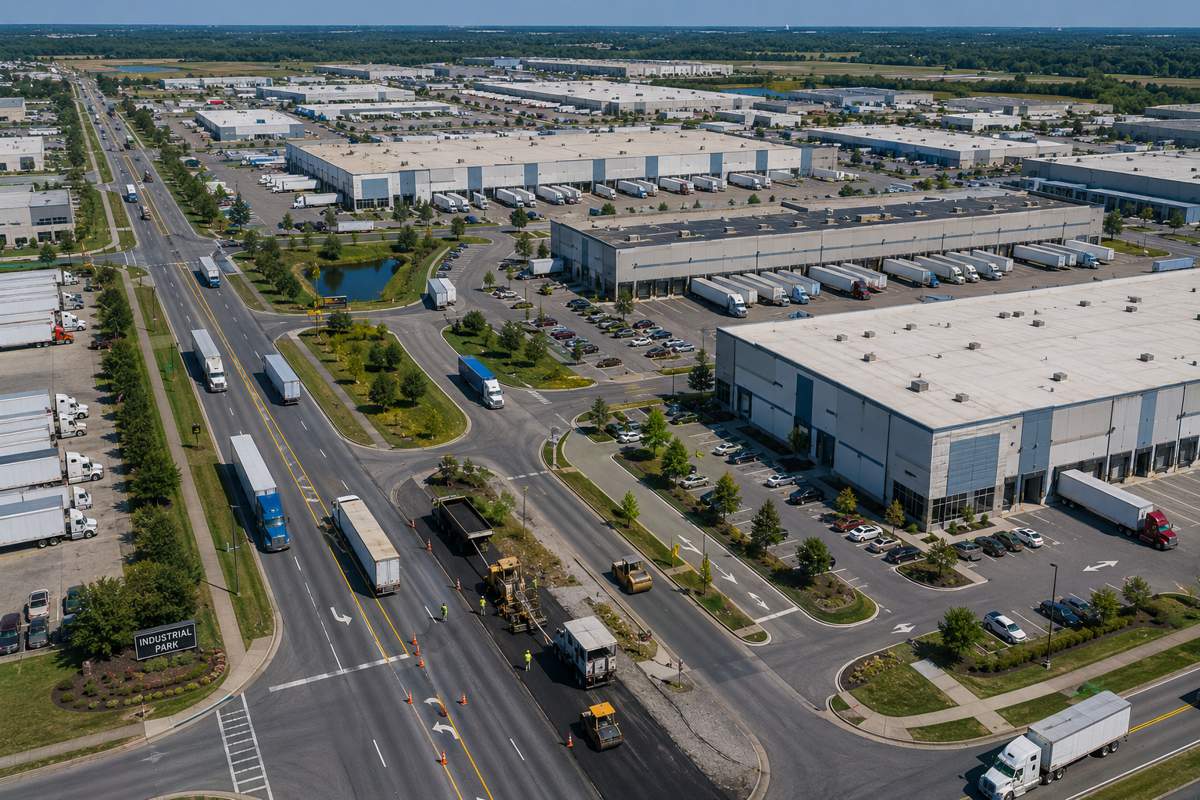
Pavement repairs in a busy logistics hub require careful planning to avoid disrupting essential supply links. Facility managers should partition the property into separate areas, employing night-time operations or segmented construction to ensure loading docks stay accessible.
Strategically schedule major work to take place outside of the busy commercial traffic hours. Effective communication is also vital. Engage with tenants at least 2 weeks in advance, provide maps of restricted areas and detours, and display digital signage at park entry points.
Ensuring a secure environment is crucial during execution, requiring bright paint and physical barriers to delineate repair areas. Managers should ensure quality by allowing adequate cure time before reopening zones to truck traffic because rushing this process can damage a new patch within a few days.
Document all completion dates and gather warranty information from the contractor to protect the investment. Meticulous documentation also enables data-driven decisions that improve efficiency and reduce downtime.
Endnote
Maintaining an industrial park’s asphalt is an ongoing investment in safety, efficiency, and value. A comprehensive approach reduces emergency repair costs and prevents supply chain delays. Using high-quality materials and coordinated execution ensures repairs withstand heavy freight without disrupting logistics, keeping industrial hubs safe and profitable for years.