Xwatch Expands into Chile’s Mining Sector Through Strategic Partnership
Mining companies around the world continue to face mounting pressure to improve safety, productivity and operational consistency while working with increasingly complex fleets of heavy equipment. In major mining nations such as Chile, where some of the world’s largest open-pit operations rely on excavators, haulage systems and specialist lifting equipment operating around the clock, machine safety technologies are becoming an increasingly important component of modern site management.
Xwatch Safety Solutions, part of Hexagon, has secured a significant foothold in the Chilean market through a new partnership development with Santiago-based MC SYSTEM SpA. The local technology specialist has selected the XW4 MK2 as its primary Xwatch offering for customers across Chile, combining the UK-developed safety platform with its established expertise in machine control, GNSS positioning, surveying systems and Leica Geosystems technologies.
The decision arrives at a time when Chile remains one of the world’s most influential mining economies. According to the International Energy Agency, demand for minerals such as copper, lithium and other critical materials is expected to grow substantially over the coming decades as electrification, renewable energy infrastructure and battery manufacturing accelerate globally. As mining operations expand and equipment becomes larger and more sophisticated, technologies that assist operators in maintaining safe working envelopes are attracting increasing attention across the sector.
Briefing
- MC SYSTEM SpA has selected the XW4 MK2 as its principal Xwatch safety solution for the Chilean market.
- Two systems have already been sold, with eight additional units ordered to establish local inventory.
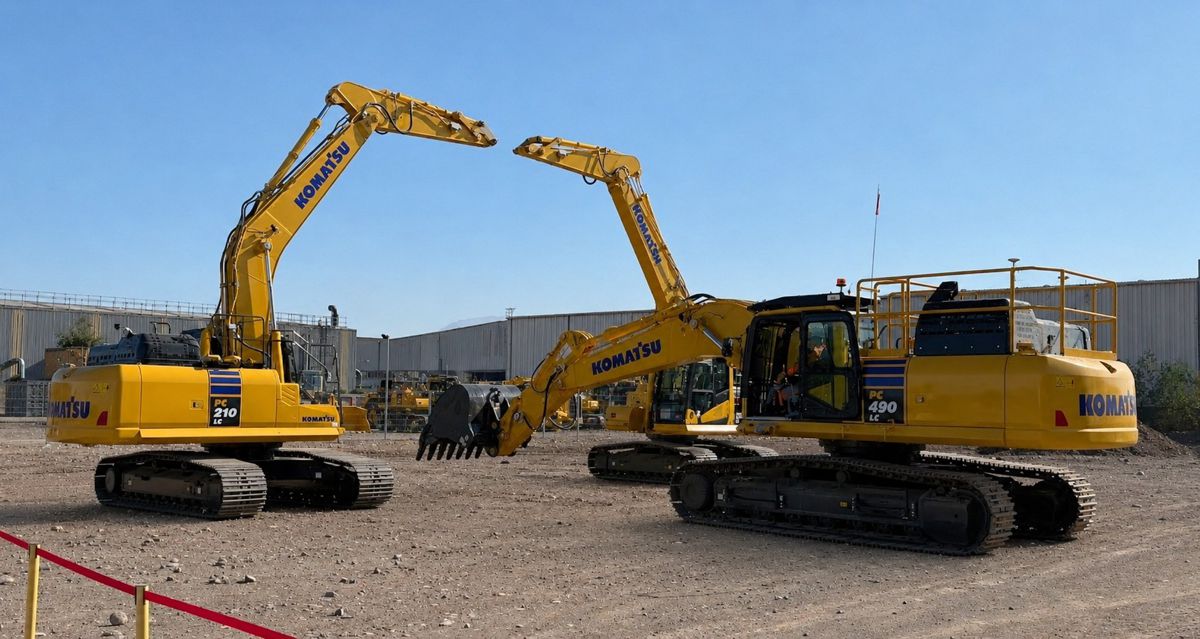
- The technology has been demonstrated on a Komatsu PC490 excavator integrated with Leica machine control systems.
- The partnership targets opportunities across Chile’s mining sector and potentially other heavy equipment applications.
- Spanish-language support materials and localisation features are being introduced to improve operator adoption.
Mining Safety Technology Moves Further Into Mainstream Operations
Safety remains one of the defining challenges within modern mining and heavy civil construction projects. Large excavators often operate close to overhead infrastructure, restricted excavation zones, haul roads and personnel working nearby. Even with highly experienced operators, maintaining situational awareness around machine movement can become increasingly demanding as project complexity increases.
As a result, the industry has seen a steady increase in the adoption of machine guidance, collision avoidance, operator assistance and movement restriction technologies. Major mining organisations have invested heavily in digital transformation initiatives aimed at reducing incidents while improving equipment utilisation. Machine control systems, GNSS positioning technologies and automated safety monitoring solutions now form part of broader digital ecosystems that connect equipment, operators and site managers in real time.
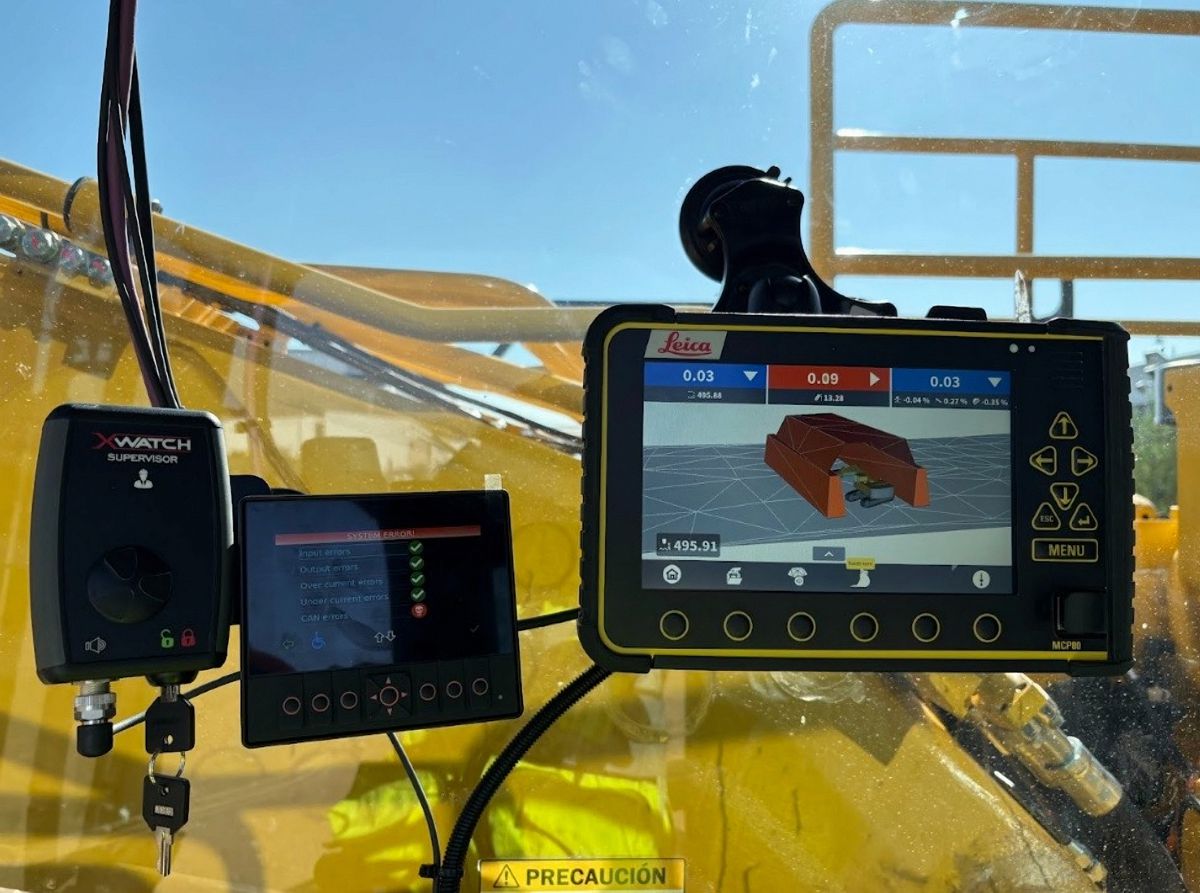
The XW4 MK2 enters this environment as a machine safety solution focused on controlling machine movement through height and rotation restrictions. Its ability to work alongside Leica MC1 machine control technology was a significant factor in MC SYSTEM SpA’s decision to standardise around the platform for Chilean customers.
Why Chile Represents a Strategic Growth Market
Chile occupies a unique position within the global mining landscape. The country produces approximately a quarter of the world’s copper and continues to attract investment across copper, lithium, gold and industrial mineral projects. Massive operations located in the Atacama Desert routinely deploy some of the largest earthmoving equipment operating anywhere in the world.
Such environments present distinct operational challenges. Equipment must work safely in remote locations, often under harsh climatic conditions and within highly regulated operating frameworks. Site operators require technology that not only performs reliably but can also be supported locally when maintenance, installation or training requirements arise.
That local capability is precisely where MC SYSTEM SpA brings value. Based in Santiago, the company has developed expertise supporting customers with machine control, laser positioning, GNSS and surveying solutions. By holding inventory locally and providing technical support in-country, the organisation aims to reduce barriers to adoption for Chilean customers evaluating new safety technologies.
Early market acceptance appears encouraging. Two XW4 MK2 systems have already been sold, while an additional order for eight units has been placed to establish stock availability and support anticipated customer demand.
Real-World Demonstration Creates Momentum
Technology demonstrations often determine whether a promising solution gains traction in heavy industry. Mining operators typically prefer seeing equipment perform under realistic working conditions before making purchasing decisions, particularly when safety-critical systems are involved.
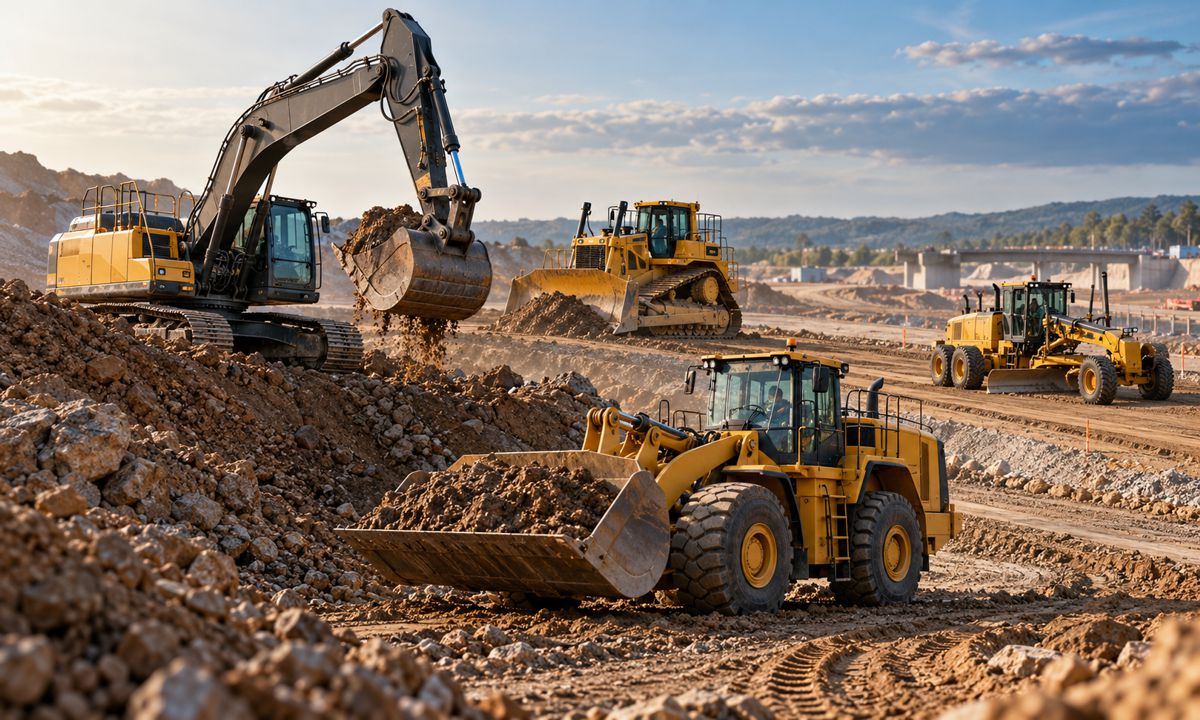
A recent installation involving an Xwatch system integrated with Leica technology on a Komatsu PC490 excavator has therefore become a significant showcase project in Chile. The machine is currently being demonstrated to a mining contractor, allowing prospective users to observe how height control and rotation control functions operate on a large excavator within a demanding mining environment.
The significance extends beyond a single demonstration. Successful deployment on large production equipment helps establish credibility among contractors, equipment owners and project managers who may be evaluating similar technologies for broader fleet implementation.
According to Dan Leaney, Head of Global Sales at Xwatch Safety Solutions, the application highlights the practical intersection between safety technology and machine control systems in heavy equipment environments. “The XW4 MK2 gives customers height and rotation control in one system, and the compatibility with Leica MC1 is a key part of this story.”
Integration Becoming the New Standard
One of the most significant trends shaping construction and mining technology today is interoperability. Site operators increasingly expect different digital systems to exchange information seamlessly rather than operating as isolated platforms.
Machine guidance systems, fleet management software, positioning technologies and safety solutions are gradually converging into integrated operational environments. This shift reduces duplication, improves workflow efficiency and allows operators to interact with fewer independent systems inside the cab.
The compatibility between Xwatch and Leica MC1 aligns with this broader industry direction. Organisations that have already invested in machine control infrastructure are often more willing to adopt complementary technologies when integration pathways are straightforward and operational disruption remains minimal.
MC SYSTEM SpA’s decision to concentrate on a single flagship model reflects this thinking. Rather than presenting multiple alternatives, the company intends to simplify deployment around a solution that combines height control, slew control and machine control compatibility within one package.
Local Support Remains Critical for Technology Adoption
Even the most capable technology can struggle to gain acceptance without adequate training and support. Mining operations frequently involve multilingual workforces, rotating shifts and varying levels of technical familiarity among operators.
Recognising this reality, MC SYSTEM SpA has developed Spanish-language training materials and video resources designed to help operators understand system functionality and practical usage. Meanwhile, the Xwatch MKII platform already includes Spanish language support within its operating interface, providing additional accessibility for local users.
Daniel Arriagada Vivar, Service and Support Engineer at MC SYSTEM SpA, highlighted the importance of practical understanding during implementation. “The demonstration on the Komatsu PC490 is important because it allows customers to see the system on a large excavator in a mining environment. This is where the conversation becomes real.”
His comments reflect a broader reality across industrial technology adoption. Successful deployment often depends as much on operator confidence and understanding as it does on the technical specification itself.
Opportunities Beyond Excavators
While excavator applications currently represent the immediate focus, discussions are already expanding into other categories of mining equipment. MC SYSTEM SpA is reportedly evaluating potential Xwatch solutions for boom trucks used within Chilean mining operations, particularly where lifting activities and elevated work platforms are involved.
This development is notable because it signals broader interest in movement restriction technologies across multiple equipment classes. As regulatory scrutiny increases and companies pursue stronger safety performance metrics, demand may extend beyond traditional excavation applications into lifting, materials handling and maintenance operations.
The ability to adapt safety technologies across diverse machine types could become an increasingly valuable differentiator as mining companies pursue standardised safety strategies across entire fleets rather than individual asset categories.
Building a Foundation for Long-Term Growth
The Chilean agreement represents more than a regional distribution arrangement. It reflects the continuing internationalisation of machine safety technologies as mining and construction operators seek practical tools that support safer and more predictable equipment operation.
For Xwatch, partnering with an established local technology specialist provides direct access to one of South America’s most influential mining markets. For MC SYSTEM SpA, the agreement expands its portfolio with a safety-focused offering that complements its existing expertise in positioning and machine control technologies.
As mining companies continue investing in digital transformation, safety systems are becoming increasingly interconnected with broader operational technology strategies. Height control, rotation management, machine guidance and positioning technologies are no longer separate conversations. They are becoming part of a single operational framework designed to improve visibility, reduce risk and support more efficient project delivery.
The early sales achieved in Chile, combined with local stock commitments and ongoing equipment demonstrations, suggest that this partnership is establishing a practical foundation for future growth. In an industry where trust is earned through proven performance rather than promises, real-world deployments often speak louder than marketing campaigns. The next phase will be determined not by announcements, but by how these systems perform on the mine sites, excavation projects and industrial operations where safety and productivity must coexist every day.