Teaching Traffic Signals to Think with Miovision’s AI Optimisation Platform
Urban mobility is changing faster than many traffic management systems can keep pace with. New housing developments, changing commuting patterns, growing demand for public transport, active travel initiatives and evolving freight movements are constantly reshaping how roads are used. Yet despite these shifts, signal timing plans at many intersections are still updated only every few years, often through labour-intensive processes that consume significant budgets and engineering resources.
The challenge facing transportation agencies is no longer simply collecting traffic data, as most cities already have access to vast quantities of information. The greater challenge lies in transforming that data into practical operational decisions and implementing changes quickly enough to keep networks performing efficiently. The latest development from Miovision seeks to address precisely that gap by bringing artificial intelligence, traffic engineering analysis, signal optimisation and controller management together within a single cloud-based environment.
Briefing
- Miovision has launched an integrated AI-driven traffic signal optimisation and deployment platform on Miovision One.
- The solution combines Mateo, Signal Optimizer and Controller Manager into a unified workflow covering analysis, optimisation, deployment and validation.
- Traditional signal retiming projects can cost thousands of dollars per intersection and often occur only every three to five years.
- The platform aims to reduce retiming and deployment effort by up to 50% while maintaining engineering oversight.
- Growing adoption of AI and connected infrastructure is accelerating a wider shift towards proactive traffic management across global transportation networks.
The Hidden Infrastructure Behind Urban Mobility
Traffic signals rarely attract public attention when they function properly. Nevertheless, they remain one of the most influential pieces of urban infrastructure. A well-coordinated network can reduce delays, improve journey reliability, support public transport operations, lower vehicle emissions and enhance safety for pedestrians and cyclists. Poorly timed signals achieve the opposite effect, creating bottlenecks that ripple across entire corridors and districts.
Research from organisations including the Institute of Transportation Engineers and the Transportation Research Board has consistently demonstrated that signal optimisation remains among the most cost-effective traffic management interventions available to agencies. Unlike major infrastructure projects requiring years of planning and construction, retiming programmes can often deliver measurable improvements using existing assets.
The difficulty lies in execution. According to Miovision, many agencies continue to depend on disconnected software tools, spreadsheets, manual data preparation, consultant-led studies and field visits to controllers before new timing plans can be deployed. As a result, retiming exercises frequently become periodic projects rather than continuous operational practices.
Why Traditional Retiming Models Are Under Pressure
Historically, signal retiming projects have followed a familiar pattern. Traffic counts are collected, engineers analyse performance, alternative timing plans are developed, reviews take place and approved changes are physically implemented at controllers. While effective, the process can be lengthy and resource intensive.
Miovision notes that many jurisdictions only undertake comprehensive retiming programmes every three to five years, with costs often ranging from US$3,000 to US$5,000 per intersection.
That timetable increasingly clashes with modern mobility realities. Hybrid working patterns have altered peak demand profiles. Population growth is creating new travel corridors. Construction projects frequently disrupt established routes. At the same time, cities are being asked to accommodate buses, cyclists, pedestrians, micromobility users and freight operators within the same constrained road space.
What worked five years ago may no longer reflect current traffic behaviour. Consequently, transportation agencies are seeking ways to update signal timing more frequently without dramatically increasing budgets or staffing requirements.
Bringing Artificial Intelligence into the Engineering Workflow
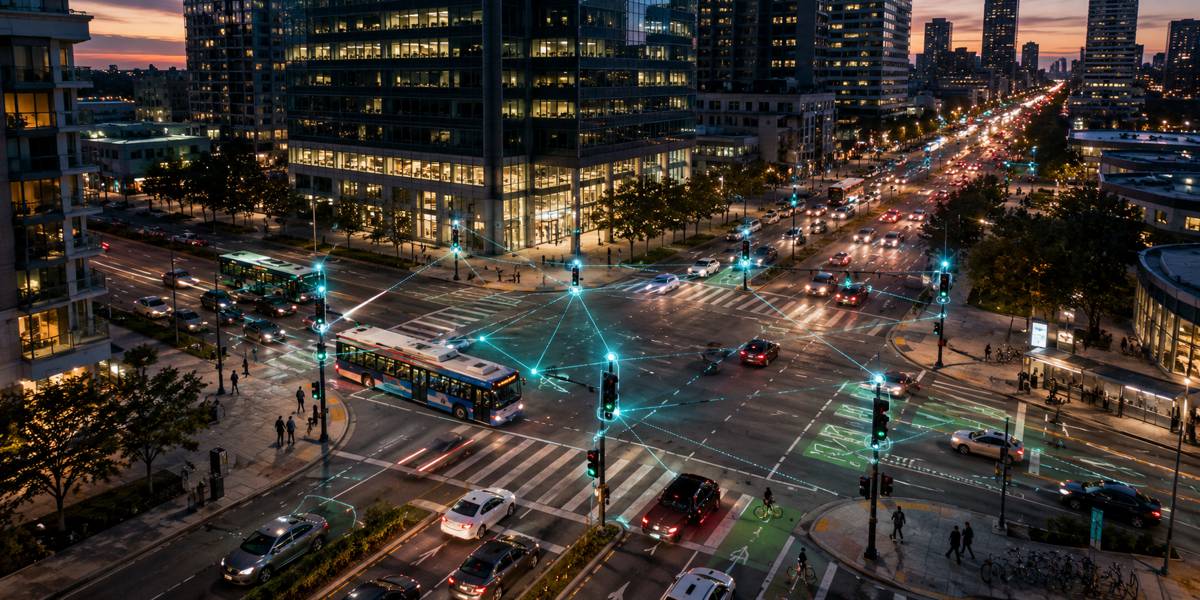
Miovision’s latest offering centres on an integrated workflow operating within its Miovision One platform. Rather than treating traffic analysis, optimisation and controller management as separate activities, the system combines them into a connected process covering identification, optimisation, deployment and validation.
At the front end sits Mateo, Miovision’s generative AI traffic engineering assistant, which became generally available in April 2026. Mateo analyses live and historical traffic information to identify intersections and corridors requiring attention. Using natural-language interaction, engineers can investigate network performance and receive prioritised insights without extensive manual preparation of datasets.
The significance of this approach extends beyond convenience. Transportation departments often face staffing shortages and increasing operational complexity. Automating routine analysis tasks allows engineering teams to spend more time evaluating solutions and less time assembling information from multiple sources.
Importantly, the system remains designed as a decision-support tool rather than an autonomous controller. Engineers continue to review findings, establish priorities and approve recommended actions, preserving professional oversight throughout the process.
Optimising Signals at Network Scale
The second component of the platform is Signal Optimizer, a new solution designed to automate significant portions of the retiming process. Using methodologies derived from the Highway Capacity Manual, the platform incorporates geometric information, traffic counts and timing plan data before generating revised signal plans.
The optimisation engine employs AI-based genetic algorithms to evaluate multiple timing scenarios and develop recommendations for cycle lengths, phase splits, offsets and sequencing arrangements. Genetic algorithms have become increasingly popular within transport engineering because they can evaluate vast numbers of possible combinations and progressively identify higher-performing solutions.
For agencies, flexibility remains essential. Different corridors may have different priorities. One network may focus on reducing delays for general traffic, while another emphasises bus reliability, multimodal accessibility or environmental performance. Signal Optimizer allows objectives to be configured according to local requirements before generating candidate timing plans.
The system also supports both isolated intersections and coordinated corridor operations, reflecting the reality that many traffic management challenges occur across interconnected networks rather than individual junctions.
Eliminating the Final Deployment Bottleneck
Creating an improved timing plan is only part of the process. Historically, implementation has often required engineers or technicians to access field equipment directly, creating additional costs and delays.
Miovision’s Controller Manager addresses this operational challenge by providing remote access and deployment capabilities through the same platform environment. Engineers can compare timing plans, monitor controller status, review detector information, track alerts and deploy approved updates without leaving the system.
The platform also incorporates version control and validation reporting, features that become increasingly important as agencies manage larger and more complex signal networks. Maintaining a clear audit trail helps organisations understand what changes were made, when they occurred and how they affected operational performance.
Another notable element is support for multi-vendor visibility through NTCIP compatibility. Interoperability has long been a challenge in transportation technology environments where agencies often operate equipment from multiple suppliers. Open standards and broader compatibility can reduce operational friction and support longer-term technology strategies.
The Wider Shift Towards Predictive Traffic Operations
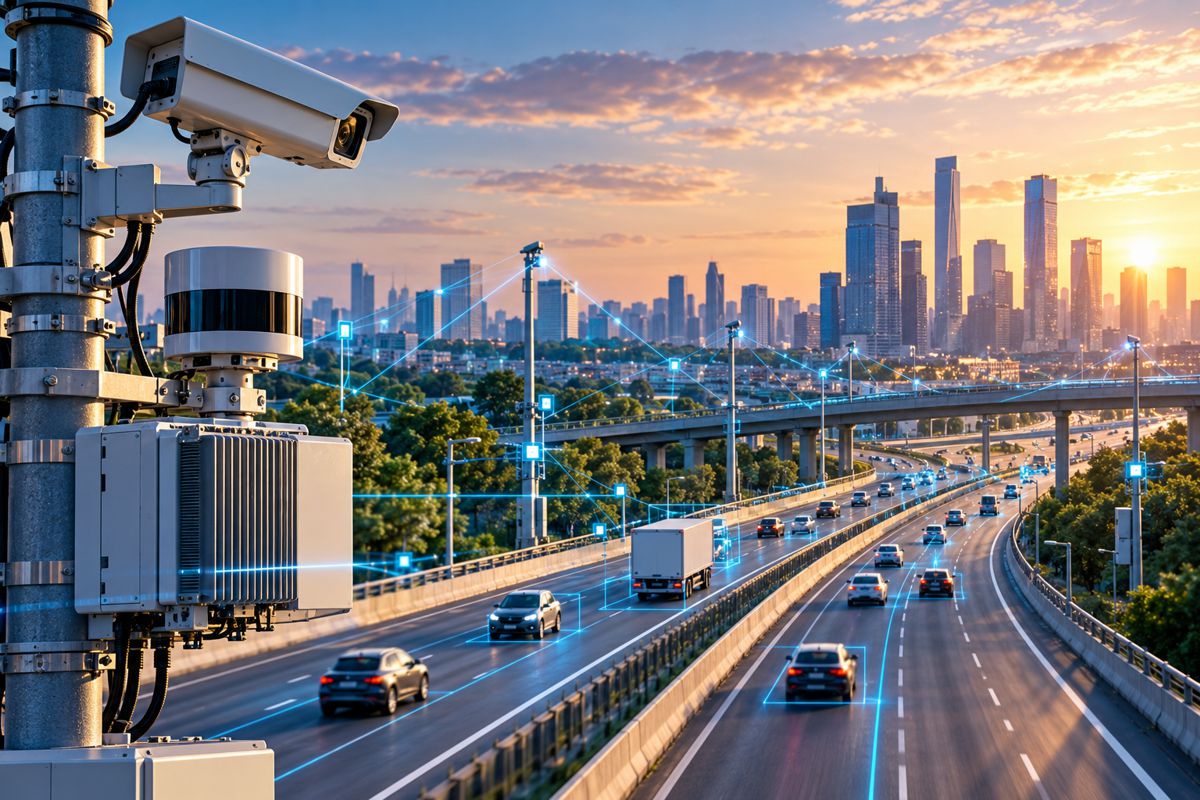
The launch aligns with a broader transformation underway across the intelligent transportation sector. Cities worldwide are investing in connected infrastructure, advanced sensing technologies and artificial intelligence tools capable of delivering more responsive network management.
According to the World Economic Forum and various smart mobility research programmes, future transportation networks will increasingly rely on continuous data analysis rather than periodic manual assessments. Infrastructure systems are gradually evolving from static assets into dynamic operational platforms capable of adapting to changing conditions.
Traffic signal optimisation represents a particularly practical application of this trend. Unlike emerging autonomous mobility concepts that may require extensive regulatory and infrastructure changes, signal management improvements can often be integrated into existing networks using current assets and established engineering practices.
That practicality makes optimisation technologies attractive for agencies seeking measurable improvements without undertaking major capital projects.
Engineering Oversight Remains Central
One concern often associated with AI deployment in critical infrastructure environments is the potential erosion of professional control. Transportation agencies remain accountable for safety, operational performance and public trust, making oversight essential.
Miovision positions its platform as an engineer-led environment rather than a fully autonomous system. Engineers continue to validate recommendations, establish performance objectives, review proposed timing plans and approve deployments. The AI components accelerate analysis and optimisation but do not replace engineering judgement.
That distinction may prove important as AI adoption expands across transportation management disciplines. Practical implementations are increasingly focused on augmenting specialist expertise rather than attempting to eliminate it altogether.
As traffic systems become more complex and expectations continue to rise, agencies will likely require technologies that combine automation with accountability. Solutions capable of reducing repetitive workloads while preserving transparency and professional oversight may find particular resonance among transportation operators.
Building Smarter Streets Through Continuous Improvement
The future of urban mobility is unlikely to depend on a single breakthrough technology. Instead, progress will come from numerous operational improvements working together across transportation networks. Signal optimisation sits firmly within that category.
Miovision’s integrated approach reflects a growing recognition that the value of traffic technology lies not merely in collecting data but in turning insights into action quickly and efficiently. By linking analysis, optimisation, deployment and validation within one environment, the company is targeting a long-standing inefficiency that has limited how frequently agencies can update signal operations.
As cities continue to pursue safer streets, lower emissions, improved travel reliability and better support for multimodal transport, proactive traffic management is becoming less of an aspiration and more of an operational necessity. Technologies that enable transportation teams to respond faster to changing conditions may increasingly shape how urban mobility networks evolve during the coming decade.
“Cities are under pressure to make streets work better for everyone, but traffic teams often have to manage modern mobility problems with outdated solutions,” said Kurtis McBride, Miovision’s co-founder and CEO. “This gives agencies a faster, more controlled way to act on traffic data, improve signal performance and deliver better day-to-day movement for the people, agencies and businesses that rely on city streets.”