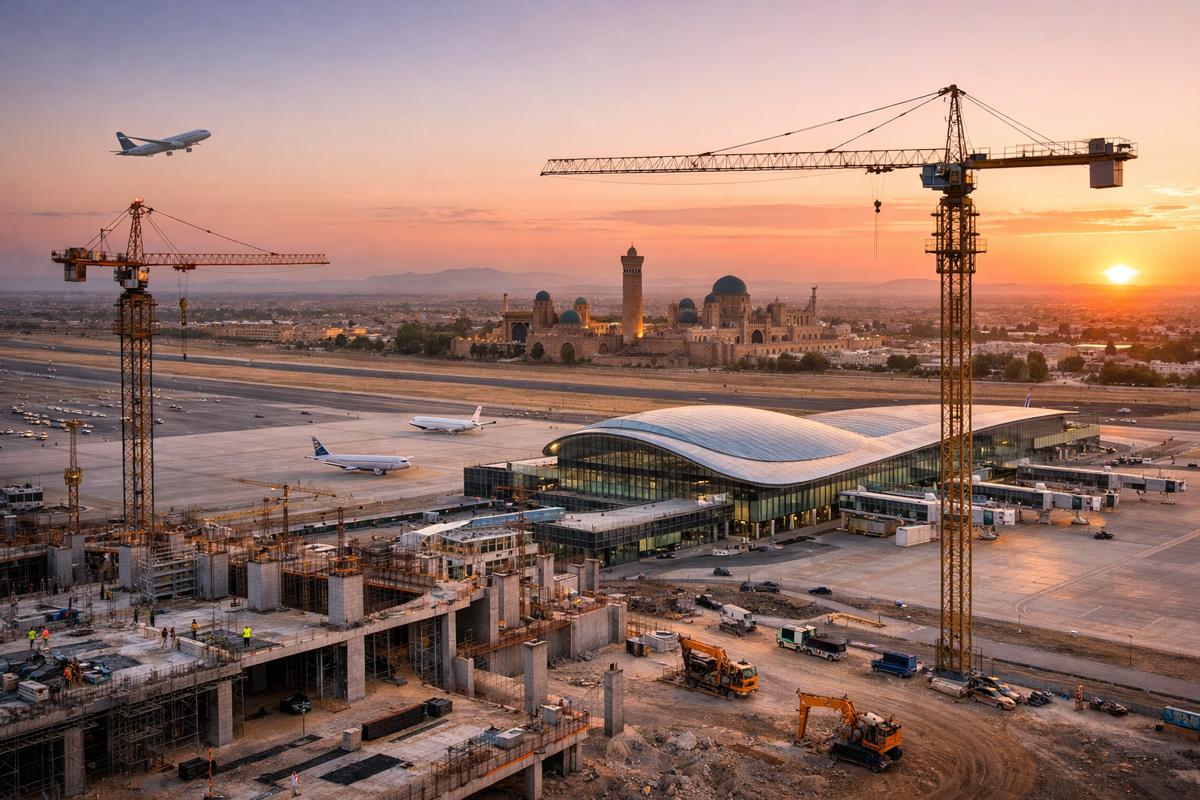
Uzbekistan Opens the Door to Private Investment at New Bukhara Airport PPP
Uzbekistan is stepping up its infrastructure ambitions with a fresh call to global investors, launching an international tender for the development of a new airport in Bukhara. The Request for Qualifications signals more than a single aviation project. It reflects a broader shift in how the country plans, funds and delivers strategic infrastructure, leaning into public private partnerships to accelerate growth while managing public finances.
The move lands at a time when Central Asia is gaining renewed attention. Trade corridors linking Asia to Europe are being reshaped, and countries like Uzbekistan are positioning themselves as logistics hubs rather than transit afterthoughts. Airports are no longer just gateways for passengers. They are economic engines tied to tourism, cargo, regional connectivity and urban development.
Bukhara, a UNESCO listed historic city, sits at the intersection of cultural tourism and emerging trade routes. Existing airport capacity has long been seen as a constraint on growth. By opting for a PPP structure, Uzbekistan is effectively inviting private expertise to deliver not just infrastructure, but operational efficiency, commercial development and long term asset management.
Briefing
- Uzbekistan has launched an international RFQ for a PPP project to develop a new airport in Bukhara
- The project aligns with national efforts to modernise transport infrastructure and attract foreign investment
- Aviation infrastructure is being positioned as a catalyst for tourism, logistics and regional connectivity
- PPP structures allow risk sharing while bringing in global expertise and capital
- The initiative reflects broader reforms to liberalise Uzbekistan’s economy and infrastructure sectors
A Strategic Pivot Towards PPP Infrastructure
Uzbekistan’s embrace of PPPs for the project finance did not happen overnight. Since 2017, the government has introduced reforms aimed at opening its economy, improving investor confidence and modernising state assets. The establishment of a dedicated PPP framework, supported by institutions such as the Ministry of Investments, Industry and Trade, has laid the groundwork for projects like the Bukhara airport.
The aviation sector has become a focal point. Historically dominated by state operators, it is now being reshaped to accommodate private participation. This includes not only airport infrastructure but also management contracts, service delivery and commercial concessions. The aim is clear enough: improve service standards while reducing the burden on public finances.
Globally, PPP models have proven effective in aviation when structured carefully. Airports such as those in Istanbul, Delhi and Lima demonstrate how private sector involvement can deliver large scale infrastructure on time while introducing operational efficiencies. Uzbekistan is now looking to replicate aspects of these successes, albeit tailored to its own regulatory and economic context.
The Bukhara Big Picture
Bukhara is not an arbitrary choice. The city is one of Central Asia’s most significant cultural destinations, attracting visitors drawn to its Silk Road heritage. Tourism in Uzbekistan has grown steadily over the past decade, supported by visa liberalisation and improved international connectivity. However, infrastructure has struggled to keep pace.
A modern airport in Bukhara could change that dynamic. Increased capacity and improved passenger experience would likely boost inbound tourism, extend visitor stays and encourage investment in hospitality and services. For contractors and developers, that creates a ripple effect across multiple sectors, from hotels and retail to urban transport.
There is also a logistics angle that cannot be ignored. While Bukhara is better known for its history than its freight activity, regional trade patterns are evolving. Improved air cargo facilities could support high value goods movement, complementing rail and road corridors that connect Uzbekistan to neighbouring markets such as Kazakhstan, Turkmenistan and beyond.
The Construction and Engineering Opportunity
From a construction standpoint, airport projects are among the most complex undertakings in the infrastructure sector. They combine civil works, advanced engineering systems, digital technologies and strict regulatory compliance. The Bukhara project is expected to include a new terminal, airside infrastructure, support facilities and potentially commercial developments.
For international contractors, the appeal lies in both scale and diversification. Central Asia remains underpenetrated compared to more mature markets, offering opportunities for firms willing to navigate local conditions. At the same time, the PPP structure allows companies to move beyond traditional build contracts into long term operational roles.
Engineering challenges will be shaped by local conditions. Uzbekistan’s climate, characterised by hot summers and cold winters, demands resilient design. Energy efficiency will also be a priority, particularly as global aviation faces increasing pressure to reduce its environmental footprint. Integrating renewable energy, efficient HVAC systems and smart building technologies is likely to be part of the conversation.
Financing Infrastructure in a Changing Market
The timing of the Bukhara airport tender is notable. Global infrastructure financing has become more complex in recent years, with higher interest rates and tighter capital conditions affecting project viability. Against that backdrop, governments are increasingly turning to PPPs to share risk and attract private capital.
Uzbekistan’s approach reflects this reality. By launching an RFQ, the government is effectively testing market appetite while ensuring that only qualified bidders proceed to the next stage. This helps maintain competitive tension while reducing the risk of project delays or cancellations.
Multilateral institutions may also play a role. Organisations such as the World Bank and the Asian Development Bank have been active in supporting infrastructure development across Central Asia, often providing advisory services, guarantees or co financing. Their involvement can enhance project credibility and reduce perceived risk for private investors.
Regulatory and Policy Foundations
A key factor in the success of any PPP project is the regulatory environment. Uzbekistan has made strides in this area, introducing legislation that clarifies procurement processes, risk allocation and dispute resolution mechanisms. Transparency and consistency remain critical, particularly for international investors assessing long term commitments.
The government has also taken steps to improve ease of doing business, streamline customs procedures and modernise its financial sector. While challenges remain, the direction of travel is clear. Uzbekistan is positioning itself as a more accessible and predictable market for infrastructure investment.
For policymakers elsewhere, the Bukhara airport project offers a case study in how emerging economies can leverage PPPs to accelerate development. It highlights the importance of aligning infrastructure projects with broader economic goals, rather than treating them as standalone investments.
Aviation as a Catalyst for Regional Development
Airports often serve as anchors for wider economic activity. The concept of the “aerotropolis” has gained traction in recent years, with developments clustering around major airports to create integrated hubs of commerce, logistics and services. While Bukhara may not evolve into a full aerotropolis, the principles still apply.
Improved connectivity can attract foreign direct investment, support local businesses and enhance regional competitiveness. For Uzbekistan, which sits at the crossroads of several trade routes, this is particularly relevant. Strengthening aviation infrastructure complements ongoing investments in rail and road, creating a more balanced and resilient transport network.
There is also a social dimension. Better air connectivity can improve access to education, healthcare and employment opportunities, particularly in regions that are otherwise less connected. Infrastructure, in this sense, becomes a tool for inclusive growth rather than simply an economic asset.
A Measured Step Towards Long Term Transformation
The launch of the Bukhara airport tender is unlikely to transform Uzbekistan’s infrastructure landscape overnight. Projects of this scale take years to plan, finance and deliver. Yet it represents a tangible step in a broader journey, one that is gradually reshaping how infrastructure is conceived and executed in the country.
For the global construction and infrastructure community, the message is straightforward. Opportunities are emerging in markets that were once considered peripheral. Success, however, will depend on understanding local dynamics, building strong partnerships and adopting a long term perspective.
Uzbekistan’s invitation to investors is not just about building an airport. It is about building confidence, capability and a track record that can support future projects. If delivered effectively, the Bukhara airport could become a benchmark for PPP infrastructure in Central Asia, setting the tone for what comes next.