Philippines

Philippines is a southeast asia market in Asia and an island market with strong dependence on maritime and air connectivity. With a population of about 100.7M and an economy of roughly $801.9B, Philippines offers a useful lens on infrastructure demand, logistics performance and project delivery.
Key gateways such as General Santos City and Bacolod-Silay International Airport help shape freight flows, passenger mobility and supply-chain reliability. This country profile is designed as an import-ready editorial starter for Highways.Today, giving you a consistent base layer for market pages, dashboards and future news linkage.
Philippines Infrastructure Dashboard
Infrastructure Strategy
National infrastructure strategy typically prioritises stronger connectivity, more reliable utilities and better project delivery across transport, energy and urban systems. For this market, strategy is especially tied to resilient ports, airports, coastal protection and import-dependent supply chains.
Transport Priorities
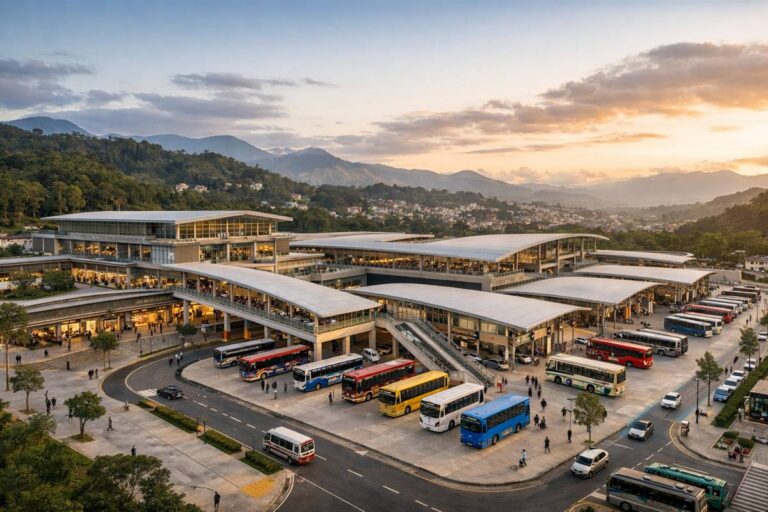
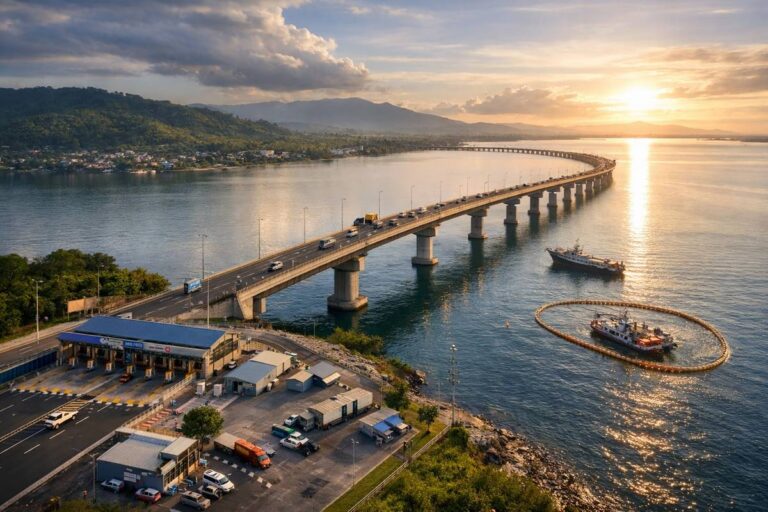
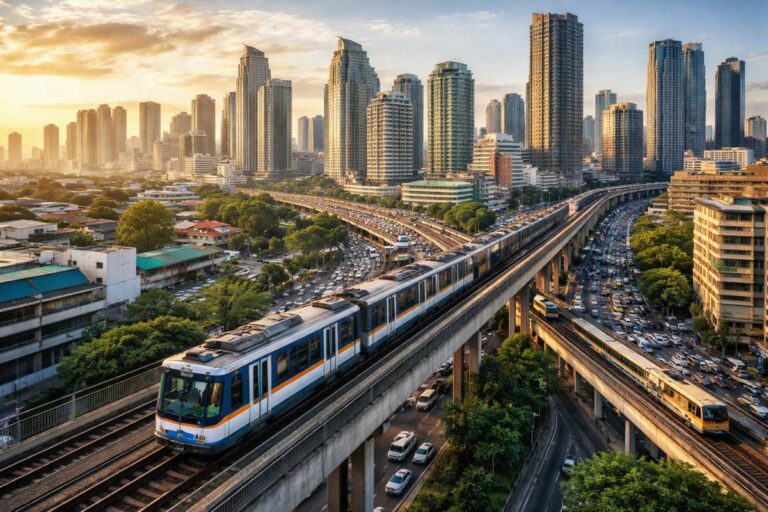
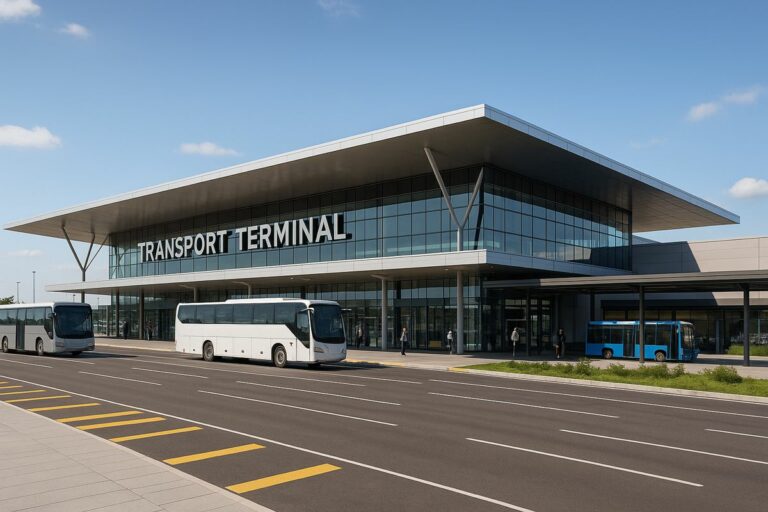
Transport priorities include maintaining and expanding strategic road corridors, modernising key airports and aviation support assets, improving port access, terminal efficiency and last-mile logistics, and selective rail upgrades where capacity, decarbonisation or passenger demand justify investment.
Investment Focus
Investment is concentrated around port resilience, airport capacity and climate-adaptive infrastructure; manufacturing platforms, metro systems and export-oriented logistics.
Infrastructure Investment & Finance
Funding usually combines national budgets, state-owned entities and private capital where bankable projects exist. Development finance, sovereign vehicles, EPC-backed finance and PPP models are commonly used for large transport and utility schemes.
Latest News from Highways.Today