The CEA explores Climate issues at COP26
As world leaders gather for the crucial climate summit, COP26 in Glasgow, the CEA has committed to continue supporting its members on their journey to achieving net zero in the UK by 2050.
Many of the CEA’s member companies have already started their own roadmaps for reducing carbon emissions, however, it will be a collaborative effort to make to necessary changes to ‘save our planet’, and this will of course take some time to achieve.
CEA member company, Hitachi Construction Machinery UK Ltd has sustainability high on its agenda and the company’s parent group, Hitachi Ltd, is the principal partner of the COP26 summit.
To showcase some of the technology that is available today that contributes to reductions in carbon emissions, Hitachi CM UK Ltd and sister company Synergy Hire prepared a 14 tonne excavator with a Stage V engine, the latest pump efficiency technology, with semi-automated Leica machine guidance, Xwatch height and slew limiter, which is connected to real time CT fleet link telematics, the machine is also running on HVO (Hydrotreated Vegetable Oil) fuel.
Hitachi CM UK’s CEO David Roberts explained: “All of these separate items combined reduce emissions while the machine is running, and increase productivity and efficiency to minimise running time, which results in a significant reduction in the carbon footprint of a job site.”
Hitachi CM Ltd is also developing battery powered machines, and alternative fuelled products to ensure that the targets for carbon emission reduction can be met and hopefully exceeded.
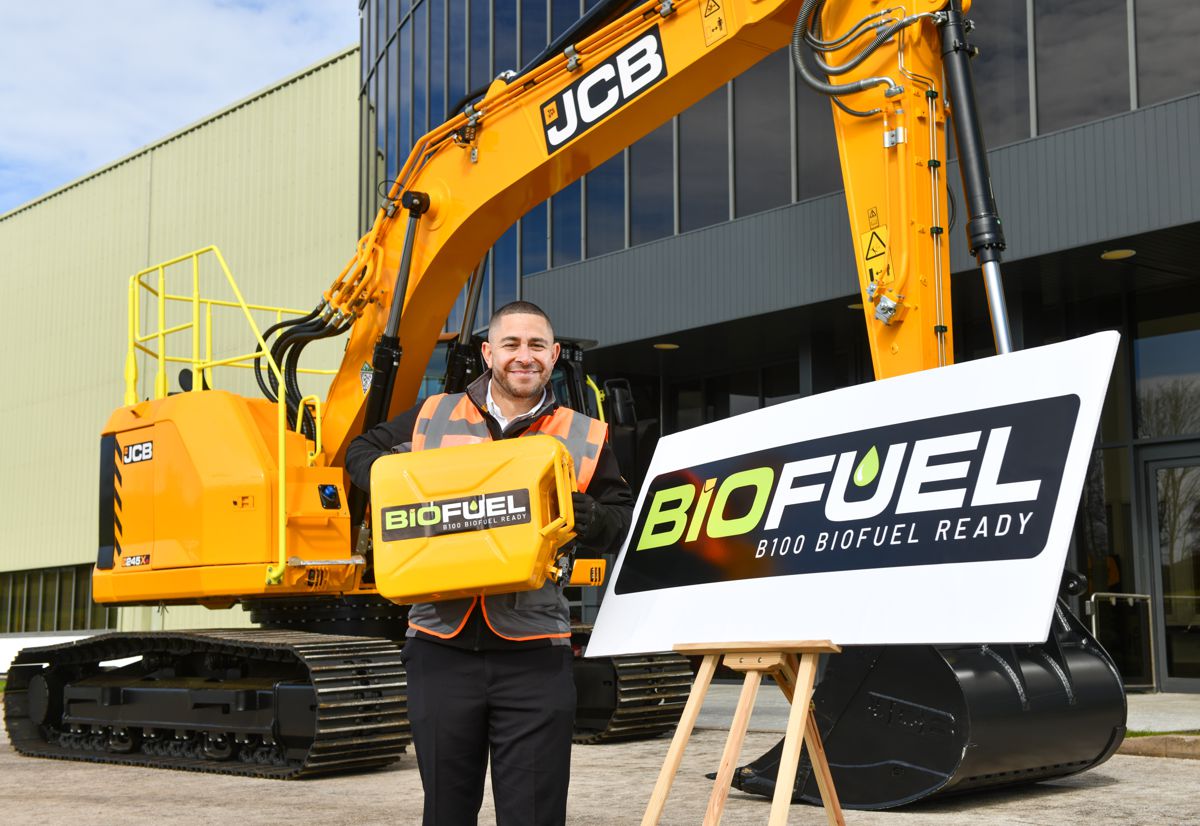
JCB has also said it will invest £100 million on a project to produce super-efficient hydrogen engines. It currently has a team of 100 engineers working on the project and will recruit up to 50 more. JCB targets the end of 2022 for the first machines to be available for sale to customers.
Volvo also revealed its ‘intelligent future of construction’ prototype machine this week. The wheeled loader was inspired by a concept devised by Volvo Construction Equipment and Lego Technic! The new Volvo LX03 represents both the next stage into the company’s journey into artificial intelligence and the decarbonisation of the construction sector.
CEA member FuelActive continues to embrace a range of technologies, but is fully aware that these changes will not happen overnight and that diesel will continue to play a very active role in the global construction sector. The company has developed an ‘intermediate technology’ that prevents the harmful effects of fuel contamination in diesel-powered equipment, resulting in up to 5% increased fuel efficiency and resultant lower exhaust emissions.
This product ensures delivery of diesel to fuel injection systems that is up to 92% cleaner, significantly reducing harmful emissions.
FuelActive is already being used successfully by customers across the world, in equipment by leading manufacturers, such as: Volvo, Terex, Atlas Copco, Komatsu, Caterpillar and JCB.
The rise of autonomous construction equipment, alternative fuels such as HVO, hydrogen powered machines and electrification will be the long term solution for OEMs, however, the industry must also consider the current challenges surrounding the net zero strategy, and needs to take into account the controversial topics on the road to net zero.
There are huge challenges of performance and powering larger machines with batteries, electrification of anything other than compact machines remains distant at present due to the incompatibility of battery performance and weight, compared to the duty cycle demands of mid and larger sized equipment.
There’s also the consideration of storage of alternative fuel – hydrogen in particular. The challenge to using hydrogen in tackling climate change is that it is very hard to store.
As it stands we do not have the infrastructure for emergent technologies. This aspect should be high on the agenda for COP26, to address long term strategies and working solutions to address these issues.
The CEA is hoping that the recent autumn statement would provide some government aide. While the chancellor confirmed that £1.4bn will be set aside for a Global Britain Investment Fund to attract foreign investment, which will have a particular focus on electric vehicles, it is important that the Government understands that electrification of vehicles is not the only solution for reducing carbon emissions.
Issues the CEA hopes will be addressed at COP26
1) End of life batteries – what will happen at the end of a battery’s life? 80% of the components are recyclable – what happens to the other 20%?
2) How do we tackle climate change with machines with lower tiered engines that are no longer able to work in the UK, and are sold abroad? What will fuel these machines?
3) Fuel storage – infrastructure? How do we efficiently and safely store alternative fuels?
4) HVO – what impact does this have on a machine’s engine? A manufacturers study is needed.
5) Diesel fuel contamination – fuel contamination is more common than you think, we need a short term solution for cleaning diesel.
The CEA will be closely following the COP 26 summit and will continue highlighting topics specific to our sector.