Turning Carbon Dioxide into solid minerals underground
A new high-profile scientific review article in Nature Reviews Chemistry discusses how carbon dioxide (CO2) converts from a gas to a solid in ultrathin films of water on underground rock surfaces. These solid minerals, known as carbonates, are both stable and common.
“As global temperatures increase, so does the urgency to find ways to store carbon,” said Pacific Northwest National Laboratory (PNNL) Lab Fellow and coauthor Kevin Rosso. “By taking a critical look at our current understanding of carbon mineralization processes, we can find the essential-to-solve gaps for the next decade of work.”
Mineralization underground represents one way to keep CO2 locked away, unable to escape back into the air. But researchers first need to know how it happens before they can predict and control carbonate formation in realistic systems.
“Mitigating human emissions requires fundamentally understanding how to store carbon,” said PNNL chemist Quin Miller, co-lead author of the scientific review featured on the journal cover. “There is a pressing need to integrate simulations, theory, and experiments to explore mineral carbonation problems.”
Below the ground and in the water
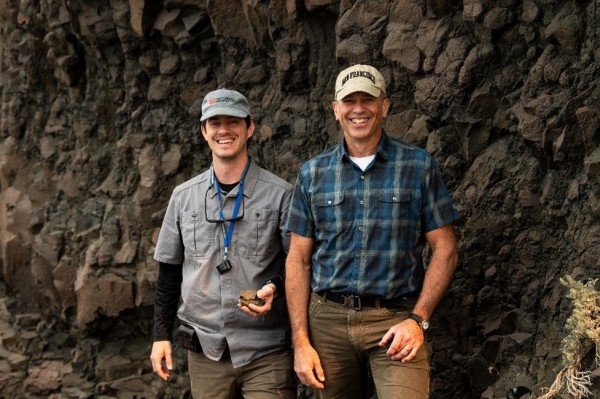
Instead of emitting CO2 into the air, one option is to pump it into the ground. Putting CO2 deep underground theoretically sequesters the carbon away. However, gas leaks remain a concern. But if that CO2 gas could be pumped into rocks rich in metals like magnesium and iron, the CO2 can be transformed into stable and common carbonate minerals. PNNL’s Basalt Pilot Project at Wallula is a field site dedicated to studying CO2 storage in carbonates.
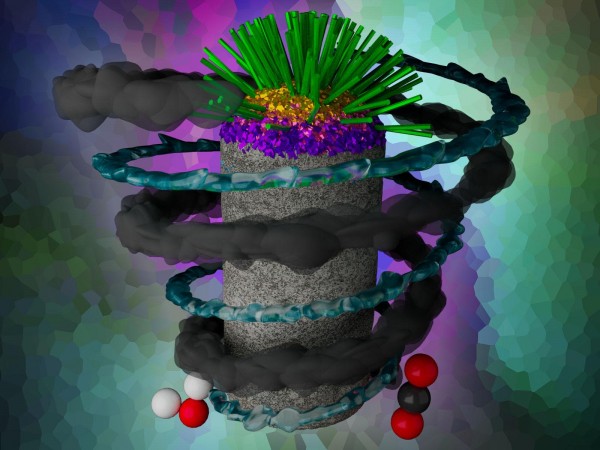
Although these subsurface environments are generally dominated by water, the conversion of gaseous carbon dioxide to solid carbonate can also occur when injected CO2 displaces that water, creating extremely thin films of residual water in contact with rocks. But these highly confined systems behave differently than CO2 in contact with a pool of water.
In thin films, the ratio of water and CO2 controls the reaction. Small amounts of metal leach out from the rocks, reacting both in the film and on the rock surface. This leads to the creation of new carbonate materials.
Previous work led by Miller, summarized in the review, showed that magnesium behaves similarly to calcium in thin water films. The nature of the water film plays a central role in how the system reacts.
Understanding how and when these carbonates form requires a combination of laboratory experiments and theoretical modelling studies. Laboratory work allows researchers to tune the ratio of water to CO2 and watch carbonates form in real time. Teams can see what specific chemicals are present at different points in time, providing essential information about reaction pathways.
However, laboratory-based work has its limits. Researchers cannot observe individual molecules or see how they interact. Chemistry models can fill in that gap by predicting how molecules move in exquisite detail, giving conceptual backbone to experiments. They also allow researchers to study mineralization in hard to experimentally access conditions.
“There are important synergies between models and laboratory or field studies,” said MJ Qomi, a professor at the University of California, Irvine and co-lead author of the article. “Experimental data grounds models in reality, while models provide a deeper level of insight into experiments.” Qomi has collaborated with the PNNL team for three years. He recently received a Department of Energy Early Career Research Program award to study carbonate mineralization in adsorbed water films.
From fundamental science to solutions
The team outlined key questions that need answering to make this form of carbon storage practical. Researchers must develop knowledge of how minerals react under different conditions, particularly in conditions that mimic real storage sites, including in ultrathin water films. This should all be done through an integrated combination of modeling and laboratory experiments.
Mineralization has the potential to keep carbon safely stored underground. Knowing how CO2 will react with different minerals can help make sure that what gets pumped underneath the surface stays there. The fundamental science insights from mineralization work can lead to practical CO2 storage systems. The Basalt Pilot Project represents an important study site that bridges small-scale basic science and large-scale research applications.
“This work combines a focus on fundamental geochemical insights with a goal of solving crucial problems,” said Miller. “Without prioritizing decarbonization technologies, the world will continue warming to a degree humanity cannot afford.”
Miller, Rosso, and Todd Schaef were the PNNL authors of this study. This work was performed in collaboration with MJ Qomi and Siavash Zare of the University of California, Irvine as well as John Kaszuba of the University of Wyoming. The research was supported with funding from the Department of Energy’s Office of Science (Basic Energy Sciences Program) and Office of Fossil Energy and Carbon Management (Carbon Storage and Utilization Partnership); the John and Jane Wold Centennial Chair in Energy; and the Nielson Energy Fellowship.