DIY Equipment Sales
Delegating responsibility for selling used machines to third party auction houses carries the risk of sub-optimal outcomes. Now, a new breed of online platforms aims to mitigate that risk, empowering companies to remarket equipment themselves using their own auction technology.
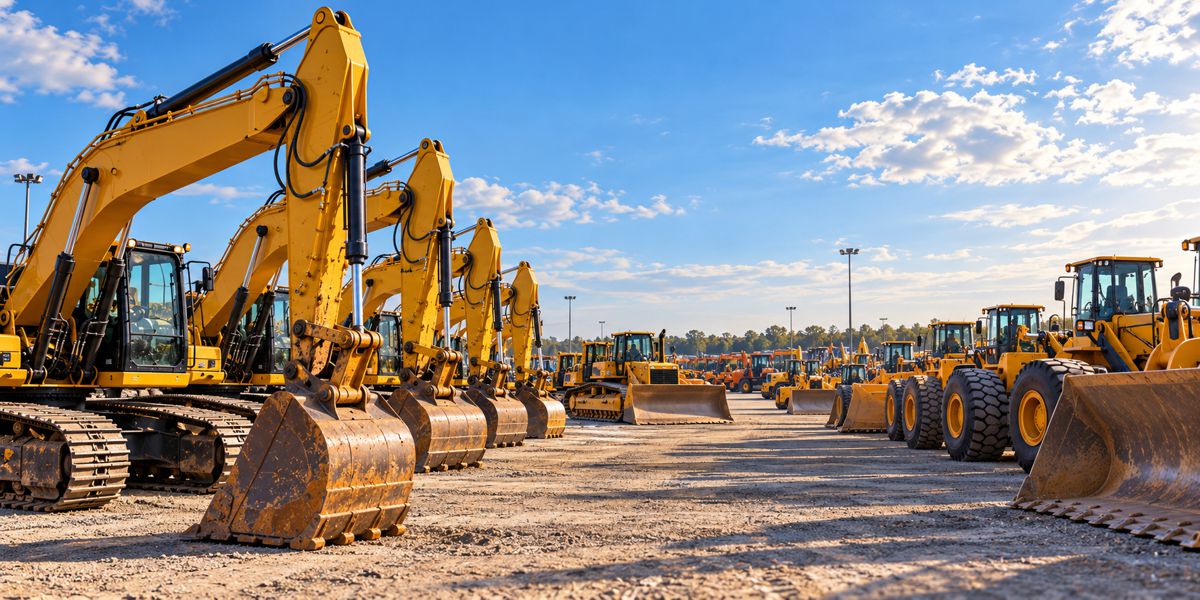
Imagine you’re a contractor or rental house in the process of recycling your fleet. Or a major OEM with large numbers of used trade-in machines to remarket. (Often made up of competing brands.) You send your well-maintained assets to an unreserved auction – and not only is there a risk of them being snapped up for a fraction of their true worth, but many of them could end up on the other side of town, filling the portfolio gaps of your fiercest rival.
Or perhaps you get lucky, offloading an asset at a time of peak demand, with frenzied bidding driving the price sky-high. However, with bidding data locked in the auctioneer’s database, there is no way of tapping into that lucrative market of disappointed bidders for further, future sales.
These are just two of the problems peculiar to third party auctions that are persuading equipment sellers to bring remarketing responsibility in-house, thanks to a new breed of online SaaS platforms. UK headquartered Krank is the leading example, used by major equipment OEMs and fleet owners. Krank offers three avenues of disposal – ‘classifieds’, eBay-style 30-day timed auctions, and live auction events. In each, both buyers and sellers enjoy a more rewarding transaction, with far fewer (or even zero) supplementary costs.
Convenience – but at a cost
“If you’re prepared to risk selling at an unreserved auction, it can be a good route for disposal, especially when demand outweighs supply,” says Krank founder Mark Turner. “While there is little doubt that they are quick and efficient ways to raise cash, often they’re a last resort. But if the asset you’re selling isn’t in demand, vendors may be disappointed. It can also grate to know that third party auction companies pride themselves on making money when the market is good – but even more when the market is bad.”
Compliance is also a consideration. Competitors acquiring your fleet cheaply, or discovering you’ve inadvertently sold assets to an embargoed country, are both outcomes to be avoided. These are situations that systems such as Krank can prevent by requiring potential bidders to be pre-approved by the vendor, if desired. (Or simply geo-fencing markets and territories to restrict bidders to selected regions.) This then paves the way for inspection or discussing the provenance of a machine.
Users of these new platforms can – should, in fact – leverage their customer database to drum up greater interest in their equipment sales. This will draw a larger, prequalified, and interested audience, and avoid the risk of equipment being sold for less than its worth for lack of competition. That said, the unreserved option is available through these platforms – for those items where vendors just want it out of the yard.
Priming the sales team for follow-up sales
While the winners’ data are important, the information about who didn’t win is just as important. “Companies who throw everything into third party auctions are basically rendering their sales teams redundant. If they ran the auctions themselves, the reverse would be true – they would be priming their own sales funnel with red hot leads,” claims Turner. “Let’s say your excavator sells for $50,000. As soon as your auction closes, we send you (and anyone in your team), a notification with a table of all that bidder data, the profiles of the bidders (because they’ve all had to connect and network with you prior to bidding), and the highest prices points their bids reached. That’s not a lead, that’s potentially further pre-baked sales. One of your sales guys can call the second-highest bidder and say: ‘You got close – and we have another asset in the yard you can have – similar condition for a similar price’. Or maybe one bidder dropped out at just $25,000 – that’s potentially a pre-baked rental sale if you’re an equipment rental company: ‘How about you take one for $2,500 a month instead?’”
Cutting carbon – and costs
The desire to reduce the time, expense and carbon footprint incurred by the – often unnecessary – transportation of equipment to an onsite auction is another major attraction of systems such as Krank. Transportation to an auction site can reduce profits by up to 30%, after factoring in other fees.
“The first crane I ever brokered was in Qatar, to a buyer from Dubai who’s project fab yard was just 1km away from where the seller’s crane was located!” Turner reveals. “Imagine the cost and carbon footprint if we’d delivered that crane to the auction in Jebel Ali, nearly 700km away, and then brought it all the way back again. An extreme example, perhaps, but valid all the same.”
Monetizing ‘stuff’
These new platforms’ easy functionality also makes it useful for disposing of items rarely seen at traditional auctions. That old bucket that’s been sitting in a corner of the yard for decades, for example, could be sold using Krank’s unreserved price option. “Someone may buy an old bucket from you today, and then come back for the rest of the excavator tomorrow,” Turner half-jokes.
Nevertheless, even those small-time one-off buyers and sellers are driving the transformation of, or even disrupting, the used equipment industry, and its established methods of doing business. The ability to scale up is intrinsic to the organic growth of platforms like Krank, and that is driven through the connections and networking of its users, as well as the leveraging of the latest technologies.