Constructing a Culture of Care
The construction industry is facing a mental health crisis that can no longer be swept under the rug. Across the globe, construction workers suffer some of the worst mental health outcomes of any profession. In many countries, suicide rates among construction employees dramatically outpace those in other sectors. For example, in the UK, two construction workers take their own lives every day with over 700 lives lost each year. This makes working in construction one of the deadliest jobs not due to accidents or heavy machinery, but because of mental distress: in fact, male construction workers in the UK are more than three times as likely to die by suicide as the average man. Similarly grim statistics emerge elsewhere. In the United States, the suicide rate among male construction workers is about 56 per 100,000, and in Canada it stands around 72 per 100,000. Figures that dwarf national averages and mean the industry suffers five times more suicides than all other construction-related fatalities combined. Such numbers paint a sobering picture of an industry in urgent need of change.
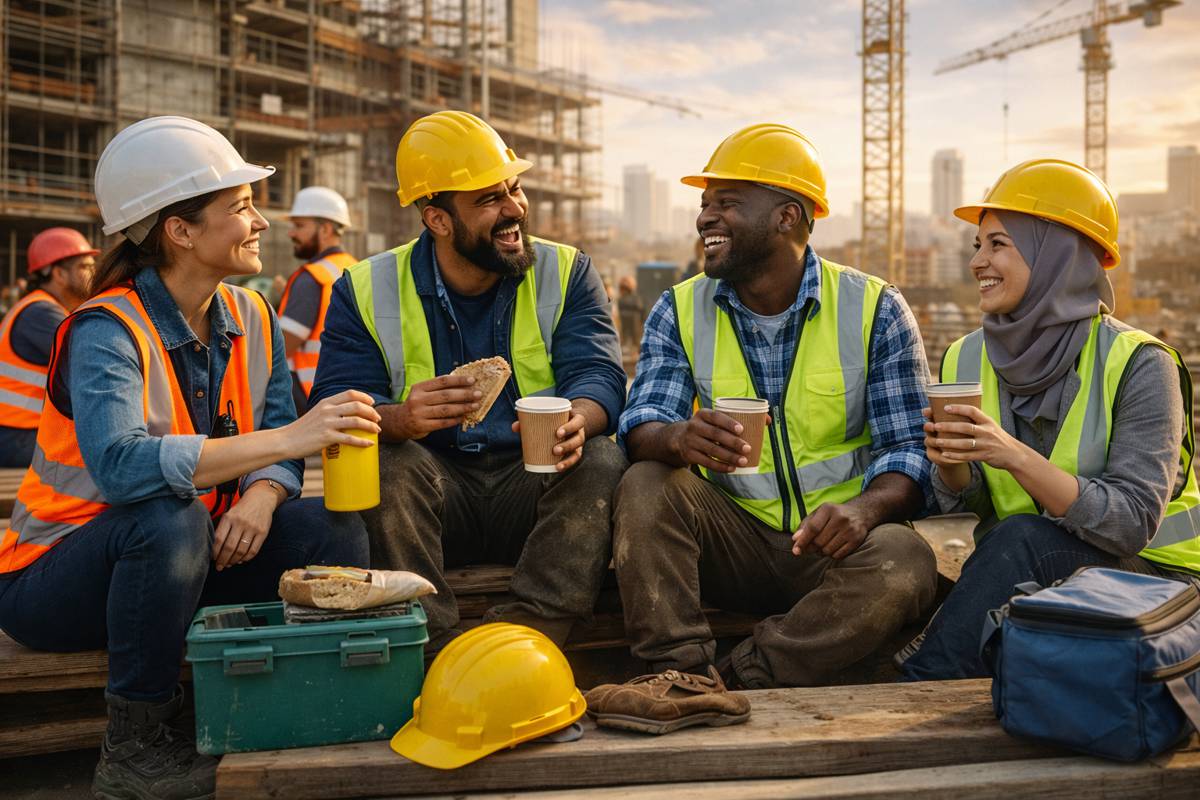
These troubling figures underscore a perfect storm of stressors inherent to construction work. Tight deadlines, dangerous tasks and a macho “tough guy” culture have long defined construction sites. This culture has fostered a stigma around mental health, discouraging workers from speaking up or seeking help. In the UK, over two-thirds of construction workers believe a stigma around mental health prevents open discussion of their struggles. With a workforce still predominantly male (82% in the UK), traditional masculine ideals of stoicism make it hard for many to admit when they are feeling overwhelmed. The tragic result is that mental illness and suicidal thoughts often stay hidden until it’s too late. As one industry charity leader put it, construction has historically gone from a culture where talking about mental health was frowned upon to one desperately in need of a culture where “looking out for your mates is part of the job”, because every suicide is one too many.

Work Conditions Take a Toll
The nature of construction work itself compounds the mental health challenge. Many common conditions of employment in this sector are known risk factors for poor well-being. Long, irregular hours are routine on big projects, overnight shifts, dawn starts, and extended overtime spur fatigue and disrupt normal family life. Temporary contracts and project-based employment can mean constant uncertainty; workers may finish one job not knowing when or where the next will come, breeding financial stress and job insecurity. It’s not uncommon for construction workers to travel far from home for weeks or months at a time on remote sites. That isolation from support networks, combined with high-pressure environments and tight deadlines, can push stress levels through the roof. “We’re in a people business. You’ve got to treat people as people. Ask how they’re doing. Build those relationships. That’s how you prevent burnout and tragedy,” reflects Christopher Saia, a safety manager who has led mental health efforts on demanding projects in Colorado’s Rocky Mountains. His experience highlights how relentless pressure and loneliness on the job can wear even the toughest workers down.
The work itself is high-risk and physically taxing, leaving little margin for error. Heavy machinery, heights, and hazardous materials require constant vigilance, and any lapse can have life-or-death consequences. This ever-present danger keeps workers in a state of alertness that can feed anxiety. Extended spells of intense physical labour contribute to exhaustion, which in turn erodes mental resilience. Research shows that fatigue is a major hidden threat in construction: it slows reaction times, impairs decision-making, and is linked to an estimated 13% of all workplace injuries. With deadlines looming, workers often push through exhaustion, creating a vicious cycle of stress on mind and body. As one international risk management firm noted, prolonged stress from tight schedules, job insecurity and long hours leads to burnout. All these factors, irregular shifts, remote postings, physical strain and the high stakes of safety, pile additional pressure on a workforce already grappling with mental health challenges.

Rethinking Worker Well-being
After years of lagging behind, many construction companies are now waking up and taking action to turn this situation around. A growing number of contractors and engineering firms have begun to rethink their workplace culture and put employee well-being front and centre. This shift includes rolling out programmes that encourage open conversations, provide mental health support, and relieve some of the chronic pressures of the job. Crucially, it also means tackling the stigma head-on: making it clear that it’s okay not to be okay, and that asking for help is a sign of strength, not weakness.
One notable strategy has been training and deploying Mental Health First Aiders on sites. Much like physical first aiders, these are volunteers trained to spot signs of distress, listen non-judgmentally, and guide colleagues to professional support if needed. Big contractors are investing in these roles to ensure help is always close at hand. For instance, UK-based Galliford Try, a major construction and housebuilding group, launched an employee well-being programme called “Be Well” that encompasses both mental and physical health support. It introduced a comprehensive Employee Assistance Program (EAP) offering 24/7 counselling, confidential helplines and online health tools. Galliford Try also appointed well-being champions across its sites and trained scores of mental health first aiders so that workers everywhere have someone to turn to. As Chief Executive Peter Truscott explained, the company is “fully committed to supporting health and wellbeing, with the aim of being upper-quartile across the industry… Wellbeing issues are key to the construction industry as we move forward, particularly as we look to attract the brightest and the best, and no company within our sector can afford not to take it extremely seriously”. His words reflect a wider realization in the boardroom: caring for workers’ mental health isn’t an optional extra, but a business imperative if the industry is to attract and retain talent.
Contractors are also experimenting with more flexible working practices to ease the strain on employees. Allowing occasional time off for personal needs, rotating staff out of particularly high-stress tasks, or even instituting mental health days are becoming more common. At international builder PCL Construction, field leaders are encouraged to relieve pressure on workers by offering flexibility, whether that means a crew member taking a day off to recharge, swapping out someone who’s been handling a stressful role for too long, or organizing team-building breaks during intensive projects. “Of course, we have deadlines and budgets to meet, but never at the expense of someone’s health. It’s just not in our culture to operate that way,” says Thomas Izykowski, PCL’s Health, Safety and Environment director. The message is clear: safety now encompasses psychological safety, and meeting a project schedule should never come before the well-being of the crew.
Fatigue management is another focus area. Given how many accidents and errors are linked to tiredness, some firms have introduced Fatigue Risk Management Programs and smarter shift scheduling. The goal is to ensure workers have adequate rest and no one is pushing past their limits. This might involve capping excessive overtime, mandating longer breaks between shifts, or using data to identify when fatigue risk is highest and adjusting schedules accordingly. In a number of cases, companies are tapping technology (discussed further below) to monitor fatigue levels and proactively warn if a team member may be too drained to work safely. The old mindset of “work until you drop” is slowly giving way to a recognition that rested workers are safer and more productive, and that it’s the employer’s responsibility to help prevent burnout.
Changing a deeply ingrained culture is not easy, but construction is starting to talk more openly about mental health than ever before. Campaigns and initiatives led by industry charities have played a big part. In the UK, groups like Mates in Mind and The Lighthouse Club have partnered with contractors to raise awareness, provide training, and even set up 24/7 helplines. Many companies now publicize these resources on site noticeboards and in tool-box talks, emphasizing that help is available. In Canada and the U.S., construction giants have come together to form alliances (such as the Construction Industry Alliance for Suicide Prevention) to share best practices and promote what works. “We’re all aware mental health is an issue. But what are we doing about it?” That blunt challenge from PCL Vice President Trent Johnson captures the new ethos of moving beyond awareness to concrete action. His office began rolling out training programs like QPR (Question, Persuade, Refer) and Mental Health First Aid for supervisors, teaching them how to recognize warning signs and intervene when a colleague is struggling. The result is that even on the jobsite, conversations about stress, depression, or personal struggles are gradually becoming more commonplace, chipping away at the old taboos.
Inclusion, Diversity and Well-being
Hand-in-hand with mental health efforts, there’s a rising focus on building more inclusive workplaces in construction, places where all employees feel supported and valued. This is not only a moral imperative; it directly affects well-being. Historically, anyone who didn’t fit the typical profile of a construction worker, whether women, young apprentices, migrant laborers, or neurodiverse individuals, often faced additional challenges on site. These could range from isolation and harassment to lack of appropriate facilities or support networks, all of which take a toll on mental health. Now, leading firms recognise that improving diversity and inclusion isn’t separate from well-being, it’s an essential part of it.
Take the experience of women in construction. They remain significantly underrepresented, making up roughly 10-12% of the construction workforce in many Western countries (and far less in field trades roles). Being such a small minority on site can create feelings of not belonging or added pressure to prove oneself. Moreover, women in construction have reported higher levels of stress and obstacles like gender bias or lack of support networks. Addressing these issues is key to their well-being. That means fostering a culture that actively welcomes and supports female staff, rather than leaving them to “fit in or quit.” As Tonya Hicks, a female CEO in the U.S. trades sector, bluntly observed from her own journey: “If the culture of the industry doesn’t change and embrace women, they won’t stay.”. Companies are heeding this message by establishing mentorship programs for women, celebrating their achievements, and cracking down on any on-site harassment or exclusionary behaviour. In practical terms, some contractors now provide things like proper PPE designed for women, flexible maternity policies, and facilities on site that accommodate women’s needs, small changes that send a big signal of inclusion.
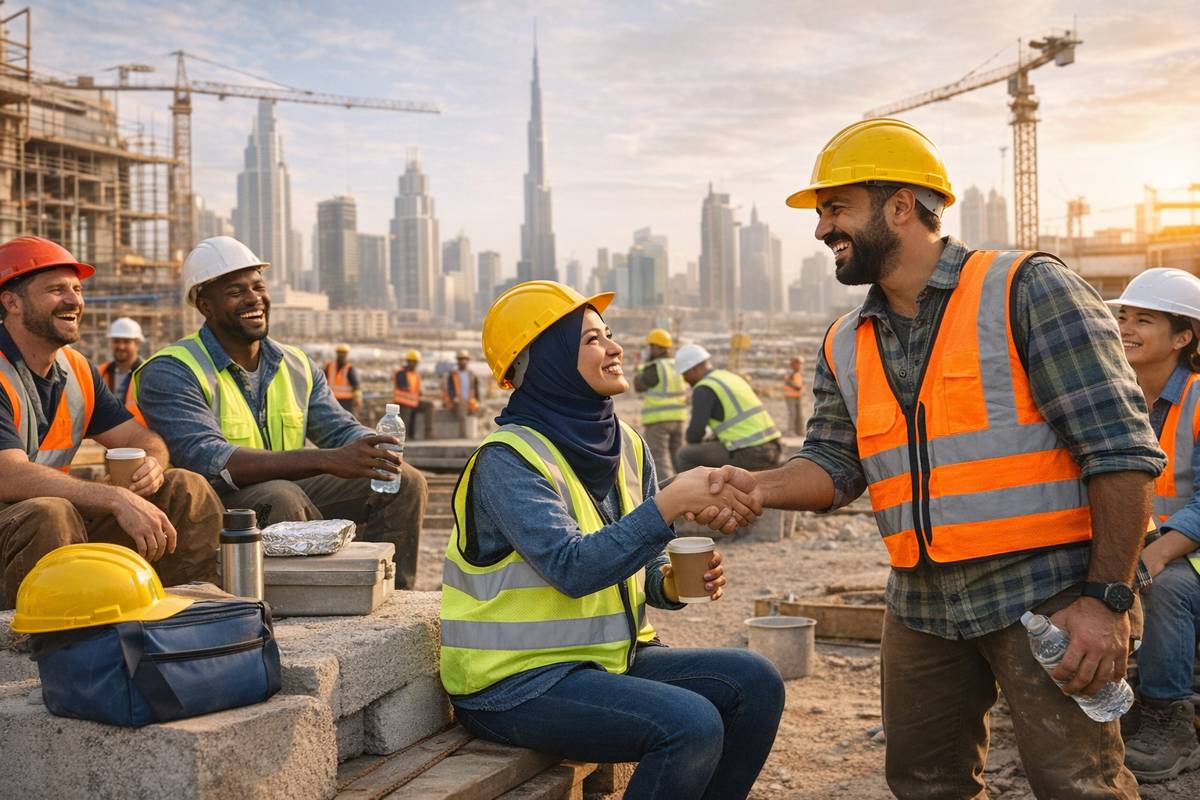
Migrant workers form another vital but vulnerable segment of the workforce. On large projects around the world, from the Middle East to Europe and North America, it’s common to find crews composed heavily of foreign-born workers. Language barriers, cultural differences and, in some cases, exploitative employment practices can all impact these workers’ mental well-being. Ensuring that migrant and expatriate workers have equal access to support services is crucial. This can include translating mental health materials into multiple languages, hiring interpreters or bilingual counsellors for helplines, and training managers in cultural sensitivity. In regions like the Gulf, major contractors on infrastructure programmes have started partnering with NGOs to improve conditions in worker accommodation camps, offer financial literacy classes (to ease money worries of migrant laborers) and provide confidential counselling services on-site. All these measures help combat the unique stresses that migrant construction workers face, far from home. It also sends a message that “you are part of this team, and we have your back.”
The industry is also beginning to pay attention to neurodiverse employees, those with conditions such as autism spectrum disorder, ADHD, dyslexia, or other cognitive differences. New research suggests neurodivergent individuals are far more common in construction than many realise: as many as one in four UK construction workers is neurodivergent, according to a report by the National Federation of Builders. Many neurodiverse people thrive in construction trades, often bringing exceptional skills like creative problem-solving or strong pattern recognition. However, they may also encounter particular challenges in traditional work environments that don’t accommodate different thinking and communication styles. A neurodiverse apprentice, for instance, might struggle with loud, chaotic site environments or with standard training methods, leading to stress or misunderstanding. Forward-looking firms are adapting by providing additional support and adjustments, for example, offering noise-cancelling headphones and quiet break areas for those who find sites overwhelming, or allowing flexibility in how someone communicates (not forcing phone calls if a person is uncomfortable and prefers written communication, for example). Such reasonable adjustments not only improve the well-being of neurodiverse employees but often benefit the whole team through better communication and empathy. It goes hand in hand with the legal and ethical push to eliminate discrimination. Under UK law, for instance, certain neurodivergent traits can be considered disabilities requiring accommodation. The bottom line is that embracing diversity, whether in gender, background, or neurodiversity, creates a more supportive, cohesive workplace for everyone. When people feel included and understood, they are far less likely to suffer in silence.
Meanwhile, special attention is turning toward the youngest in the industry, apprentices and young tradespeople, who data show may be at heightened risk in terms of mental health. A recent Australian study revealed that while overall suicide rates in construction have begun to decline thanks to prevention efforts, suicides among workers aged 15-24 have actually been rising. Younger workers can be more vulnerable to job stresses, perhaps due to less experience or less established support networks. They might also hesitate to speak up about mental health challenges, fearing stigma in an unfamiliar work culture. To counter this, companies are focusing on mentorship and buddy systems for apprentices, so that no young worker feels like they have “no one to talk to” on site. In some regions, mental health charities have developed toolkits specifically aimed at apprentices, teaching them coping skills and encouraging a mentality that seeking help is okay. As Jorgen Gullestrup, CEO of MATES in Construction Australia, noted: the industry must “double down on prevention and support for apprentices and younger men… Looking out for your mates is part of the job.”. That ethic of collective care, experienced workers watching over the newcomers, and vice versa, strengthens the entire workforce.
Well-being and Productivity
For industry leaders and investors, there is a compelling business case behind this cultural shift toward well-being. Quite simply, healthier, happier employees are also more productive and safer employees. When workers feel supported, they are more engaged in their jobs, less likely to call in sick, and more likely to stay with the company long-term. Conversely, poor mental health among staff leads to absenteeism, turnover, and higher risks of accidents, all of which hit the bottom line. The numbers illustrate the point vividly. In the UK, stress, anxiety and depression account for roughly one-fifth of all work-related illnesses, resulting in an estimated 70 million sick days per year at a cost of £70-100 billion to the economy. Construction undoubtedly shoulders a large portion of that burden given its high stress levels. By investing in mental health support and preventative measures, companies can reduce these lost days. Even a modest improvement in workers’ well-being can yield significant gains: studies suggest that addressing mental wellness in the workplace can boost productivity by up to 12%. In an industry with tight profit margins, that is a figure impossible to ignore.
There are other tangible benefits too. A workforce that is well-rested and mentally focused is far less prone to mistakes or accidents. Construction is a business where a single error can cause costly project delays or insurance claims, not to mention human tragedy. By mitigating burnout and distress, firms see better safety performance and quality of work. Employees who feel valued and supported also tend to show higher loyalty and motivation. They collaborate better, solve problems more creatively, and provide better customer service on client-facing roles. All of this translates to improved project outcomes. “Investing in employees’ wellbeing should be top of mind for all organizations in the industry,” notes a Willis Towers Watson report, adding that these investments pay off through “increased productivity, decreased injury and illness risk, and more engagement at work.” Indeed, some forward-thinking construction CEOs now view mental health initiatives as akin to any other productivity tool, as essential to project success as a crane or a concrete mixer. In short, taking care of people is good business. It creates a virtuous cycle: supportive, inclusive workplaces lead to healthier workers, which leads to better performance and a stronger company, which then has more capacity to invest in its people. This direct link between well-being and productivity is one reason the current movement has real momentum, it’s not driven by sentiment alone, but by solid evidence that everyone stands to gain from a kinder, more humane work culture.
Innovation in Wellness and Safety
As construction embraces digital innovation in other areas, it’s also turning to technology to support worker wellness. A new generation of technology tools is emerging to help monitor and improve mental health, manage fatigue, and create a safer, more responsive workplace. These tools are by no means a panacea, but they provide valuable aids to complement the human-centred approaches discussed above.
One area of rapid development is fatigue detection and management systems. Wearable devices, smart sensors and AI-driven software are being deployed to identify when workers are dangerously tired or under strain. For example, some contractors use wearable wristbands or helmet sensors that monitor biometric signs (like heart rate variability or micro-sleeps) and can alert a worker or supervisor if fatigue levels become critical. Others employ camera-based systems with computer vision that watch for tell-tale signs of drowsiness, such as drooping eyelids or slowed reaction, in machine operators, and automatically shut down equipment or sound an alarm if a driver is falling asleep at the wheel. On the software side, platforms like Fatigue Science’s “Readi” use machine learning to analyse workers’ sleep data and schedules, producing predictive fatigue scores for each employee up to 18 hours in advance. This allows project managers to foresee when someone is likely to be too fatigued and adjust staffing or shift patterns proactively. AI-based scheduling tools can also help optimize rosters to minimize fatigue risks, for instance, by ensuring nobody gets assigned a string of long night shifts without adequate recovery time. The goal is to stop accidents before they happen, using data to catch the subtle warning signs that humans might miss. According to the U.S. National Safety Council, such fatigue management could be game-changing, given that more than one in eight workplace injuries is tied to overtiredness. Early adopters report not only safety improvements but also productivity benefits, as workers operate at peak alertness more often.
Digital technology is also enabling better reporting and support for mental health issues. Mobile apps and online portals now give construction workers discreet channels to seek help or flag issues. For example, some companies have introduced anonymous reporting apps where an employee can quickly indicate if they’re feeling overly stressed or if they notice a co-worker showing signs of distress, triggering a follow-up from a manager or counsellor. This helps bypass the reluctance some feel in approaching a boss face-to-face. There are also smartphone apps offering guided mindfulness exercises, stress management tips, and even AI chatbots trained to engage in supportive conversation with users who may be anxious or depressed (always with the option to connect to a human professional if needed). On large infrastructure projects, digital tools are being used to survey worker sentiment regularly, short pulse surveys that ask crews about their fatigue levels, morale, and any concerns. By aggregating and analysing this data, companies can spot patterns, say, a particular site or team where morale is dipping or fatigue spiking, and intervene with targeted solutions. Construction tech firms are even exploring integration of mental health modules into project management software, so that well-being metrics sit alongside productivity metrics on managers’ dashboards, keeping people’s health as a key performance indicator. While care must be taken to protect privacy and ensure these tools are used supportively (and not to pry or punish), they represent an important evolution. They signal that worker wellness is being treated with the same seriousness as other project KPIs, aided by real-time information.
Another innovative application has been the use of AI and machine learning to predict and prevent hazards that affect mental health. Some systems analyse data from multiple sources, incident reports, weather conditions, work hours, even sociological data, to forecast when and where workers might be under unusual stress. For instance, AI might detect that crews on a particular bridge construction site are logging very long hours ahead of a deadline and working in extreme heat, and flag this as a high-risk situation for accidents or health issues. Managers can then be prompted to rotate shifts, bring in extra hands, or ensure cooling and hydration measures are stepped up. Similarly, digital PPE and wearable tech can monitor vital signs for indicators of heat stress or overexertion and automatically signal workers to take a break. These technologies essentially act as an extra set of eyes on well-being, continuously scanning for red flags. Of course, no app or gadget can replace a compassionate human touch, and companies stress that tech is an aid, not a substitute, for genuine engagement with workers. But in an industry traditionally slower to digitize, the uptake of health-focused tech tools is a promising sign that construction is leveraging every available means to protect its people.

Lessons from Pioneers
Real change in construction is being driven by those organizations willing to lead from the front, and their stories offer hope that the industry can transform its workplace culture. Some of the most powerful examples come from major contractors who have taken a comprehensive, sustained approach to worker well-being, treating it not as a one-off initiative, but as a core value embedded in everything they do.
One such case is PCL Construction, one of North America’s largest builders, which has garnered attention for its proactive mental health strategy. PCL’s journey illustrates how a company can evolve from raising awareness to truly changing daily practices. They began by piloting mental health training programs across several offices and jobsites in the U.S. and Canada, targeting those in supervisory roles, superintendents, safety managers, foremen, with education on recognizing distress and providing support. PCL equipped these leaders with the confidence to approach workers and say: “I see you’re struggling. Let me help you find support.” According to Michelle Arthurs, PCL’s Director of HR, “This is about culture… It’s not a poster campaign or a sticker on a hard hat. It’s a long-term investment in our people.” That long-term view led PCL to weave mental health into all aspects of its operations. They set up local “Wellness Committees” that organize regular events, from team ski days to family picnics, to build camaraderie and give workers enjoyable outlets for stress. When designing a new regional office in Calgary, they included a quiet wellness room, an on-site gym, and game areas to encourage breaks and socialising. PCL also reached beyond its walls, partnering with community organizations on suicide prevention and donating to mental health charities. The result is a noticeable cultural shift: “Even our interns are now talking about mental health… that tells me we’re heading in the right direction,” notes Trent Johnson of PCL. Perhaps most telling is the comment from another PCL manager, Paul Garnier: “We don’t treat mental health like a once-a-year initiative… We embed it into our work through our committees, our spaces and our conversations. It’s just part of the culture now.” PCL’s example shows what’s possible when leadership is fully bought in, policies and talk evolve into everyday norms where everyone looks out for each other.
Across the Atlantic in the UK, Galliford Try’s aforementioned “Be Well” program is another trailblazer. By partnering early with Mates in Mind and making well-being a strategic priority, Galliford Try set a benchmark that many peers have since followed. Not only did they implement tangible supports (EAP, mental health first aiders, etc.), they also made well-being a board-level topic. The Chief Executive’s vocal stance, that no firm can afford to ignore mental health, signalled to the entire company and industry that this was serious. The payoff has been a more open dialogue internally, and Galliford Try has reported improved staff retention and engagement scores linked to these efforts (as evident in employee surveys and feedback). Other UK contractors, from Balfour Beatty to Skanska, have launched similar initiatives, often sharing knowledge through industry forums. The competitive nature of construction is giving way to collaboration when it comes to wellness: firms swap ideas on what works, whether that’s scheduling “Stand Down for Safety” days focusing on mental health, or providing on-site financial advice sessions to ease workers’ money worries.
In Australia, the MATES in Construction program stands out as a successful industry-wide intervention. Established in 2008 as a suicide prevention and mental health network on worksites, MATES has trained thousands of volunteers on sites to be “connectors” and “gatekeepers”, co-workers who keep an eye out and know how to respond if someone is doing it tough. The cultural impact has been significant. Recent research from the University of Melbourne indicates that in states where MATES has been active, suicide rates among construction workers have started to fall, even approaching parity with other industries in some regions. Perhaps more importantly, qualitative studies show that on many Australian worksites, it’s now considered normal, even a point of pride, to check in on your mates and speak openly about mental health. “Construction has gone from a culture where talking about mental health was frowned upon, to one where looking out for your mates is part of the job,” says Jorgen Gullestrup. “This is proof that cultural change is possible, and it saves lives.” That sentiment, “Stronger together,” could well serve as the motto for the industry’s new approach around the world.
Building a Better Future
The rising focus on well-being, mental health, and inclusion in construction marks a profound shift for a traditionally hard-bitten industry. Just a decade ago, it was rare to hear executives or project managers discuss topics like depression, burnout or diversity on the job. Today, those conversations are not only happening, they are being championed at the highest levels. A more humane, supportive ethos is taking root, driven by both compassionate leadership and plain business sense. There is growing acknowledgement that productivity and profit in construction need not come at the expense of people’s health. In fact, the opposite is true: only by prioritizing workers’ mental and physical well-being can the industry sustain a skilled, motivated workforce and deliver quality projects safely.
Challenges remain, of course. Changing culture in thousands of job sites, big and small, across the globe won’t happen overnight. There are still pockets of resistance, and many workers who have yet to feel the benefits of these new policies. Economic pressures and tight margins can tempt companies to slip back into old habits of viewing labour as a cost to be squeezed. But the momentum behind well-being is real and building. Each success story, each construction firm that implements a 24/7 helpline, or designs smarter shifts, or sees an employee saved because a co-worker intervened, adds further proof that caring for mental health is both the right thing to do and the smart thing to do.
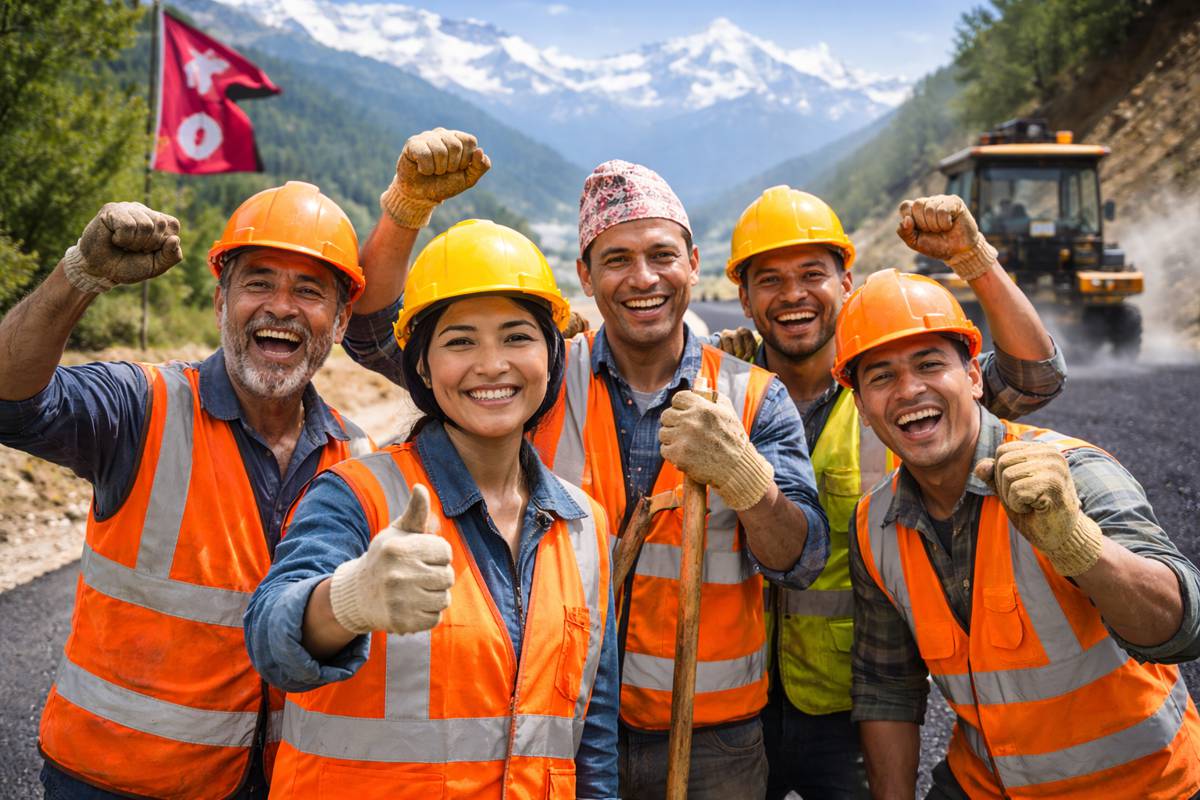
Ultimately, the push for better well-being and workplace culture in construction is about extending the same duty of care to mental health as has long existed for physical safety. It’s about creating an environment where a young apprentice, a veteran engineer, and a migrant labourer alike all feel they can speak up and be supported. It’s about making sure that no one in this high-pressure field ever feels truly alone. The industry’s slogan for safety has often been “everyone home safe each day.” Now, a broader vision is emerging: everyone home safe and sound. Achieving that will require continued commitment from all stakeholders, employers, workers, unions, and policymakers, to keep mental health and inclusion at the forefront. But if construction can build bridges and skyscrapers, it can surely build a culture that cares for its own. The foundation has been laid; it’s time to keep building on it, together.