China Pushes Autonomous Mining to New Heights
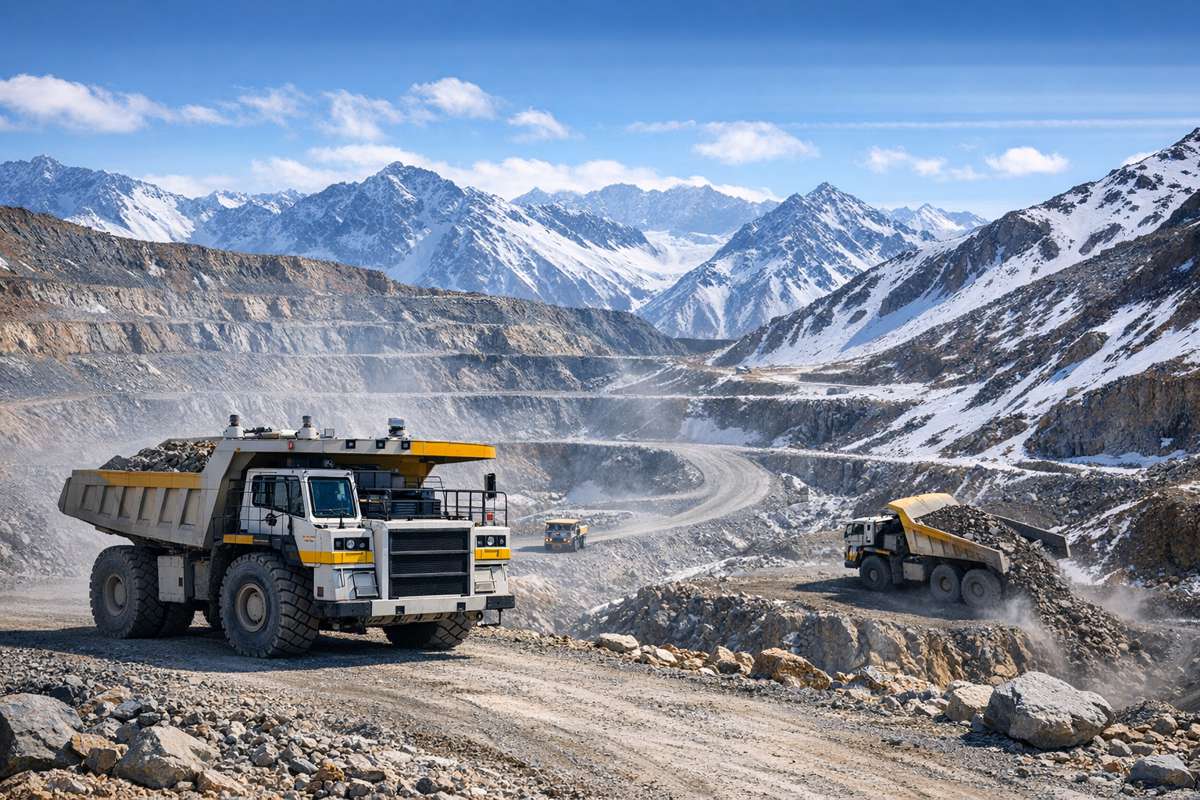
At an altitude where the air is thin, temperatures plunge well below freezing, and human endurance is stretched to its limits, China has quietly achieved a milestone that signals where the future of mining is heading. At the Huoshaoyun lead-zinc mine in Xinjiang’s Kunlun Mountains, domestically built unmanned haul trucks have successfully completed operational tests at 5,600 metres above sea level. The elevation places the site above the world’s highest permanent human settlement, in an environment where atmospheric oxygen levels are roughly half those at sea level.
The tests mark the world’s highest-altitude deployment of an autonomous mining transport system and underscore China’s accelerating push to remove people from the most dangerous industrial environments. According to Science and Technology Daily, the trials demonstrated that unmanned trucks could operate reliably despite strong winds, extreme cold, permafrost and chronic oxygen scarcity, conditions that make prolonged human work both hazardous and inefficient.
Huoshaoyun and the Strategic Importance of the Site
Huoshaoyun is no ordinary mine. Located deep in Xinjiang’s western highlands, the site hosts China’s largest known lead-zinc reserves, with proven metal reserves exceeding 21 million tonnes. Chinese media place the estimated economic value of those resources at more than 370 billion yuan, equivalent to roughly US$52.3 billion.
Developing such a deposit presents enormous logistical challenges. At 5,600 metres, even routine tasks expose workers to altitude sickness, hypothermia and fatigue, while seasonal weather extremes can halt operations entirely. As one report in The Star noted, the mine’s elevation means oxygen levels are “only about half those at sea level”, dramatically limiting the time human operators can safely spend on site.
Who Built the Autonomous Haulers
Crucially for the global construction and mining equipment sector, the unmanned trucks operating at Huoshaoyun are not imported machines. They are the product of a domestic collaboration between Huoshaoyun Lead-Zinc Mine Co., Ltd. and Beijing Linghang Zhitu Technology Company, a technology subsidiary of China Railway 19th Bureau Group.
Science and Technology Daily described the project as: “a jointly developed intelligent mining transport system integrating unmanned mining trucks, high-precision perception and cloud-network coordination”. The report makes clear that Beijing Linghang Zhitu Technology is responsible for the autonomous vehicle development and system integration, positioning the company as the effective hauler developer rather than a traditional off-highway OEM.
This distinction matters. Rather than retrofitting autonomy onto an existing foreign haul truck platform, the Huoshaoyun system reflects China’s broader strategy of building vertically integrated industrial technologies that combine vehicles, software, communications and infrastructure under domestic control.
How the System Works in Practice
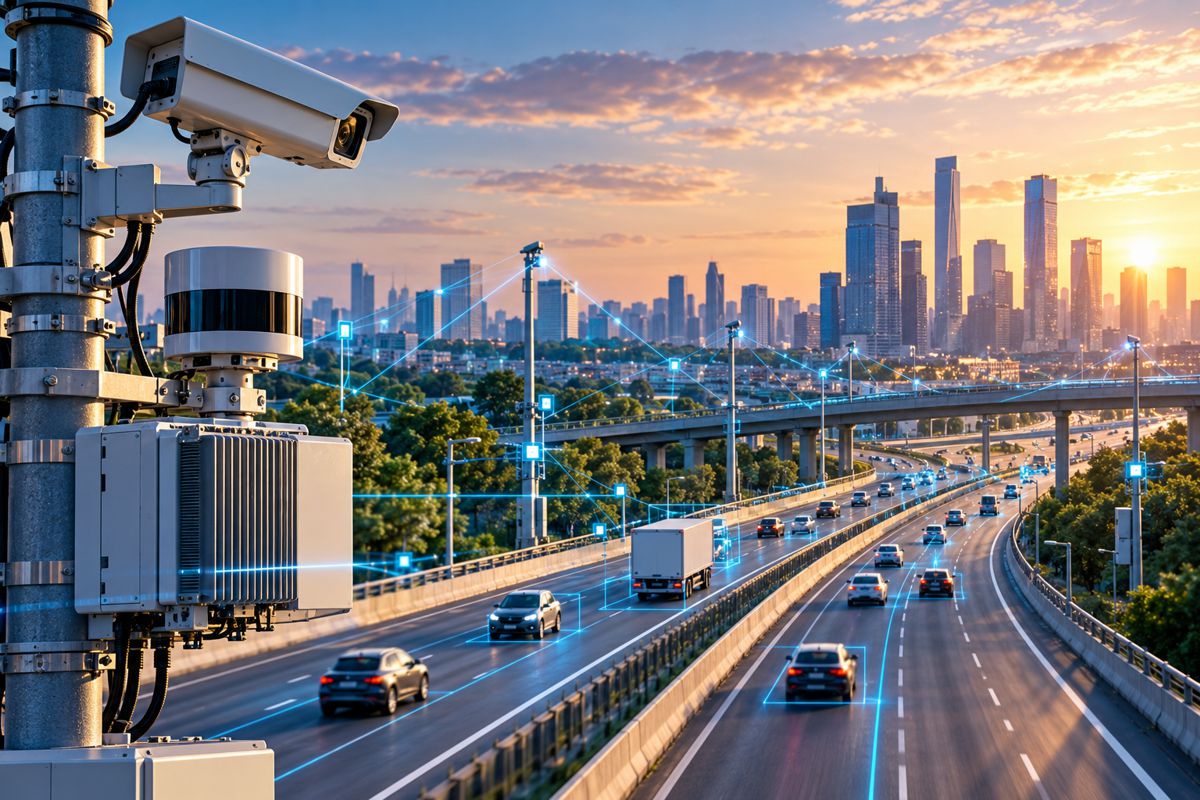
At the heart of the Huoshaoyun deployment is a 5G-enabled intelligent transport system designed to function with minimal human intervention. Multiple sources describe the system as relying on multi-sensor fusion, combining lidar, radar, cameras and positioning data to create a real-time perception model of the mine environment.
According to Science and Technology Daily, the trucks are coordinated through a cloud-network vehicle control platform that enables centralised scheduling, route planning and collision avoidance. The publication stated: “The intelligent mining transport system uses multi-sensor fusion perception and 5G cloud-network vehicle coordination to realise autonomous operation of mining trucks in high-altitude environments.”
The use of 5G connectivity is not incidental. High-bandwidth, low-latency communication allows continuous data exchange between vehicles and the control platform, enabling real-time decision-making even in rapidly changing weather or ground conditions.
Removing Humans from Harm’s Way
One of the clearest motivations behind the Huoshaoyun project is worker safety. Traditional mining at extreme altitude exposes personnel to cumulative health risks, including chronic hypoxia and cardiovascular strain, while also increasing the likelihood of accidents caused by fatigue or impaired judgement.
The Star reported that the unmanned trucks are intended to support “round-the-clock operations”, eliminating the need for drivers to work prolonged shifts in life-threatening conditions. It also noted that the system includes remote simulation cockpits, allowing operators at lower altitude to intervene if required without being physically present at the mine.
This approach reflects a broader shift in Chinese mining policy towards what officials increasingly describe as intelligent mining, where automation, connectivity and data replace manpower in the most dangerous parts of the value chain.
Proving Reliability at 5,600 Metres
From a technical standpoint, operating autonomous vehicles at such altitude is a significant achievement. Electronics, sensors and power systems behave differently in low-pressure, low-temperature environments, while snow, ice and permafrost can disrupt perception and traction.
Shanghai Metals Market reported that the Huoshaoyun trucks successfully completed full-process tests of ore loading and transportation, demonstrating that the system could maintain stability and accuracy throughout the haul cycle. The report described the trial as a key step towards expanding unmanned operations across the entire loading, hauling and dumping workflow.
These results suggest that the system is moving beyond experimental proof-of-concept and into the early stages of commercial viability, at least within tightly controlled environments such as large-scale open-pit mines.
A Signal to the Global Mining Industry
Internationally, the Huoshaoyun trials will not go unnoticed. Autonomous haulage systems are already in use at lower-altitude mines in Australia, North America and parts of Africa, typically supplied by established OEMs. What sets Huoshaoyun apart is the combination of altitude, domestic technology and integrated 5G connectivity.
Business Standard, summarising the development, described the site as the “world’s highest unmanned mine” and highlighted how China is leveraging telecommunications infrastructure alongside heavy engineering to accelerate automation. That convergence mirrors trends seen in smart highways, ports and logistics hubs, where connectivity is becoming as critical as concrete and steel.
Beyond Huoshaoyun
For China, Huoshaoyun is likely just the beginning. State media coverage frames the project as a template for future high-altitude and remote resource developments, particularly in western regions where harsh geography has historically limited exploitation.
Science and Technology Daily concluded that the system provides: “important technical support for the safe, efficient and green development of high-altitude mineral resources”. While the language is measured, the implication is clear. Autonomous, connected equipment is becoming a strategic enabler for unlocking deposits that would otherwise remain too dangerous or costly to mine.
What Comes Next
As the Huoshaoyun system moves towards wider deployment, attention will inevitably turn to scalability, interoperability and export potential. Whether Beijing Linghang Zhitu Technology evolves into a recognised global hauler developer or remains focused on domestic projects remains to be seen.
What is already evident is that the line between mining equipment manufacturer, technology integrator and infrastructure provider is blurring. At 5,600 metres above sea level, China has demonstrated that autonomy, connectivity and industrial ambition can operate together where humans cannot.