Wastewater Surveillance Goes Global to Improve Disease Detection
The next pandemic is unlikely to announce itself with a press conference. More often than not, emerging infectious diseases begin quietly, spreading unnoticed through communities long before health authorities recognise a problem. During the COVID-19 pandemic, wastewater surveillance emerged as one of the most effective tools for detecting outbreaks early, providing a real-time view of infection trends without relying on clinical testing. Yet this capability has remained largely confined to wealthier nations with extensive sewer infrastructure.
A new study led by researchers from Tufts University suggests that limitation may no longer be necessary. Working with international partners in Côte d’Ivoire, scientists have demonstrated that wastewater surveillance can function effectively in communities lacking conventional sewer systems. Their findings point towards a future where disease monitoring becomes accessible in some of the world’s most vulnerable regions, strengthening global preparedness against emerging health threats.
The implications extend well beyond public health, the research highlights how sanitation systems, urban drainage networks and environmental monitoring infrastructure are becoming increasingly important components of national resilience strategies. As cities expand and climate pressures intensify, integrating disease surveillance into basic infrastructure planning could become a standard requirement rather than a specialist public health exercise.
Briefing
- Researchers successfully detected SARS-CoV-2 and influenza A viruses in wastewater collected from open drainage channels and poultry markets in Côte d’Ivoire.
- The project demonstrates that wastewater surveillance can operate in low-resource environments without conventional sewer networks.
- Local laboratories and scientists were trained to conduct testing independently, reducing reliance on external expertise.
- Early detection of infectious diseases could improve global pandemic preparedness by identifying outbreaks closer to their point of origin.
- The findings reinforce the strategic importance of sanitation and environmental infrastructure in protecting public health.
A Pandemic Innovation That Changed Public Health Monitoring
Although wastewater monitoring became widely recognised during COVID-19, the concept itself is far from new. Public health agencies have used environmental sampling for decades to track disease transmission and verify disease elimination campaigns. The Global Polio Eradication Initiative, for example, routinely employs wastewater surveillance to detect poliovirus circulation, even when no clinical cases are reported.
The pandemic accelerated adoption on an unprecedented scale. Across North America, Europe and parts of Asia, wastewater treatment facilities became valuable epidemiological observatories. By analysing sewage samples, researchers could estimate infection trends days or even weeks before hospitals experienced surges in admissions. This early-warning capability proved particularly valuable when clinical testing resources were limited or when large numbers of infections went undiagnosed.
Several studies published by organisations including the World Health Organization and the Centers for Disease Control and Prevention have since highlighted wastewater surveillance as a cost-effective complement to traditional disease monitoring systems. Unlike clinical testing programmes, wastewater analysis captures information from entire communities regardless of whether individuals seek medical care or exhibit symptoms.
As surveillance technology matured, monitoring programmes expanded beyond COVID-19 to include influenza, respiratory syncytial virus (RSV), antimicrobial resistance markers and a range of other pathogens. In many jurisdictions, wastewater testing now forms a permanent element of public health infrastructure.
The Infrastructure Challenge Facing Billions
Despite its success, conventional wastewater surveillance depends heavily on one critical requirement: centralised sewer systems.
In countries with developed sanitation infrastructure, wastewater from thousands or even millions of residents is channelled through extensive pipe networks towards treatment facilities. Sampling equipment can be installed at strategic locations where wastewater converges, creating efficient monitoring points that represent large populations.
Globally, however, this model excludes a substantial proportion of humanity. According to estimates from the United Nations Children’s Fund and the World Health Organization Joint Monitoring Programme, billions of people still lack safely managed sanitation services. In many rapidly growing urban centres across Africa, Asia and parts of Latin America, wastewater frequently flows through open drains, informal channels or decentralised disposal systems.
These environments present major challenges for traditional surveillance methods. Sampling locations are less predictable, wastewater streams may be diluted by rainfall, and laboratory infrastructure can be limited. As a result, some of the regions considered most vulnerable to emerging infectious diseases have historically remained beyond the reach of wastewater monitoring programmes.
Researchers involved in the Tufts-led study sought to determine whether these barriers could be overcome using practical, locally deployable approaches.
Testing a New Model in West Africa
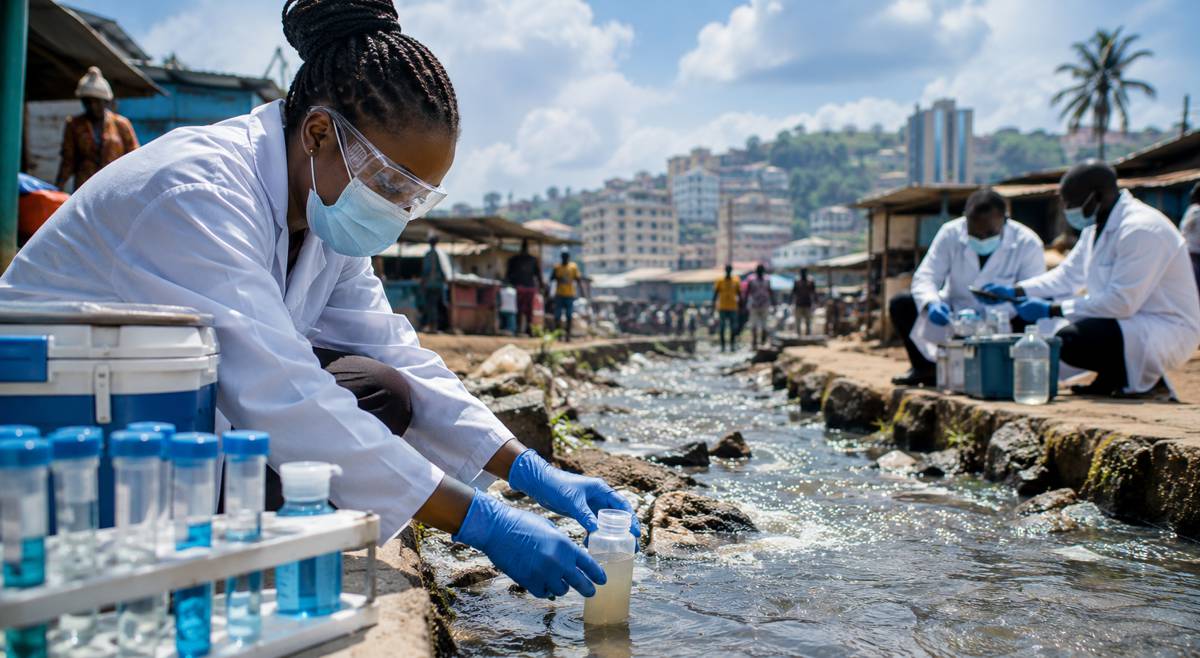
The research focused on Côte d’Ivoire, a nation whose growing urban population reflects many of the sanitation challenges faced across the developing world. Rather than relying on treatment plants and sewer interceptors, investigators targeted locations where wastewater naturally accumulated or flowed through communities.
Two urban neighbourhoods featuring open wastewater channels were selected alongside a poultry market where water used during bird processing was discharged into local drainage systems. These sites provided opportunities to examine both human and animal disease transmission pathways.
Researchers collected samples over a 12-week period and analysed them within local laboratory facilities. The team specifically searched for SARS-CoV-2, responsible for COVID-19, and influenza A viruses associated with avian influenza risks.
The results were encouraging. Nearly half of the wastewater samples originating from human sources contained evidence of SARS-CoV-2, while influenza A virus was detected in poultry-associated wastewater streams. Importantly, the project demonstrated that meaningful disease signals could be identified despite the absence of conventional sewer infrastructure.
Equally significant was the project’s emphasis on local capability development. Scientists trained local researchers and laboratory personnel to conduct sampling and testing procedures independently, establishing technical capacity that could continue beyond the study itself.
Infrastructure Meets Public Health Security
For professionals working in construction, water management and urban infrastructure, the findings reinforce an increasingly important reality: infrastructure systems are becoming integral components of public health protection.
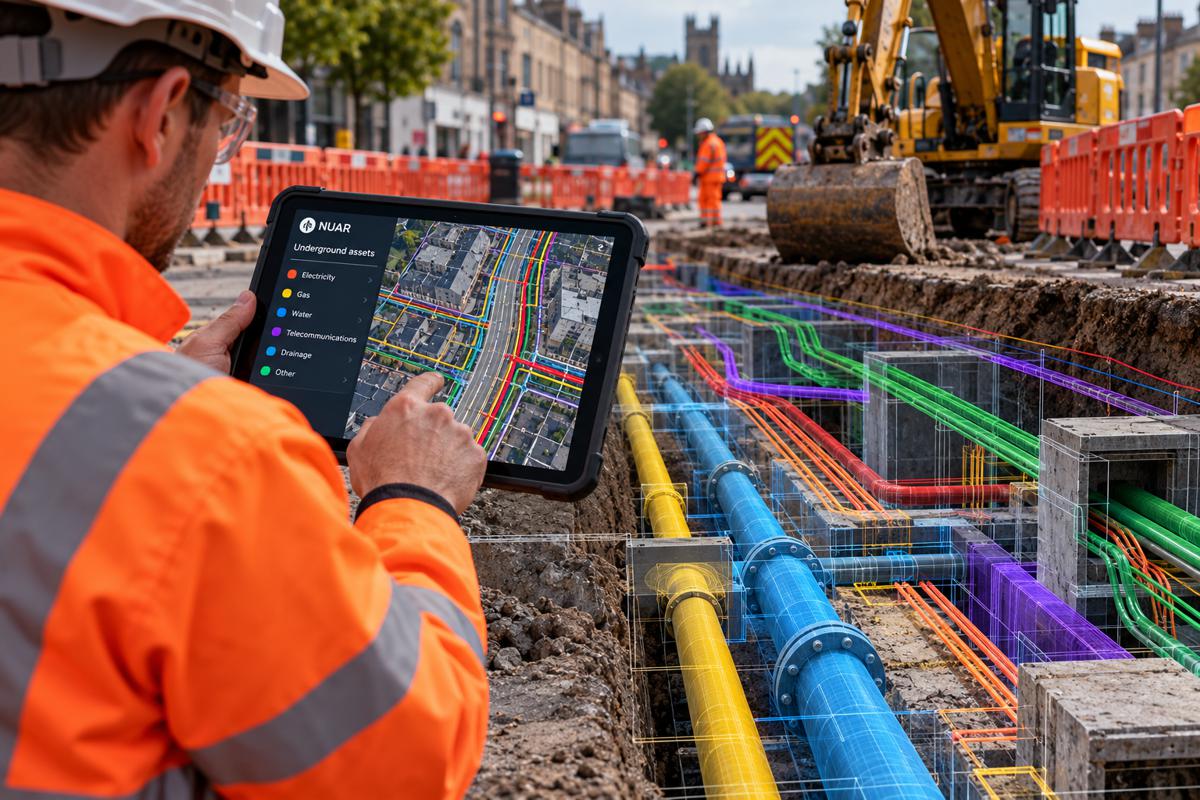
Historically, sewer networks were primarily justified through sanitation, environmental and quality-of-life benefits. Today, these systems offer additional value as sources of population-level health intelligence. Every wastewater network effectively becomes a monitoring platform capable of providing insight into disease trends, pharmaceutical consumption patterns and environmental contaminants.
This convergence of engineering and epidemiology creates new opportunities for infrastructure investment. Smart drainage systems, environmental sensors and digital monitoring platforms can transform conventional sanitation assets into multipurpose resilience infrastructure.
Urban planners are already beginning to incorporate public health considerations into infrastructure design. Concepts associated with smart cities increasingly include environmental monitoring capabilities that support rapid responses to biological threats. Wastewater surveillance fits naturally within this broader trend, particularly as analytical technologies become more affordable and accessible.
For low-income nations facing competing development priorities, scalable monitoring approaches that utilise existing drainage systems may prove especially attractive. Rather than waiting decades for complete sewer network deployment, authorities could establish disease surveillance programmes using infrastructure that already exists.
Detecting Outbreaks Before They Spread
One of the most compelling aspects of wastewater surveillance is its ability to identify emerging threats before clinical systems recognise them.
Many infectious diseases circulate silently for extended periods. Individuals may experience mild symptoms, remain asymptomatic, or lack access to healthcare facilities capable of confirming diagnoses. During this interval, transmission continues largely unnoticed.
Environmental surveillance offers a way to close this information gap. By monitoring wastewater, authorities gain visibility into community-level infection trends regardless of healthcare utilisation patterns.
The researchers involved in the Côte d’Ivoire project emphasised the international implications of this capability. Infectious diseases are increasingly influenced by global mobility, urbanisation and environmental change. An outbreak originating in one region can quickly become an international concern through modern transport networks.
The 2014 West African Ebola outbreak demonstrated how localised health crises can evolve into global emergencies. More recently, COVID-19 illustrated the extraordinary economic and social disruption associated with delayed detection of emerging pathogens.
Early identification remains one of the most effective tools for limiting disease spread. Surveillance systems capable of functioning close to potential outbreak sources therefore represent valuable investments in global health security.
Beyond COVID and Influenza
While the study focused on SARS-CoV-2 and influenza A, researchers see much broader potential for wastewater-based disease monitoring.
One pathogen highlighted during discussions surrounding the project was Lassa fever, a viral haemorrhagic illness endemic to parts of West Africa. Transmitted primarily through contact with rodents, Lassa fever often presents symptoms similar to malaria and other common illnesses, making diagnosis difficult in resource-constrained settings.
Many infections remain undetected, obscuring the disease’s true geographic distribution and public health impact. Wastewater surveillance could potentially provide a more accurate picture of transmission patterns, helping authorities allocate resources more effectively and identify emerging hotspots earlier.
The Tufts team had planned to investigate wastewater samples associated with a rural hospital where untreated waste entered nearby forest environments. Researchers hoped to assess whether Lassa virus could be detected using low-cost surveillance methods. According to the study discussion, those efforts were halted following funding reductions linked to changes affecting support from the United States Agency for International Development.
The interruption illustrates a broader challenge facing public health innovation. Demonstrating new surveillance techniques often requires sustained investment, particularly in regions where laboratory infrastructure remains limited. Without continued support, potentially valuable advances may struggle to progress from pilot projects to operational programmes.
Building a Global Early Warning Network
The development of wastewater surveillance in low-resource environments represents more than a technical achievement. It signals a shift towards more inclusive approaches to global disease monitoring.
As urban populations grow and environmental pressures increase, governments face mounting pressure to strengthen resilience against biological threats. Traditional healthcare systems remain essential, but environmental intelligence is becoming an increasingly important complement.
The Côte d’Ivoire study suggests that effective surveillance need not depend entirely on expensive infrastructure. With appropriate training, local laboratories, strategic sampling locations and adaptable testing protocols, communities lacking modern sewer systems can still participate in early warning networks.
For the construction and infrastructure sectors, the message is equally clear. Future sanitation systems may be evaluated not only for their ability to transport and treat waste but also for their role in generating actionable public health intelligence. The intersection of engineering, environmental management and disease surveillance is creating new expectations for infrastructure performance.
Every community produces wastewater. Turning that continuous stream of information into a practical defence against future outbreaks could become one of the most valuable public health innovations of the coming decade.