Arctic Mining Goes Autonomous as Greenland Resources Joins EU Robotics Initiative
The mining industry has long relied on human expertise to navigate some of the world’s harshest operating environments. Yet as mineral projects move deeper into remote regions and investors demand greater efficiency, safety and environmental accountability, digital technologies are increasingly becoming a critical part of project development. Nowhere is this shift more apparent than in the Arctic, where challenging weather, prolonged darkness and logistical constraints continue to test even the most experienced operators.
Greenland Resources‘ decision to participate in the European Union-backed BOREAS project places the Malmbjerg molybdenum project at the centre of a growing effort to modernise mineral exploration and extraction through robotics, automation and digital twin technology. Supported through Horizon Europe funding and coordinated by Sweden’s Luleå University of Technology, the initiative seeks to develop autonomous robotic systems capable of operating in Arctic subsurface and surface mining environments.
For Greenland Resources, the programme provides more than research funding. It offers access to emerging technologies that could reshape how mining projects collect geological information, monitor operational risks and optimise resource recovery. More broadly, the collaboration reflects an accelerating trend across the global mining sector as companies seek to harness robotics, artificial intelligence and real-time analytics to improve both productivity and sustainability.
Briefing
- Greenland Resources has joined the EU-funded BOREAS Arctic mining robotics programme led by Luleå University of Technology in Sweden.
- The company will receive a non-repayable Horizon Europe grant of €489,125 over four years to support research and implementation activities.
- Autonomous aerial and ground robotic systems will be tested for mapping, monitoring and geotechnical applications at the Malmbjerg project in Greenland.
- Data gathered by robotic systems will contribute to a real-time digital twin designed to improve resource recovery and environmental management.
- The initiative highlights growing investment in automation and robotics for remote mining operations worldwide.
Europe Expands Investment in Arctic Mining Innovation
The BOREAS project, formally titled Beyond Outreach: Robotised Exploration and Mining in the Arctic Subsurface, forms part of Horizon Europe’s Cluster 4 programme, which supports research into digital technologies, industry transformation and space-related innovation.
Led by Luleå University of Technology, the project brings together thirteen participating organisations from across Europe to address one of mining’s most persistent challenges: operating efficiently and safely in remote Arctic environments. The consortium has secured total funding of €7.1 million to develop and validate robotic technologies specifically designed for exploration and mining applications in northern regions.
Europe’s growing focus on critical minerals has intensified interest in Arctic resource development. The European Union’s Critical Raw Materials Act identifies the importance of securing reliable supplies of strategically important minerals while reducing dependence on external supply chains. As demand rises for metals required in renewable energy systems, electrification technologies and advanced manufacturing, improving access to remote mineral resources has become an increasingly important policy objective.
The BOREAS programme therefore sits at the intersection of several strategic priorities. It combines resource security, technological innovation, environmental stewardship and regional economic development into a single research framework capable of generating practical solutions for future mining operations.
Malmbjerg Becomes a Testbed for Autonomous Mining Technologies
At the centre of Greenland Resources’ participation lies the Malmbjerg molybdenum project in eastern Greenland. The deposit is widely regarded as one of the world’s significant undeveloped molybdenum resources and has attracted attention because of its potential contribution to future industrial supply chains.
Under the agreement, Greenland Resources A/S will undertake applied research and implementation activities over a four-year period supported by the €489,125 grant. The funding is non-repayable and intended to facilitate the testing and deployment of technologies developed through the broader BOREAS initiative.
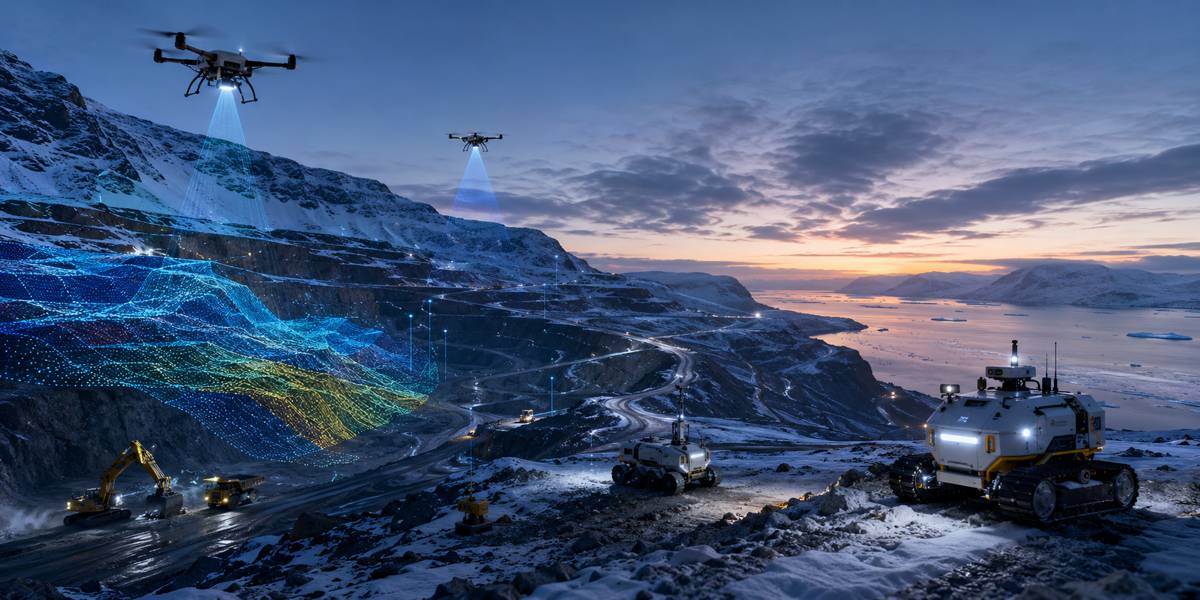
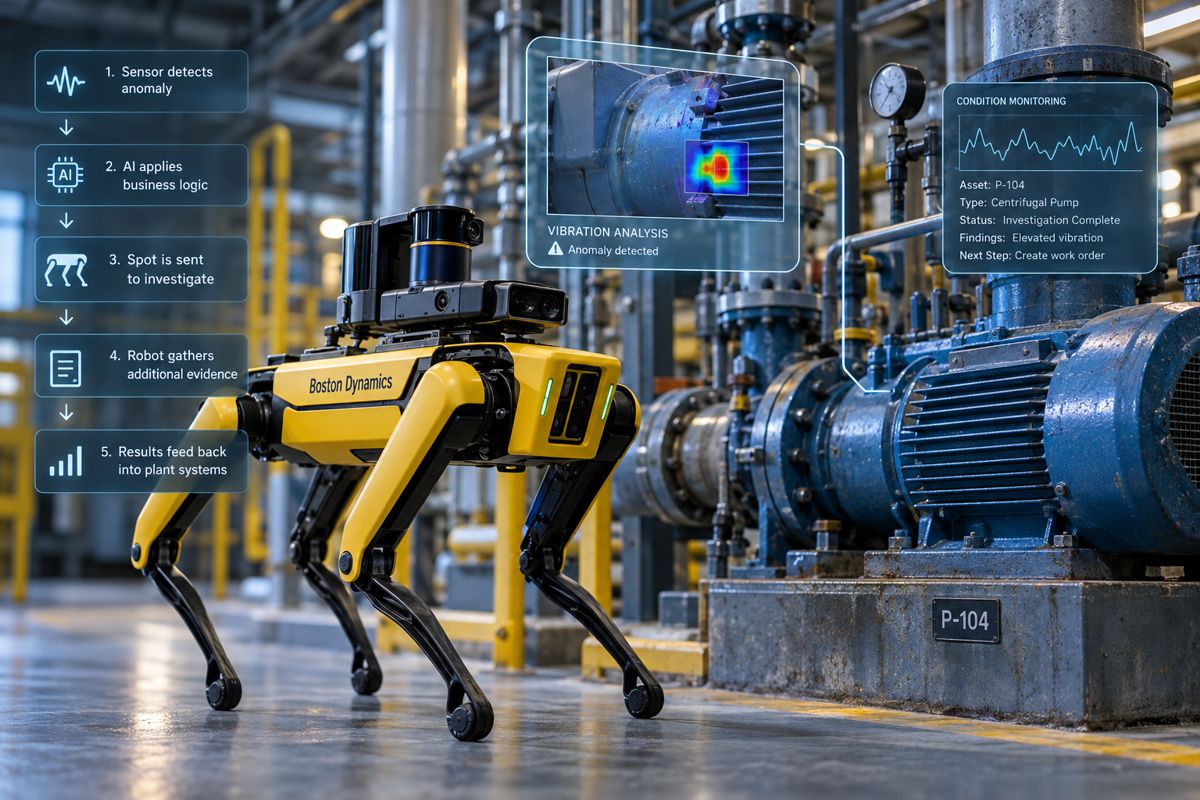
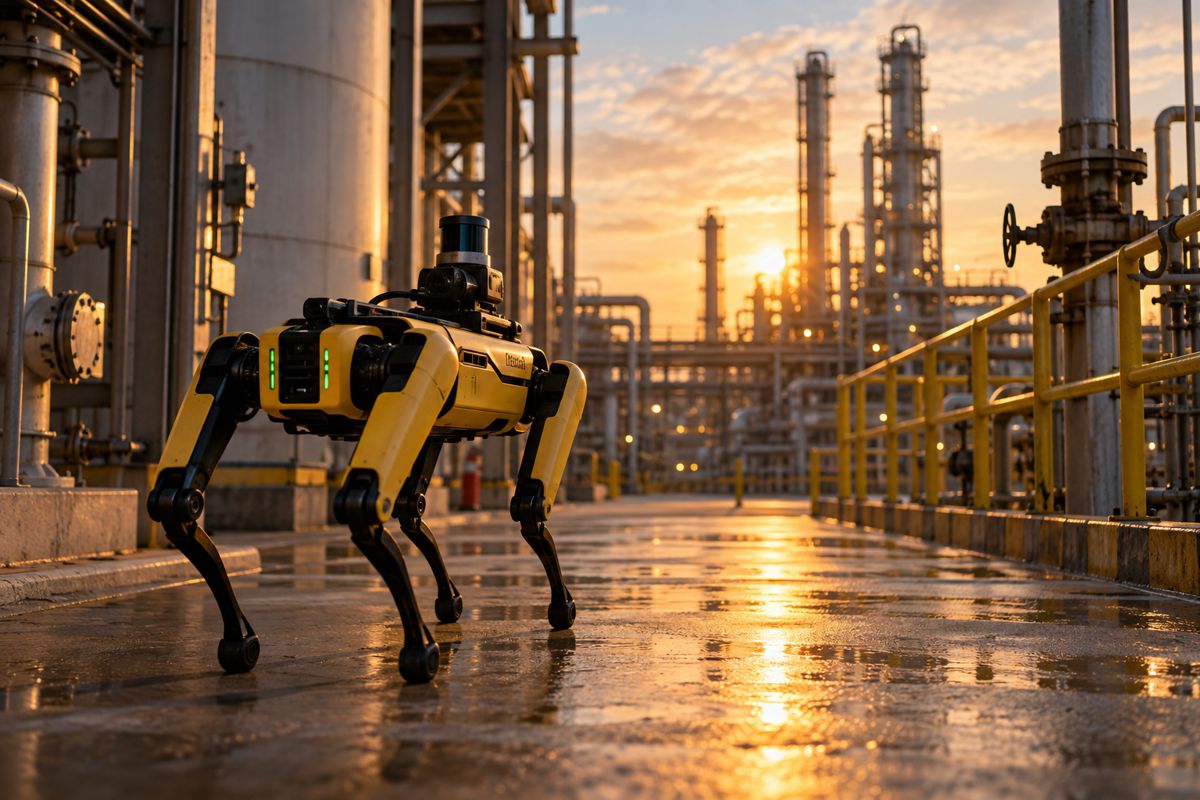
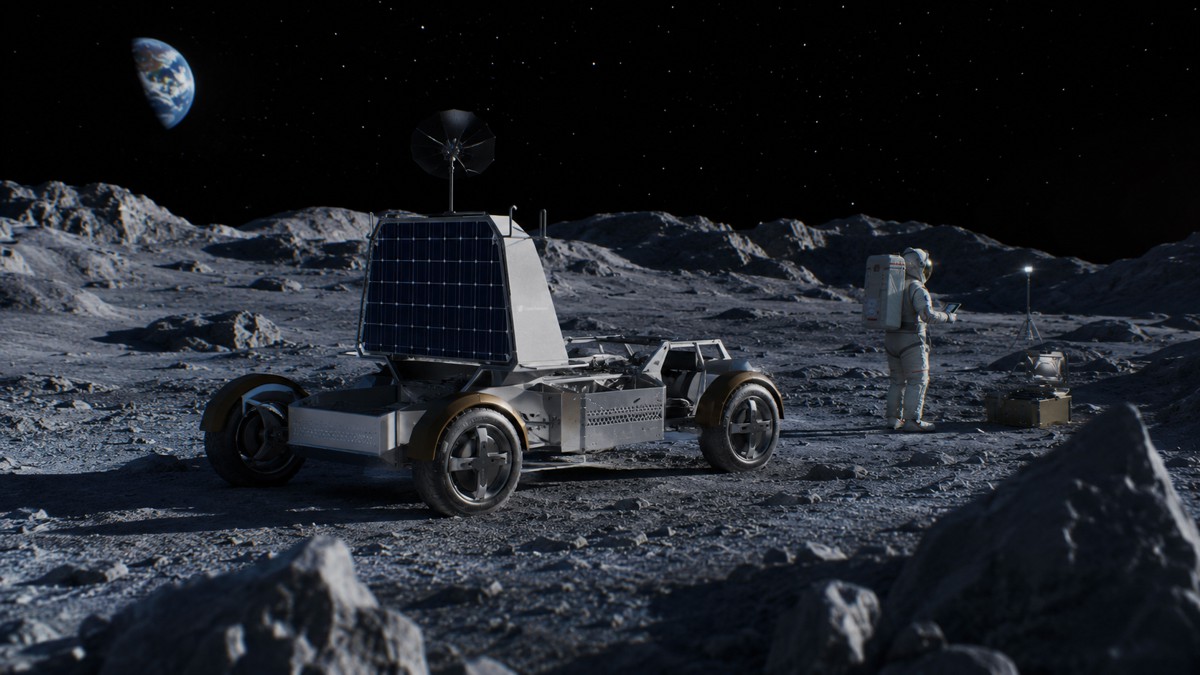
The project envisions fleets of autonomous aerial and ground-based robotic systems operating across mining environments. In some cases, entirely new robotic platforms may be developed. In others, existing equipment could be enhanced through the integration of robotic controls, autonomous navigation systems and advanced sensing technologies.
Such systems could potentially undertake continuous monitoring tasks that would otherwise require significant manpower and exposure to difficult environmental conditions. Arctic mining operations frequently encounter periods of poor visibility, severe weather and extended darkness during winter months. Automation offers a means of maintaining operational awareness regardless of these challenges.
Improving Geotechnical Monitoring in Harsh Conditions
Among the most immediate potential applications for autonomous systems is geotechnical monitoring.
Slope stability remains a critical issue in open-pit mining. Ground movement, rockfalls and geotechnical failures can create safety risks, disrupt production schedules and increase operating costs. Traditionally, monitoring programmes rely upon a combination of field inspections, surveying equipment and remote sensing technologies.
The robotic systems envisioned under BOREAS could significantly expand monitoring capabilities by providing continuous data collection across large operational areas. Equipped with advanced sensors, autonomous aerial and ground platforms may be able to identify changes in terrain conditions, detect emerging geohazards and support early-warning systems.
This capability is particularly valuable in Arctic environments where weather conditions may restrict access for personnel. Robots capable of operating autonomously during winter darkness could continue gathering critical information when conventional inspection methods become more challenging.
By extending observation coverage and increasing monitoring frequency, mining operators gain a more comprehensive understanding of changing site conditions. Better information ultimately supports more informed operational decisions and potentially reduces risk exposure.
Digital Twins Move from Concept to Operational Reality
One of the most significant aspects of the BOREAS initiative is the planned integration of collected data into a real-time digital twin of the mining operation.
Digital twins have emerged as one of the most transformative technologies within infrastructure, industrial operations and resource extraction. Essentially, a digital twin is a continuously updated virtual representation of a physical asset or system that reflects real-world conditions through live data streams.
Major mining companies worldwide are increasingly adopting digital twins to improve planning, maintenance and operational performance. Firms such as Rio Tinto, BHP and Anglo American have invested heavily in digitalisation strategies that leverage real-time operational data to enhance decision-making.
At Malmbjerg, robotic monitoring data would feed directly into a digital twin environment capable of modelling geological conditions, operational performance and environmental impacts. As information is updated, the virtual model can provide increasingly accurate insights into resource characteristics and mining conditions.
The result is a more dynamic understanding of the operation compared with traditional static planning models. Engineers and operators gain access to information that evolves alongside actual site conditions, enabling more responsive management strategies.
Unlocking Greater Resource Recovery
The value of advanced data systems extends beyond operational awareness.
According to the project framework, robotic data collection and digital twin analysis may help identify specific geological zones suitable for targeted treatment and recovery of by-product magnesium resources. Enhanced geological understanding allows operators to distinguish between different material types with greater precision and potentially optimise extraction strategies accordingly.
Selective mining and targeted processing have become increasingly important across the industry as companies seek to maximise resource utilisation while reducing waste generation. Improved geological characterisation can contribute to higher recovery rates and more efficient processing operations.
The integration of real-time data into block modelling systems represents another important development. Block models serve as the foundation of mine planning by defining the distribution and characteristics of mineral resources throughout a deposit.
When continuously updated using field data, these models become more accurate representations of actual geological conditions. This improved accuracy can influence extraction sequencing, processing decisions and long-term production planning.
Environmental Management Becomes More Data Driven
Environmental performance has become a defining consideration for modern mining projects. Regulatory expectations, investor scrutiny and community engagement requirements all place increasing emphasis on transparent environmental management. The BOREAS initiative aims to support these objectives through enhanced monitoring and data integration capabilities.
Real-time information regarding waste rock management, geological conditions and operational activities could assist environmental compliance efforts by improving visibility across the entire mining system. Early detection of potential issues enables operators to respond more rapidly and implement corrective measures before problems escalate.
Digital twins also provide opportunities for scenario modelling. Alternative operational strategies can be evaluated virtually before implementation, helping operators understand potential environmental consequences and optimise decision-making processes.
This transition toward predictive environmental management mirrors broader developments occurring across infrastructure sectors, where digital technologies increasingly support asset resilience, sustainability and lifecycle optimisation.
Mining’s Autonomous Future Is Taking Shape
Mining automation is no longer limited to large haul trucks operating on carefully controlled routes. The next phase of industry transformation involves interconnected networks of autonomous systems working collaboratively across exploration, extraction, monitoring and environmental management functions.
Research organisations estimate that mining remains among the sectors most likely to benefit from robotics due to its remote operating environments, repetitive processes and significant safety considerations. Advances in artificial intelligence, sensor technologies, machine vision and communications networks continue expanding the range of tasks that can be automated.
The Arctic presents an especially compelling proving ground. Conditions that challenge human operators often provide strong justification for robotic deployment. If autonomous systems can demonstrate reliability under Greenland’s demanding environmental conditions, their applicability elsewhere becomes considerably broader.
Greenland Resources’ involvement in BOREAS therefore represents more than participation in a research project. It provides an opportunity to help shape technologies that may influence how future mines are designed, monitored and managed.
Building the Digital Arctic Mine
The mining sector’s digital transformation continues to gather momentum as operators seek safer, more efficient and more sustainable methods of resource development.
Through its participation in the BOREAS programme, Greenland Resources gains access to a collaborative framework exploring how robotics, autonomous systems and digital twins can address some of Arctic mining’s most demanding operational challenges. The technologies under development could strengthen geotechnical monitoring, improve resource recovery and enhance environmental oversight while reducing reliance on manual inspection activities.
As critical mineral demand grows and remote resource development becomes increasingly important, innovations emerging from projects such as BOREAS may prove influential well beyond Greenland. The future Arctic mine is unlikely to rely solely on heavy equipment and human observation. Increasingly, it will also depend on fleets of intelligent machines continuously gathering data and feeding digital models that help operators make better decisions in real time.
For an industry built on extracting value from geological information, that evolution may prove just as important as the minerals themselves.