Ouster Redefines Machine Vision With Native Colour LiDAR and Physical AI Ambitions
Autonomous machines are becoming a far more serious proposition for the construction, mining, transport and infrastructure sectors. From robotic survey crews and autonomous haul trucks to intelligent traffic systems and AI-powered industrial inspection, the industry is shifting steadily toward machines capable of perceiving and reacting to the physical world with minimal human intervention. That transition, however, depends heavily on one stubborn bottleneck: perception.
For years, lidar technology has been regarded as one of the most promising solutions for machine perception because it provides precise three-dimensional spatial awareness. Yet traditional lidar systems have largely operated in a monochrome world, capturing geometry and depth but lacking the colour and contextual understanding humans naturally rely upon. Cameras filled part of that gap, though combining multiple sensor streams introduced complexity, latency, calibration headaches and reliability concerns in harsh industrial environments.
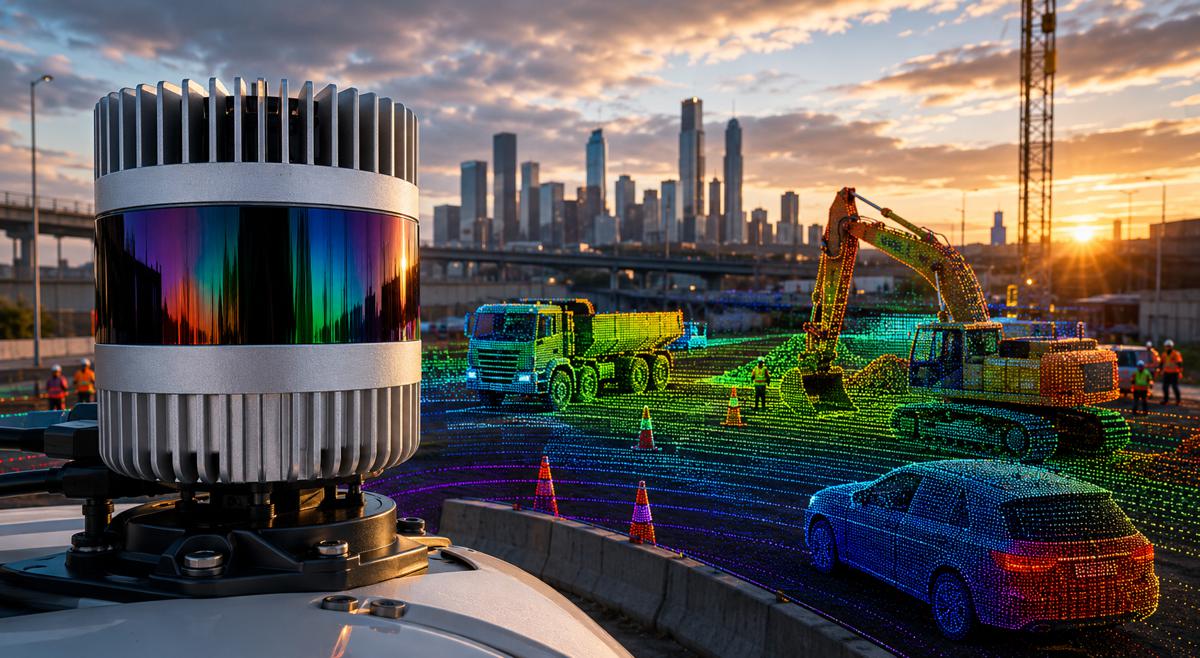
Ouster has now unveiled its new Rev8 OS family of digital lidar sensors powered by its next-generation L4 Ouster Silicon. The company claims the platform introduces the world’s first native colour lidar sensors while simultaneously doubling range and resolution compared with its previous generation hardware. Just as significantly, the technology has been engineered with functional safety, scalability and long-term commercial deployment in mind rather than remaining confined to research labs and prototype vehicles.
The launch matters because infrastructure industries are entering a period where physical AI systems are expected to operate in increasingly complex environments. Whether it’s autonomous machinery navigating quarries, drones inspecting bridges, robotic systems working inside warehouses or smart road infrastructure managing traffic flows, the need for richer environmental perception is accelerating rapidly. Ouster’s move suggests the sector may now be crossing an important threshold where lidar evolves from a specialist sensing component into a foundational platform for large-scale industrial autonomy.
Briefing
- Ouster has launched the Rev8 OS family of lidar sensors powered by next-generation L4 Ouster Silicon
- Rev8 introduces what the company describes as the world’s first native colour lidar sensors
- The new platform delivers up to double the range and resolution of previous Ouster sensors
- Rev8 has been designed for automotive-grade functional safety, cybersecurity and mass-scale deployment
- Ouster has also integrated Rev8 across the NVIDIA Jetson Platform to accelerate Physical AI and robotics development
Native Colour Lidar Changes the Conversation
The headline feature of Rev8 is undoubtedly native colour lidar. While lidar systems traditionally map physical geometry using laser reflections, they generally lack direct colour awareness. Most advanced autonomous systems therefore rely on sensor fusion between lidar and camera systems to combine depth information with visual context.
Ouster’s approach attempts to eliminate that separation entirely. Instead of stitching data together through software pipelines, every lidar point generated by Rev8 is effectively captured with colour data embedded from the outset. According to the company, this allows each point to maintain precise spatial and temporal alignment while dramatically reducing latency and calibration complexity.
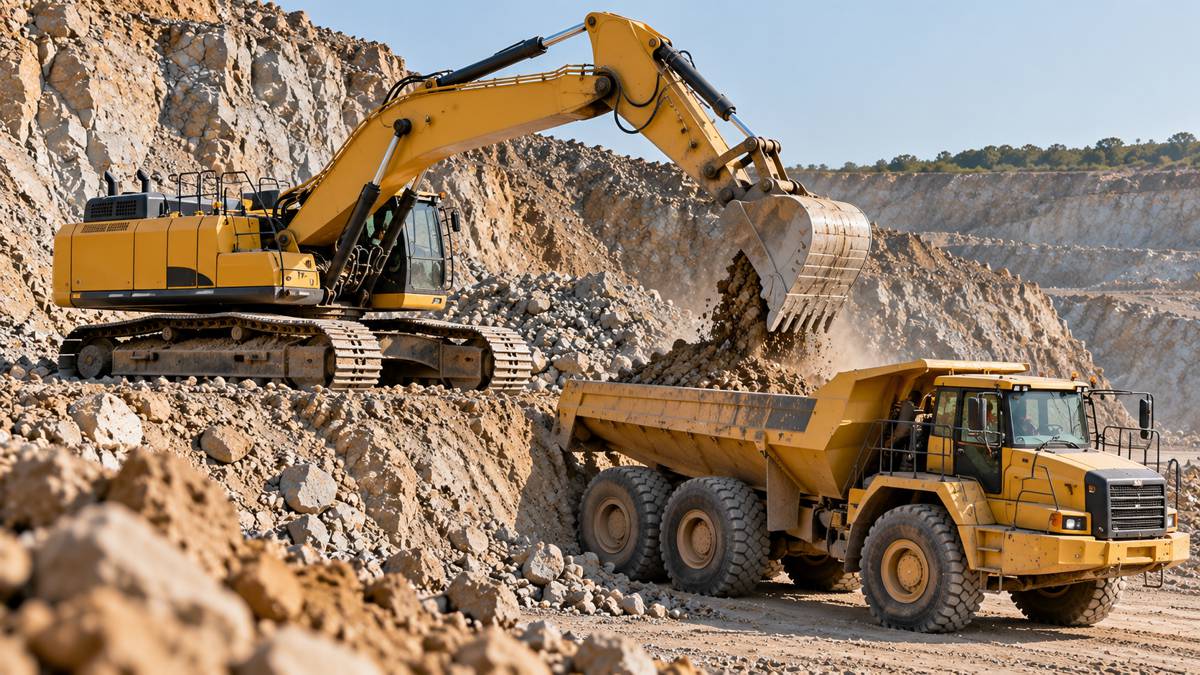
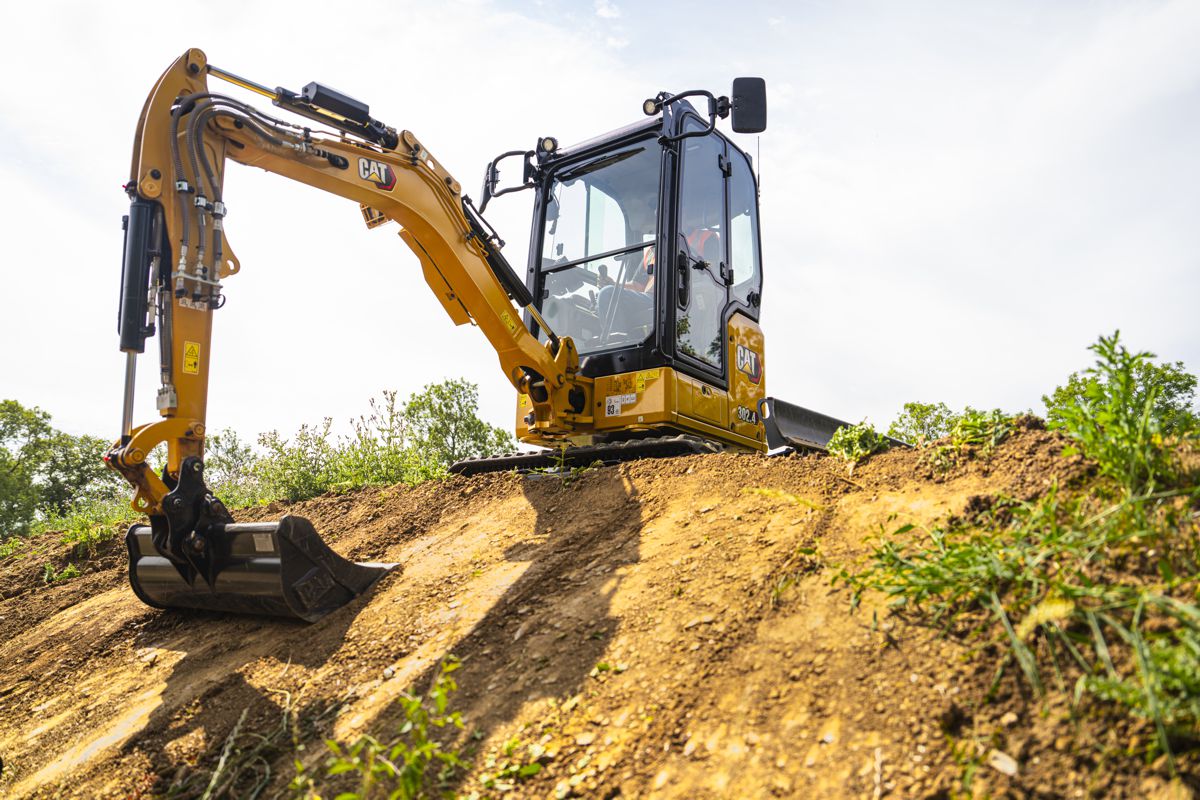
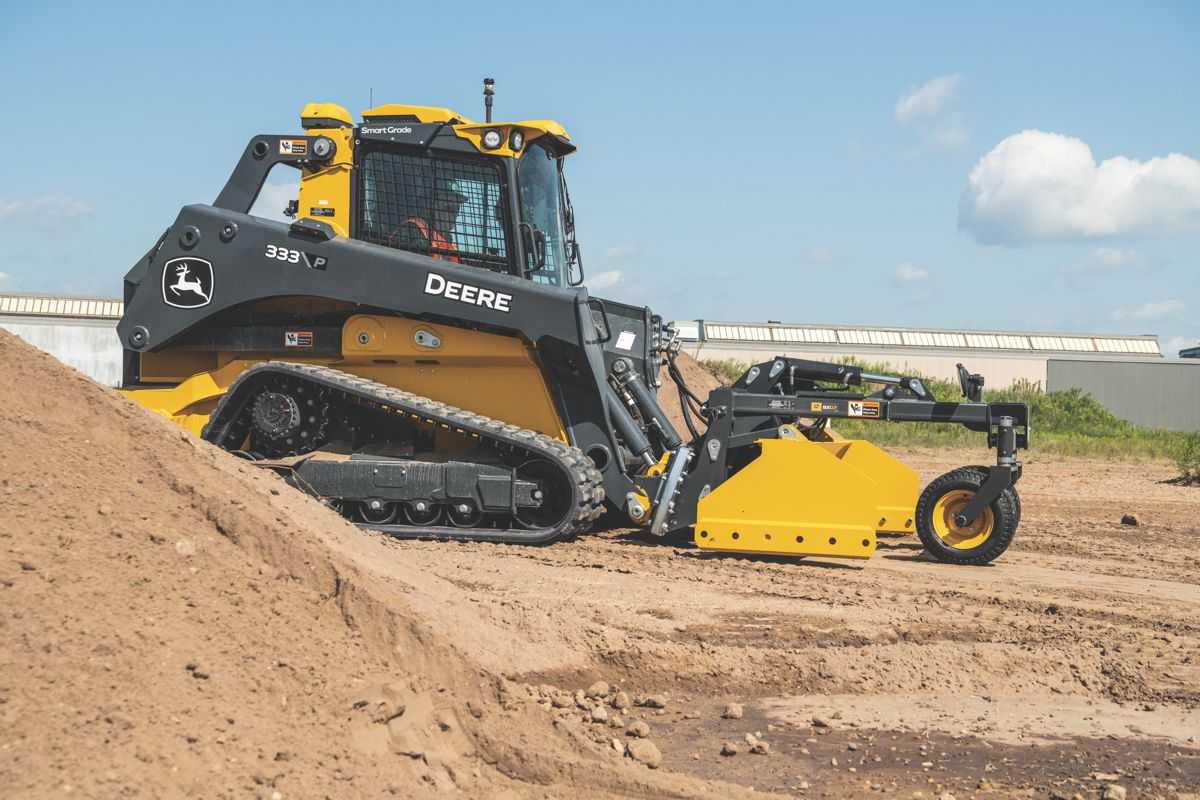
That shift could have considerable implications for infrastructure and industrial operations. Autonomous road maintenance vehicles, for example, may gain an improved ability to distinguish lane markings, traffic signage and temporary work-zone indicators under difficult lighting conditions. Mining equipment could better differentiate terrain, hazards and personnel in dust-heavy environments. Smart city infrastructure might process richer environmental data streams without relying on large multi-sensor arrays.
Ouster says its native colour sensing is enabled through patented Ouster Silicon combined with embedded Fujifilm colour science technology. The platform reportedly supports 48-bit colour depth alongside 116 dB of dynamic range, maintaining performance from extremely low-light conditions through to intense daylight exposure reaching two million lux.
That matters because one of the persistent challenges facing autonomous systems is environmental variability. Infrastructure assets don’t operate inside controlled laboratories. They work in tunnels, ports, deserts, snowstorms, urban glare and construction sites filled with dust, vibration and unpredictable movement. Any perception system intended for commercial infrastructure deployment has to survive those conditions consistently and economically.
Building Sensors for Physical AI Rather Than Demonstrations
The term “Physical AI” has increasingly become shorthand for AI systems capable of interacting directly with the real world through robotics, autonomous mobility and industrial automation. Analysts at McKinsey & Company and Gartner have both identified physical AI and embodied intelligence as major growth sectors likely to reshape logistics, manufacturing, infrastructure management and mobility over the next decade. Ouster is clearly positioning Rev8 squarely within that emerging ecosystem.
The company’s L4 architecture substantially expands sensor processing capability compared with prior generations. According to Ouster, the platform can process up to 10.4 million points per second and handle off-chip bandwidth of 22.4 gigabits per second. The system also reportedly detects up to 20 trillion photons per second while operating with picosecond timing precision.
Those specifications aren’t merely marketing figures for engineers to admire. In practical terms, they translate into improved environmental fidelity at longer ranges and higher speeds. That capability becomes essential when machines must make safe navigation decisions in dynamic environments such as motorways, industrial yards or active construction zones.
The flagship OS1 Max sensor particularly targets those demanding applications. Featuring a 256-channel architecture powered by the L4 Max platform, the sensor reportedly delivers detection ranges of up to 200 metres at 10 per cent reflectivity and maximum detection distances of 500 metres within a 45-degree field of view.
For autonomous transport and industrial applications, longer-range perception creates more decision-making time. Vehicles travelling at motorway speeds, automated mining trucks operating in remote quarries or robotic systems working alongside humans all depend on milliseconds of additional reaction time to improve operational safety and reliability.
“Rev8 is the most advanced family of lidar sensors ever released and sets a new standard in sensing,” said Ouster CEO Angus Pacala. “With the L4 Ouster Silicon, we are delivering on the promise of our digital architecture to deliver exponential improvements in performance, doubling our core specs and simultaneously introducing the world’s first native color lidar to give machines 3D human-like sight for the next era of Physical AI.”
Safety Certification Becomes a Commercial Necessity
One area separating experimental autonomy from commercially deployable infrastructure systems is functional safety compliance. Construction firms, transport authorities, mining operators and industrial clients increasingly expect automation technology to meet rigorous international safety standards before deployment. Ouster has emphasised that Rev8 was engineered specifically with those requirements in mind.
The sensors are described as automotive-grade and cybersecure to ISO 21434 standards while being designed for ASIL-B compliance under ISO 26262 alongside SIL-2 and PLd functional safety frameworks. Those certifications are especially relevant for autonomous vehicles, industrial robotics and safety-critical infrastructure applications where system failures carry potentially severe operational consequences.
Cybersecurity has also become a growing concern for connected infrastructure. Smart transport systems, remote industrial operations and autonomous fleets are all becoming increasingly vulnerable to digital threats as connectivity expands. Hardware-level security therefore moves from being a desirable feature to a baseline requirement.
Equally notable is Ouster’s emphasis on affordability and long-term production stability. Many autonomous sensing technologies have historically struggled to transition from expensive pilot deployments into scalable commercial programmes. Ouster says Rev8 has been designed for high-volume manufacturing with a planned 10-year production lifecycle.
That kind of lifecycle assurance matters enormously to infrastructure operators. Road authorities, industrial fleets and mining operators typically procure assets with operational horizons measured in decades rather than software release cycles. Hardware consistency, replacement availability and long-term supplier stability become critical purchasing considerations.
NVIDIA Collaboration Strengthens AI Ecosystem Position
Alongside the Rev8 hardware launch, Ouster also announced expanded integration across the NVIDIA Jetson Platform, strengthening ties between sensing hardware and accelerated AI computing.
The partnership reflects a broader industry trend toward tightly integrated perception and AI development ecosystems. Sensors alone no longer define autonomous capability. What increasingly matters is how efficiently perception data flows into AI models, simulation tools and real-time decision systems.
Ouster says it has developed dedicated NVIDIA JetPack plugins, including integration with Isaac ROS, allowing Rev8 point-cloud data to feed directly into NVIDIA’s hardware-accelerated perception pipelines. The company also confirmed support within NVIDIA Isaac Sim, enabling developers to generate synthetic lidar training data and validate perception systems before physical deployment.
Simulation environments are becoming increasingly important across construction and infrastructure industries because they allow organisations to train AI models without exposing live operations to unnecessary risk. Digital twins, robotic testing environments and synthetic data generation are rapidly moving into mainstream infrastructure workflows.
The integration also supports edge processing using NVIDIA Jetson AGX Orin and Jetson Thor hardware, allowing low-latency perception processing for applications such as SLAM, obstacle detection and sensor fusion.
“Ouster and NVIDIA’s expanded collaboration marks a pivotal moment for the robotics community,” said Angus Pacala. “By integrating our Rev8 sensors with NVIDIA Jetson, we’re ensuring rich, high-fidelity 3D digital lidar data is fully harnessed by NVIDIA’s accelerated computing and development tools.”
Infrastructure Industries Prepare for Wider Adoption
Perhaps one of the strongest indicators of Rev8’s commercial significance lies in the list of organisations intending to adopt the technology. Ouster says companies across robotics, mining, industrial automation, smart infrastructure and autonomous mobility sectors are preparing deployments.
That list includes organisations such as Google, Liebherr, Epiroc, Skydio, Seegrid and Volvo Autonomous Solutions among others. For the infrastructure sector, that breadth of interest highlights how autonomy is no longer confined to passenger vehicles. Heavy industry is increasingly emerging as one of the most commercially viable early adopters of advanced perception systems.
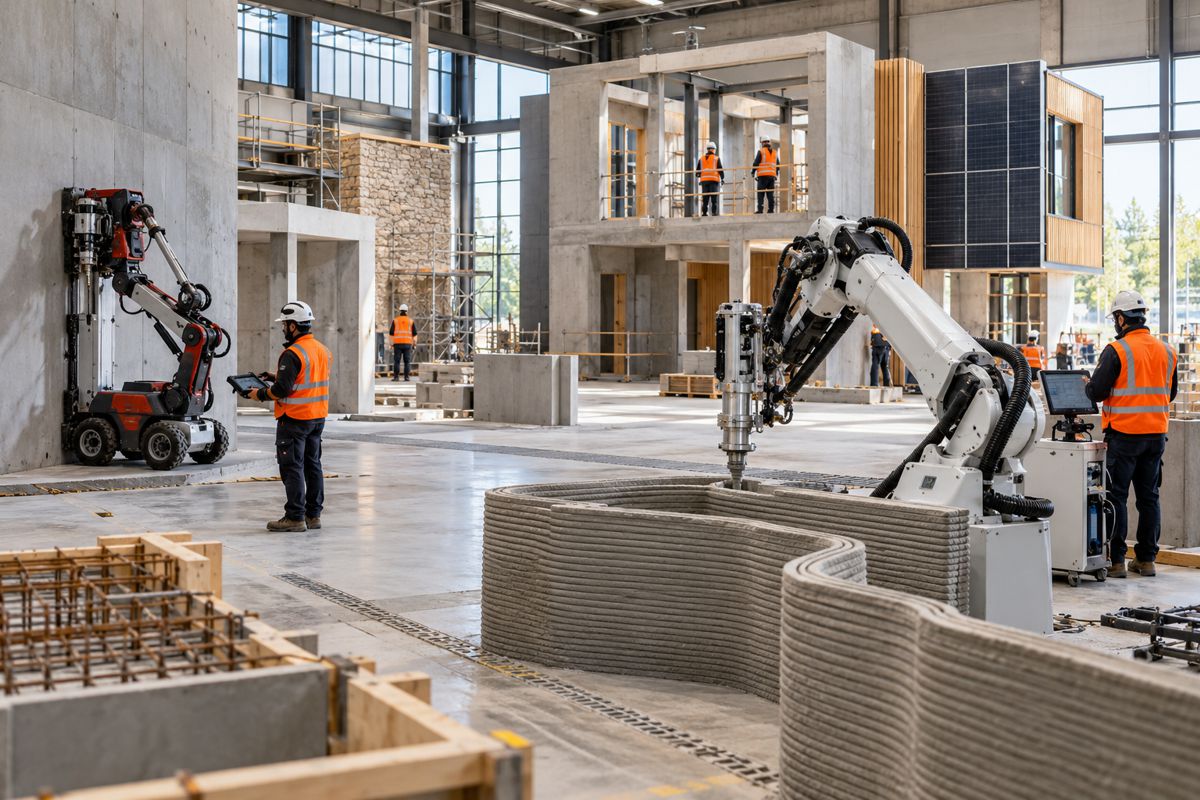
Mining operations are deploying autonomous haulage systems to improve productivity and reduce exposure to hazardous environments. Construction firms are exploring robotic surveying, autonomous earthmoving and digital site management. Logistics operators are investing heavily in automated yards and warehouse systems. Municipalities continue expanding smart infrastructure initiatives involving traffic monitoring, urban mobility and infrastructure inspection. All of those systems depend on reliable environmental perception.
At the same time, governments worldwide continue investing aggressively in digital infrastructure programmes. The European Union’s digital transport initiatives, smart mobility programmes in the Gulf states, industrial automation growth across Asia and infrastructure modernisation spending in North America are collectively creating fertile ground for sensing technologies capable of supporting autonomous operations at scale.
The Next Stage of Machine Perception
Lidar technology has evolved rapidly over the past decade, though much of the public discussion has remained centred around autonomous passenger vehicles. Rev8 suggests the technology may now be entering a broader industrial phase where infrastructure, logistics, robotics and heavy industry become equally important markets.
Ouster’s focus on native colour sensing, long-range performance, functional safety and scalable deployment reflects a growing recognition that the next generation of AI systems must operate effectively outside carefully controlled environments.
Machines are steadily being asked to navigate complex road networks, construction sites, industrial facilities and public infrastructure alongside humans. That transition demands perception systems capable not only of seeing depth and distance, but also understanding environmental context with increasing sophistication.
Rev8 won’t solve every challenge facing autonomy overnight. Sensor cost, regulation, liability, infrastructure readiness and AI reliability all remain major industry hurdles. Yet the launch does mark another step toward making physical AI systems commercially practical rather than merely technologically impressive.
For infrastructure industries wrestling with labour shortages, operational efficiency pressures and growing demands for safer worksites, that evolution is likely to attract considerable attention over the coming years.
Machines Begin Seeing the World in Colour
As AI continues moving from software environments into roads, factories, construction sites and industrial operations, perception technology is becoming the defining battleground for autonomy. The companies that solve real-world sensing challenges economically and reliably are likely to shape the next era of industrial automation.
Ouster’s Rev8 platform represents an ambitious attempt to move beyond incremental lidar improvements and fundamentally rethink how machines perceive the physical world. Native colour sensing, tighter AI integration and industrial-grade functional safety together point toward a future where autonomous systems operate with far richer situational awareness.
Infrastructure sectors have historically adopted automation more cautiously than consumer technology markets, largely because the consequences of failure are far greater. That caution isn’t disappearing anytime soon. Still, the combination of labour pressures, productivity demands and accelerating digital infrastructure investment means the appetite for reliable autonomous capability is growing steadily.
Whether Rev8 becomes a defining industry platform remains to be seen. What’s clear, though, is that the race to give machines more human-like perception has entered a new phase, and the infrastructure sector is no longer watching from the side-lines.