Hydrogen Refuelling Networks Push Safety Testing into Focus
Hydrogen may still represent a relatively small slice of the global transport energy market, yet investment in hydrogen infrastructure is accelerating at a pace few in the energy sector can ignore. Governments across Europe, Asia and North America are pouring billions into hydrogen corridors, heavy transport decarbonisation programmes and industrial fuel transition strategies. As that build-out gathers momentum, one uncomfortable reality sits at the heart of the industry. Hydrogen is exceptionally difficult to manage safely.
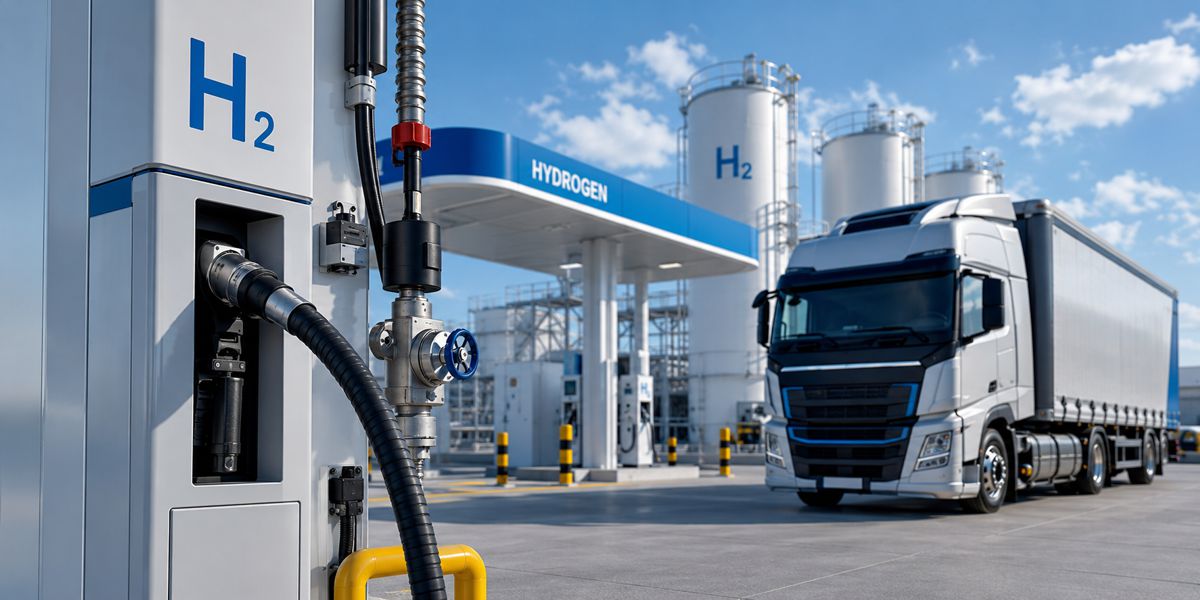
Unlike conventional liquid fuels, hydrogen molecules are tiny, highly diffusive and capable of igniting across a wide range of concentrations. A minor leak in poorly designed equipment can quickly escalate into a serious safety incident, particularly in high-pressure refuelling environments serving buses, trucks, rail systems and industrial fleets. That challenge has pushed component certification and testing firmly into the spotlight as the hydrogen economy begins shifting from pilot projects to operational infrastructure.
UL Solutions has now launched a new suite of safety testing and certification services for hydrogen fuelling station valves and dispenser hoses. The move reflects a broader shift taking place across the infrastructure sector, where regulators, fleet operators, insurers and investors increasingly want independently verified safety assurance before committing to large-scale hydrogen deployments.
The new services focus on evaluating critical fuelling station components against internationally recognised ISO 19880 standards. These standards are becoming increasingly influential as hydrogen refuelling networks expand globally, particularly for heavy-duty commercial vehicles and public transport fleets operating under demanding safety requirements.
Briefing
- UL Solutions has launched new hydrogen fuelling station safety testing services focused on valves and dispenser hoses.
- The certification programme evaluates compliance with ISO 19880 hydrogen infrastructure standards.
- Hydrogen demand reached nearly 100 million tonnes globally in 2024, according to the International Energy Agency.
- Heavy transport, public transit, rail and industrial fleets are driving much of the infrastructure investment.
- Independent safety verification is becoming increasingly important as hydrogen refuelling networks scale internationally.
Hydrogen Infrastructure Faces a Critical Safety Challenge
Hydrogen’s appeal is obvious for sectors where battery-electric solutions remain difficult to deploy efficiently. Long-haul trucking, mining equipment, port machinery, rail transport and municipal bus operations all require high energy density, rapid refuelling and extended operating cycles. Hydrogen fuel cell systems can offer those advantages while producing only water vapour at the point of use.
Yet the engineering realities are unforgiving. Hydrogen fuelling systems commonly operate at pressures reaching 70 MPa, or around 10,000 psi. That level of pressure introduces substantial stresses on hoses, valves, seals and breakaway systems. Any weakness in design, manufacturing quality or maintenance can create serious operational risks.
Infrastructure developers know this only too well. Several hydrogen projects worldwide have experienced delays linked to permitting concerns, safety compliance issues or public scrutiny over fuelling station reliability. Even isolated incidents can undermine confidence in emerging transport networks, particularly where public investment is involved.
As a result, certification frameworks are no longer viewed as optional box-ticking exercises. They are becoming foundational elements in securing financing, obtaining regulatory approval and reassuring fleet operators that hydrogen infrastructure can operate reliably in real-world conditions.
The Growing Importance of ISO 19880 Standards
The ISO 19880 series has emerged as one of the defining global benchmarks for hydrogen fuelling station safety. These standards establish detailed technical requirements covering system design, component performance and operational safeguards.
UL Solutions’ new certification services specifically address two areas under the ISO framework. The first is ISO 19880-3:2018, which covers valves used within hydrogen fuelling stations. These include shut-off valves, excess flow valves, pressure safety valves, flow control valves and hose breakaway devices. Each plays a vital role in preventing uncontrolled hydrogen release during normal operations or emergency scenarios.
The second standard, ISO 19880-5:2025, focuses on dispenser hoses and hose assemblies operating at pressures up to 70 MPa. These hoses endure constant mechanical stress, temperature variation and repeated fuelling cycles, making durability and leak prevention critical engineering priorities.
By introducing independent conformity assessments against these standards, UL Solutions is effectively helping manufacturers demonstrate that essential safety considerations are embedded within the design and performance characteristics of their equipment.
That matters commercially as well as technically. Infrastructure procurement contracts increasingly specify compliance with recognised international standards, particularly for publicly funded transport projects.
Heavy Transport is Driving Hydrogen Investment
Passenger hydrogen vehicles have struggled to achieve widespread adoption, but heavy transport tells a different story entirely. Fleet operators managing buses, freight corridors, logistics hubs and industrial equipment continue to explore hydrogen as a practical route toward emissions reduction without compromising operational uptime.
Across Europe, hydrogen-powered truck corridors are expanding under programmes backed by the European Union and national governments. Germany, the Netherlands and France continue investing in hydrogen refuelling infrastructure aimed at supporting freight movement across major logistics routes.
In Asia, countries including Japan and South Korea have positioned hydrogen as a strategic industrial and transport fuel. Meanwhile, China continues investing heavily in fuel cell buses and commercial vehicle deployment as part of wider energy diversification efforts.
North America is also seeing growing momentum. California remains a major hydrogen transport market, while Canada is investing in hydrogen production and fuelling infrastructure tied to industrial decarbonisation strategies.
The International Energy Agency’s Global Hydrogen Review 2025 reported that global hydrogen demand reached almost 100 million tonnes in 2024. Much of that demand still originates from industrial applications such as refining and chemical production, but transport-related growth is accelerating steadily as infrastructure matures.
For construction and infrastructure professionals, this trend has significant implications. Hydrogen refuelling stations are becoming increasingly sophisticated engineering projects involving civil works, high-pressure mechanical systems, advanced monitoring technologies and strict regulatory oversight.
Safety Certification is Becoming a Commercial Necessity
Hydrogen infrastructure development is not merely an engineering challenge. It is also an insurance, financing and regulatory challenge.
Banks, infrastructure funds and institutional investors increasingly evaluate operational risk before supporting energy transition projects. Independent certification from recognised testing bodies can help reduce uncertainty surrounding new technologies and emerging infrastructure models.
For manufacturers, third-party certification may also simplify access to international markets. Different jurisdictions often maintain varying regulatory frameworks, and recognised conformity assessments can help streamline approval processes.
“Hydrogen is emerging as a key source in meeting global energy needs,” said Wesley Kwok, vice president and general manager of the Energy and Industrial Automation group at UL Solutions. “Manufacturers can now demonstrate compliance with key standards through a clear, trusted path that we are providing to help integrate safety as a foundational aspect in the world’s growing hydrogen infrastructure.”
That emphasis on trust is becoming increasingly important. Fleet operators adopting hydrogen technology want assurance that fuelling systems can withstand intensive operational use across demanding environments ranging from ports and depots to mining sites and transport hubs.
Public authorities face similar concerns. Municipal transit operators deploying hydrogen bus fleets must satisfy strict public safety obligations while ensuring long-term operational reliability.
Testing Capacity Will Become Increasingly Valuable
One less discussed issue within the hydrogen economy is the growing need for specialised testing infrastructure itself. Hydrogen component testing requires advanced facilities capable of handling extreme pressures, leak detection procedures and hazardous operational conditions.
UL Solutions currently operates hydrogen testing facilities in Canada and Germany, supporting broader hydrogen-related product evaluations beyond these newly announced certification services. The company also provides witnessed testing at qualified third-party laboratories.
As hydrogen infrastructure deployment scales globally, demand for specialised testing capacity is likely to rise sharply. Manufacturers bringing new valves, connectors, hoses and pressure systems to market will require access to recognised testing environments capable of validating compliance with evolving standards.
That creates an important secondary market within the broader hydrogen economy. Certification, inspection and testing services are quietly becoming essential enablers of infrastructure deployment, much like they already are in aviation, rail, energy and industrial automation sectors.
Construction firms entering hydrogen infrastructure projects may also face stricter compliance requirements in future procurement frameworks. Project owners increasingly want assurance that all installed systems meet recognised international safety standards before commissioning begins.
Hydrogen’s Future Depends on Confidence as Much as Technology
Hydrogen has spent decades cycling through waves of optimism and disappointment. What appears different today is the scale of industrial commitment now supporting the sector.
Major energy companies, governments, equipment manufacturers and transport operators are all investing heavily in hydrogen infrastructure, particularly for applications where electrification alone remains difficult. Yet infrastructure expansion can only continue if public confidence, regulatory trust and operational reliability keep pace with investment, and that places safety engineering squarely at the centre of hydrogen’s future.
Testing standards, certification pathways and independently verified component performance may not generate the same headlines as hydrogen production megaprojects or fuel cell vehicle launches. Still, they form the technical backbone that allows the wider ecosystem to scale responsibly.
For the global construction and infrastructure industries, the message is becoming increasingly clear. Hydrogen is no longer confined to experimental pilot schemes or future-facing strategy documents. It is steadily becoming a physical infrastructure sector requiring the same rigorous engineering discipline, risk management and operational scrutiny applied to any major energy system, and in that environment, trust is every bit as valuable as technology itself.