UK Power Networks Mapping the Future of Electric Freight
Britain’s freight industry is approaching a pivotal moment. While passenger electric vehicles have steadily entered the mainstream over the past decade, the transition of heavy goods vehicles from diesel to battery-electric propulsion represents a far more complex challenge. Logistics operators are not simply swapping engines. They are reshaping depot operations, energy consumption patterns, infrastructure investment strategies and supply chain resilience simultaneously.
That complexity is precisely why the latest initiative from UK Power Networks matters far beyond the energy sector itself. The company’s new Future Fleet innovation programme is designed to address one of the least visible yet most critical obstacles facing freight decarbonisation: understanding where high-capacity charging demand will emerge before operators begin scaling deployments nationally.
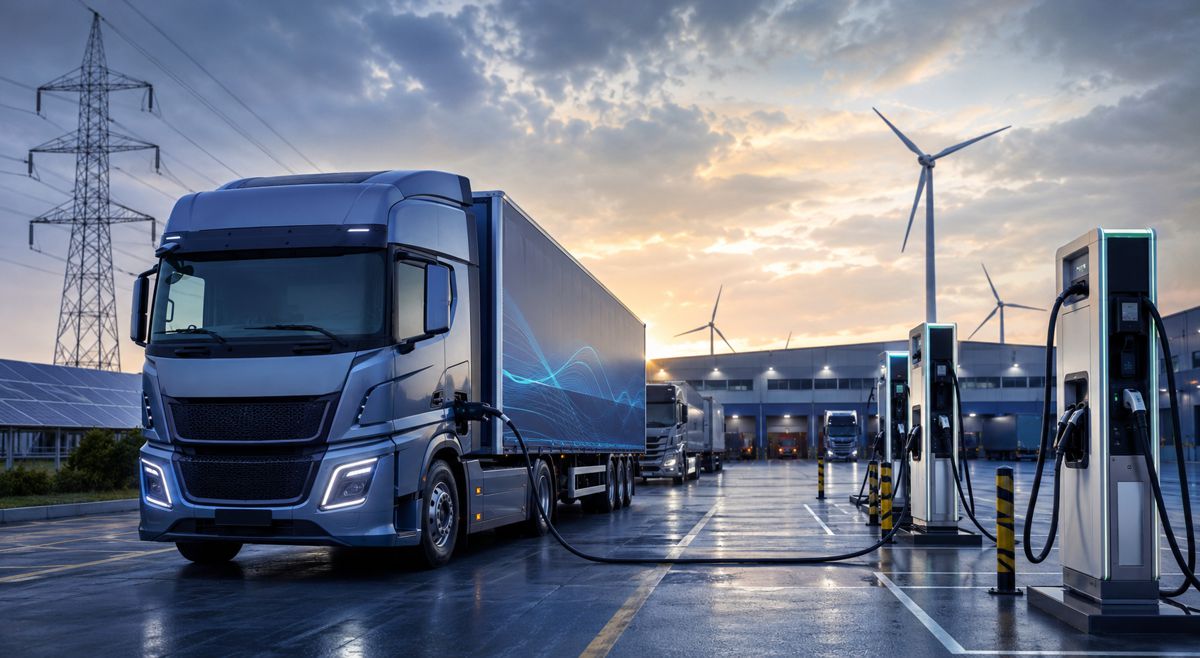
Electric heavy goods vehicles, commonly referred to as eHGVs, require dramatically higher charging power than passenger EVs. Megawatt-scale charging infrastructure will become essential for commercial depots, distribution hubs and long-haul freight corridors. Yet electricity distribution networks currently have limited visibility into how logistics companies will electrify their fleets, when those transitions will occur, and where concentrated charging demand will materialise.
Rather than waiting for capacity constraints to emerge reactively, UK Power Networks is attempting to build predictive intelligence around freight electrification before widespread deployment accelerates.
Briefing
- UK Power Networks has launched the Future Fleet innovation project to forecast future eHGV charging demand across Britain’s freight sector
- The programme combines logistics data, geospatial modelling and smart energy strategies to improve grid planning
- Partners include Maritime Transport, Voltempo, Energy Systems Catapult and Baringa
- The project will assess flexible charging, storage, renewables and vehicle-to-everything technologies to minimise grid reinforcement costs
- Findings could significantly influence the pace and affordability of freight electrification across the UK logistics industry
Freight Electrification Is Entering a New Phase
The road freight sector remains one of the most difficult parts of transport decarbonisation. Heavy vehicles require large battery packs, operate under demanding duty cycles and often travel long distances with minimal downtime. Unlike passenger EV charging, which can often rely on slower overnight charging, commercial freight operations depend on rapid turnaround and predictable availability.
Across Europe, governments are tightening emissions regulations while manufacturers accelerate development of battery-electric and hydrogen-powered trucks. Major truck builders including Volvo Trucks, Scania, Mercedes-Benz Trucks and MAN Truck & Bus are all investing heavily in electric freight platforms.
However, vehicle technology is only part of the equation. Charging infrastructure and grid readiness are emerging as equally decisive factors.
A single high-powered truck charging depot can consume electricity on a scale comparable to a small industrial facility. As fleets scale, demand spikes could place significant pressure on local electricity networks if planning is not handled intelligently. That challenge becomes even more complicated when operators require charging simultaneously at logistics hubs clustered near ports, industrial estates or motorway freight corridors.
Future Fleet aims to provide the data foundations needed to avoid those bottlenecks before they slow the sector’s transition.
Understanding Where Demand Will Appear
One of the most notable aspects of the Future Fleet programme is its focus on operational “archetypes.” Rather than applying generic assumptions to the freight industry, the project intends to build detailed profiles based on how different logistics operators actually move goods, schedule routes and manage depots. This distinction matters enormously.
Urban last-mile delivery fleets behave very differently from long-haul container transport operations. Construction materials suppliers, supermarket logistics providers and refrigerated freight operators all generate unique charging patterns. Some fleets may rely heavily on overnight charging while others need rapid daytime top-ups between journeys.
By modelling those operational realities in detail, UK Power Networks and its partners hope to forecast where charging clusters are likely to emerge as eHGV adoption accelerates.
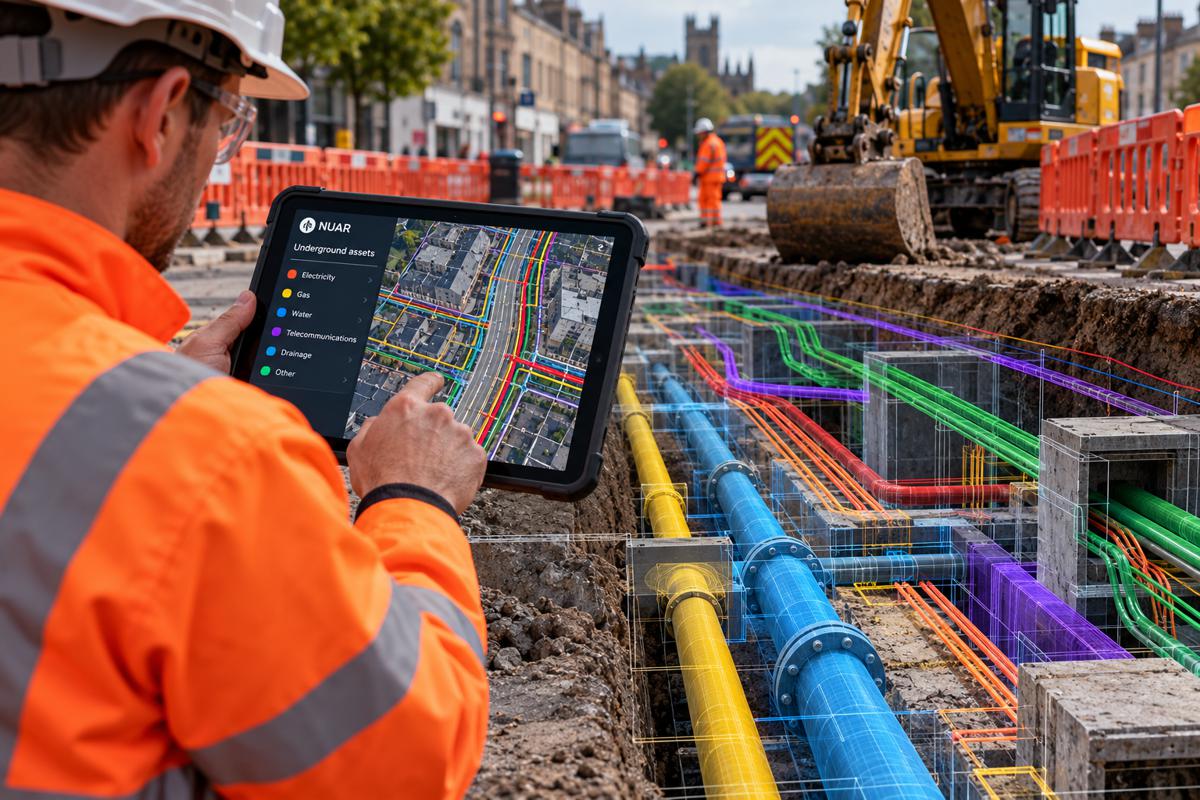
The project will also deploy advanced geospatial modelling to compare projected freight charging demand against existing network capacity. That capability could help identify future grid pressure points years before infrastructure becomes overloaded.
For logistics operators, that level of planning visibility could reduce delays in securing power connections for new charging facilities. For electricity distributors, it creates opportunities to optimise investment rather than relying on expensive reactive reinforcement work.
Smart Energy Management Could Reduce Infrastructure Costs
One of the largest concerns surrounding freight electrification is the potential cost of grid upgrades. Reinforcing local electricity infrastructure to support megawatt charging can become extremely expensive, particularly in areas where network capacity is already constrained.
The Future Fleet project intends to explore whether smarter energy management approaches can reduce those costs substantially.
This includes assessing:
- Flexible charging strategies
- Behind-the-meter energy systems
- On-site renewable generation
- Battery storage integration
- Operational flexibility
- Vehicle-to-everything (V2X) technologies
These technologies could fundamentally change how freight depots interact with the electricity system.
For example, depot batteries may allow operators to store energy during lower-demand periods before discharging it into vehicles during peak charging windows. On-site solar generation could partially offset daytime energy consumption. Flexible charging schedules may reduce strain during national peak demand periods.
Vehicle-to-grid and broader V2X technologies could eventually enable parked trucks to act as temporary energy storage assets, feeding electricity back into local networks during periods of high demand.
While some of these concepts remain in relatively early stages commercially, their integration into freight operations could significantly reduce both infrastructure costs and pressure on the wider grid.
Maritime Transport Brings Operational Reality
A major strength of the initiative lies in the involvement of active logistics operators already deploying electric trucks commercially.
Maritime Transport has emerged as one of the UK freight sector’s more proactive early adopters of eHGV technology. According to the company, more than 20 electric heavy goods vehicles have already been deployed during 2026, with more than 50 additional vehicles scheduled for rollout alongside high-powered charging infrastructure across multiple locations. That operational experience provides the project with real-world data rather than purely theoretical assumptions.
“We’re very pleased to be collaborating with UK Power Networks and our Future Fleet partners on a project addressing one of the biggest challenges in decarbonising road freight: understanding where and when eHGV charging will be needed, and what that will mean for operators and the electricity grid,” said Tom Williams, deputy chief executive officer at Maritime Transport.
“With more than 20 eHGVs successfully deployed so far this year, and over 50 due to be introduced nationally in 2026 alongside high-powered charging across a number of our locations, Maritime is already seeing at first hand the relationship between fleet operations, site requirements, and power demand.”
Those insights could prove invaluable as the industry attempts to avoid repeating some of the fragmented infrastructure deployment challenges seen during the early years of passenger EV adoption.
Megawatt Charging Will Reshape Freight Infrastructure
The involvement of Voltempo highlights another crucial issue facing freight electrification: the rise of megawatt charging systems.
Unlike conventional EV chargers measured in tens or hundreds of kilowatts, future eHGV charging infrastructure may increasingly operate at megawatt scale to minimise downtime for commercial operators. That level of power delivery introduces entirely new engineering and grid integration challenges.
Across Europe, the development of the Megawatt Charging System (MCS) standard is gathering pace. Industry groups and manufacturers are working toward harmonised ultra-high-power charging protocols capable of supporting long-haul electric trucking.
If widely adopted, megawatt charging could reshape motorway service areas, logistics depots and industrial energy systems across the continent.
Britain’s electricity distribution operators therefore face a rapidly approaching strategic challenge. They must prepare networks for a future where clusters of freight depots may demand enormous quantities of electricity within highly concentrated geographic areas.
Projects such as Future Fleet provide an early attempt to understand that transition before it reaches full commercial scale.
Britain’s Electricity Networks Face a Strategic Transition
The broader significance of the initiative extends beyond freight alone. Electricity distribution networks are entering a period of unprecedented transformation as transport, heating and industrial systems electrify simultaneously.
UK Power Networks serves approximately 20 million people across London, the South East and East of England through its electricity distribution infrastructure. The company has invested more than £8 billion in its networks since 2011.
Yet even substantial investment programmes may struggle to keep pace if infrastructure planning remains disconnected from real-world commercial demand patterns.
That is increasingly true across Europe, North America and parts of Asia where freight electrification is accelerating. Grid operators are being forced to think less like passive infrastructure providers and more like strategic planners coordinating complex energy ecosystems.
David Francis, head of investment management and innovation at UK Power Networks, summarised the challenge clearly: “Supporting the shift to electric HGVs means understanding not just how fleets operate, but how networks adapt to support their charging infrastructure. Future Fleet gives us the clarity we need to accurately forecast where charging demand will grow and how we can facilitate faster, efficient connections to the network.”
That forecasting capability may ultimately become one of the most valuable assets in the transition to electrified transport.
Building the Foundations for Scalable Electrification
The initial six-month phase of Future Fleet will focus on defining requirements for potential live trials. While relatively modest in duration, the groundwork established during this stage could shape future infrastructure deployment strategies across the UK freight sector.
Importantly, the project is not focused solely on national fleet operators. Its findings are intended to support businesses ranging from SMEs to major logistics groups.
That inclusivity matters because smaller operators often face greater challenges accessing capital, securing infrastructure investment and navigating complex energy requirements. If electrification becomes prohibitively expensive or operationally difficult for smaller logistics firms, the transition risks creating major market imbalances within the freight sector. By identifying scalable and flexible approaches early, Future Fleet may help reduce those barriers before they become entrenched.
The freight industry’s transition to electric propulsion is no longer a distant prospect. Vehicle deployments are already accelerating, charging technologies are maturing rapidly and regulatory pressure continues to intensify. What happens next will depend heavily on whether infrastructure planning can keep pace with operational reality. Quietly, behind distribution centres, industrial estates and motorway depots, the foundations of a new freight energy system are beginning to take shape.