Simpro Group Accelerates AI for Field Service Trades
Artificial intelligence has spent the last two years dominating boardroom conversations across nearly every industry. Yet for much of the global field service sector, the promise of AI has often felt distant, fragmented or designed primarily for white-collar workflows rather than technicians, engineers and contractors working on active job sites.
That gap is precisely where Simpro Group believes the next major software transformation will occur. The company has launched Lightning, a new AI-native operating platform developed specifically for field service trade businesses, integrating artificial intelligence directly into operational workflows rather than treating it as an optional enhancement layered on top of existing systems.
The release spans three of the company’s major software ecosystems including Simpro, AroFlo and BigChange, covering customers across Australia, New Zealand, North America, the United Kingdom and Europe. The move represents one of the most ambitious AI deployments yet seen within the field service management software market, particularly in sectors such as electrical contracting, security systems, HVAC, plumbing, utilities maintenance and specialist infrastructure services.
Briefing
- Simpro Group has launched Lightning, an AI-native operating platform for field service trade businesses
- The system integrates across Simpro, AroFlo and BigChange software environments
- Cooper, the platform’s AI engine, powers automation, workflow analysis and AI agents
- Four specialist AI agents launch initially, targeting technician onboarding, dispatch preparation, documentation and customer reporting
- The company aims to improve profitability within a sector where margins often remain between 5% and 10%
AI Moves Beyond Generic Automation
The broader construction and infrastructure sectors have already begun adopting AI in areas such as predictive maintenance, digital twins, asset analytics and project scheduling. However, field service businesses have historically faced a different challenge. Many still operate with fragmented operational systems, extensive paperwork requirements and workforce shortages that place enormous strain on profitability.
Research from global consultancy firms including McKinsey & Company and Deloitte has repeatedly highlighted that service industries stand to gain substantial operational improvements from workflow automation and AI-supported decision making. Yet adoption rates among small and mid-sized trade businesses remain comparatively low due to implementation complexity, integration concerns and limited internal technical capacity.
Lightning attempts to tackle those barriers by embedding AI directly into daily operational processes. Rather than requiring businesses to bolt on third-party tools or external AI integrations, the platform positions artificial intelligence as the operational core of dispatching, communication, documentation and workforce coordination.
That distinction matters because field service environments generate enormous quantities of operational data that frequently remain underutilised. Job histories, technician notes, maintenance schedules, inventory records and customer communications all create valuable operational intelligence. Historically, extracting meaningful insight from that information required substantial manual oversight. Simpro Group’s approach centres on converting that operational data into real-time decision support.
Cooper Becomes the Operational Brain
At the centre of the Lightning platform sits Cooper, the AI operating layer developed to act as what the company describes as a strategic digital business partner.
Unlike many enterprise AI tools currently entering the market, Cooper is not marketed purely as a chatbot or search assistant. Instead, it functions as an orchestration engine capable of analysing operational workflows, surfacing business issues, streamlining communications and supporting ongoing process optimisation.
The field service industry presents particularly fertile ground for this type of AI deployment because operational inefficiencies compound rapidly. Delayed technician onboarding, incomplete documentation, missed dispatch information or invoicing disputes can quickly erode already narrow profit margins.
According to industry studies from organisations including Service Council, technician productivity and first-time-fix performance remain among the strongest indicators of service business profitability. Improving even small percentages in these areas can significantly affect operational margins. Simpro Group argues that AI can compress many of those inefficiencies simultaneously.
“When AI is built into the platform and not stapled to it, the platform itself gets smarter, faster and more useful every single week,” said Fred Voccola, Chairman and CEO of Simpro Group. “Our customers won’t have to wait years for the features they need. They’ll watch the product improve in real time, the same way a great employee gets better the longer they work for you.”
The company also claims AI-assisted development workflows are accelerating its own product release cycles, reducing some feature deployment timelines from multiple quarters to just weeks.
Digital Workers Enter the Trades Sector
Perhaps the most commercially significant aspect of Lightning is the introduction of AI agents designed to function as supplemental digital workers within trade businesses.
The initial release includes four specialist agents, each targeting operational bottlenecks commonly found across field service environments.
FieldReady focuses on technician onboarding and workflow training using company-specific operational data. The platform claims onboarding timelines can be reduced from several months to only days by automating procedural familiarisation and operational guidance.
JobReady supports dispatch preparation by compiling job histories, customer records, site details and parts information before technicians arrive on-site. This directly targets first-time-fix performance, one of the most critical operational metrics within service industries.
JobScribe automates field documentation by converting technician voice recordings into structured job records. Administrative workload reduction has become increasingly important as labour shortages continue affecting skilled trades globally.
Meanwhile, JobBrief automatically generates customer-facing summaries after job completion, potentially reducing disputes while accelerating payment cycles.
These AI agents reflect a broader shift occurring across enterprise software markets. Increasingly, AI is being deployed not merely to provide recommendations but to actively perform operational functions that previously required administrative staff. That trend has substantial implications for labour-constrained industries.
Labour Pressures Continue Across Global Infrastructure Markets
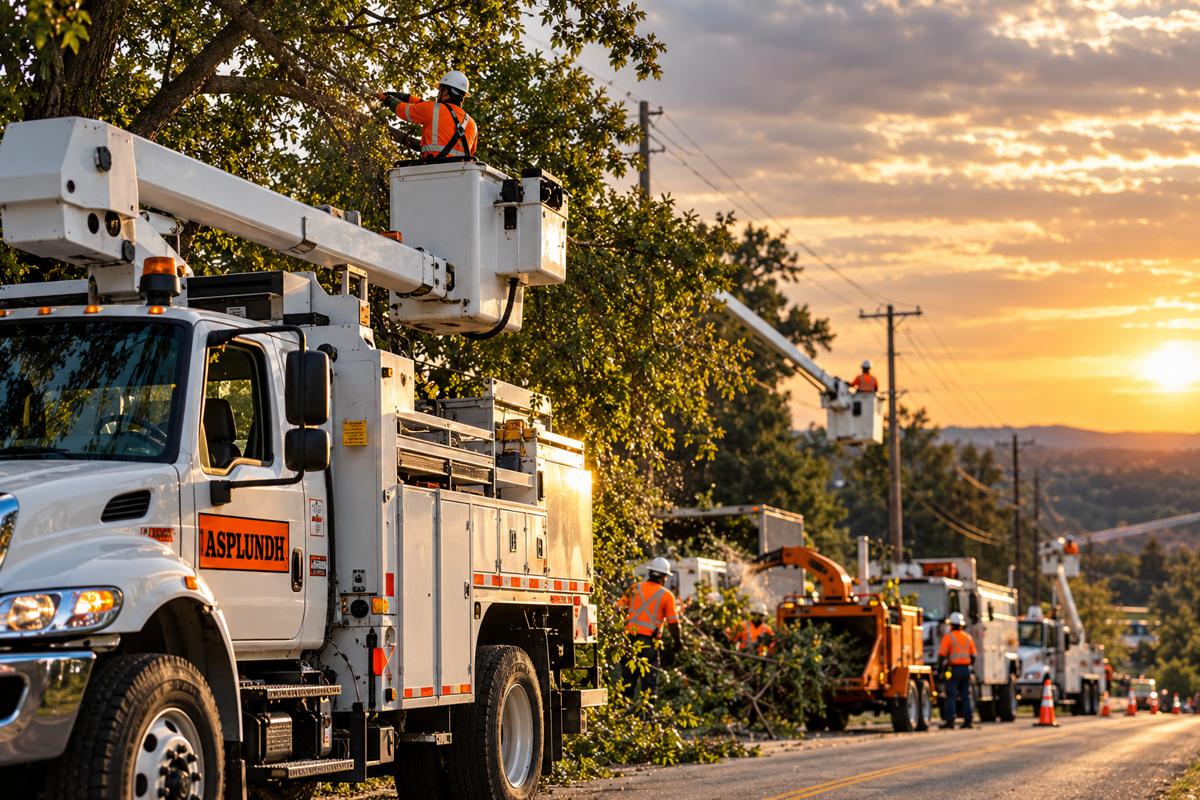
The timing of Lightning’s launch coincides with mounting labour shortages across infrastructure, utilities and construction markets worldwide.
In the United Kingdom, organisations including the Construction Industry Training Board have repeatedly warned about skilled workforce shortages affecting construction delivery capacity. Similar concerns exist across Australia, North America and Europe, particularly in specialist technical trades linked to electrification, renewable energy infrastructure and smart building systems.
At the same time, infrastructure modernisation programmes continue expanding globally. Governments are investing heavily in energy transition projects, grid upgrades, transport electrification and digital infrastructure deployment.
All of those projects ultimately rely on technicians, contractors and service providers capable of installing, maintaining and operating increasingly sophisticated infrastructure systems.
The problem facing many field service businesses is that operational complexity has grown faster than administrative capacity.
Software automation alone has not fully resolved that imbalance. AI-driven operational support potentially offers a more scalable solution, particularly for mid-sized businesses unable to absorb rising staffing costs across administrative and coordination roles.
“These aren’t features. They’re roles,” Voccola said. “Trade businesses have always needed a trainer, a job-prep coordinator, a documentation specialist and a customer success lead.”
That framing may prove commercially important because many trade businesses do not view themselves as technology companies. Positioning AI in terms of operational staffing support rather than abstract automation could accelerate adoption.
SaaS Competition Intensifies Around AI Integration
The field service management software sector has become increasingly competitive as AI adoption accelerates. Major enterprise software providers including Salesforce, Microsoft and ServiceNow are all aggressively integrating generative AI capabilities into operational platforms. Meanwhile, specialist field service software vendors are racing to differentiate themselves through industry-specific AI functionality.
Simpro Group’s decision to position Lightning as an AI-native platform rather than an AI-enhanced platform reflects a wider strategic divide emerging across the software sector.
Many vendors initially approached generative AI as an accessory feature. Increasingly, however, software architecture itself is being redesigned around AI orchestration, automation and autonomous task management. That architectural distinction could shape long-term competitiveness because AI-native systems may adapt more rapidly as operational AI capabilities evolve.
The field service market remains particularly attractive due to its scale. Millions of businesses globally rely on scheduling, dispatching, maintenance coordination, quoting and invoicing systems. Yet digital maturity across the sector varies dramatically, leaving significant room for operational modernisation.
Infrastructure Reliability Depends on the Trades
The broader significance of platforms like Lightning extends beyond software competition.
Modern infrastructure systems increasingly depend on distributed field service workforces maintaining highly interconnected physical assets. From smart utilities and transport systems to industrial automation and energy networks, infrastructure resilience now relies heavily on rapid-response technical service operations.
Field service technicians effectively operate as operational custodians of modern infrastructure.
Simpro Group describes these businesses as the “second responders” of society, reflecting the critical role they play in maintaining essential systems.
That role is only becoming more important as infrastructure systems grow more technologically complex. Electrification, IoT integration, AI-enabled buildings and predictive maintenance systems all increase demand for highly coordinated technical service operations.
Improving operational efficiency within the field service economy therefore carries implications extending well beyond individual business profitability.
AI Reshapes the Next Generation of Service Operations
The launch of Lightning highlights how rapidly AI adoption is moving beyond experimental deployment into operational infrastructure across industrial sectors.
For years, field service businesses have struggled with a difficult equation. Customers expect faster response times, more accurate reporting and higher service reliability while margins remain persistently thin and labour shortages continue intensifying.
AI alone will not resolve those structural pressures. Nevertheless, platforms capable of automating documentation, accelerating onboarding, improving dispatch preparation and reducing administrative friction may materially alter the economics of service operations.
That matters not only for software vendors but for the infrastructure industries that depend on those businesses every day.
The next phase of industrial AI adoption may not emerge first from corporate boardrooms or office environments. Instead, it could arrive through the vans, toolkits and maintenance crews quietly keeping modern infrastructure operational behind the scenes.