AI Data Centres are Quietly Reshaping the Water Measurement Business
When a developer of buried-pipe testing technology signs up to a water stewardship body, it would ordinarily be the kind of corporate housekeeping that slips past unnoticed.
Electro Scan Inc., a Sacramento-based outfit that builds electrical resistance tools for measuring leaks in underground water and wastewater pipes, has done exactly that, joining the Alliance for Water Stewardship (AWS), the international membership network behind the globally recognised AWS Standard. On its own, a new membership card means little. What sits behind it is the more interesting story, because the timing lines up with a problem the construction and infrastructure world has spent the past two years scrambling to get its arms around: how to prove, with numbers that survive an audit, that water taken out of a stressed catchment is actually being put back.
That question used to live in sustainability departments and corporate responsibility reports. It has since migrated into permitting offices, project finance models and the boardrooms of the companies racing to build artificial intelligence capacity. Data centres need water to stay cool, regulators and communities increasingly want guarantees that the local supply won’t suffer, and the people who sign off on planning consent are asking for evidence rather than promises.
Electro Scan’s pitch is that it can measure leaking water at the point of the defect and turn the recovered volume into a number somebody can independently check. Whether the wider industry agrees that this is the missing piece is the thing worth watching.
Briefing
- Electro Scan Inc. has joined the Alliance for Water Stewardship, the body behind the AWS Standard, positioning its pipe-assessment technology within the formal water stewardship framework that corporates and regulators increasingly reference.
- The move lands as AI data centres face mounting scrutiny over water use, with hyperscale operators committing to water-neutral or water-positive targets and permitting now frequently tied to water performance metrics.
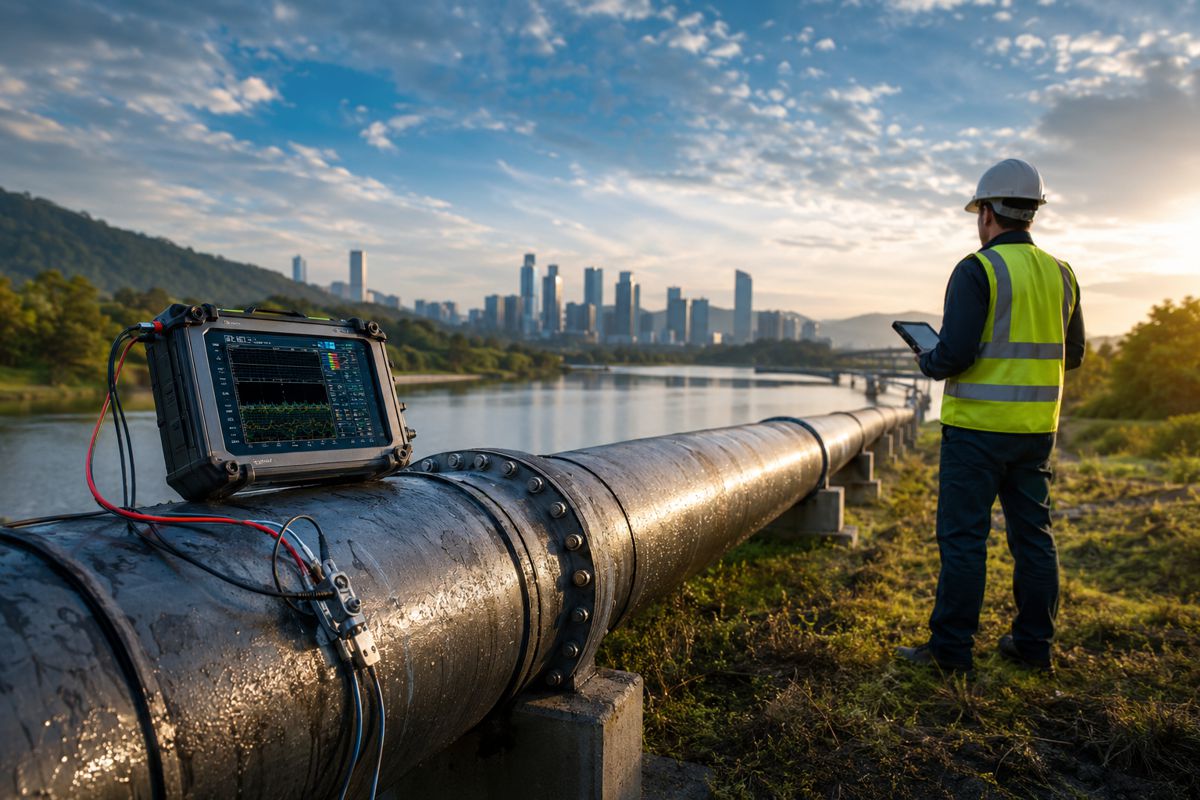
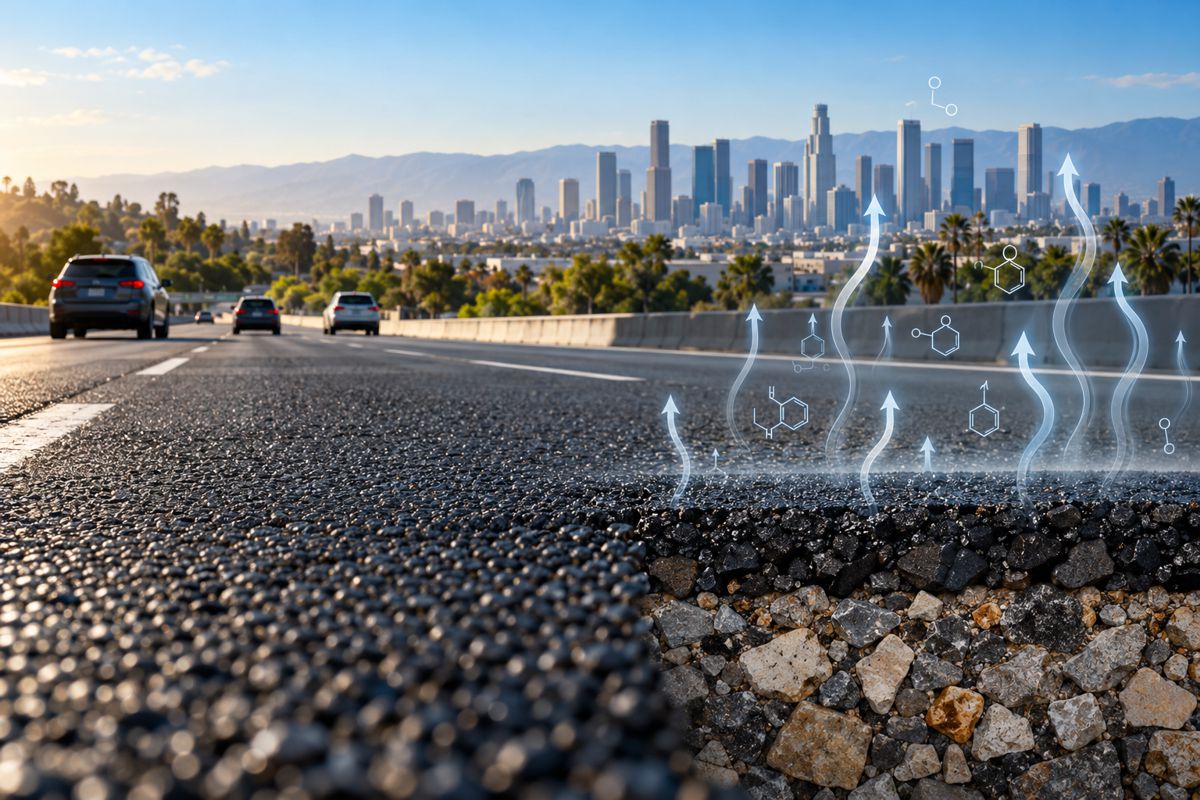
- The company’s core claim is direct measurement: rather than estimating leakage, its electrical resistance method quantifies escaping water at individual pipe defects in gallons per minute or litres per second.
- Electro Scan’s workflows are aligned with Volumetric Water Benefit Accounting (VWBA) 2.0, the WRI-backed methodology now widely used to substantiate corporate water replenishment claims.
- Founder Chuck Hansen and the technology will appear at AWWA’s ACE26 in Washington, DC, and at the AWS Global Water Stewardship Forum in Edinburgh, both falling in late June 2026.
Why Measurement Became The Whole Argument
For most of the past two decades, the underground inspection trade has run on inference. Acoustic sensors listen for the sound of escaping water, technicians interpret the readings, and crews dig where the evidence points. Visual inspection, satellite analysis and, more recently, predictive modelling all share the same characteristic: they suggest where loss is probably happening and roughly how much. That has been good enough for operational triage, where speed and coverage matter more than precision. It starts to look thin, though, the moment somebody needs to stand behind a specific recovered volume in front of an auditor or a planning committee.
Electro Scan’s argument is that its physics-based electrical resistance testing sidesteps the guesswork by measuring the conductive pathway a leak creates, both inside and outside the pipe. Instead of saying the network probably lost a certain amount, the company says a named defect produced a specific flow, quantified in gallons per minute or litres per second. Mike App, the company’s executive vice president, put the shift in plain terms.
“Traditional leak detection tools may continue to serve important operational roles for efficiency and speed, but Electro Scan increasingly provides the measurable data layer supporting repeatable and auditable water benefit accounting,” he said. “Once you see how Electro Scan can provide unambiguous and unbiased defect-level volumetric leaks expressed in GPM, with comparable and repeatable results over long periods of time, it can’t be unseen.” It’s a confident framing, and the company knows the burden of proof rests on repeatability.
The Data Centre Pressure Cooker
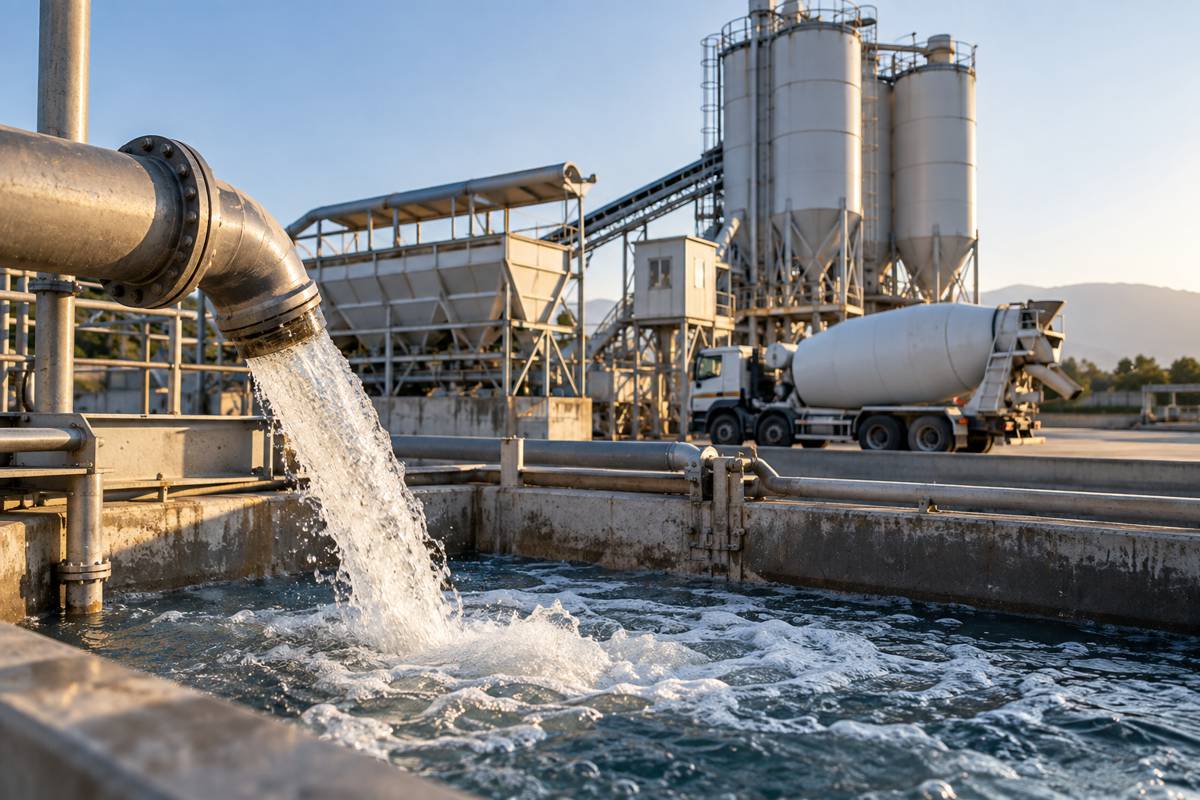
Here’s where the membership stops looking like housekeeping. The AI build-out has turned cooling water into one of the sector’s most contentious inputs. A 100-megawatt hyperscale facility, a fairly standard size for AI workloads, can get through three to six million gallons of water a day during peak summer operation, much of it lost to evaporation. Global Water Intelligence has forecast that onsite water consumption for data centre cooling will rise by just over 50 percent by 2030 even as the industry shifts to more efficient cooling, and in water-stressed markets such as India the figure is set to more than double. Communities living near these campuses tend to experience that arithmetic less as a percentage and more as a falling water table or a higher utility bill.
Operators have responded with water-neutral and water-positive pledges, several aiming for 2030, and environmental clearance for new facilities is now frequently tied to Water Usage Effectiveness metrics. The catch is that a pledge to replenish more water than you consume only holds up if the replenishment can be counted. That’s the gap Electro Scan is aiming at.
If a developer can demonstrably recover water already leaking out of nearby municipal or industrial pipes, fix the defects, verify the result and book the saved volume against a replenishment target, it has something more durable than a modelled estimate. The company calls the approach “Find a Gallon, Use a Gallon,” and frames the recovered water as previously unmeasured volume that legacy methods never captured. Some in the field describe the same idea as infrastructure additionality.
Fitting Into The Accounting Rulebook
The reason VWBA keeps coming up is that it has become the common language for these claims. Volumetric Water Benefit Accounting, first published in 2019 by the World Resources Institute with LimnoTech and other partners and updated to a 2.0 version through 2024 and 2025, gives companies a standardised way to quantify the water benefit of a stewardship project in comparable volumetric units. It traces back to methods LimnoTech developed with The Nature Conservancy in support of Coca-Cola’s replenishment commitment more than a decade ago, and practitioners have since applied it to over a thousand projects across roughly a hundred countries. In other words, it’s the framework auditors and sustainability teams already trust.
By aligning its FIND–FIX–VERIFY–RECOVER–AUDIT workflow to that methodology, Electro Scan is trying to slot its hardware into an accounting system that corporates recognise. The AWS Standard, now at Version 3.0 following a launch in Tokyo in March 2026, plays a complementary role: it’s the site- and catchment-level framework that defines what good stewardship looks like and backs it with independent third-party certification.
Membership doesn’t certify Electro Scan’s technology, and it’s worth being clear about that. What it does is place the company inside the room where the rules for measurable replenishment are being argued out, alongside the businesses, NGOs and public bodies that make up the alliance’s membership of more than 200 organisations.
A Track Record Built On Repeat Testing
A measurement claim is only as strong as its reproducibility, and Electro Scan leans heavily on a history of verification work to make its case. The company points to same-pipe, same-day forward and reverse testing, repeat testing on the same pipe across intervals ranging from 60 days to more than 600 days apart, tests using different deployment systems, and before-and-after rehabilitation studies. International benchmarking has involved the US EPA, WRc in the UK, IKT in Germany, SUEZ in France, JASCOMA in Japan, utilities across the United Arab Emirates, Petronas in Malaysia, and certification under Saudi Aramco Engineering Requirement 12366.
One detail in the company’s own account is more candid than most marketing material allows. In certain cases, post-repair evaluations found greater measurable leakage than before the repair, an awkward result that Electro Scan uses to argue precisely for repeatable defect-level verification and independent quality control. It’s a reminder that rehabilitation doesn’t always deliver what’s assumed, and that the value of measurement partly lies in catching the failures.
The company’s credibility also rests on a separate regulatory marker: in December 2024 the US EPA recognised electrical resistance testing as the only commercially available innovative technology able to identify buried lead drinking-water pipes without digging, a finding that underpins Electro Scan’s SWORDFISH lead-detection product and lends weight to the broader method.
Old Roots, New Market
Electro Scan was founded in 2011 by Chuck Hansen, but its institutional lineage runs back more than four decades through Hansen Software and Hansen Information Technologies, providers of asset management systems for water, sewer, treatment plant and public works operations. Hansen Information Technologies was later acquired by San Francisco’s Golden Gate Capital and folded into Infor Global Solutions, and several of the original technology architects have stayed on as senior advisers. That history matters because the company is essentially betting that asset-management discipline, applied to leak measurement, answers a question the AI era has made urgent.
The commercial logic, as Hansen frames it, is that the market is moving away from broad conservation talk toward accountability that can be defended publicly. “Water stewardship is increasingly moving from generalized conservation discussions toward measurable accountability,” he said, adding that hyperscale developers, industrial operators, utilities and communities increasingly want solutions that are “measurable, repeatable, auditable, and publicly defensible.”
The company is now evaluating deployment partnerships, licensing arrangements and platform integrations, and is courting interest across AI data centre stewardship, raw water transmission, municipal non-revenue water reduction and basin-scale replenishment programmes.
Whether that ambition translates into adoption will depend on how many infrastructure owners decide that a measured gallon is worth paying more for than an estimated one. Hansen and the technology will be making that pitch in person at AWWA’s ACE26 in Washington and at the AWS Forum in Edinburgh, both in the final week of June, in front of exactly the audience that will decide the answer.