Georgia Tech Wins $7.5m DOE Award to Turn Tailings into Critical Minerals Supply
The most valuable critical minerals resource in the American Southeast may already have been dug up, hauled, screened and stacked. That is the commercial premise behind a $7.5 million US Department of Energy award to Georgia Tech, which will lead the Critical Minerals in the Atlantic Seaboard Plain project, known as CM-MAP, across a region defined less by unexplored geology than by a century of industrial activity.
The target list reads like an inventory of the construction and industrial minerals economy: kaolin, bauxite, heavy mineral sands, phosphates, legacy mining residues, coal combustion byproducts and samples drawn from brownfield sites across the region.
For infrastructure and materials businesses, the significance sits in what the award does not fund. It does not open a new mine or commit capital to a greenfield processing plant. It funds characterisation, the unglamorous work of establishing what is present, in what mineral form, at what grade and in which piles, then converting that into predictive models that investors and processors can act on.
In a market where the binding constraint is no longer whether the elements exist inside American borders but whether anyone can prove their recoverability at bankable confidence, that data layer has become the scarce commodity.
The timing is deliberate. Heavy rare earth prices outside China have run to multiples of their pre-2025 levels, Washington has stood up a $12 billion minerals reserve, and federal money is now flowing towards feedstocks that sit inside permitted industrial footprints rather than under fresh ground. Georgia, the leading American kaolin producer and home to established heavy mineral sands operations, is positioned squarely inside that shift.
Briefing
- The Department of Energy has awarded Georgia Tech $7.5 million to lead CM-MAP, one of two regional consortia sharing $15 million and extending the CORE-CM initiative from 13 basins to eight broader national regions including Hawaii, Alaska and Puerto Rico.
- Target feedstocks are sedimentary deposits such as kaolin, bauxite, heavy minerals and phosphate, plus residues from mining and coal combustion and material sampled from former industrial sites across the Atlantic coastal plain.
- Georgia produces more than eight million tons of kaolin annually, generating substantial tailings volumes, while heavy mineral sands operations in the south-east of the state already recover rare earth concentrates that are refined outside the United States.
- Sampling data on composition, mineral type, critical mineral form and rare earth characteristics will feed statistical analysis and machine learning intended to predict occurrence and identify efficient extraction routes.
- The award lands alongside a broader federal push that includes $134 million announced for rare earth element supply chains and $75 million directed at recovery from coal and coal-based feedstocks, with DOE noting that selection for award negotiations does not itself commit funding.
Why the Market Has Moved Towards Pre-Mined Material
Beijing’s April 2025 export controls reset the economics of Western supply. Argus data cited by Reuters shows yttrium oxide prices outside China rising to roughly US$1,100 per kilogramme by May 2026 from single digits before the restrictions, with dysprosium and terbium oxide climbing four to five times over the same period, while shipments of all three have run around 50 per cent below the twelve months preceding the controls.
S&P Global reported that China’s exports of less processed rare earths fell to 4,392 tonnes in December 2025, well below the monthly average for that year, with the smaller and more sensitive heavy rare earth volumes effectively drying up under dual-use restrictions. Those numbers changed the calculus for any project that can shorten the path from material to metal.
The policy response has been proportionate to the exposure. In February 2026 the White House launched a $12 billion US Strategic Critical Minerals Reserve, anchored by roughly $11 billion from the Export-Import Bank alongside seed capital from manufacturers including General Motors, Stellantis, Boeing, Corning, GE Vernova and Google.
The 2025 US critical minerals list expanded significantly, pulling minerals such as copper, potash, uranium and metallurgical coal into a framework that guides federal investment and permitting decisions. Against that backdrop, an award aimed at unconventional and secondary feedstocks is not a research curiosity but an attempt to compress development timelines, since material already on the surface sits inside existing permits, alongside existing haul roads, rail links, water infrastructure and processing plant.
Assistant Secretary of Energy Audrey Robertson framed the consortia programme in exactly those terms when DOE announced the two awards, saying that “Building domestic supply chains for critical minerals and materials means realizing the value of unconventional feedstocks” and that “Domestically abundant sources, such as coal, wastewater from oil and gas development, and acid mine drainage, can reinforce supply chains for American manufacturing and the production of essential technologies.”
The second selected project, led by the University of Nevada, Reno, applies the same logic to sedimentary formations and active mine waste across the Pacific Coast and Basin and Range regions. Two consortia, two very different geologies, one shared conviction that the cheapest tonne of new supply is the one somebody has already moved.
Georgia’s Industrial Base Reframed as a Resource Map
The Atlantic coastal plain earns its selection through industrial history rather than exploration upside. Georgia generates more than eight million tons of kaolin each year, making it the leading American producer and a substantial exporter, and that output carries millions of tons of mining and processing residues with it.
Published research on central Georgia kaolin has found total rare earth concentrations of 0.02 to 0.06 weight per cent in mined kaolin, rising to as much as 1.9 weight per cent in mine tailings and 4.6 weight per cent in associated sand lithologies, with the elements hosted primarily in the phosphate minerals monazite and xenotime. Coarse fractions of mined kaolin showed enrichment in the heavy rare earths, precisely the sub-group where Western availability is thinnest and pricing most punishing.
Heavy mineral sands add an operating precedent rather than a hypothesis. Chemours mines and separates heavy mineral sands in Florida and Georgia, and in March 2025 formed a strategic alliance with Energy Fuels aimed at building out domestic rare earth and critical minerals supply chains from those feedstocks. Rare earth concentrates are already being produced as a byproduct of heavy mineral sand mining in south-east Georgia, yet the material leaves the state and then the country for refining into magnet-grade products.
That gap between what the region extracts and what it converts is the commercial opening CM-MAP is designed to illuminate, and it explains why the project scope runs through processing, recovery, recycling and advanced manufacturing rather than stopping at resource assessment.
Tim Lieuwen, executive vice president for Research at Georgia Tech, described the award as “a powerful example of how Georgia Tech brings together leading research capabilities and partnerships from industry, government, nonprofits, and national labs to address complex national challenges”, adding that “By identifying and domestically sourcing critical minerals, we are helping secure essential supply chains, while enabling the next generation of energy and materials technologies.”
The institutional scaffolding around the award is already substantial, spanning the Center for Critical Mineral Solutions founded in 2024, the Georgia Partnership for Essential Materials convening industry and state agencies alongside the University of Georgia, Georgia State University and the Georgia Mining Association, and a congressionally supported Georgia Critical Mineral Supply Chain Manufacturing Demonstration Center.
Characterisation, Machine Learning and the Value of Knowing the Pile
The technical core of CM-MAP is deportment, not headline grade. Samples from natural deposits and former industrial sites across the region will be analysed to establish composition, mineral types, the specific forms in which critical minerals occur and rare earth element characteristics, because the mineral host governs everything downstream.
Rare earths locked in refractory zircon behave very differently from those held in monazite, xenotime or sorbed onto weathered clay surfaces, and that distinction drives reagent selection, leach chemistry, energy intensity, residue handling and ultimately the operating cost per kilogramme of separated oxide. A pile with an attractive assay and hostile mineralogy is a liability rather than an asset, and only characterisation at scale separates the two.
Combining those datasets with statistical analysis and machine learning turns scattered sampling into predictive capability across a region where similar depositional processes repeat over hundreds of miles. That matters commercially because processing capital is the bottleneck in every Western rare earth strategy, and processing capital follows feedstock certainty.
A developer weighing a separation circuit needs confidence in volume, consistency and mineralogy across a multi-decade asset life, and a regional model that predicts where recoverable material sits inside existing tailings inventories and brownfield holdings materially reduces that risk.
Principal investigator Yuanzhi Tang, the Georgia Power Professor in the School of Earth and Atmospheric Sciences and founding director of the Center for Critical Mineral Solutions, noted that “This project brings together a highly collaborative team from Georgia Tech, national labs, industry partners, and research institutions across the region”, a structure that reflects how far the work reaches beyond geology into process engineering and manufacturing.
Coal Ash and the Contest Between Concrete and Chemistry
Coal combustion byproducts occupy an unusual position in this story because the construction sector already wants them. Roughly 40 million tons of new coal fly ash arise annually in the United States, with historic beneficial utilisation running below 40 per cent and the remainder landfilled or impounded, and declining coal generation has tightened supply of the fly ash that concrete producers rely on as a supplementary cementitious material.
Harvesting previously disposed ash from landfills and ponds for reuse in concrete has become an established commercial trend as a result, supported by test method development for reclaimed material. The same impoundments now attract interest as rare earth feedstock, and that creates a materials contest that infrastructure owners will feel through pricing and availability of cementitious blends.
The more interesting outcome is complementary rather than competitive. Recovery routes under investigation, including recyclable ionic liquid systems demonstrated at bench scale, aim to extract rare earths selectively under mild conditions while preserving the treated solids for potential use as supplementary cementitious materials.
Legacy ponded ash appears particularly promising, since weathering seems to enhance rare earth accessibility in material previously considered unsuitable for beneficial use. For utilities carrying closure obligations across ash basins, and for the civil contractors executing that closure work, a residue stream that yields both a saleable mineral concentrate and a specification-compliant concrete addition changes the economics of remediation from pure cost to partial recovery.
Phosphates, Road Base and the Regulatory Route to Reuse
Phosphate sits in the CM-MAP target list for good reason, and its secondary stream is already being tested against highway specifications. The Environmental Protection Agency approved a small-scale pilot in December 2024 allowing Mosaic Fertilizer to construct four test road sections using varying phosphogypsum mixtures in road base at its New Wales facility in Polk County, Florida, structured to demonstrate designs meeting Florida standard specifications for road and bridge construction.
Construction of a 3,200-foot section began in 2025 using approximately 1,200 tons of the material, with the University of Florida contracted to run the research programme. Florida legislators had authorised the state transportation department to study the material in 2023, and the approval has been challenged before the Eleventh Circuit by the Center for Biological Diversity, so the regulatory position remains under active review.
The wider lesson for infrastructure procurement is that construction specifications increasingly function as the offtake mechanism for secondary industrial materials. Phosphogypsum stacks are enormous, with individual stacks capable of holding around 70 million tons, and the United States produces roughly a fifth of global phosphogypsum output.
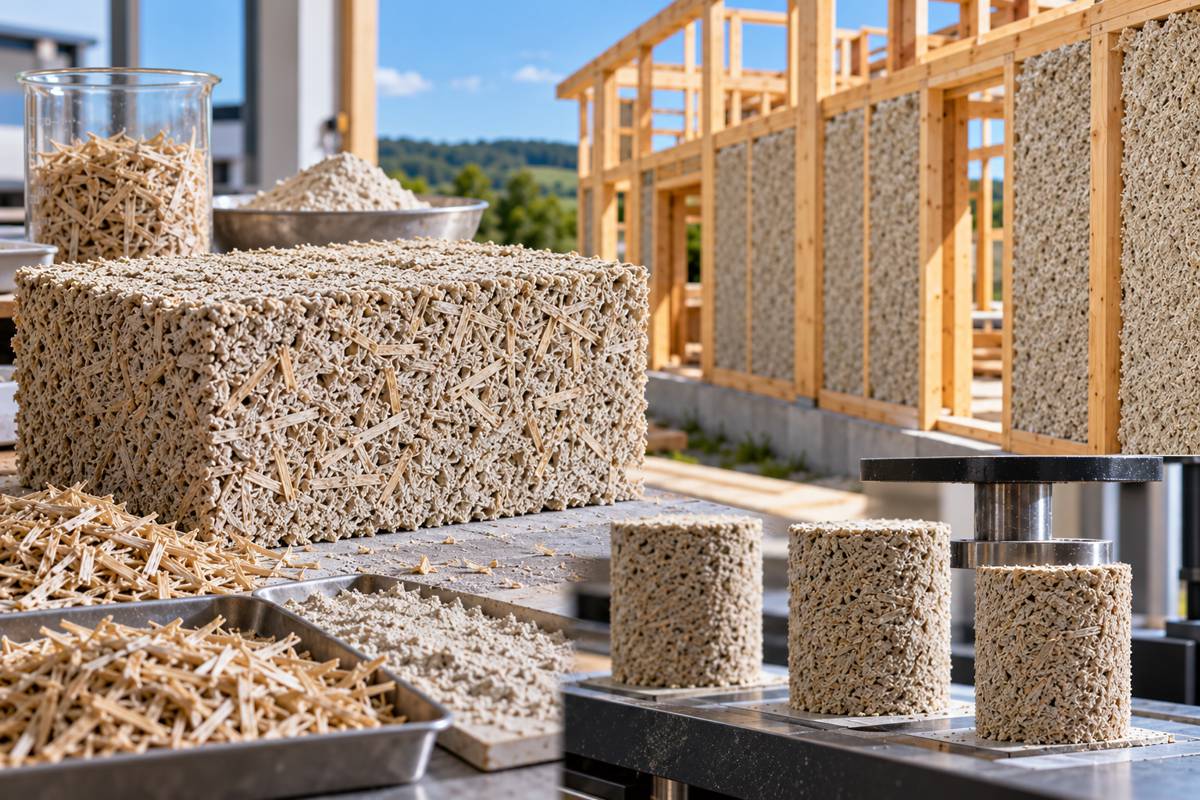
Any pathway that combines critical mineral recovery with a compliant construction end use for the treated residue addresses two liabilities at once, which is why phosphate residues attract attention from both materials scientists and highway engineers. Owners and specifiers should expect more of these dual-purpose material streams to reach standards committees over the next few years, and the technical evidence base being built through projects like CM-MAP will shape how confidently those specifications are written.
The Plant, Earthworks and Logistics Demand Behind a Regional Build-Out
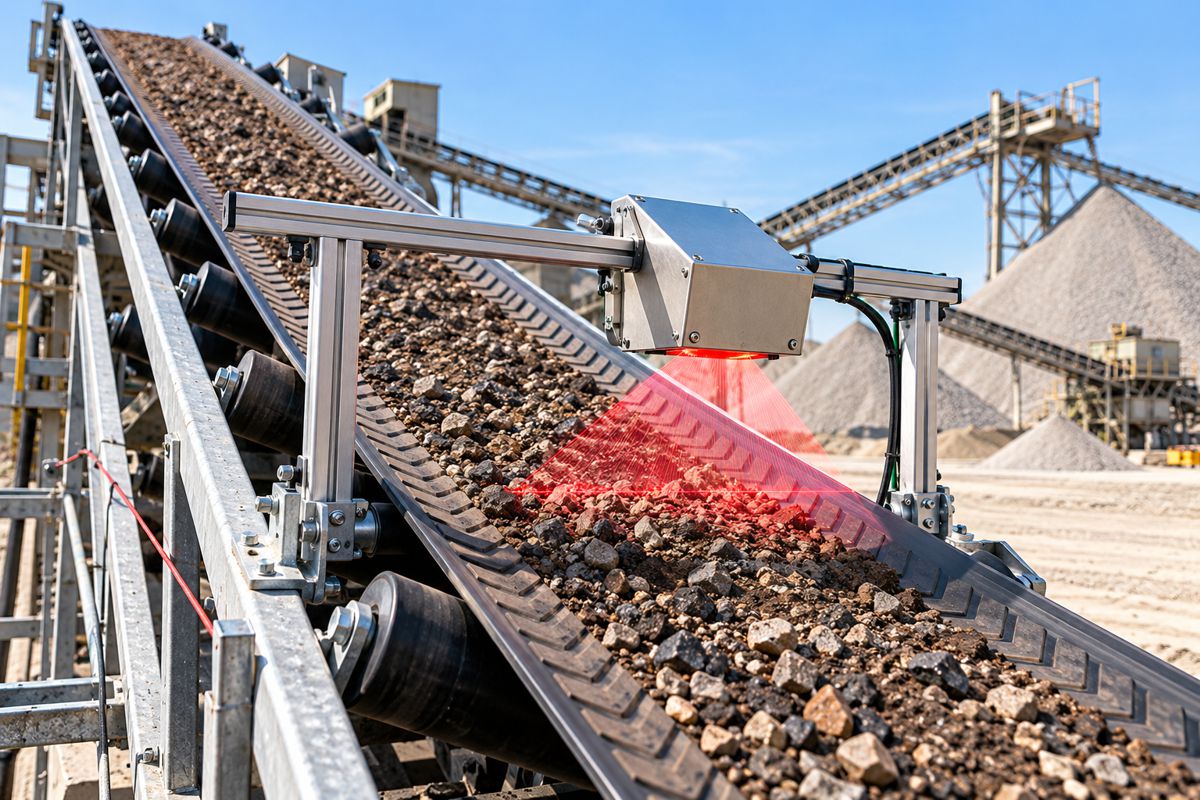
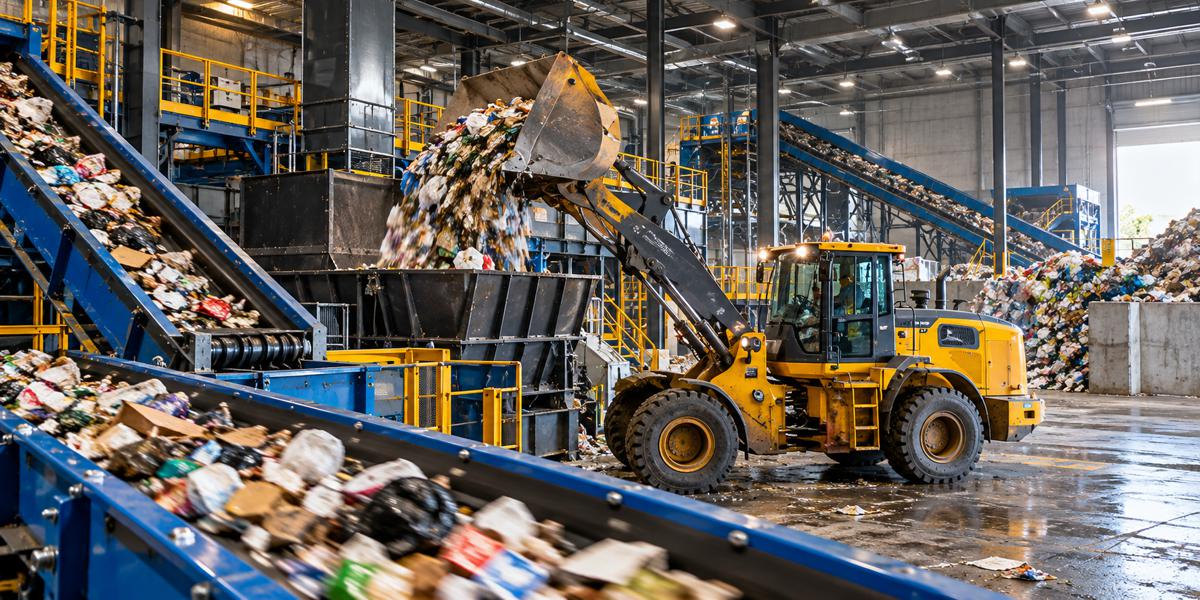
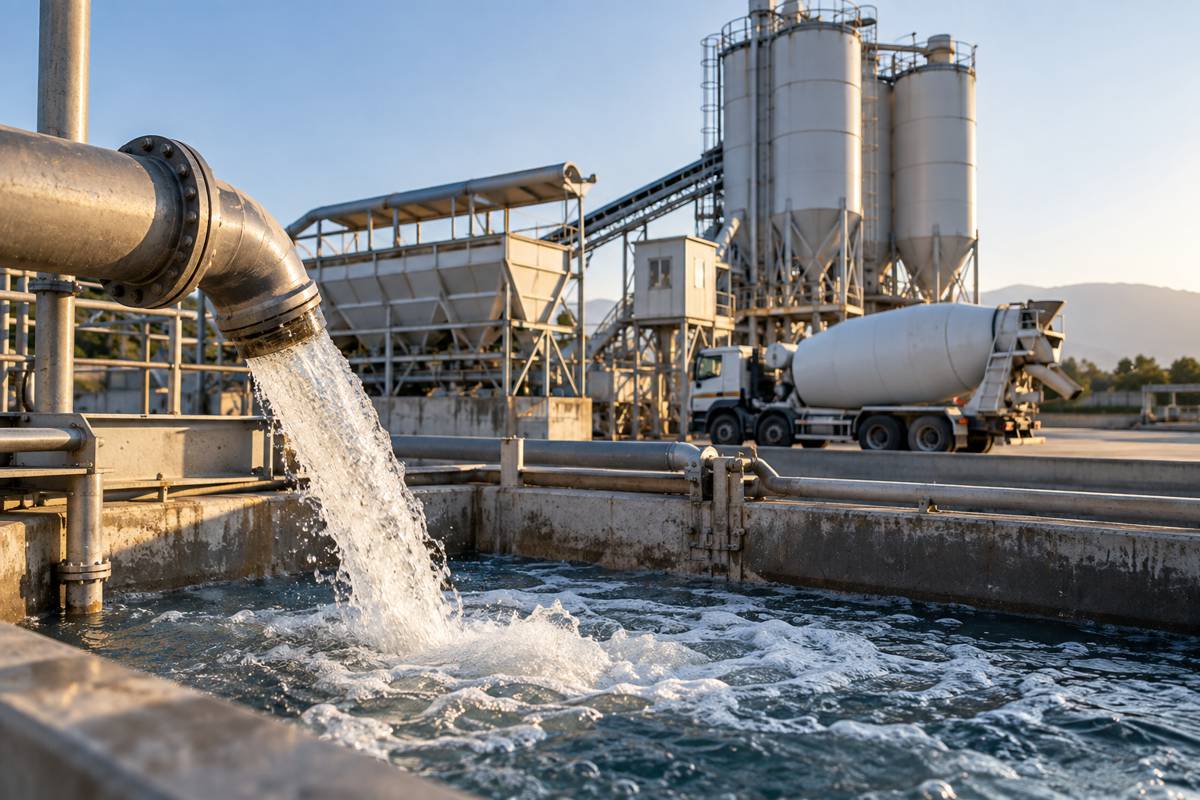
A secondary-feedstock supply chain is, in practical terms, an earthmoving and materials handling business with a chemistry plant attached. Reclaiming legacy tailings, dewatering ponded ash and rehandling stack material calls for excavators, articulated haulers, dozers, screening and washing plant, dredging equipment, conveyors and thickeners, alongside the water management and containment engineering that permits demand.
Brownfield sites bring their own civils requirements, from ground investigation and remediation to access roads, hardstanding, weighbridges and rail sidings. For plant dealers and civil contractors across the Southeast, the addressable work sits in site preparation, bulk earthworks and process plant installation rather than in mining as conventionally understood.
The logistics dimension is equally concrete. Savannah and Brunswick give the region deep-water capacity and established bulk handling, while the existing kaolin and mineral sands industries have already built the rail and road connections that heavy industrial minerals require.
Tang set out an ambition that runs directly through that infrastructure, stating that “Through this award, we are working to build secure and resilient critical materials supply chains, from resource discovery and characterization to processing, recovery, recycling, and advanced manufacturing, while also developing the skilled workforce needed to support these emerging industries”, and adding that “Our vision is to create a regional innovation ecosystem that embraces both unconventional resources and circular economy approaches to maximize the value of materials already in use.” The workforce point deserves attention from anyone planning capacity in the region, since technical colleges and process operator training will determine how quickly demonstration-scale work converts into commercial throughput.
A Transatlantic Read-Across for Britain’s Own Clay Country
The Georgia Tech programme includes a UK-US working group linking the south-eastern United States with south-west England, and the parallel is more than diplomatic. Cornwall produces kaolin from kaolinised granite through a process that historically yields only 10 to 15 per cent clay, leaving very large waste volumes across the china clay district, and that same landscape now hosts lithium projects at Trelavour and Cross Lanes and the South Crofty tin restart, both backed by National Wealth Fund investment.
Britain’s critical minerals strategy, published in November 2025, sets targets of meeting 10 per cent of demand from domestic production and 20 per cent from recycling by 2035, against roughly 6 per cent sourced domestically today, backed by up to £50 million in fresh funding and a cap of 60 per cent reliance on any single foreign supplier.
The strategic emphasis differs in a way that makes the exchange useful. British policy leans towards midstream processing and recycling, with Less Common Metals at Ellesmere Port among the few Western sources of rare earth alloys for permanent magnets, alongside magnet recycling work by HyProMag and Ionic Technologies in Belfast. American policy has more upstream resource and considerably more capital behind it.
A working group that pairs Georgia’s tailings inventories and characterisation capability with Britain’s separation and magnet recycling assets addresses complementary gaps, and it gives UK infrastructure and materials businesses a route into a supply chain that will otherwise be built entirely on the other side of the Atlantic.
Where the Commercial Advantage Will Settle
The competitive position in critical minerals is shifting from tenure to technique. Ownership of an orebody carries less advantage than the ability to demonstrate, with data, that a specific residue stream can be processed at predictable cost into a product that magnet makers will qualify. That favours operators who already hold large volumes of characterised material inside permitted sites, which in the Southeast means kaolin producers, heavy mineral sands operators, phosphate manufacturers and the utilities responsible for ash basins. It also favours the engineering and contracting firms able to move from remediation scopes into materials recovery scopes without rebuilding their commercial model.
Infrastructure owners and investors should watch for three signals over the coming eighteen months. The first is whether characterisation data from CM-MAP and its sister consortia begins to appear in feasibility studies and offtake discussions rather than only in academic literature. The second is whether secondary materials clear the specification hurdle for construction reuse in enough jurisdictions to create a reliable disposal-side revenue line.
The third is whether processing capacity actually breaks ground in the region, since the persistent Western weakness has been separation and metallisation rather than resource identification. Federal money and price signals have both moved decisively; the question that remains open is how quickly the Southeast converts a well-mapped industrial legacy into installed capacity.

Key Industry Questions
- What is the CM-MAP project actually funding? The $7.5 million award funds regional resource assessment and characterisation rather than mine development or plant construction. Researchers will collect samples from natural deposits and former industrial sites across the Atlantic coastal plain, analyse their composition, mineral types, critical mineral forms and rare earth element characteristics, then apply statistical analysis and machine learning to predict where recoverable material occurs and which extraction routes are most efficient. The output is a regional dataset and a set of predictive models intended to support later commercial decisions on processing, recovery and recycling. DOE has noted that selection for award negotiations does not itself constitute a commitment to issue funding, and final amounts remain subject to negotiation.
- Why target tailings and industrial residues rather than new deposits? Material that has already been mined sits inside existing permits, adjacent to existing haul roads, rail connections, water infrastructure and processing plant, which removes years from a development timeline and a substantial share of upfront capital. Comminution has often already been paid for, since crushing and grinding are among the most energy-intensive steps in any mineral circuit. Legacy residues also carry closure and remediation liabilities that recovery can partially offset, changing the financial framing of the work. The constraint is rarely whether the elements are present but whether their mineral form allows economic extraction, which is precisely what characterisation programmes are designed to establish.
- How significant are the rare earth concentrations in Georgia kaolin residues? Published research on central Georgia kaolin reports total rare earth concentrations of 0.02 to 0.06 weight per cent in mined kaolin, up to 1.9 weight per cent in mine tailings and up to 4.6 weight per cent in associated sand lithologies, with monazite and xenotime as the principal hosts. Coarse fractions from mined kaolin showed enrichment in heavy rare earths relative to the associated sands, which is commercially notable because heavy rare earths including dysprosium and terbium are the elements most constrained outside China. Grade alone does not establish viability, since recovery depends on mineral form, liberation, reagent consumption and residue management across the full circuit.
- What does this mean for fly ash supply to concrete producers? Demand for fly ash as a supplementary cementitious material has tightened as coal generation declines, and harvesting previously disposed ash from landfills and impoundments for concrete reuse has already become an established commercial activity. Rare earth recovery introduces a second claim on the same inventories, which could affect regional availability and pricing for cementitious blends. Several recovery routes under development are designed to preserve treated solids for potential use as supplementary cementitious materials, which would allow both markets to be served from a single stream. Specifiers should track how treated ash performs against relevant standards before assuming equivalence with conventional material.
- Is phosphogypsum a realistic construction material? It is being tested under carefully controlled conditions rather than adopted at scale. The EPA approved a small-scale pilot in December 2024 permitting Mosaic to build four test road sections with varying phosphogypsum content in road base at a private facility in Polk County, Florida, designed to meet state road and bridge specifications, with construction beginning in 2025 and research conducted with the University of Florida. The approval has been challenged in federal appellate court, and phosphogypsum remains regulated under the Clean Air Act because of radium-226 content. Wider adoption would require further approvals and, most likely, additional field performance data from the pilot programme.
- Which businesses stand to benefit commercially in the Southeast? Kaolin producers, heavy mineral sands operators, phosphate manufacturers and utilities holding ash basins control the feedstock inventories, giving them first claim on any value the characterisation work identifies. Civil contractors and plant suppliers gain from bulk earthworks, dewatering, screening, washing and process plant installation, work that resembles quarrying and remediation more than conventional mining. Logistics operators around Savannah and Brunswick benefit from bulk handling volumes. Specialist processing and separation companies stand to capture the largest margin if midstream capacity is built domestically, since separation and metallisation remain the narrowest point in the Western supply chain.
- How does this fit with wider United States critical minerals policy? The award sits within a rapid sequence of federal action. The 2025 critical minerals list was substantially expanded, guiding federal investment and permitting. In February 2026 the administration launched a $12 billion strategic minerals reserve funded largely through the Export-Import Bank with private seed capital from major manufacturers. DOE has separately announced $134 million for rare earth element supply chains and $75 million for recovery from coal and coal-based feedstocks. CM-MAP and its Nevada counterpart extend the CORE-CM initiative from 13 basins to eight broader regions, indicating a shift from basin-scale studies towards regionally coordinated supply chain development.
- What relevance does this have for the UK market? The programme includes a UK-US working group connecting the south-eastern United States with south-west England, where china clay production has left comparable residue volumes and where lithium and tin projects are now advancing on brownfield ground. Britain’s critical minerals strategy targets 10 per cent of demand from domestic production and 20 per cent from recycling by 2035, against roughly 6 per cent today, with policy emphasis on midstream processing and recycling rather than large-scale extraction. That creates a natural complementarity, since American partners hold resource volume and capital while British assets such as Less Common Metals at Ellesmere Port and magnet recyclers including HyProMag and Ionic Technologies hold downstream capability.
- What would indicate the project is translating into commercial activity? Three markers are worth tracking. Characterisation data appearing in commercial feasibility studies and offtake negotiations would show the dataset is being used for investment rather than publication. Secondary materials clearing specification hurdles for construction reuse across multiple jurisdictions would establish a reliable revenue line on the disposal side of the equation. Most importantly, separation and metallisation capacity breaking ground in the region would address the structural Western weakness, since resource identification has never been the binding constraint. Workforce development through technical colleges and operator training programmes offers an early indicator, because process capacity cannot outpace the availability of qualified operators.
Strategic Takeaways
- Competitive advantage in critical minerals is migrating from mineral tenure towards characterisation capability, favouring operators who can prove recoverability from material they already control inside permitted sites.
- Legacy tailings, ash impoundments and gypsum stacks should now be assessed as dual-value assets on the balance sheet, combining potential mineral recovery with reduced long-term closure and remediation liability.
- Construction specifications are becoming a decisive offtake mechanism for secondary industrial materials, which means standards committees and highway authorities will shape the commercial viability of recovery projects as much as process engineers do.
- Contractors and plant suppliers should position for earthworks, dewatering, screening and process plant installation scopes across brownfield and residue sites, since a secondary-feedstock supply chain is predominantly a materials handling business.
- The persistent bottleneck in Western supply remains separation and metallisation rather than resource identification, so investors should weight announcements about installed processing capacity far more heavily than announcements about resource potential.