ASTM Seeks Research to Advance Hemp-Lime Construction Standards
Hemp-lime has been used in building construction for decades, yet questions remain over how consistently its performance can be measured and compared. ASTM International is now inviting researchers to examine those questions, with a new special issue of its Journal of Testing and Evaluation focusing on the material’s engineering properties, testing methods and potential routes towards standardisation.
The research initiative covers a broad range of subjects, from the moisture behaviour of hemp-based insulation to fire resistance, durability, prefabricated construction and 3D printing. Together, they reflect the practical challenges involved in turning a promising bio-based material into a building product that designers, contractors and regulators can specify with confidence.
Unlike conventional insulation products manufactured to relatively consistent formulations, hemp-lime composites can vary considerably according to the hemp aggregate, mineral binder, mixing proportions and installation method. Establishing reliable ways to characterise those differences is central to the work ASTM hopes to bring together.
Briefing
- ASTM International is inviting research papers for a special issue of its Journal of Testing and Evaluation.
- Hemp-lime composites, commonly known as hempcrete, are primarily used for non-loadbearing insulation and building-envelope applications.
- Research topics include thermal performance, moisture behaviour, mechanical properties, durability, fire safety and standardised testing.
- The programme also covers prefabricated products, installation methods, 3D printing and performance in completed buildings.
- Preliminary abstracts of 250 words must be submitted by 31 October 2026.
Understanding Hemp-Lime Construction
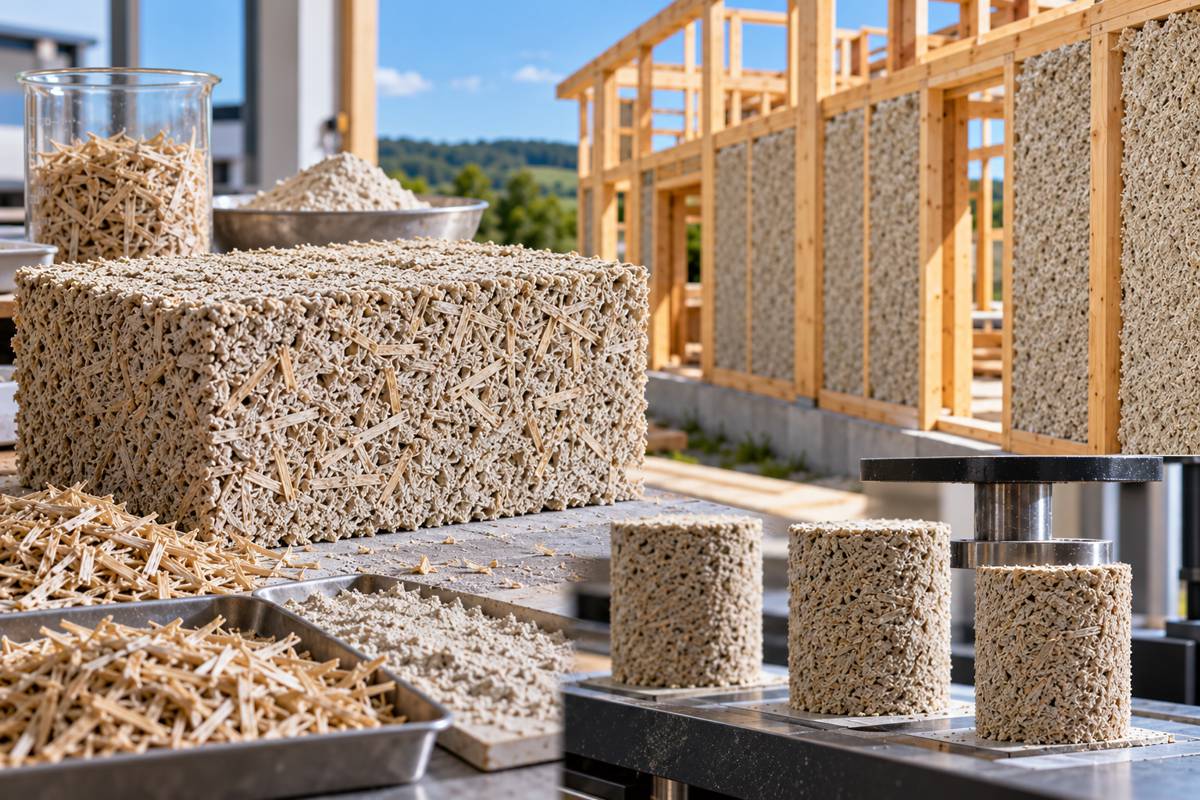
Hemp-lime is produced by combining the woody inner core of industrial hemp stems, known as hemp shiv, with a mineral binder, generally based on lime. The resulting composite is relatively lightweight and porous, making it suitable for insulating walls, roofs and other elements of the building envelope.
Unlike conventional structural concrete, hemp-lime is generally not intended to carry significant building loads. It is typically installed around a separate structural frame, providing insulation and enclosure while the supporting structure carries the weight of the building.
The material’s porous structure is central to its performance. Air trapped within the composite reduces heat transfer, while its ability to absorb and release water vapour can help moderate changes in indoor humidity. These characteristics have encouraged interest in hemp-lime for both new construction and the refurbishment of existing buildings, particularly where designers are looking for alternatives to conventional insulation systems.
The difficulty is that hemp-lime is not a single, uniform material. Particle size, binder chemistry, mixing ratios, compaction and curing conditions can all influence its properties, sometimes producing significant differences between composites that appear broadly similar.
Research by R. Walker and S. Pavía, published in Construction and Building Materials, has examined the influence of different lime-based binders on moisture transfer and thermal behaviour. Their findings indicated that binder composition affected capillary water absorption, while differences in thermal conductivity and heat capacity were less pronounced.
Such variation becomes particularly relevant when comparing products intended for different climates, wall assemblies and construction methods. A laboratory result obtained from one formulation cannot necessarily be applied to another without understanding the materials and conditions involved.
Developing Consistent Testing Methods
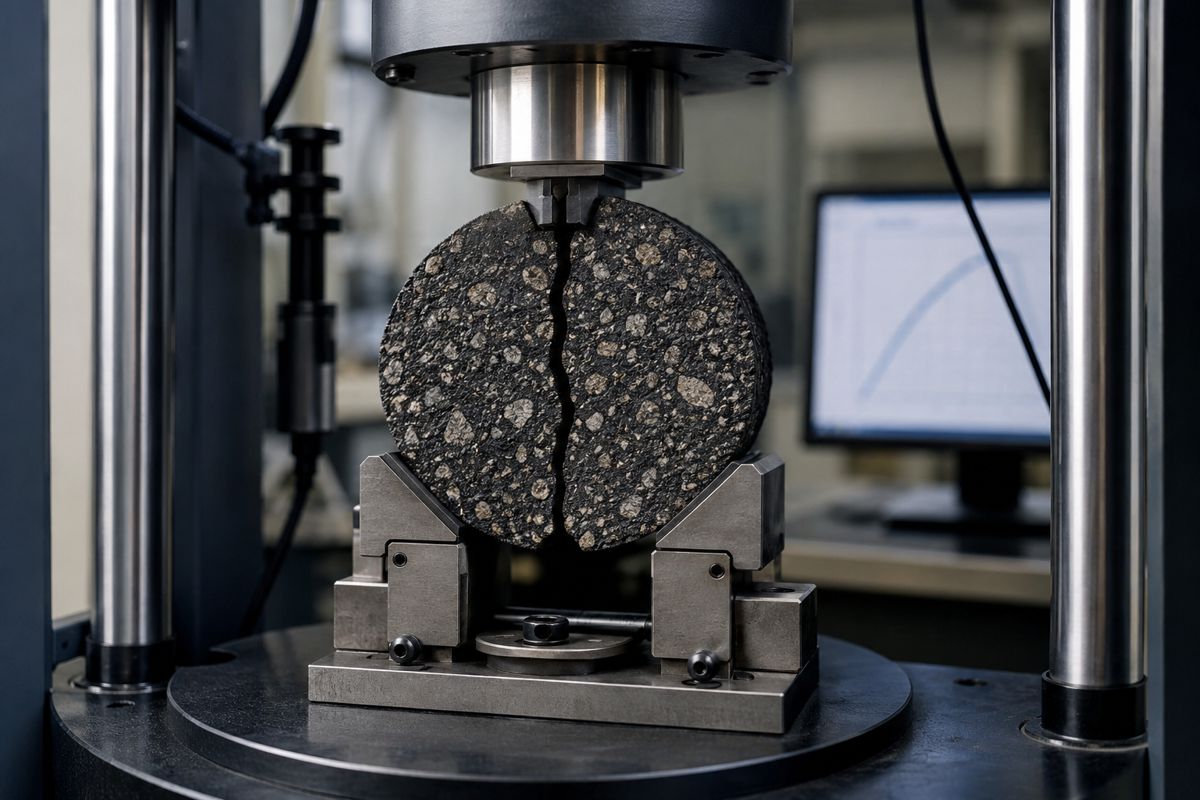
Construction materials are normally assessed through established procedures covering properties such as strength, thermal conductivity, moisture resistance, fire behaviour and durability. These provide designers and manufacturers with a common basis for evaluating products, although adapting conventional methods to plant-based composites can introduce additional considerations.
Hemp shiv itself presents a particular challenge. As an agricultural material, its physical characteristics can vary according to growing conditions, harvesting, processing and storage. Its interaction with the binder also influences the properties of the finished composite, making reliable characterisation of the raw material an important part of any testing programme.
Work towards more consistent methods is already under way. A RILEM technical committee published recommendations in 2017 for characterising hemp shiv, drawing on research involving seven laboratories. The programme examined procedures for measuring initial moisture content, water absorption, bulk density, particle grading and thermal conductivity.
The objective was to improve the consistency of measurements before hemp shiv was incorporated into construction composites. Without comparable information about the raw materials, differences observed in finished products can be difficult to interpret.
ASTM’s proposed special issue extends that discussion into the wider performance of hemp-lime materials and building systems. Alongside laboratory characterisation, the organisation is seeking research into installation methods, environmental exposure and the behaviour of composites in service.
These questions become more complicated once a material is incorporated into a building. Temperature and humidity fluctuate, moisture moves through connected materials, and construction details can influence performance in ways that are difficult to reproduce using isolated laboratory specimens. Research that connects controlled testing with measurements from completed buildings could therefore make a useful contribution to future assessment methods.
Moisture, Durability and Fire Performance
The interaction between hemp-lime and moisture is one of its most extensively studied characteristics. Its ability to buffer humidity can contribute to building-envelope performance, but that behaviour must be considered alongside water absorption, drying rates and the potential effects of prolonged exposure.
Moisture movement is particularly relevant in composite wall assemblies, where the properties of finishes, membranes and adjoining materials can influence how readily water vapour passes through the construction. A hemp-lime wall finished with an inappropriate coating, for example, may behave differently from one designed to accommodate vapour movement.
Researchers have also investigated how the carbonation of lime-based binders changes material properties over time. As carbonation progresses, the composition of the binder can evolve, with potential consequences for moisture transport and other aspects of performance. Understanding those changes is important when laboratory measurements are used to represent a material expected to remain in service for decades.
Durability presents a related challenge, particularly where materials must withstand repeated changes in temperature and moisture over long periods. ASTM’s research programme consequently extends into environmental resistance and life safety, including performance under fire, flooding, seismic activity and wind loading.
Fire performance requires particular care because the behaviour of an individual material does not automatically establish the resistance of a complete wall or roof assembly. Protective finishes, structural connections, cavities and other construction details can influence the results, while different test methods address different aspects of fire safety.
The same distinction applies to structural and environmental loading. Hemp-lime may be used as non-loadbearing infill, but the behaviour of the complete building system still depends on how that infill interacts with its supporting structure and surrounding components.
The proposed research topics recognise these differences, encouraging studies that address practical building requirements rather than relying solely on the properties of isolated specimens.
From Laboratory Materials to Building Products
Hemp-lime has traditionally been associated with cast-in-place construction, where the composite is placed around a supporting framework. Other methods include sprayed application and the manufacture of blocks or panels that can be assembled on site.
Each approach introduces different considerations for material consistency, construction quality and programme management. Cast-in-place applications depend on the preparation and placement of the mixture, with compaction and drying conditions influencing the finished material. Site conditions and workmanship can therefore affect results even when the same nominal formulation is used.
Factory production offers the possibility of more controlled mixing and manufacturing conditions, potentially improving dimensional consistency and quality assurance. Prefabricated products must nevertheless satisfy additional requirements relating to handling, transport, installation and the performance of connections between elements.
ASTM has included installation methods, prefabricated products and 3D printing among the subjects for its special issue, recognising that material development is increasingly connected with changes in how building components are manufactured and assembled.
Additive manufacturing introduces further technical questions, particularly around the consistency of deposited material, bonding between layers and the relationship between manufacturing parameters and finished performance. These considerations differ from those encountered in conventional cast-in-place construction, even where the underlying composite uses similar ingredients.
The availability of dependable test methods could help researchers and manufacturers compare these approaches on a more consistent basis, particularly when evaluating how production techniques affect thermal, mechanical and moisture-related properties.
Assessing Environmental Performance
Hemp-lime’s environmental appeal comes partly from the carbon dioxide absorbed during hemp cultivation and retained within the harvested plant material. Lime-based binders can also absorb carbon dioxide through carbonation, although their manufacture involves emissions that must be included when assessing the overall environmental balance.
Consequently, describing hemp-lime as carbon-negative requires a clearly defined assessment boundary and supporting lifecycle evidence. Results depend on the cultivation and processing of hemp, binder composition, manufacturing energy, transport, construction methods and assumptions about service life and end-of-life treatment. Comparisons with conventional materials must also account for differences in thermal performance and the quantities required to achieve equivalent building functions.
ASTM’s proposed research programme includes sustainability and circular bio-economy considerations, providing scope for studies that examine environmental performance alongside engineering properties. Consistent methods for assessing durability and service life are particularly relevant, since a product’s initial embodied carbon represents only part of its long-term environmental impact.
Submitting Research to ASTM
ASTM International is inviting preliminary abstracts of approximately 250 words for consideration in the special issue of its Journal of Testing and Evaluation. Submissions are welcome across industrial hemp resources, material formulation, thermal and moisture performance, mechanical behaviour, durability, life safety, testing procedures and construction applications.
Researchers must submit their abstracts by 31 October 2026 to Alyssa Conaway at aconaway@astm.org. Further information on submission guidelines, background and publication timelines is available through the ASTM Journal of Testing and Evaluation call for papers.
The special issue is intended to bring together scientific findings and emerging approaches to standardisation, rather than establish a new ASTM standard directly. Its value will depend on the quality and comparability of the evidence submitted, particularly where research can connect laboratory measurements with manufacturing processes and performance in completed buildings.
As hemp-lime applications extend from traditional cast-in-place insulation to factory-produced panels and experimental additive manufacturing, the technical questions are becoming increasingly specific. How reliably can the material be produced, how does its performance change over time, and which testing methods can provide results that engineers and building authorities can use with confidence?
Key Industry Questions
- What is hemp-lime concrete? Hemp-lime, commonly known as hempcrete, is a composite made from industrial hemp shiv and a mineral binder, generally lime-based. It is primarily used for insulation and non-loadbearing building-envelope applications.
- Can hemp-lime replace structural concrete? Not generally. Conventional hemp-lime is normally used alongside a separate loadbearing structure and should not be treated as a direct replacement for reinforced structural concrete.
- What are the main technical advantages of hemp-lime? Its principal characteristics include relatively low thermal conductivity, moisture-buffering capacity and the use of renewable plant-based aggregate. Actual performance depends on the formulation and installation.
- Why are standardised testing methods needed? Consistent testing allows laboratories, manufacturers and designers to compare material properties more reliably and assess products against relevant building requirements.
- Is hemp-lime carbon-negative? It can achieve favourable lifecycle carbon results, potentially including net-negative outcomes under certain assessment boundaries. The result depends on binder composition, production processes, transport and other lifecycle assumptions.
- Can hemp-lime be used in prefabricated construction? Yes. Hemp-lime can be manufactured into blocks and panels, as well as installed using cast-in-place or sprayed techniques. Each method has different manufacturing and performance considerations.
- Does ASTM’s special issue establish new construction standards? No. The initiative is intended to advance technical understanding and contribute research that may inform future testing procedures and standards development.
- When is the submission deadline? Preliminary abstracts of 250 words must be submitted by 31 October 2026.
Strategic Takeaways
- Variations in hemp aggregate, binder composition and manufacturing methods make consistent material characterisation essential for reliable product comparisons.
- Laboratory measurements need to be considered alongside the performance of complete building assemblies, particularly for moisture management, durability and fire safety.
- Prefabrication offers opportunities for controlled manufacturing, but introduces additional requirements for handling, connections and installed performance.
- Environmental claims require transparent lifecycle assessment methods that account for binder production, carbon storage and long-term material performance.
- Research that connects material properties with practical construction applications can help inform future testing procedures and engineering specifications.