Hitachi Drives Dealer Digitalisation with LANDCROS Sales Navigator
Construction equipment manufacturers have spent years digitising machines, fleets and worksites. Yet across large parts of the global heavy equipment sector, one critical area has remained stubbornly fragmented: dealer sales operations.
Customer conversations still sit inside spreadsheets, handwritten notes, emails, messaging apps and disconnected CRM platforms. Valuable lead intelligence often disappears when sales staff move roles, retire or simply forget to update internal systems. For construction equipment dealers operating across vast territories and multiple business lines, that fragmentation can quietly erode customer relationships and commercial performance.
Now, Hitachi Construction Machinery is attempting to tackle that problem head on with the launch of LANDCROS Sales Navigator, a new digital platform designed to centralise dealer sales information and improve communication across equipment sales operations.
The company confirmed the platform will begin rolling out globally during fiscal year 2026, starting initially in Japan and Southeast Asia before wider international deployment. The move signals a broader shift underway across the construction and mining equipment industries, where manufacturers are increasingly focusing not only on machine performance but also on digital ecosystems supporting dealerships, aftermarket services and customer lifecycle management.
The announcement also arrives during a significant transition period for the Japanese manufacturer. Hitachi Construction Machinery has revealed plans to change its corporate brand and trade name to LANDCROS Corporation in April 2027, aligning future digital and solutions-focused operations under a unified global identity.
Briefing
- LANDCROS Sales Navigator centralises dealer customer and sales information
- Global rollout begins in fiscal year 2026 starting in Japan and Southeast Asia
- The platform aims to improve sales coordination, customer continuity and lead utilisation
- Smartphone-friendly design targets practical use in field sales environments
- Hitachi Construction Machinery plans future AI-powered automation and analytics integration
The Construction Equipment Sector’s Data Fragmentation Problem
Heavy equipment dealerships are among the most operationally complex sales organisations in the industrial economy. Unlike automotive retail, construction machinery sales involve lengthy procurement cycles, multiple stakeholders, financing arrangements, aftermarket services, rentals, used equipment and fleet lifecycle management.
A single contractor purchasing excavators may also require attachments, telematics support, service contracts, operator training and long-term maintenance agreements. In mining and infrastructure projects, those relationships can stretch over decades.
Despite the scale and sophistication of these operations, many dealerships still rely on fragmented systems that struggle to provide a unified view of customer activity. According to research from consulting firms including McKinsey and Deloitte, industrial businesses continue facing major challenges integrating customer data across sales, service and operational divisions.
That lack of integration creates practical commercial problems. Leads are duplicated. Opportunities are missed. Customer histories become difficult to track. Regional teams often operate in silos. In highly competitive markets, those inefficiencies directly affect profitability and customer retention.
LANDCROS Sales Navigator appears designed specifically to address those longstanding issues within dealer networks.
Centralising Sales Intelligence Across Dealer Networks
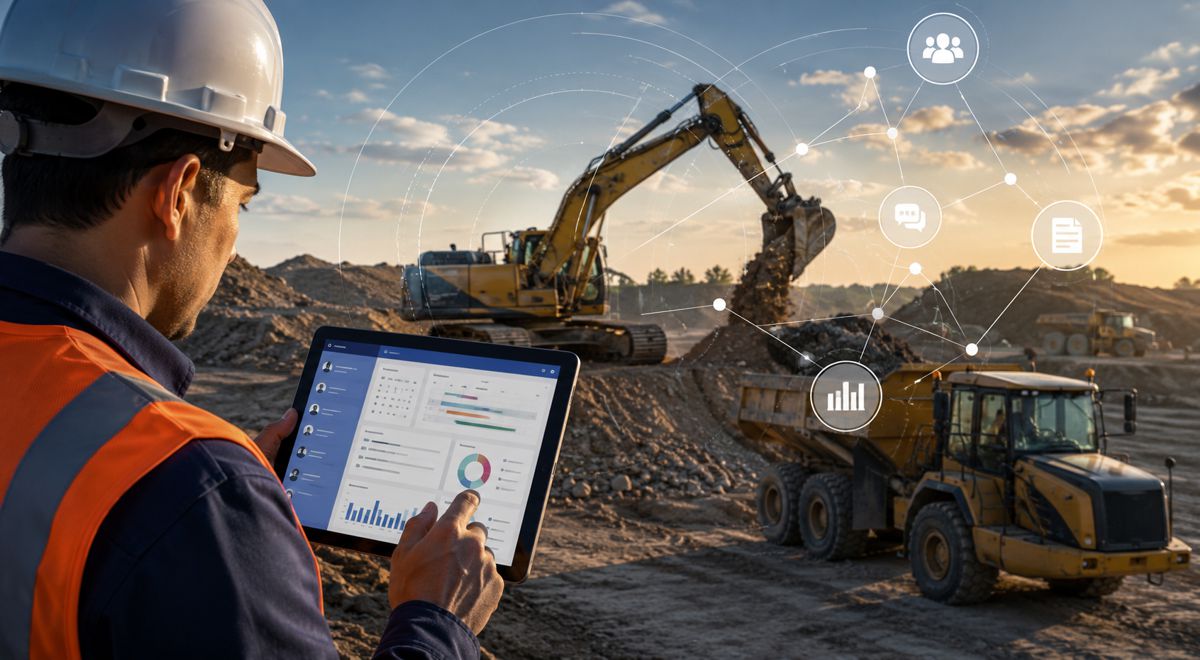
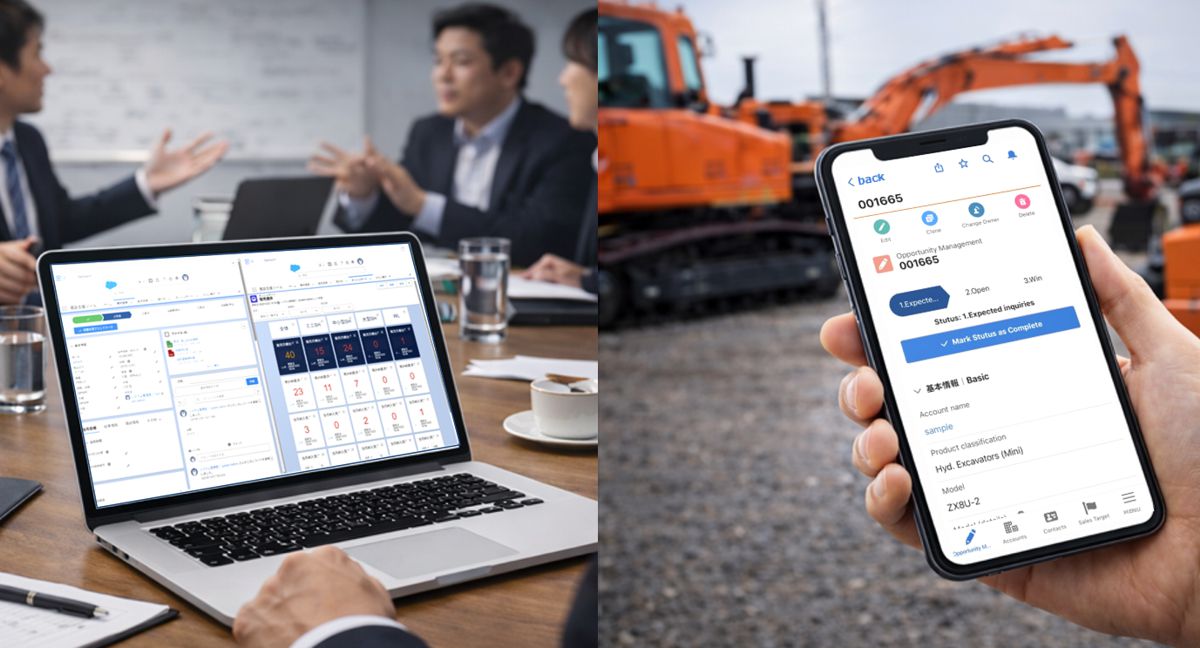
At the heart of the platform is a centralised management system for customer information and business discussion histories. Rather than storing project information across disconnected tools, dealerships can digitise and consolidate operational sales data into a unified platform.
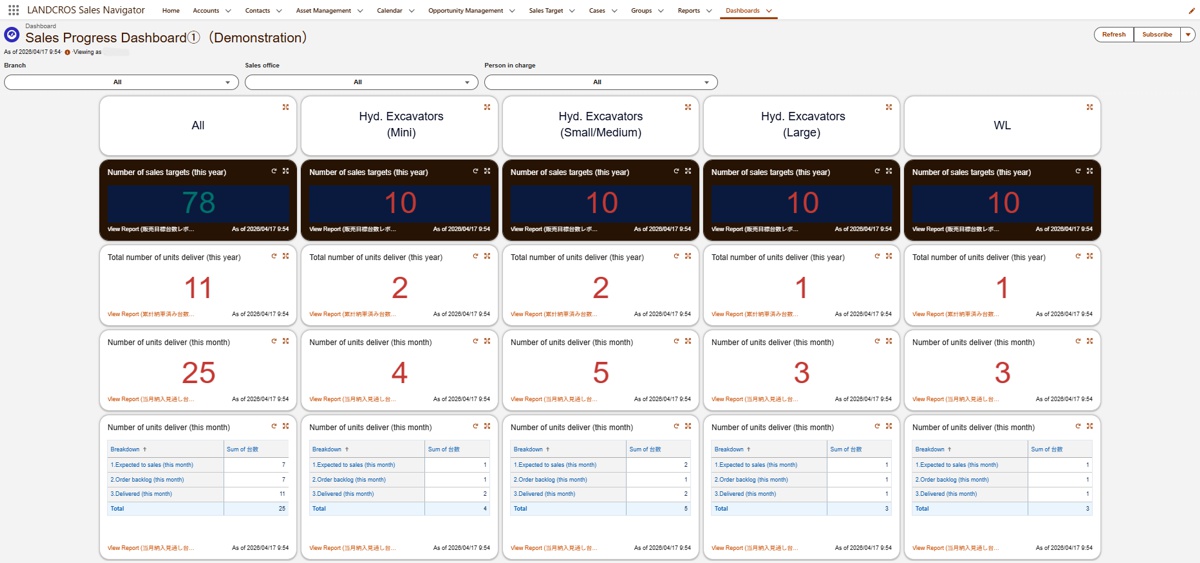
The system includes dashboard functionality capable of visualising project progress, sales targets and operational status in real time. That visibility matters because many construction equipment sales teams operate across geographically dispersed regions where maintaining consistent reporting standards can prove difficult.
For dealers, the platform potentially creates greater transparency across sales pipelines and customer engagement activity. For customers, the intended benefit is continuity. Contractors and fleet operators dealing with multiple branches or personnel changes should theoretically receive more consistent service and recommendations informed by prior interactions.
The broader industry significance lies in the increasing importance of data continuity within equipment sales ecosystems. As machinery becomes more technologically advanced and service-driven, manufacturers and dealers alike are under pressure to maintain deeper long-term customer relationships rather than focusing purely on transactional machine sales.
A Shift Toward Value Chain Business Models
The launch also reflects the wider transformation occurring across global construction machinery manufacturers.
Historically, equipment builders generated most revenue through new machine sales. Today, the commercial model has evolved significantly. Manufacturers increasingly depend on recurring revenue streams linked to parts, services, remanufacturing, rentals, software and used equipment operations.
Hitachi Construction Machinery itself highlighted the growing importance of these “value chain businesses” alongside its traditional machinery operations.
This transition mirrors broader industrial trends seen across sectors such as mining, transport and energy infrastructure. Equipment manufacturers are increasingly repositioning themselves as long-term solutions providers rather than simply machine suppliers.
Digital platforms play a central role in that evolution. Customer data, service histories and operational analytics have become commercially valuable assets underpinning aftermarket revenue growth.
The ability to coordinate dealer interactions effectively therefore carries strategic importance extending far beyond sales administration.
Designed for Field Sales Practicality
One notable aspect of LANDCROS Sales Navigator is its apparent focus on usability rather than complexity.
Enterprise CRM deployments have historically struggled in field-based industrial environments because systems often become overly complicated for practical use by mobile sales teams. Construction equipment dealerships frequently operate across remote territories where personnel require fast, simple data entry tools that work efficiently on mobile devices.
Hitachi Construction Machinery stated that the platform was intentionally designed with simplicity in mind, allowing customer records, activity management and vehicle discussion information to be documented easily using smartphones.
That may sound relatively straightforward, but usability remains one of the biggest barriers to successful enterprise software adoption across industrial sectors. Sales teams rarely embrace systems perceived as administrative burdens.
The focus on smartphone accessibility also reflects changing workforce realities. Increasingly mobile and distributed sales operations require systems capable of functioning effectively away from office environments and desktop infrastructure.
Lower Barriers to Dealer Adoption
Another important element is the platform’s deployment model.
Hitachi Construction Machinery says the system carries zero initial costs because it uses existing external infrastructure without requiring system modifications. Dealers instead pay a monthly licensing fee and can reportedly implement the system within roughly one month.
That low-barrier approach could prove commercially important, particularly across emerging markets where dealer digitisation budgets may remain constrained.
Construction equipment dealer networks vary enormously in size and technological maturity. Some multinational dealers operate highly sophisticated digital ecosystems. Others continue relying on legacy systems and manual workflows.
Reducing implementation complexity and upfront investment potentially broadens accessibility across regional and independent dealer operations that might otherwise delay digital transformation projects.
This software-as-a-service style approach also aligns with wider enterprise technology trends where subscription-based operational systems increasingly replace large-scale custom infrastructure deployments.
Future AI Integration Signals Broader Ambitions
Although the current rollout focuses primarily on centralised information management, Hitachi Construction Machinery also confirmed it is considering future AI-driven functionality.
Potential future capabilities include automated entry of business discussion information alongside analytical tools.
Within industrial sales operations, AI-assisted CRM systems are rapidly becoming a major development area. Global technology providers including Salesforce, Microsoft and Oracle are already integrating generative AI into enterprise sales environments to automate meeting summaries, customer analysis and forecasting.
For construction equipment dealerships, AI could eventually help identify fleet replacement opportunities, predict service demand, analyse purchasing behaviour or prioritise sales leads based on historical patterns.
The challenge will be adapting those capabilities to the highly specialised operational realities of construction and mining sectors where procurement decisions often involve long asset lifecycles, financing structures and infrastructure project timing.
Still, the mention of AI integration demonstrates that LANDCROS Sales Navigator is unlikely to remain simply a basic customer database platform.
Supporting Faster Dealer Communication
The platform also includes communication tools allowing dealers to share information internally while simultaneously interacting directly with Hitachi Construction Machinery sales personnel.
That functionality may appear administrative on the surface, but communication speed increasingly matters within modern equipment supply chains.
Construction projects operate under tight schedules, while mining operations often require rapid support responses due to the enormous financial consequences of equipment downtime. Delays in approvals, technical clarifications or parts coordination can quickly escalate into operational problems for contractors and fleet owners.
Improved dealer-manufacturer coordination therefore contributes not only to sales efficiency but also to broader customer support performance.
LANDCROS Signals a Broader Corporate Evolution
Perhaps the most intriguing aspect of the announcement is the growing prominence of the LANDCROS brand itself.
The planned corporate transition from Hitachi Construction Machinery to LANDCROS Corporation in 2027 suggests a strategic repositioning extending beyond traditional heavy equipment manufacturing.
Globally, major equipment manufacturers are increasingly reframing themselves around integrated digital ecosystems, lifecycle support services and connected operational platforms.
Volvo Construction Equipment, Caterpillar, Komatsu and others have all accelerated investment in telematics, autonomy, connectivity and data-driven service operations during the past decade.
The emergence of LANDCROS Sales Navigator fits squarely within that wider industry transformation. Digital infrastructure supporting customer relationships is becoming just as strategically important as physical machinery itself.
For dealers, contractors and infrastructure operators, the implications are significant. Future competitive advantage may increasingly depend on how effectively equipment ecosystems integrate machines, data, service operations and customer intelligence into a unified operational framework.
Quietly, behind excavators, loaders and mining trucks, the construction equipment industry is becoming a software business too.