Tennant Targets Industrial Outdoor Cleaning with New Z50 Citadel Sweeper
Outdoor cleaning has become a far more demanding task than it was even a decade ago. Ports are operating around the clock, logistics hubs are expanding at record pace, industrial estates are handling higher freight volumes, and municipalities are facing mounting pressure to reduce airborne particulates in urban environments. Against that shifting operational landscape, equipment manufacturers are increasingly being pushed to deliver machines capable of handling larger areas, more varied debris loads and stricter environmental standards simultaneously.
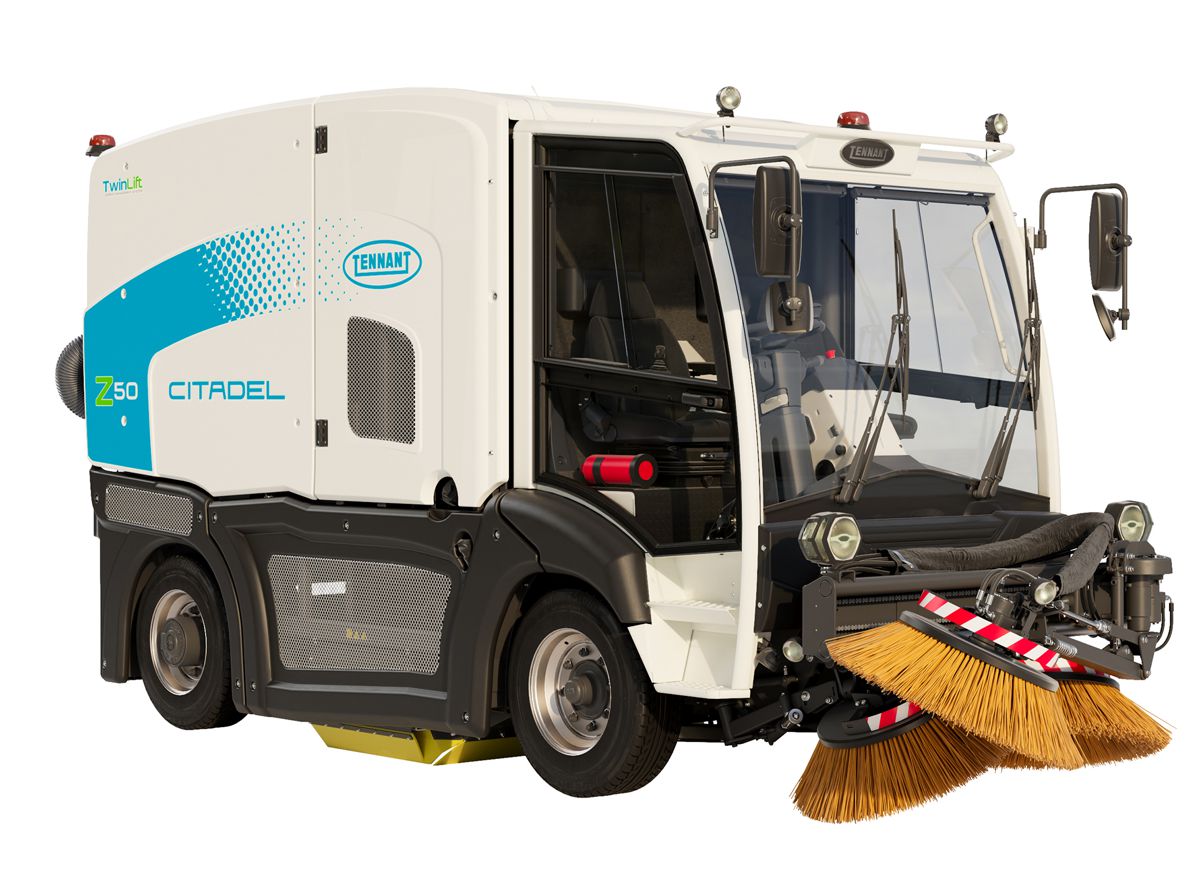
It is within this evolving infrastructure environment that Tennant Company has introduced the Z50 Citadel outdoor sweeper, a machine aimed squarely at industrial and municipal operations where conventional sweeping systems can struggle to balance productivity, dust suppression and operational durability.
The launch reflects broader trends reshaping industrial cleaning worldwide. Global investment in logistics infrastructure, manufacturing reshoring, transport hubs and urban renewal projects has created growing demand for specialised outdoor maintenance equipment capable of operating continuously in harsh conditions. Cleaning equipment is no longer viewed simply as a facilities management requirement. Increasingly, it forms part of wider operational efficiency, health and environmental compliance strategies across infrastructure-heavy sectors.
Briefing
- Tennant has launched the Z50 Citadel outdoor sweeper for industrial and municipal applications
- The machine combines mechanical and vacuum sweeping technologies for varied debris conditions
- Dust management focuses heavily on PM 2.5 and PM 10 particulate control
- The Z50 targets ports, logistics hubs, manufacturing facilities and urban infrastructure environments
- The launch highlights growing global demand for high-capacity outdoor cleaning equipment
Outdoor Cleaning Has Become Infrastructure Critical
Industrial cleaning rarely attracts the same attention as heavy equipment, transport systems or construction machinery, yet its operational importance has grown substantially. Modern logistics and industrial facilities operate with tighter environmental controls, stricter health regulations and significantly higher utilisation rates than in previous decades.
Ports, intermodal freight centres and manufacturing complexes now handle enormous daily traffic volumes, generating everything from packaging waste and tyre residue to dust, aggregates and airborne particulates. In municipal environments, meanwhile, air quality regulations continue tightening across Europe, the Middle East and many urban regions globally. Sweeping technology increasingly sits at the intersection of environmental compliance and operational continuity.
The World Health Organization has repeatedly linked fine particulate pollution to respiratory and cardiovascular health risks, particularly PM 2.5 particles capable of penetrating deep into the lungs. European regulators have similarly strengthened urban air quality standards in recent years, placing growing pressure on municipalities and industrial operators to control dust emissions more effectively during routine maintenance activities.
Against that backdrop, outdoor sweeping equipment has evolved from relatively simple mechanical systems into far more sophisticated platforms integrating filtration technology, dust suppression systems, visibility aids and productivity-focused operational features.
The Z50 Citadel Targets Heavy Duty Applications
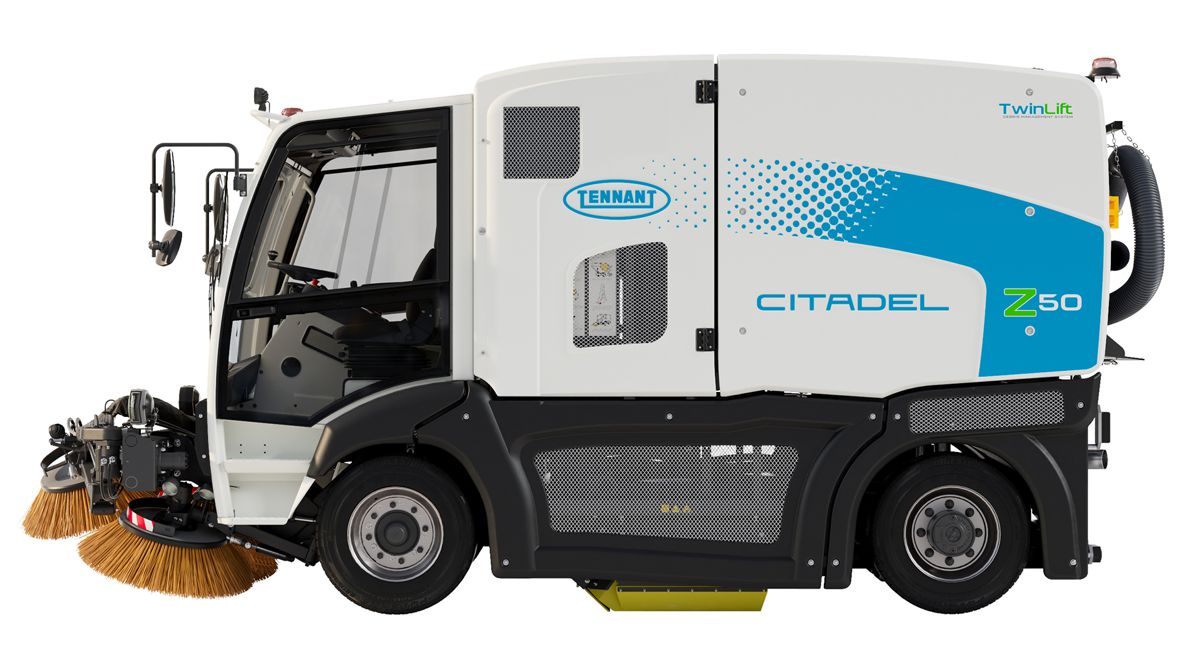
According to the supplied material, the Z50 Citadel combines both mechanical and vacuum sweeping technologies to manage a broad range of debris types, from fine dust through to heavier industrial waste materials.
That hybrid approach matters because industrial environments rarely produce uniform debris conditions. A logistics terminal may contain packaging fragments, tyre dust, sand, metal particles and organic waste within the same operating zone. Municipal street cleaning operations face similar variability, particularly in high-traffic urban areas exposed to weather, construction activity and transport emissions.
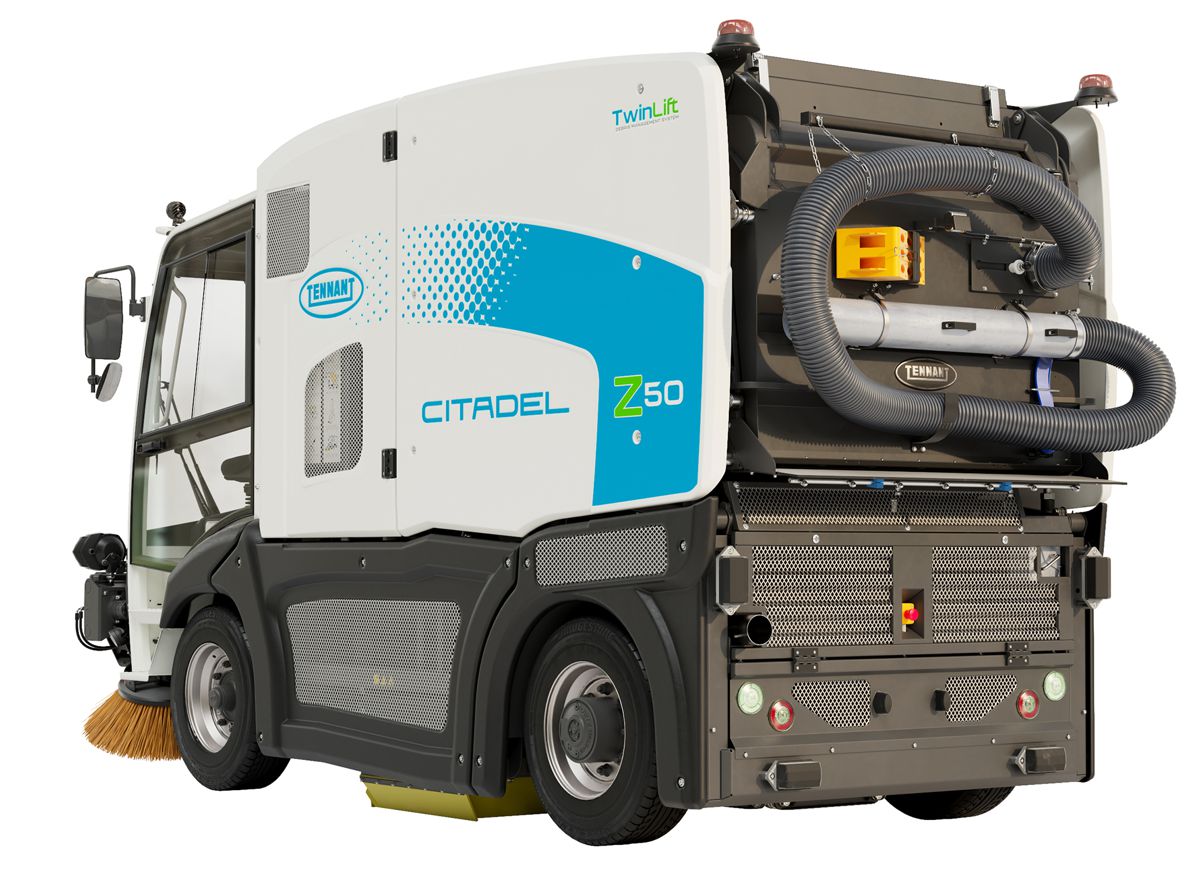
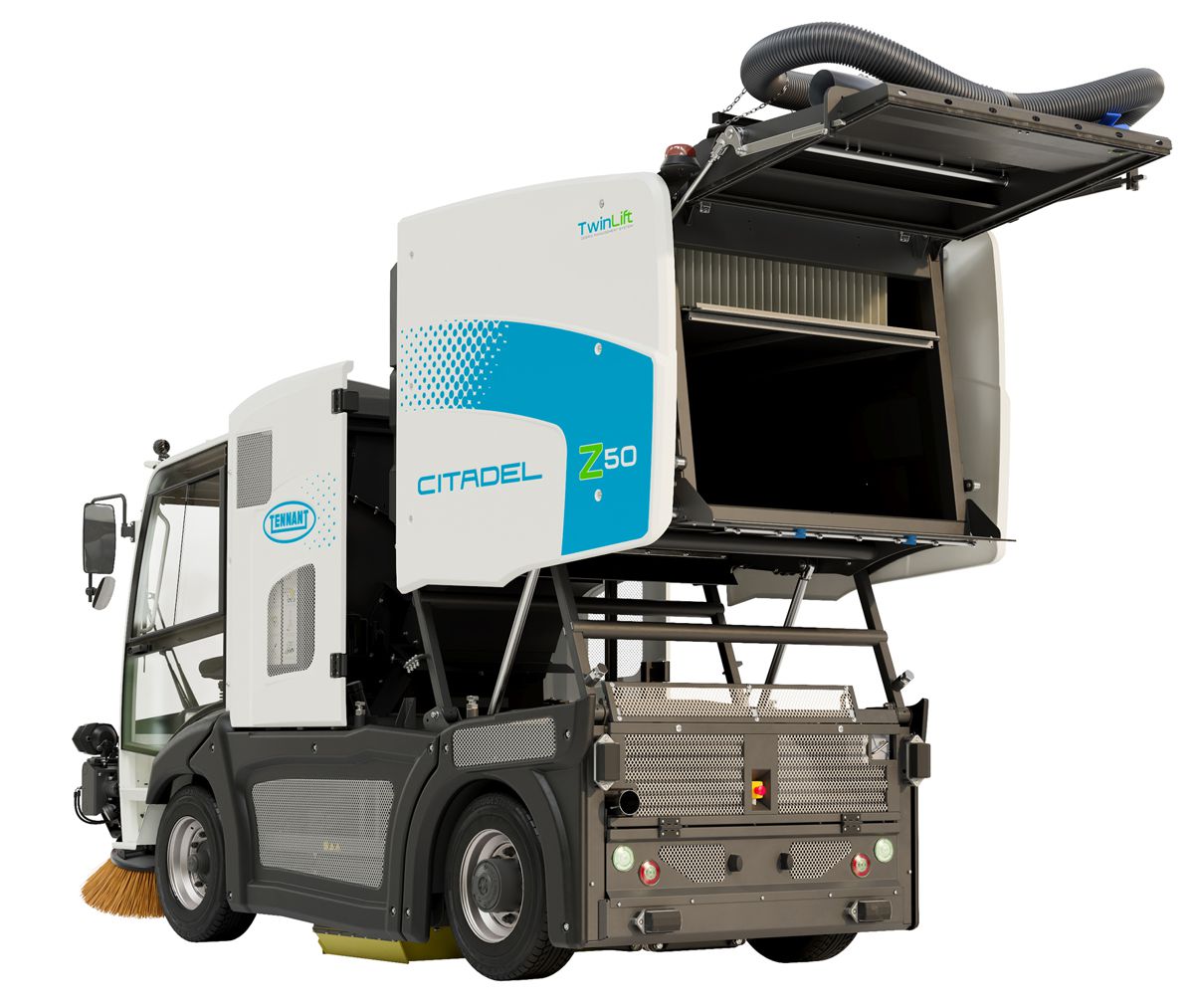
The Z50’s TwinLift Debris Management System is intended to improve debris capture efficiency while controlling airborne dust during sweeping operations. Dust management has become one of the most commercially important differentiators in the outdoor sweeping market, especially as operators seek to reduce secondary airborne contamination generated during cleaning itself.
The machine’s filtration system is certified to EUnited PM 2.5 and PM 10 4-star standards. EUnited certification is widely recognised across Europe as a benchmark for particulate control performance in sweeping equipment, particularly for urban and industrial applications where fine dust suppression is critical.
Logistics Growth Is Reshaping Equipment Requirements
The timing of the Z50 launch aligns with rapid expansion across the global logistics sector. Warehousing and freight infrastructure investment has accelerated significantly since the pandemic, driven by e-commerce growth, supply chain diversification and increased regional manufacturing capacity.
Large logistics parks often operate continuously with constant heavy vehicle movement, generating persistent debris accumulation across loading areas, roadways and storage yards. Traditional compact sweepers frequently struggle to maintain productivity in such large-scale environments without repeated hopper emptying or reduced operational efficiency.
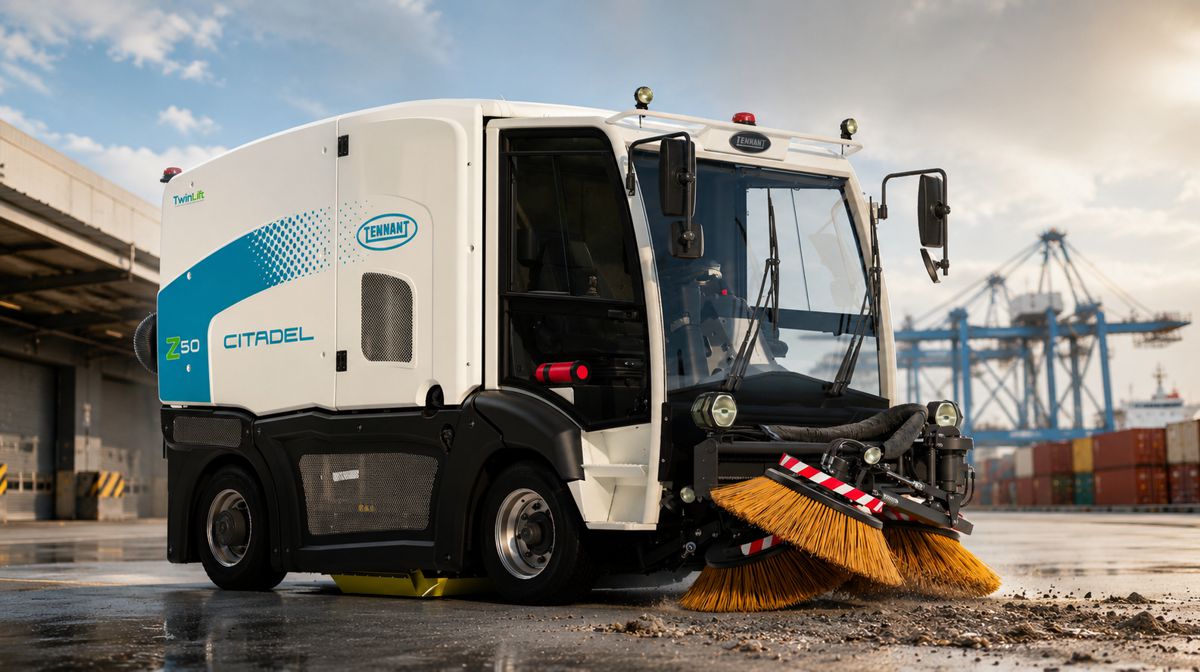
The Z50 addresses this challenge through a wide cleaning path of up to 2,480 mm using dual side brushes, alongside optional extended configurations for even greater coverage. High-capacity debris handling systems are equally important because downtime associated with unloading collected waste directly impacts operational efficiency on large sites.
Ports present particularly difficult conditions for sweeping systems. Salt exposure, abrasive materials, container traffic and variable weather create highly demanding operating environments. Equipment reliability and operator visibility become especially important where machines work alongside heavy industrial traffic.
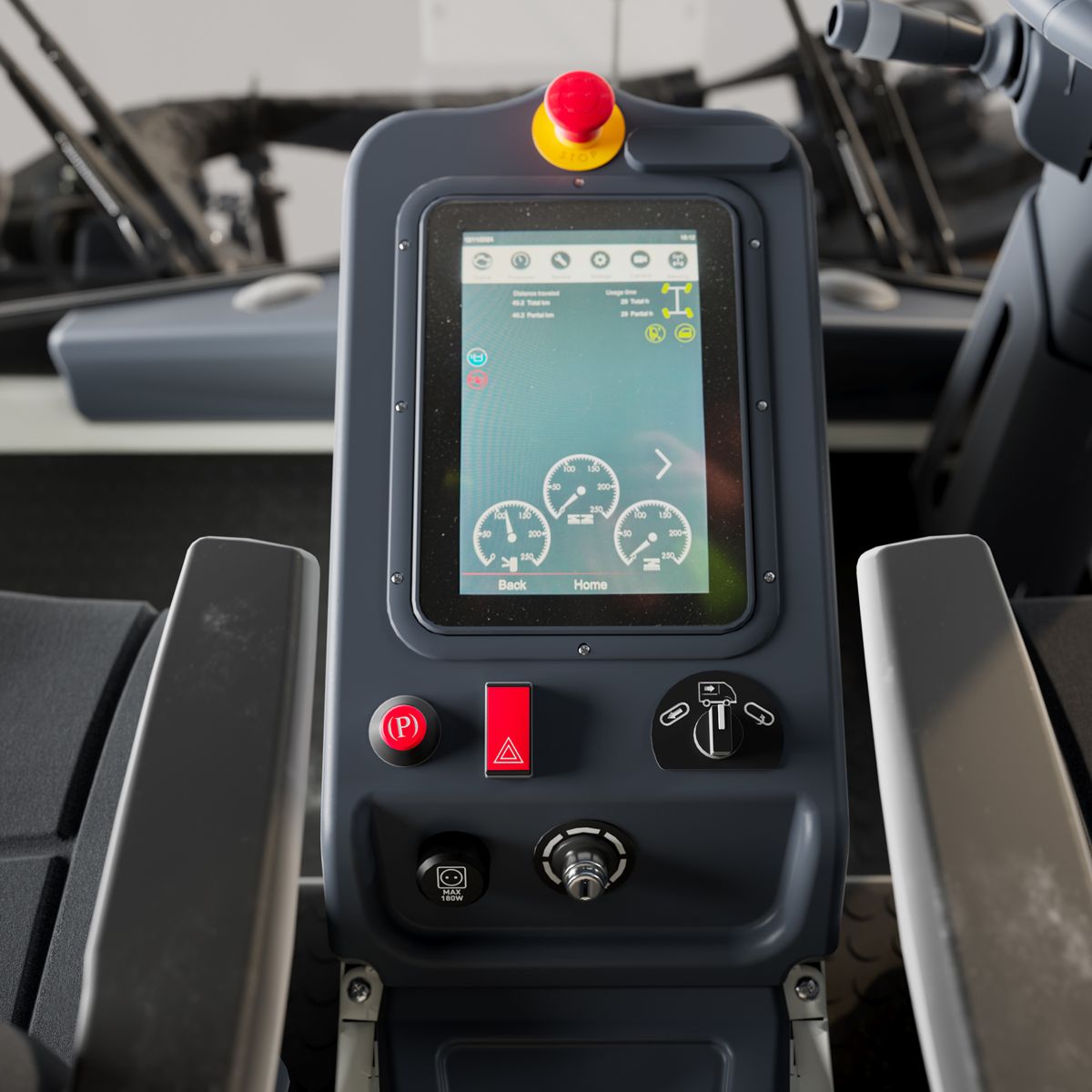
To support operation in complex outdoor settings, the Z50 includes a fully glazed cab, rear PerformanceView camera system and four-wheel power steering. These features increasingly reflect broader trends seen across industrial equipment categories, where operator safety, visibility and ease of control have become central design priorities.
Municipalities Face Rising Pressure on Air Quality
Municipal infrastructure operators are facing mounting pressure to modernise urban maintenance fleets as cities attempt to address environmental concerns linked to traffic congestion, particulate pollution and climate resilience.
Street sweeping historically focused primarily on appearance and debris removal. Today, however, many cities increasingly view sweeping operations as part of wider environmental management strategies aimed at reducing airborne particulate levels and improving public health outcomes.
European cities in particular have expanded low-emission zones and air quality initiatives over the past several years. Infrastructure maintenance contractors are consequently being required to demonstrate stronger environmental performance from support equipment operating in dense urban areas.
The Z50’s emphasis on particulate control reflects this broader market direction. Fine dust management is becoming commercially significant not simply from a regulatory standpoint but also from a reputational perspective. Municipal authorities are under increasing scrutiny regarding urban cleanliness, environmental standards and visible pollution management.
Outdoor sweeping equipment capable of balancing productivity with effective particulate control therefore occupies an increasingly important role within smart city and sustainable infrastructure strategies.
Industrial Equipment Markets Continue Consolidating
The professional cleaning equipment sector has also undergone considerable transformation in recent years. Customers increasingly expect industrial-grade machines to incorporate digital monitoring, predictive maintenance support and operational efficiency improvements similar to those already common across construction and transport equipment markets.
Manufacturers are responding by expanding machine capabilities beyond simple cleaning functions toward broader asset management and operational performance support.
Tennant’s own position within the sector reflects that industrial evolution. Founded in 1870 and headquartered in Minnesota, the company operates globally across industrial, commercial and outdoor cleaning markets. The company reported sales of $1.29 billion in 2024 and employs approximately 4,500 people worldwide.
Its global service footprint also highlights another important trend shaping equipment purchasing decisions. As industrial operators increasingly prioritise uptime and lifecycle management, aftersales support networks have become almost as commercially important as machine specifications themselves.
For municipal and industrial customers operating mission-critical cleaning fleets, equipment downtime can rapidly disrupt broader operational workflows. Regional support capability therefore plays a significant role in procurement decisions, particularly across large infrastructure and logistics operations.
Expansion Strategy Reflects Emerging Regional Demand
The Z50 Citadel will initially launch in Spain, Portugal and selected regions across Africa and the Middle East, with wider geographic expansion planned later.
Those launch markets are notable because they include several regions experiencing substantial infrastructure expansion and urban development activity. The Middle East continues investing heavily in logistics corridors, ports and smart city developments. Africa is simultaneously seeing increasing investment in industrial zones, transport infrastructure and urban modernisation projects.
Southern Europe also presents growing demand for municipal air quality management solutions, particularly in cities facing rising environmental scrutiny and increasing tourism-related infrastructure pressures.
The selection of those markets therefore suggests Tennant is targeting regions where industrial growth, urban development and environmental management priorities are converging simultaneously.
Cleaning Technology Quietly Supports Modern Infrastructure
Industrial sweeping equipment may not generate the same headlines as autonomous construction machinery, transport megaprojects or AI-enabled infrastructure systems, yet it plays an essential role in maintaining operational efficiency across modern economies.
Logistics hubs cannot function effectively under persistent debris accumulation. Ports require constant surface maintenance to manage safety and operational flow. Municipal authorities increasingly depend on advanced sweeping technology to support air quality and public health objectives.
As industrial infrastructure grows more complex, support equipment must evolve alongside it. Machines such as the Z50 Citadel illustrate how even traditionally overlooked sectors like industrial cleaning are being reshaped by environmental pressures, operational efficiency demands and infrastructure expansion.
Quietly, in ports, logistics centres, manufacturing plants and city streets, these machines help keep modern economies functioning day after day. For infrastructure operators balancing productivity with environmental accountability, that role is becoming far more significant than many outside the sector may realise.