Sweco Leading ERTMS Roll-out for Finland’s Digital Rail Transformation
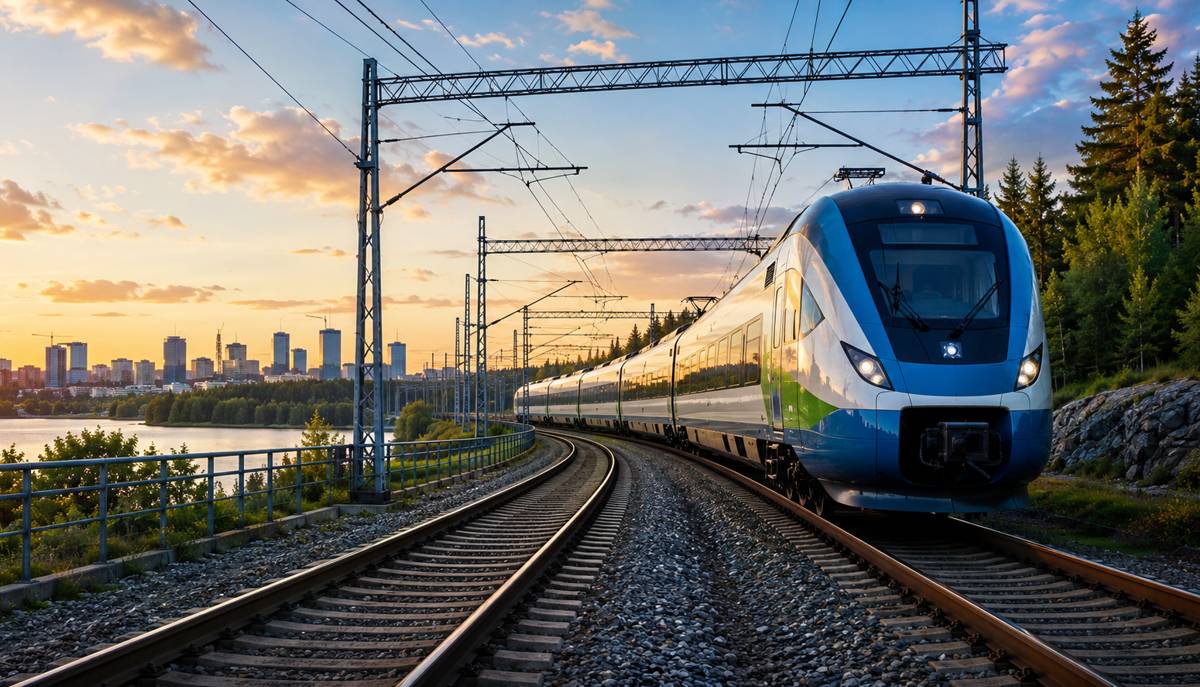
Finland is moving decisively towards a fully digital railway future as the country prepares one of the most significant transport modernisation programmes in its history. The decision by the Finnish Transport Infrastructure Agency, Finnish Transport Infrastructure Agency, to appoint Sweco for major consultancy services within the national European Rail Traffic Management System programme marks another important milestone in Europe’s accelerating rail digitalisation movement.
The contracts, valued at more than EUR 24 million and extending across eight years, place Sweco at the centre of Finland’s transition towards the EU-standardised ERTMS signalling and train control platform. The work covers approximately 970 kilometres of railway across Western and Southern Finland and forms part of a nationwide migration programme scheduled between 2028 and 2040.
For the wider infrastructure sector, the significance stretches far beyond Finland’s borders. Europe’s rail networks are entering a period of unprecedented technological convergence as countries replace fragmented national signalling systems with interoperable digital platforms designed to improve safety, increase capacity and simplify cross-border rail operations. The Finnish programme illustrates how transport authorities are increasingly viewing digital rail infrastructure not simply as a transport upgrade, but as a strategic national resilience investment tied directly to economic competitiveness, logistics security and climate policy.
Briefing
- Finland is rolling out the EU-standardised ERTMS digital rail signalling system nationwide between 2028 and 2040
- Sweco secured consultancy contracts worth more than EUR 24 million covering design and commissioning services
- The project covers approximately 970 kilometres of railway in Western and Southern Finland
- ERTMS aims to improve rail interoperability, safety, network capacity and cross-border operations across Europe
- Rail digitalisation is becoming a strategic infrastructure priority tied to resilience, decarbonisation and freight efficiency
Europe’s Rail Networks Enter a Digital Standardisation Era
Railway signalling has historically evolved on a country-by-country basis across Europe, creating a patchwork of incompatible systems that complicated international train operations and increased infrastructure costs. Freight operators crossing borders often needed locomotives capable of handling multiple signalling systems or required costly operational adjustments at national boundaries.
The European Rail Traffic Management System was created specifically to eliminate these barriers. Developed under the direction of the European Union Agency for Railways, ERTMS combines the European Train Control System (ETCS) with GSM-R digital communications standards to create a unified operational environment for European railways.
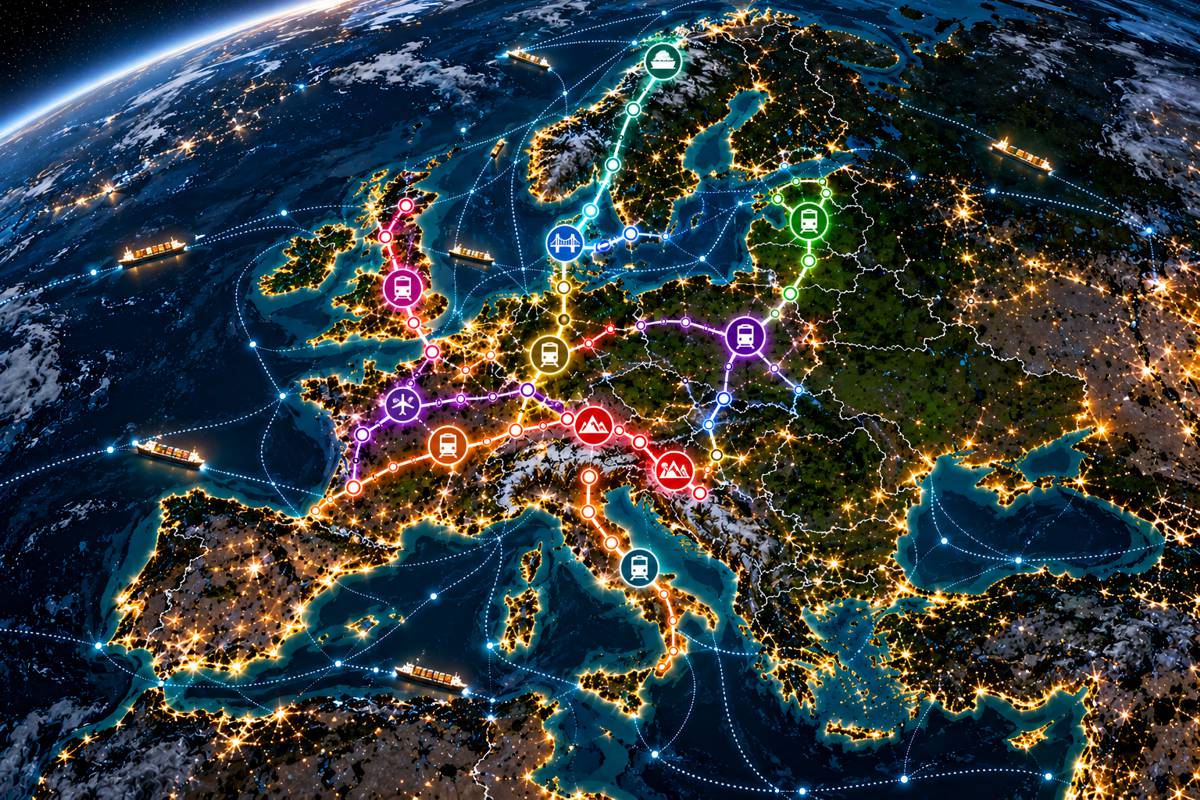
The scale of deployment now underway is enormous. According to the European Commission, ERTMS deployment forms a core element of the Trans-European Transport Network strategy, with major investment programmes progressing across Germany, France, Sweden, the Netherlands, Belgium, Italy and several Central and Eastern European countries. EU funding mechanisms, including the Connecting Europe Facility, continue supporting deployment as part of broader climate and mobility objectives.
Finland’s adoption of the system demonstrates how even geographically distinct rail networks are increasingly aligning with continental interoperability standards. Although Finland uses a broader rail gauge than most of mainland Europe, digital harmonisation still offers substantial operational and technological advantages.
Sweco’s Expanding Role in European Rail Digitalisation
Under the newly awarded contracts, Sweco will provide design services for replacing safety equipment and traffic control systems while also carrying out commissioning inspection services. The consultancy’s responsibilities place it deep within the operational backbone of Finland’s future rail network.
The project builds on Sweco’s growing involvement in ERTMS deployment across multiple European markets including Sweden, Germany and the Netherlands. That experience is becoming increasingly valuable as transport agencies seek partners capable of managing the engineering complexity associated with large-scale digital railway migration.
“Sweco has solid, Europe-wide expertise in ERTMS and we are pleased to play our role in this important project to develop Finland’s rail network. The project will further improve safety and resilience across the rail network,” said Thomas Hietto, Business Area President for Sweco in Finland.
The broader consultancy market surrounding rail digitalisation is also evolving rapidly. Unlike conventional rail expansion projects focused primarily on civil engineering, ERTMS programmes require expertise spanning software integration, telecommunications, cybersecurity, systems engineering, data management and operational transition planning. That multidiscipline requirement is reshaping procurement strategies across Europe’s transport sector.
Finland’s Rail Upgrade Reflects Long-Term Infrastructure Thinking
One of the more striking aspects of Finland’s programme is its timeframe. The national roll-out extending from 2028 to 2040 reflects the enormous operational complexity involved in replacing signalling systems while maintaining active rail operations.
Unlike highway projects that can often be delivered in isolated segments, railway signalling upgrades affect the operational logic of entire corridors. Every transition phase must preserve safety, operational continuity and interoperability with legacy infrastructure during migration.
The Finnish Transport Infrastructure Agency has adopted a phased alliance-based delivery approach intended to reduce risk while maintaining long-term programme flexibility. This increasingly mirrors delivery models used in other large-scale infrastructure sectors where collaboration between public authorities, designers, contractors and technology providers becomes essential for managing programme uncertainty.
The approach also reflects a wider European infrastructure trend favouring lifecycle-oriented planning rather than isolated capital works. Digital rail systems require ongoing updates, maintenance integration and future adaptability, making long-term consultancy partnerships increasingly valuable.
Rail Digitalisation is Becoming a Security and Resilience Issue
Across Europe, governments are beginning to view transport digitalisation through a broader geopolitical lens. Railways play a critical role in military logistics, supply chain resilience and national emergency preparedness. Digital interoperability increasingly forms part of strategic infrastructure resilience planning.
Finland’s geographical position adds another layer of importance. The country occupies a strategically sensitive location within Northern Europe and shares one of the EU’s longest external borders. Improving network resilience, operational visibility and interoperability aligns closely with broader European transport security priorities.
At the same time, climate policy continues accelerating rail investment across the continent. Rail remains one of the most energy-efficient transport modes available for both passengers and freight. As governments seek to reduce emissions from long-distance road transport and aviation, modern rail infrastructure is becoming central to decarbonisation strategies.
ERTMS contributes directly to those ambitions by increasing line capacity and operational efficiency. Digital signalling allows trains to run with improved traffic management precision, reducing delays and enabling denser network utilisation without necessarily requiring entirely new railway corridors.
The Engineering Challenge Behind ERTMS Deployment
Although ERTMS is often discussed as a signalling upgrade, the engineering reality is substantially more complex. Deployment requires integration between rolling stock, trackside infrastructure, operational control centres and telecommunications systems.
Existing railway assets frequently vary in age, design standards and technical condition. Integrating modern digital control systems into legacy infrastructure environments demands extensive investigation, modelling and staged commissioning.
Sweco’s responsibilities in Finland include expert commissioning inspections, which are critical for validating operational safety and system performance before new signalling systems enter active use. These inspection phases often become some of the most technically demanding aspects of digital rail programmes.
Cybersecurity is also becoming increasingly important within railway modernisation projects. As signalling systems become more connected and software-driven, protecting operational networks against cyber threats is now treated as an essential component of infrastructure resilience.
The European Union Agency for Cybersecurity has repeatedly highlighted transport infrastructure as a growing focus area for cyber risk management, particularly as digital operational technologies become more interconnected.
Nordic Infrastructure Modernisation Gains Momentum
Finland’s programme also highlights the Nordic region’s accelerating focus on infrastructure digitalisation. Across Scandinavia, governments are investing heavily in smart transport systems, electrification, clean energy integration and digitally managed infrastructure networks.
Sweden has already progressed substantial ERTMS deployment work, while Norway continues advancing rail modernisation projects tied to freight efficiency and regional connectivity. Combined with investments in ports, logistics hubs and renewable energy infrastructure, the Nordic transport landscape is undergoing a major technological transformation.
For engineering consultancies such as Sweco, this creates sustained long-term demand for specialist digital infrastructure expertise. The company notes that it employs around 6,000 experts across transportation-related disciplines including mobility, electrification, traffic safety and climate adaptation.
That multidisciplinary capability is becoming increasingly important as infrastructure owners seek integrated solutions rather than isolated engineering services.
Building the Foundations for Europe’s Connected Rail Future
Finland’s ERTMS transition may unfold gradually over the next decade and beyond, but its strategic implications are already clear. Europe’s transport systems are steadily moving towards deeper digital integration, greater interoperability and more intelligent operational management.
The shift is unlikely to remain confined to signalling alone. Future rail infrastructure programmes are expected to integrate predictive maintenance systems, AI-assisted traffic optimisation, digital twins and increasingly autonomous operational capabilities.
In many respects, ERTMS represents the digital foundation layer upon which Europe’s next-generation railway ecosystem will be built. Countries investing early and systematically in these transitions are positioning themselves for improved freight efficiency, stronger international connectivity and more resilient transport operations.
Finland’s latest contracts with Sweco therefore represent far more than a consultancy appointment. They signal another step in Europe’s long-term transition towards a digitally unified rail network designed for the operational, environmental and geopolitical demands of the decades ahead.