Bobyard Brings AI Estimating Into Commercial Electrical Construction
Construction has spent decades digitising design, modelling and project management, yet one of the industry’s most commercially sensitive processes still relies heavily on manual work. Estimating remains a labour intensive discipline where experience, speed and interpretation directly affect profitability. For specialist contractors competing in increasingly compressed procurement cycles, the ability to price work accurately and submit bids quickly often determines whether opportunities are won or simply abandoned.
Electrical contracting sits squarely inside that challenge. Commercial electrical packages are among the most technically detailed and resource intensive disciplines in construction. Estimators routinely work through extensive drawing sets, manually counting fixtures, tracing cable routes, identifying circuits and calculating quantities under tight deadlines. While digital takeoff tools have existed for years, much of the process still depends on human interpretation.
That gap between available data and usable productivity is becoming increasingly difficult to ignore. Labour shortages continue to affect construction markets globally while project pipelines remain volatile. Contractors are under pressure to increase output without expanding teams at the same pace. Into that environment steps Bobyard, a specialist construction technology company now extending its AI based estimating platform into electrical workflows.
The company’s latest release, Bobyard Electrical Takeoff, marks its first dedicated move into electrical estimating and reflects a broader shift taking place across specialist trades as AI moves from experimental adoption into operational deployment.
Briefing Summary
- Bobyard has launched Electrical Takeoff as its first dedicated electrical estimating workflow.
- The platform applies trade specific AI models to automate blueprint interpretation and quantity takeoff.
- Electrical contractors can automate fixture counting, wire estimation and circuit identification.
- The launch reflects growing industry interest in productivity gains without increasing staffing levels.
- Expansion plans already include additional estimating workflows across mechanical, plumbing and finishing trades.
Electrical Estimating Remains One of Construction’s Most Manual Functions
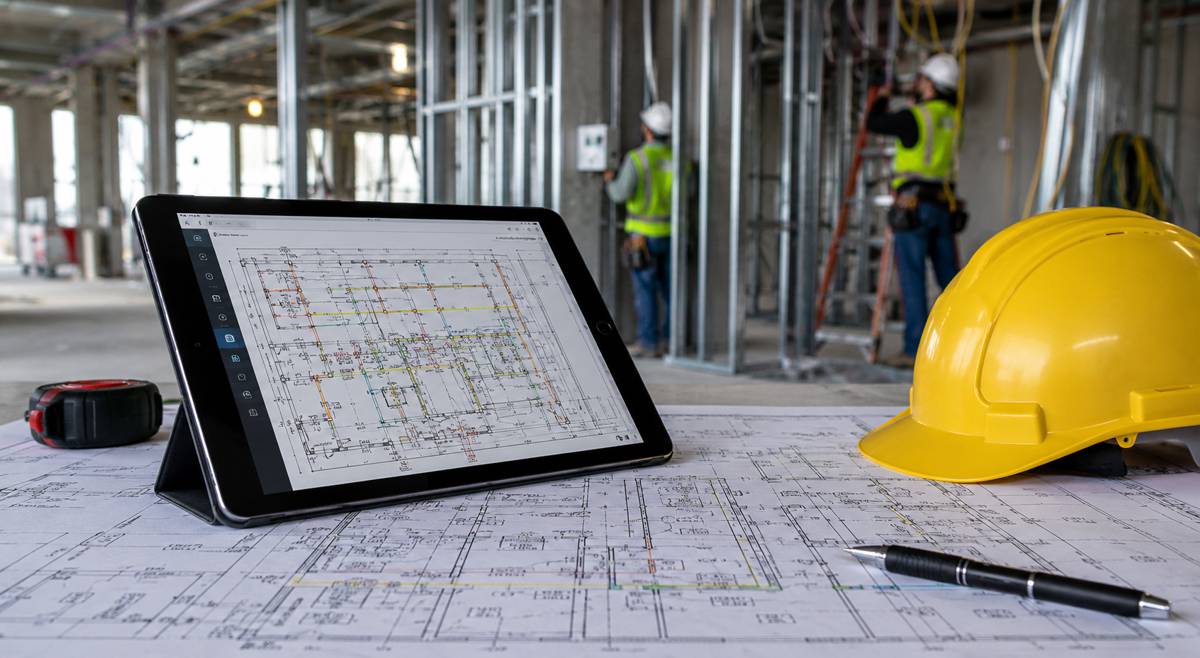
Estimating technology has improved significantly during the past decade, but electrical takeoffs continue to involve substantial manual effort. Teams regularly spend hours reviewing drawings, measuring routes and translating plan information into bid ready quantities.
Industry analysts and organisations including McKinsey & Company and Dodge Construction Network have repeatedly identified productivity constraints and workforce shortages as long term structural issues across construction. While project management platforms and BIM have improved coordination, estimating remains one of the least automated phases of project delivery.
Electrical work presents additional complexity because drawings contain dense layers of information that interact across disciplines. Fixtures, panels, homeruns, circuits and cable pathways must all be interpreted consistently before costs can be assembled into a competitive proposal.
For contractors operating in commercial markets, delays in estimating create a hidden commercial cost. Every bid not submitted because of limited estimating capacity becomes lost revenue potential.
Bobyard is positioning its latest platform release around that specific challenge.
Moving From Generic Automation to Trade Specific AI
One of the more notable aspects of Bobyard’s approach is that it has chosen not to position itself as a universal construction AI layer.
Instead, the company develops dedicated AI model suites for individual trades. According to Bobyard, these models are trained internally by teams specialising in neural networks and computer vision, using construction drawings and blueprint annotations to build domain specific understanding rather than relying on broad automation tools.
Electrical becomes the latest category added to that framework following earlier work across landscaping and sitework workflows.
According to the company, contractors using its existing platform report average reductions of 65 percent in takeoff time while enabling estimators to submit three to five times more bids. Those figures originate from customer usage reported by Bobyard and illustrate the commercial objective behind the platform rather than serving as an industry benchmark.
Michael Ding, founder and CEO of Bobyard, framed the release around workflow transformation rather than replacement of estimators.
“Electrical estimating is still highly manual, with teams spending hours tracing wire runs, counting fixtures and reviewing plans by hand,” said Michael Ding, founder and CEO of Bobyard. “We built Electrical Takeoff to fundamentally change that workflow with AI that is trained to understand electrical drawings and estimating workflows.”
That distinction matters. Most contractors are not looking to eliminate estimating teams. They are looking to increase throughput and consistency without continuously adding staff.
What Bobyard Electrical Takeoff Actually Automates
The practical value of estimating technology depends less on headline AI claims and more on whether it removes repetitive tasks from everyday operations.
Bobyard’s Electrical Takeoff platform focuses on several stages of electrical estimation that traditionally consume significant time.
Capabilities introduced within the release include:
- Automatic detection and counting of electrical fixtures
- Identification of circuits and associated panels from drawings
- Wire routing and homerun generation
- Faster estimation of wire lengths
- Accelerated takeoffs across larger and more complex drawing packages
These tasks may sound procedural, but collectively they represent substantial hours during the estimating cycle.
Electrical contractors often work against narrow submission windows. Missing a deadline means losing the opportunity entirely. Increasing estimator capacity without adding headcount therefore becomes commercially significant.
The platform appears designed to support that operational reality rather than replace technical judgement. Final pricing decisions, constructability considerations and bid strategy remain contractor controlled.
Early Contractor Feedback Points Toward Capacity Rather Than Cost Reduction
Construction technology launches often emphasise labour replacement narratives. Feedback emerging from Bobyard’s early electrical users suggests something different.
The initial responses focus more on bid capacity and competitive positioning. “We leave a lot of jobs on the table because we don’t have time to bid them. That’s exactly what Bobyard is going to help us fix,” said Randi Clark, Wells Electrical.
That comment reflects a challenge widely recognised across specialist contracting. Winning more work frequently starts with simply submitting more viable bids.
Another early user highlighted the industry’s changing expectations. “We’ve been doing takeoffs the same way for a long time. Partnering with Bobyard during the beta felt like the right moment to get ahead of where the industry is heading,” said Zach Pauline, Banister Electrical.
Neither statement suggests immediate workforce reduction. Instead, both point toward increased responsiveness and operational scale.
That aligns with wider construction technology adoption patterns, where software increasingly acts as force multiplication for experienced professionals rather than direct substitution.
Estimating Could Become the Next Competitive Battleground
The broader significance of Bobyard’s expansion reaches beyond electrical contracting.
Construction has already experienced major digital transformation across planning, BIM, project controls and field management. Estimating may now be entering a similar phase.
As projects become larger, timelines tighten and procurement cycles accelerate, contractors who can process drawings faster and maintain pricing consistency may gain measurable competitive advantages.
Bobyard’s roadmap suggests this is only the beginning. The company has stated future estimating workflows are planned across mechanical, plumbing and interior trades including flooring, drywall and paint.
If those workflows follow the same trade specific model strategy, the result could be a layered estimating ecosystem where AI tools become increasingly specialised by discipline.
Founded in 2023 by Stanford trained engineer Michael Ding, the San Francisco based company has attracted attention through rapid growth and investment activity within construction technology circles.
Whether Bobyard ultimately becomes a category leader remains to be seen. What is clearer is that estimating, long treated as a necessary administrative process, is starting to emerge as a strategic function capable of influencing contractor growth, resource allocation and profitability.
A New Layer of Digital Infrastructure for Construction Trades
Construction’s productivity discussion often focuses on machinery, robotics and project delivery platforms. Yet much of the sector’s economic friction occurs long before equipment arrives on site.
Estimating determines what work enters the pipeline in the first place. Tools that reduce administrative burden while preserving professional judgement are increasingly becoming part of the industry’s operational infrastructure. Electrical estimating appears to be the latest front where that transition is unfolding.
For contractors balancing labour constraints with rising opportunity pipelines, improving bid throughput may prove every bit as important as improving site productivity.
Bobyard’s move into electrical takeoffs suggests software providers are beginning to treat estimating not as back office administration, but as one of construction’s most valuable competitive assets.