Sweco Leads Planning for Finland’s Strategic Rail Nordica Connection
Europe’s transport map is quietly being redrawn in the far north. While major rail investments across the continent often focus on high-speed passenger services or urban mobility schemes, Finland’s proposed Rail Nordica project addresses a different challenge altogether: connecting a strategically important Nordic nation directly to the wider European rail system through a common track gauge.
The appointment of engineering consultancy Sweco to support planning for Rail Nordica marks a significant step in a project that extends far beyond conventional railway development. The planned standard-gauge railway corridor linking Kemi in northern Finland to the Swedish border at Tornio and Haparanda would establish a direct physical connection between Finland and the European standard-gauge network for the first time, improving freight efficiency, strengthening supply chains and enhancing regional resilience.
For construction professionals, policymakers and investors, the project illustrates how infrastructure priorities across Europe are evolving. Security of supply, military mobility, industrial competitiveness and cross-border logistics are increasingly shaping transport investment decisions alongside traditional economic considerations. Rail Nordica sits squarely at the intersection of these strategic objectives.
Briefing
- Rail Nordica will create a standard-gauge rail connection between northern Finland and the wider European rail network via Sweden.
- Sweco has secured an approximately €9 million role supporting planning, investigations and environmental assessments through 2030.
- The project aims to improve cross-border logistics, strengthen supply chain resilience and support military mobility.
- Finland has allocated €20 million for planning activities, with €18 million dedicated to the current procurement programme.
- The railway forms part of wider European efforts to create interoperable transport corridors and improve strategic connectivity across the Nordic region.
Reconnecting Finland with the European Rail Network
Railway gauge differences have shaped European transport patterns for more than a century. Most European countries operate on the standard gauge of 1,435 mm, while Finland’s network uses the broader 1,524 mm gauge inherited from historical links with the Russian Empire.
Although Finland possesses a modern and highly capable railway system, this difference in track gauge has traditionally limited seamless rail movements between Finland and the rest of continental Europe. Freight crossing the Finnish-Swedish border requires specialised handling, transhipment facilities or technical solutions to overcome the incompatibility.
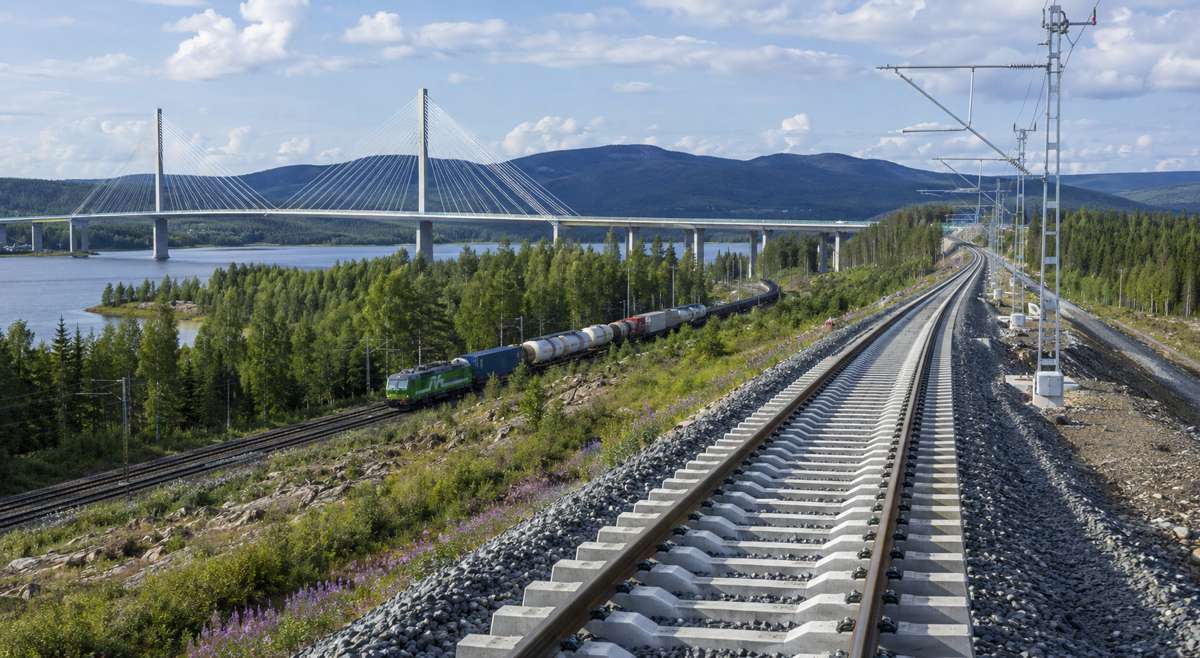
Rail Nordica aims to address this long-standing challenge by introducing a standard-gauge railway section between Kemi and the Swedish border. Designed alongside Finland’s existing rail infrastructure, the new corridor would provide direct compatibility with rail systems across Sweden, Germany, France, the Netherlands and the wider European Union transport network.
The implications are substantial. Reduced handling requirements can improve freight efficiency, shorten transit times and lower logistics costs for industries operating in northern Finland. For export-focused sectors such as forestry, mining, manufacturing and energy, improved access to European markets could strengthen competitiveness and attract future investment.
Strategic Infrastructure in an Uncertain World
Transport infrastructure has increasingly become a matter of national resilience as well as economic development.
Recent disruptions to global supply chains, geopolitical tensions and changing security priorities have prompted governments throughout Europe to reconsider how critical goods, raw materials and strategic resources move across borders. Rail corridors that once served purely commercial functions are now viewed through a broader lens encompassing economic security and defence preparedness.
The European Union’s Trans-European Transport Network (TEN-T) programme has increasingly prioritised infrastructure that strengthens connectivity between member states while improving interoperability across national systems. Rail Nordica aligns closely with these objectives.
The project’s emphasis on security of supply and military mobility reflects wider European trends. The EU has invested heavily in improving transport corridors capable of supporting rapid movement of personnel, equipment and essential goods during emergencies. Northern Europe occupies a particularly important position within this evolving framework due to its strategic geography and growing significance within NATO and European defence planning.
By creating a standard-gauge connection from Finland into the European network, Rail Nordica contributes to broader efforts aimed at reducing transport bottlenecks and enhancing resilience across northern Europe.
Building a Nordic Logistics Corridor
Northern Finland is home to significant industrial activity, including forestry operations, mineral extraction, advanced manufacturing and renewable energy developments.
Many of these industries depend on reliable transport links to international markets. While maritime transport remains essential, rail offers an increasingly attractive alternative for moving large volumes of goods efficiently and with lower emissions.
Cross-border rail freight between Finland and Sweden has grown steadily in recent years, supported by increasing trade flows and industrial cooperation throughout the Nordic region. However, infrastructure limitations continue to constrain the full potential of these connections.
Rail Nordica seeks to unlock additional capacity while creating opportunities for more integrated logistics operations. By enabling standard-gauge trains to operate directly into Finland, businesses may gain access to more flexible freight solutions and broader European distribution networks.
The development also complements wider infrastructure investments occurring throughout the Nordic region. Sweden is investing heavily in railway modernisation, while Norway and Denmark continue to expand rail capacity and electrification programmes. Together, these initiatives are gradually creating a more interconnected northern European transport ecosystem.
The Technical Challenge Behind the Vision
Constructing a new railway corridor alongside an operational network presents significant engineering complexities.
According to project plans, the new standard-gauge infrastructure will be developed alongside Finland’s existing broad-gauge railway between Tornio and Kemi. This dual-network approach allows existing rail services to continue operating while creating future interoperability with European rail systems.
Achieving this requires extensive investigation and planning before construction can begin. Ground conditions across northern Finland can be demanding, particularly in areas affected by seasonal freezing, peat soils and sensitive environmental conditions.
Sweco’s responsibilities include conducting ground investigations, technical studies, master planning activities and environmental impact assessment procedures as part of a broader consortium. These early-stage activities will help determine route alignment, engineering solutions, environmental mitigation measures and long-term operational requirements.
Environmental considerations are expected to play a particularly important role. Northern Finland contains ecologically sensitive habitats, important waterways and areas utilised by traditional reindeer herding communities. Modern infrastructure development increasingly requires careful balancing of economic benefits with environmental stewardship and community interests.
Planning for the Next Generation of Nordic Infrastructure
The Rail Nordica programme is structured as a multi-year initiative extending from 2026 through 2030.
The initial development phase will continue until 2027 before transitioning into implementation planning activities through the remainder of the decade. Finland has allocated €20 million within its state budget for project planning, demonstrating substantial governmental commitment to advancing the concept. Of that amount, €18 million has been designated for the procurement programme supporting project development.
Long planning horizons are increasingly common for major transport projects throughout Europe. Modern rail infrastructure must accommodate evolving freight patterns, climate adaptation requirements, digital signalling technologies and future capacity demands over operational lifespans that often exceed a century.
Consequently, planning decisions made today will influence transport performance, economic development and regional connectivity for generations. The emphasis on comprehensive studies and environmental assessments reflects growing recognition that robust planning frequently determines the ultimate success of large infrastructure investments.
Sweco’s Expanding Role in European Rail Development
Sweco’s appointment highlights the growing importance of multidisciplinary expertise in delivering modern transport infrastructure.
The consultancy has extensive experience supporting railway, mobility and infrastructure projects across Europe. According to company information, approximately 6,000 transportation specialists work across areas including rail planning, mobility systems, electrification, climate adaptation and traffic safety.
As railway projects become increasingly complex, engineering consultancies are often required to integrate expertise spanning civil engineering, environmental sciences, digital technologies, stakeholder engagement and regulatory compliance. Large cross-border schemes particularly benefit from organisations capable of drawing upon experience from multiple national markets and infrastructure environments.
Rail Nordica exemplifies this trend. The project requires not only technical railway expertise but also understanding of European transport policy, interoperability requirements, environmental legislation and long-term strategic planning.
Strengthening Europe’s Northern Gateway
Rail Nordica remains in its early planning stages, yet its significance already extends beyond the proposed tracks themselves.
The project represents a broader shift in how European nations are approaching transport infrastructure. Railways are no longer viewed solely as transport assets. They are increasingly recognised as strategic systems that underpin economic resilience, industrial competitiveness, environmental goals and regional security.
For Finland, establishing a direct standard-gauge connection to Europe offers an opportunity to strengthen its position within continental logistics networks while improving access to key markets and transport corridors. For Europe, the project contributes to the creation of a more interconnected and resilient transport system capable of supporting future economic and strategic needs.
As planning progresses through the remainder of the decade, Rail Nordica may well become one of the most consequential transport infrastructure developments in northern Europe, helping bridge a historic gap between Finland’s railway system and the broader European network while laying the foundations for stronger Nordic connectivity in the decades ahead.