Bobcat Backs America’s Frontline Workforce With Year Round Equipment Support
Communities rarely stop to consider the machinery that keeps modern life functioning until something breaks. Roads need repairing after storms, fallen trees block access routes, emergency crews need rapid site clearance, and small contractors often operate on razor-thin margins while handling essential local work. Across the United States, many of those responsibilities fall to veterans, first responders, medical professionals and service-driven business owners who rely heavily on dependable compact equipment to get the job done safely and efficiently.
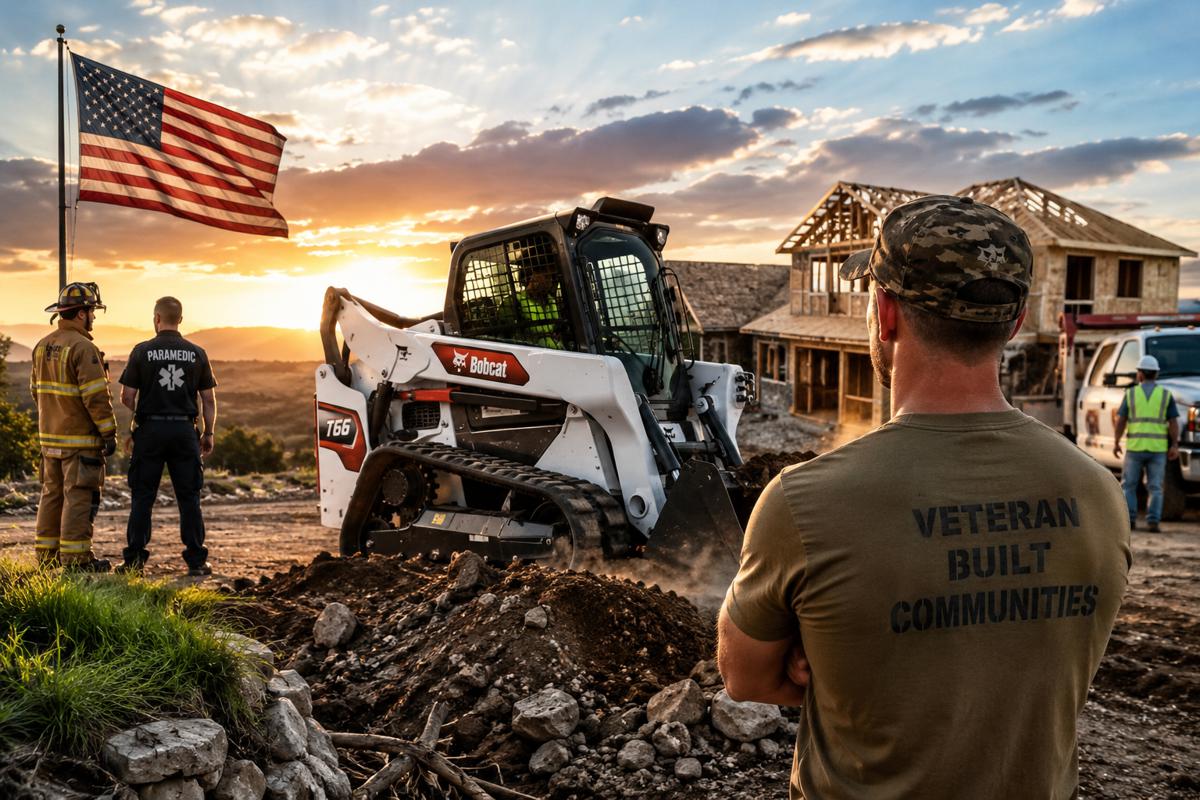
With rising equipment costs, tightening financing conditions and growing pressure on small operators, manufacturer-backed support schemes aimed at frontline professionals are becoming increasingly significant. That’s where the B.R.A.V.O. initiative from Bobcat Company enters the conversation. Short for Benefits for Responders and American Veteran Ownership, the programme provides equipment discounts and financing support to eligible current and former military personnel, veterans, emergency responders and healthcare professionals across the United States.
The initiative arrives at a time when compact construction and utility equipment has become indispensable far beyond traditional construction sites. Municipal maintenance crews, rural property owners, landscaping firms, emergency response units and veteran-owned enterprises now depend on compact loaders, excavators and utility machinery to maintain infrastructure, improve resilience and support local economies. In practical terms, easier access to equipment financing can often determine whether a small operation expands or stalls.
Briefing
- Bobcat’s B.R.A.V.O. programme provides equipment savings and financing support to veterans, military personnel, first responders and medical professionals
- The initiative operates year-round through authorised Bobcat dealerships across the United States
- The programme reflects wider industry recognition of veteran-owned and service-led small businesses in construction and infrastructure sectors
- Compact equipment demand continues to grow in emergency response, municipal maintenance and rural infrastructure operations
- Bobcat says the initiative aligns with its long-term support for frontline professionals and local communities
Equipment Access Becomes Increasingly Important for Small Operators
The economics of equipment ownership have shifted dramatically over the past decade. Inflationary pressure, elevated borrowing costs and global supply chain disruptions have increased the financial burden on contractors and independent operators alike. According to data from the Association of Equipment Manufacturers, compact equipment demand remains strong across North America as labour shortages continue pushing contractors toward mechanisation and efficiency-driven workflows.
That trend extends well beyond mainstream construction. Veteran-owned businesses are increasingly active in sectors such as excavation, landscaping, rural maintenance, snow clearance, utility servicing and disaster recovery. Many of these firms operate with lean staffing structures, making reliable machinery central to daily operations. Financing incentives can therefore carry genuine operational significance rather than functioning as simple promotional perks.
Emergency responders and local authorities are also leaning more heavily on compact machinery during severe weather events and infrastructure incidents. Compact loaders and utility equipment are routinely deployed for debris removal, access management and rapid recovery operations after hurricanes, floods and wildfires. In many smaller municipalities, multi-purpose equipment offers a practical solution where budgets limit access to specialised fleets.
Healthcare professionals may appear less directly connected to the construction and equipment sector, yet many also operate farms, rural properties or secondary businesses that rely on machinery for maintenance and land management. The growing overlap between rural enterprise and professional service sectors has broadened the user base for compact equipment manufacturers considerably.
Bobcat’s Longstanding Position in Compact Equipment Markets
Founded in North Dakota in the late 1940s, Bobcat Company has become one of the most recognisable names in compact construction equipment globally. The company operates under the umbrella of Doosan Bobcat and maintains manufacturing, engineering and dealership operations across North America and international markets.
Bobcat’s equipment portfolio spans skid-steer loaders, compact track loaders, excavators, utility vehicles, compact tractors, telehandlers and grounds maintenance equipment. Those product categories increasingly intersect with sectors tied to resilience, municipal operations and small-scale infrastructure maintenance rather than purely commercial construction.
Compact equipment manufacturers have spent years expanding their role beyond jobsite productivity. Increasingly, they’re positioning themselves as broader worksite solutions providers serving agriculture, utilities, landscaping, emergency support and rural enterprise markets. Financing programmes like B.R.A.V.O. reflect that wider commercial evolution.
Speaking about the initiative, Mike Ballweber, president of Doosan Bobcat North America, said: “Supporting those who serve our country and their communities has long been part of who we are at Bobcat. The B.R.A.V.O. program reflects our ongoing commitment to stand behind those who demonstrate courage, resilience and integrity every day.”
The language may sound familiar within American industrial manufacturing circles, where veteran recruitment and service-oriented branding have become increasingly visible. Still, the operational value of these programmes often lies less in messaging and more in dealer accessibility, financing flexibility and aftersales support.
Veteran Owned Businesses Continue to Expand Across the United States
Veteran entrepreneurship has become an increasingly important component of the American small business landscape. According to the U.S. Small Business Administration, millions of veteran-owned businesses contribute significantly to employment and regional economic activity throughout the country.
Construction, transport, logistics and maintenance services remain particularly attractive sectors for former military personnel due to transferable operational skills, leadership experience and familiarity with machinery and field environments. Many veterans enter trades-based industries after service, often establishing small independent operations that require dependable equipment but face capital access constraints during early growth phases.
Programmes that reduce acquisition barriers can therefore influence business viability in tangible ways. Lower financing rates, dealership incentives or operational support packages may enable smaller firms to secure equipment sooner, expand service capacity or reduce reliance on rental fleets.
The wider construction industry has also placed renewed focus on recruiting military veterans to address persistent workforce shortages. Organisations across infrastructure, utilities and civil engineering increasingly view veterans as a valuable talent pool due to their technical training, discipline and experience working in demanding environments.
Dealers Remain Central to the Customer Relationship
One notable aspect of the B.R.A.V.O. programme is its dealership-based structure. Rather than functioning solely as a centralised online discount scheme, the initiative operates through authorised Bobcat dealer networks across the United States.
That matters because dealership relationships continue to shape equipment purchasing decisions throughout the compact machinery sector. Access to maintenance support, replacement parts, operator training and financing assistance frequently outweighs headline machine specifications when buyers assess long-term value.
For smaller operators especially, local dealership proximity can directly influence downtime risk and operational continuity. Contractors and property owners often prioritise equipment brands supported by responsive local service infrastructure rather than simply pursuing the lowest upfront purchase price.
The dealer model also enables manufacturers to maintain stronger regional engagement with service-oriented communities. In rural states and smaller municipalities, equipment dealers frequently act as community business hubs with longstanding ties to contractors, agricultural operators and emergency services.
Compact Machinery Plays a Growing Role in Resilience and Recovery
The broader significance of programmes like B.R.A.V.O. also reflects how compact equipment has become increasingly important within resilience planning and disaster response operations.
Extreme weather events across North America have intensified demand for flexible machinery capable of supporting rapid deployment and recovery tasks. Compact loaders, excavators and utility equipment are routinely used for clearing storm debris, stabilising damaged infrastructure, reopening transport corridors and supporting emergency logistics.
Federal investment programmes linked to infrastructure resilience are likely to reinforce that trend further. The Federal Emergency Management Agency and state-level resilience initiatives continue encouraging stronger local preparedness capabilities, including access to adaptable operational equipment.
At the same time, infrastructure maintenance backlogs across roads, drainage systems and public facilities continue placing pressure on local contractors and municipal service teams. Compact equipment offers smaller authorities and contractors a practical route to handling diverse maintenance tasks without maintaining large specialised fleets.
As technology evolves, modern compact machines are also incorporating telematics, automation features, improved operator safety systems and lower-emission drivetrains. Those developments are gradually reshaping how small operators manage fleet productivity and long-term operating costs.
Supporting Communities Beyond Military Appreciation Month
Military Appreciation Month provides a timely platform for companies to highlight support initiatives connected to veterans and service personnel. Yet the more meaningful measure of such programmes lies in their long-term continuity rather than seasonal visibility.
Bobcat’s decision to position B.R.A.V.O. as a permanent year-round initiative reflects a wider recognition that frontline professionals increasingly operate at the centre of infrastructure resilience, emergency response and local economic stability. Whether clearing roads after storms, maintaining rural properties or operating small contracting businesses, these users form an often-overlooked layer of the broader infrastructure ecosystem.
The programme also underlines how construction equipment manufacturers are adapting to changing customer demographics. Compact machinery is no longer confined to large contractors alone. It now supports an expansive network of independent operators, veteran-owned firms, municipal crews and service-led businesses whose work directly affects community functionality and recovery capacity.
In practical terms, access to reliable equipment can determine how quickly communities recover after disruption, how efficiently infrastructure is maintained and whether small operators can continue growing in increasingly competitive markets. That reality places financing accessibility and dealership support firmly alongside machine capability in the modern equipment equation.