Bosch Making Stolen eBikes Unsellable with Digital Theft Protection at CES
Electric bicycles have become an everyday mobility tool in cities and rural regions alike, serving commuters, logistics providers, leisure riders, and shared mobility fleets. With that growth has come an uncomfortable side effect. eBike theft has evolved into a professionalised business, driven by strong resale values and fragmented verification processes in the second hand market. Owners are often left with little more than frustration and a costly insurance claim, while stolen bikes quietly reappear elsewhere, stripped of identity and sold on.
Against that backdrop, Bosch eBike Systems used CES 2026 in Las Vegas to unveil a significant extension of its digital theft protection strategy. The objective is clear and deliberately blunt. Make stolen eBikes unsellable. By embedding theft status directly into its digital ecosystem, Bosch is targeting the resale economy that fuels theft in the first place.
Marking Stolen eBikes Across a Digital Ecosystem
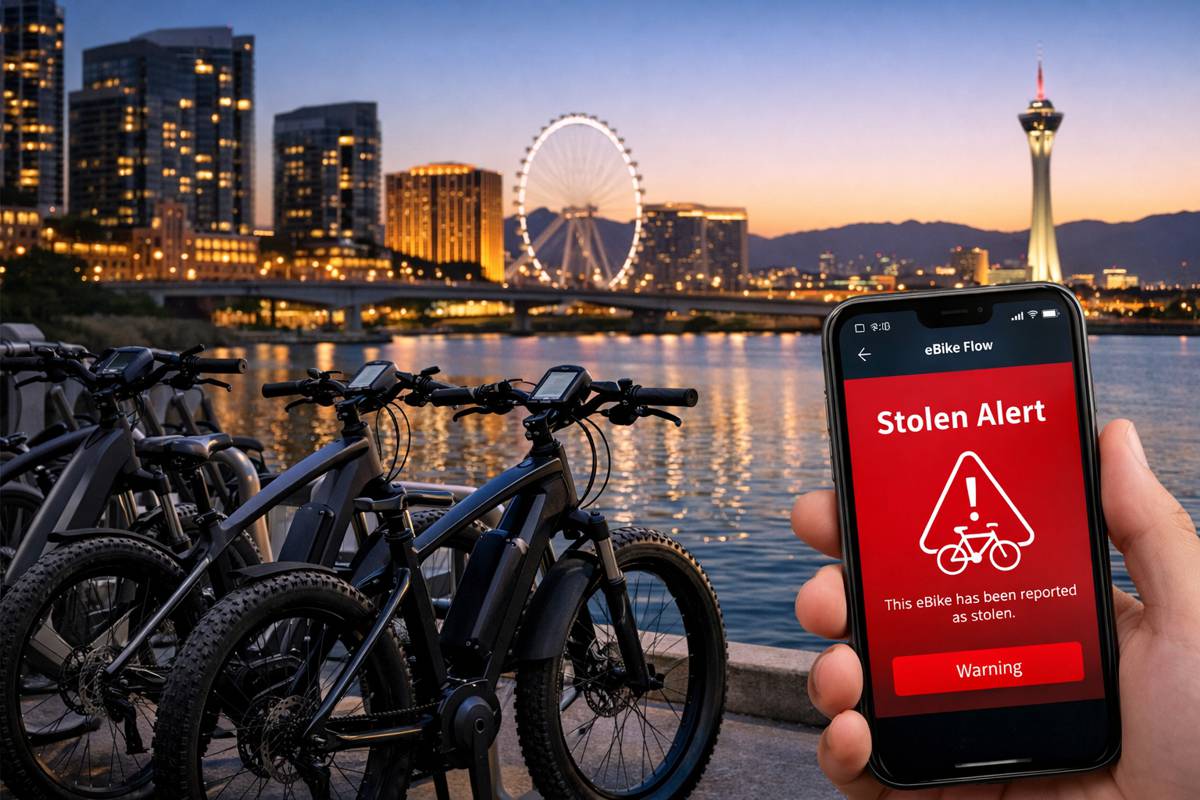
From the end of January 2026, users of Bosch smart system eBikes will be able to mark their eBike or battery as stolen directly within the eBike Flow app. The feature is provided free of charge and represents a shift from device level protection to system wide identification.
Once marked as stolen, the eBike is permanently flagged throughout the Bosch eBike Systems digital environment. That status is not cosmetic. It actively follows the bike wherever it attempts to connect, whether through a private buyer’s smartphone, a dealer’s service terminal, or Bosch support channels. The intention is to remove ambiguity and eliminate plausible deniability in the used eBike market.
Transparency for Buyers Dealers and Authorities
The new functionality extends beyond the original owner. Anyone attempting to connect to a stolen eBike via the eBike Flow app receives a clear warning. This includes prospective buyers checking a second hand purchase, authorised dealers carrying out servicing, and public authorities verifying recovered property.
The warning displays the serial numbers of the components marked as stolen, creating a direct link between the physical bike and its digital identity. In parallel, the connection to the eBike Flow app is permanently blocked. Over the air updates become inaccessible and custom riding modes cannot be selected. Dealers also receive an alert through the Bosch DiagnosticTool when the eBike is connected for servicing, ensuring that stolen bikes cannot quietly re enter circulation through routine maintenance.
Centralised Storage With System Wide Impact
At the heart of the new feature is Bosch’s digital allocation principle. Each core component of an eBike, including the motor, battery, and display, is uniquely registered within the Bosch smart system and linked to a specific user profile. This creates a persistent digital fingerprint that cannot be easily altered or erased.
When an owner flags an eBike or battery as stolen, that information is stored centrally and becomes instantly accessible across the Bosch ecosystem. The eBike Flow app, the DiagnosticTool, and Bosch eBike Support all draw from the same dataset. Importantly, the stolen status can only be removed through the original registered user profile, closing off a common loophole exploited by professional thieves.
Building on an Established Theft Protection Portfolio
The CES 2026 announcement does not stand alone. Bosch eBike Systems has been building its theft protection portfolio since 2018, gradually layering digital and physical safeguards into its smart system. Existing solutions include eBike Lock, which disables motor assistance without authorisation, eBike Alarm, which provides audible alerts and notifications, and Battery Lock, which renders stolen batteries unusable on other bikes.
The ability to digitally mark an entire eBike as stolen adds a broader ecosystem level deterrent. Instead of simply preventing use, it undermines resale value, which is often the primary motivation behind organised theft. Taken together, these measures align with Bosch’s stated ambition to prevent all eBike thefts through intelligent system design rather than reactive recovery alone.
Making Theft a Losing Proposition
The economics of theft matter. Professional eBike theft relies on speed, anonymity, and access to resale channels that rarely verify origin. By embedding theft status into a widely adopted digital platform, Bosch shifts risk back onto the thief and the unwitting buyer. A bike that cannot be updated, customised, serviced, or easily resold becomes a liability rather than an asset.
For owners, the system improves recovery prospects by making stolen eBikes easier to identify and harder to conceal. For the wider market, it introduces a form of digital due diligence that mirrors vehicle identification checks long established in the automotive sector.
Expanding Control for Commercial eBike Fleets
While private owners are a clear beneficiary, Bosch has also expanded functionality for commercial users. Shared mobility operators, rental firms, and corporate fleets face different challenges, including misuse, non return, and operational oversight. Passive theft protection is rarely sufficient in those environments.
The Bosch ConnectModule enables remote deactivation of motor support, giving fleet operators an active intervention tool when bikes are taken outside permitted zones or not returned. This capability reflects the operational realities of professional fleets, where immediate control can prevent losses before they escalate.
Data Driven Fleet Management Capabilities
Beyond theft prevention, commercial users gain access to a cloud based interface providing real time operating data. This includes battery level, range forecasts, service intervals, maintenance requirements, GPS position where tracking is enabled, and detailed usage statistics.
Crucially, this data can be integrated into existing fleet management systems rather than requiring parallel platforms. As professional eBike fleets expand in logistics, hospitality, corporate mobility, and urban transport, such integration is likely to become a baseline requirement rather than a premium feature.
Supporting a Rapidly Maturing Market
The professionalisation of eBike fleets mirrors earlier transitions in car sharing and micromobility. Operators increasingly demand predictability, security, and lifecycle visibility. Bosch’s expanded control functions position its smart system as infrastructure rather than accessory, supporting long term asset management rather than simple ride enablement.
By combining theft deterrence, operational data, and remote control, Bosch is responding to a market that now expects eBikes to behave like connected vehicles, complete with digital identity and enforceable rules of use.
A Step Toward Trust in the Used eBike Market
The implications extend beyond theft statistics. A transparent and verifiable used eBike market benefits consumers, insurers, dealers, and authorities alike. Digital theft marking introduces a common reference point that reduces uncertainty and supports legitimate resale.
As connectivity becomes standard rather than optional, digital identity is likely to play a growing role in mobility markets of all kinds. Bosch’s CES 2026 announcement illustrates how software driven safeguards can address problems that mechanical locks alone never solved.
The Future is Connected and Mobile
Bosch eBike Systems’ latest expansion reinforces a broader shift in the mobility sector. Security is no longer just about preventing unauthorised use. It is about controlling digital access, protecting asset value, and ensuring transparency across an increasingly complex ecosystem.
By making stolen eBikes visible, verifiable, and functionally constrained, Bosch is not only protecting individual riders but reshaping expectations around ownership and responsibility in connected mobility.