HARMAN Ready Ride Targets Two Wheeler Connectivity
The global two wheeler market has long been a paradox. It is vast, fast growing and central to urban mobility in Asia, Europe and Latin America, yet remains largely disconnected in a digital age defined by software, data and over the air upgrades. While cars have embraced embedded telematics and cloud connectivity as standard practice, motorcycles and scooters have often been left to rely on aftermarket devices and handlebar mounted smartphones.
At MWC Barcelona, HARMAN, a subsidiary of Samsung Electronics Co., Ltd., introduced Ready Ride, a purpose built end to end connectivity platform designed specifically for two wheelers. It is the company’s first connectivity platform engineered exclusively for this segment, combining a rugged telematics control unit, an intelligent software stack, cellular connectivity and an OEM backend architecture.
The announcement matters because it signals a structural shift. Rather than treating motorcycles as scaled down cars or as peripheral to the connected vehicle revolution, HARMAN is positioning two wheelers as a distinct digital ecosystem with its own durability demands, cost pressures and safety imperatives.
A Connectivity Gap That Can No Longer Be Ignored
According to research from Berg Insight, less than five percent of motorcycles globally are connected via telematics. That figure is striking when set against broader industry trends. Passenger car connectivity rates in developed markets are already well above 50 percent, with many OEMs moving towards fully software defined vehicle architectures.
The disparity is not merely technological. Two wheelers account for a significant proportion of global motorised transport, particularly in densely populated urban centres. In markets such as India, Indonesia and Vietnam, motorcycles are the backbone of personal mobility and last mile logistics. Even in Europe, scooters and motorcycles play a growing role in urban commuting and delivery fleets.
This gap represents both risk and opportunity. Riders increasingly expect navigation, safety alerts, remote diagnostics and media integration as standard. In the absence of embedded connectivity, many mount smartphones to handlebars for navigation and streaming. Yet vibration, exposure to weather and sudden changes in speed can cause devices to malfunction or detach, creating obvious safety hazards. A purpose built, motorcycle grade connectivity system therefore addresses not just convenience but fundamental operational resilience.
Industrialising Two Wheeler Telematics
Ready Ride is structured around a scalable telematics control unit integrated with a unified hardware and software stack. Instead of OEMs stitching together one off modules and bespoke integrations for each model, the platform offers a packaged foundation that can be reused across vehicle lines and geographies.
HARMAN brings considerable scale to this proposition. The company reports delivering more than 20 million connected vehicles across 120 countries in the automotive sector. That experience in managing global cellular connectivity, backend services and lifecycle software management underpins the Ready Ride architecture.
For OEMs, the implications are commercial as much as technical. By standardising the telematics layer, manufacturers can reduce engineering rework, shorten development cycles and accelerate time to market. In a cost sensitive category where margins can be tight, architecture reuse and scalable deployment are not marginal gains. They can determine whether connected features are commercially viable at all.
Over the longer term, decoupling hardware from software through over the air updates allows OEMs to introduce new features without redesigning core electronics. That aligns two wheelers more closely with the software defined vehicle model that is reshaping the automotive industry.
Snapdragon Powered Platform for Next Generation Use Cases
To support bandwidth and latency sensitive applications, Ready Ride leverages Snapdragon Digital Chassis system on chip technology tailored for the two wheeler market from Qualcomm Technologies, Inc.. This partnership combines HARMAN’s telematics and integration expertise with Qualcomm’s connectivity and processing capabilities.
The Snapdragon platform is designed to handle real time data exchange over cellular networks, enabling use cases that go beyond basic tracking. These include advanced ride assistance alerts, remote diagnostics and feature updates delivered wirelessly.
Jeff Arnold, VP and GM, Auto Telematics and Consumer Connectivity at Qualcomm Technologies, Inc., emphasised the strategic direction of the collaboration: “We’re proud to support HARMAN Ready Ride with our purpose-built Snapdragon Digital Chassis SoCs for the two-wheeler industry. Together we’re accelerating the future of two-wheeled mobility, delivering scalable, reliable, and always-on connectivity that empowers OEMs to confidently bring next-generation rider experiences to life.”
For investors and policymakers tracking the evolution of intelligent transport systems, such alliances illustrate how semiconductor platforms are becoming foundational to mobility ecosystems beyond passenger cars.
Over The Air Architecture as a Commercial Lever
One of the most consequential aspects of Ready Ride is its support for over the air firmware and software updates. OTA capability enables OEMs to remotely enhance features, fix bugs and deploy new services throughout the vehicle lifecycle.
In practical terms, this reduces reliance on dealership visits for software related issues, lowering service complexity and associated costs. For fleet operators and shared mobility providers, remote diagnostics and maintenance can reduce downtime and improve asset utilisation.
From a product strategy perspective, OTA functionality allows features to be introduced post sale. That opens pathways for subscription services, tiered functionality and regional feature adaptation without hardware changes. As the global industry debates monetisation of vehicle software, two wheelers are now positioned to participate in the same digital revenue models that have transformed automotive economics.
Engineering for Motorcycle Grade Durability
Connectivity in a motorcycle environment faces challenges that differ sharply from passenger cars. Two wheelers are directly exposed to rain, dust, washdowns and continuous vibration. Electronics must operate reliably in tight packaging envelopes and under mechanical stress.
Ready Ride addresses these constraints through an IP69 certified enclosure and rugged connectors designed to block dust and water ingress. IP69 certification indicates resistance to high pressure, high temperature washdowns, a common scenario in two wheeler maintenance. Shock and vibration performance has been validated to motorcycle conditions, and flexible mounting options are provided to accommodate different vehicle architectures.
Such engineering detail is not incidental. Failure in a connectivity module mounted on a motorcycle can compromise navigation, safety alerts or emergency calling functions. By applying automotive grade validation standards to a two wheeler specific form factor, HARMAN is attempting to close the reliability gap that has historically limited embedded telematics adoption in this segment.
Safety and Security as Core Differentiators
Motorcycle riders are inherently more vulnerable than occupants of enclosed vehicles. The absence of a protective body structure means that collision mitigation and rapid response systems can have a disproportionate impact on outcomes.
Ready Ride’s roadmap includes support for Advanced Ride Assistance Systems such as forward collision warnings, along with crash and tip over detection. The platform is eCall ready and incorporates a backup battery to maintain critical functionality in the event of a power interruption. In regions where automatic emergency call regulations are tightening, such capabilities may become not just differentiators but compliance necessities.
Security is equally pressing. Motorcycles are frequently targeted for theft, particularly in urban areas. Planned telematics services include theft alerts, stolen vehicle tracking and remote immobilisation. When integrated with OEM backends and customer apps, these features can create an ecosystem that deters theft and aids recovery.
Shahriar Ravari, Director and Ready Ride Business Lead at HARMAN, framed the strategic intent as follows: “Ready Ride brings our leading connectivity expertise to two-wheelers, reducing complexity with a standardized TCU foundation that helps OEMs launch faster, lower program cost, and scale confidently across regions and generations. With hardware packaged in a ruggedized small form factor, the end-to-end Ready Ride platform ensures riders, from busy city streets to remote mountain passes, will get robust, safe and connected experiences, while OEMs gain a dependable, low-friction pathway from first prototype to global roll-out.”
For policymakers focused on road safety and urban resilience, integrated crash detection and emergency response capabilities align with broader efforts to reduce fatalities among vulnerable road users.
Consumer Integration Without Compromise
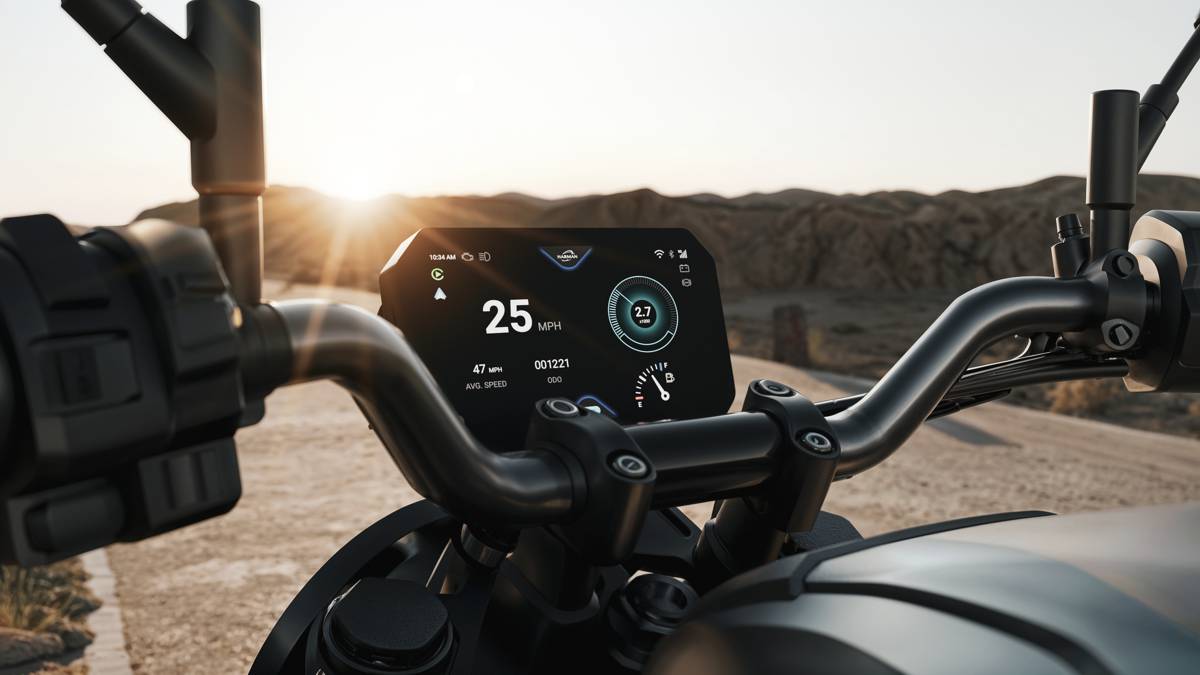
Ready Ride supports dual Bluetooth connectivity and compatibility with Apple CarPlay and Android Auto. This positions it among the first embedded connectivity platforms in the two wheeler market to offer such integration.
For riders, seamless access to navigation, communication and media through familiar interfaces reduces friction and encourages hands free operation. By embedding these capabilities within a ruggedised platform rather than relying on external devices, OEMs can enhance user experience without compromising durability.
The broader significance lies in consumer expectation alignment. As digital natives move between cars, scooters and shared mobility services, consistency of interface and functionality becomes a competitive factor. Two wheelers that remain digitally isolated risk appearing outdated in comparison to connected alternatives.
A Strategic Inflection Point for Two Wheeler Mobility
The launch of Ready Ride reflects a recognition that two wheelers are entering the software defined era. Connectivity is no longer an optional add on but a structural component of safety, security and lifecycle value.
With fewer than five percent of motorcycles currently connected, the addressable market remains largely untapped. For OEMs, standardised platforms such as Ready Ride offer a route to scale connectivity without prohibitive development costs. For technology suppliers, the segment represents a new frontier for telematics, semiconductor integration and cloud services.
As cities grapple with congestion, emissions and safety challenges, digitally enabled two wheelers could form part of integrated mobility networks. Data from connected motorcycles can inform traffic management, fleet optimisation and infrastructure planning. In that context, the significance of HARMAN’s move extends beyond product launch headlines. It signals that the connected mobility revolution is shifting gears and two wheelers are finally coming along for the ride.