TomTom Redefines Lane-Level Mapping and ADAS
The push towards safer, more automated mobility has exposed a long-standing weakness in digital mapping. High-definition maps have traditionally delivered accuracy, but often at the expense of scale, freshness, and cost. TomTom is now setting out to change that equation with the launch of its Orbis Lane Model Maps, supported by the introduction of a new ADAS Software Development Kit designed for software-defined vehicles and regulatory compliance.
At the heart of this announcement is a clear message. Lane-level precision is no longer a premium feature reserved for limited test corridors or select urban zones. It is becoming a baseline requirement for advanced driver-assistance systems and the next generation of automated driving. By demonstrating the maturity of its Orbis AI-powered map data factory, TomTom positions itself as a single, high-fidelity source of truth for both navigation and automated driving applications.
Orbis Lane Model Maps and the Shift to True Urban Scale
Orbis Lane Model Maps deliver lane-level intelligence that goes well beyond traditional road centreline mapping. The dataset captures lane geometry, lane connectivity, markings, and contextual road attributes with a level of detail that supports complex urban driving scenarios. Crucially, this detail is not confined to small pilot areas or a handful of cities.
Using an AI-driven map-factory approach, TomTom can now generate lane-accurate maps efficiently across entire regions. Germany already benefits from nationwide lane-level geometry, and TomTom is rapidly scaling coverage to additional countries to meet the operational needs of global automotive customers. For manufacturers operating across multiple markets, this consistency removes a significant barrier to deployment and validation.
Automation, Freshness, and Cost Efficiency Combined
One of the most persistent challenges with traditional HD maps has been their cost and maintenance burden. Expanding coverage city by city is slow, expensive, and difficult to keep current as road layouts change. Orbis Lane Model Maps are designed specifically to overcome these constraints.
The combination of breadth and freshness is a defining characteristic. The same HD richness expected by automated driving systems is now engineered to scale across entire road networks, including dense urban environments, at a fraction of the historical cost. Continuous updates ensure that changes to lane markings, geometry, or connectivity are reflected rapidly, supporting safer and more reliable vehicle behaviour.
Enabling Safer Decisions for ADAS and Automated Driving
Lane-level intelligence is not an abstract technical upgrade. It directly influences how vehicles interpret their surroundings and anticipate what lies ahead. Advanced driver-assistance systems rely on accurate context to support functions such as lane keeping, speed adaptation, and trajectory planning.
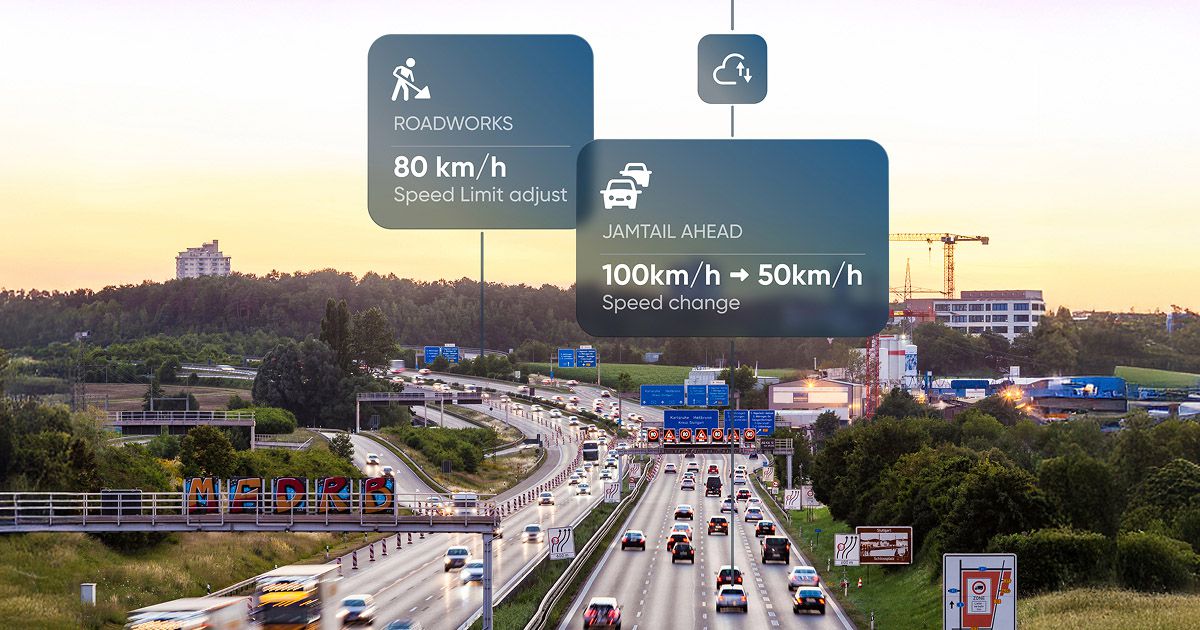
By integrating Orbis Maps content into automated driving stacks, vehicle systems gain enhanced scene understanding in complex environments. The maps provide foresight into road layout, upcoming lane changes, and speed adjustments, working in concert with onboard sensors. This fusion of perception and prediction is essential for improving safety and driving comfort, particularly in urban settings where conditions change rapidly.
Industry Perspective on Scalable Mapping
Michael Harrell, Senior Vice President for Product Engineering at TomTom, framed the significance of the launch in terms of practical deployment rather than technical novelty: “Delivering a safe and exceptional experience for next-generation automated driving requires cost-efficient maps with more features, higher accuracy, and fresh updates across all road types, including urban environments.”
He added: “Our innovative solutions are accelerating the scalability of automated driving in complex urban environments.”
The emphasis on scalability reflects a growing industry consensus. Without the ability to deploy lane-level mapping consistently across markets, automated driving programmes struggle to move beyond limited demonstrations.
Introducing the ADAS SDK for Software-Defined Vehicles
Alongside Orbis Lane Model Maps, TomTom has launched its ADAS SDK, a modular and lightweight toolkit designed to simplify the deployment of predictive driver assistance features. Built as a standalone solution, the SDK responds directly to the needs of software-defined vehicles, where flexibility and rapid integration are critical.
For automotive OEMs and Tier-1 suppliers, the SDK acts as a gateway to Orbis map data. It enables safety, comfort, and efficiency features to be embedded directly into vehicle control systems without the overhead of integrating a full navigation stack. This approach significantly reduces development time and lowers integration costs across vehicle platforms.
Supporting the Transition to L2 Plus and Beyond
As manufacturers accelerate towards L2+ driver assistance and higher levels of automation, scaling these capabilities efficiently has become a major challenge. Hardware diversity, regional regulations, and software complexity often slow progress and inflate costs.
The ADAS SDK addresses these pressures by offering an out-of-the-box solution that can be deployed across geographies. By standardising access to high-quality ADAS map data, TomTom enables manufacturers to focus engineering resources on differentiation rather than foundational infrastructure.
Compliance and Certification Made Practical
Regulatory compliance has emerged as a decisive factor in ADAS deployment strategies. Requirements such as Intelligent Speed Assistance and increasingly stringent Euro NCAP protocols raise the bar for safety performance and scoring.
TomTom positions the ADAS SDK as a compliance-in-a-box solution. By removing the integration burden typically associated with navigation systems, the SDK offers a streamlined path to faster vehicle certification. This not only accelerates time to market but also supports improved safety ratings, which are becoming a key purchasing criterion for consumers.
Predictive Horizons and Road Intelligence
Leveraging Orbis map data, the ADAS SDK generates a predictive path enriched with detailed attributes. These include speed limits, lane connectivity, curvature, gradient, and traffic sign information. The system also supports advanced horizon capabilities, allowing vehicles to calculate a Most Probable Path and anticipate upcoming road conditions.
This predictive intelligence underpins a range of driver assistance functions, from adaptive lighting and hazard warnings to more precise lane-keeping assistance. By looking beyond the immediate sensor range, vehicles can respond more smoothly and confidently to what lies ahead.
Efficiency Gains for Electric Vehicles
Electric vehicles stand to benefit significantly from the depth of road intelligence provided by the ADAS SDK. Detailed gradient data and statistical speed profiles enable predictive powertrain management, allowing vehicles to optimise energy consumption based on the upcoming route.
The result is improved efficiency and extended driving range, outcomes that align closely with both consumer expectations and regulatory pressure to reduce emissions. In this context, high-quality map data becomes an enabler of sustainability as much as automation.

Anticipation as a Core Capability
Manuela Locarno Ajayi, Senior Vice President for Product Engineering at TomTom, highlighted the importance of predictive capability in the evolution of automated driving: “In the transition to automated driving, a vehicle’s ability to anticipate the road ahead is just as critical as its ability to see it.”
She continued: “Our ADAS SDK provides an out-of-the-box solution to build sophisticated automated driving features in a fast and cost-effective way, significantly accelerating the path to higher levels of automation.”
Mapping as a Strategic Infrastructure Layer
Taken together, Orbis Lane Model Maps and the ADAS SDK reflect a broader shift in how digital maps are perceived within the automotive industry. Mapping is no longer a static background layer. It is becoming a dynamic, predictive infrastructure that actively shapes vehicle behaviour.
By combining lane-level precision, national scale, continuous updates, and modular software integration, TomTom is aligning its technology with the realities of mass-market deployment. For OEMs, suppliers, and regulators alike, this approach addresses long-standing barriers to scalability while supporting safer and more efficient mobility.
Why This Matters for the Industry
The ability to deploy consistent, high-fidelity lane-level maps across entire regions has implications that extend beyond automated driving programmes. It influences safety ratings, regulatory compliance, energy efficiency, and consumer trust.
As vehicles become increasingly software-defined, solutions that reduce complexity while improving capability will shape competitive advantage. TomTom’s latest launches suggest a clear intent to serve as a foundational partner in that transition, providing the digital road intelligence required for the next phase of mobility.