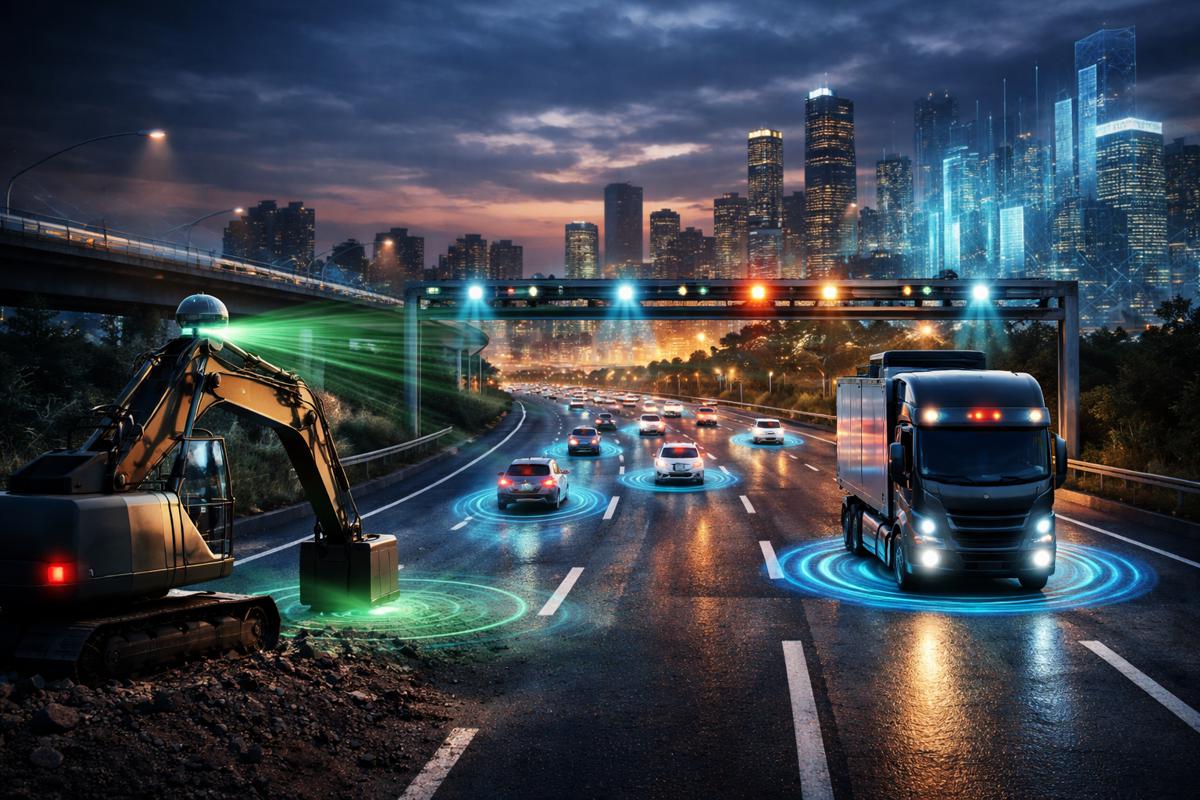
AEye Pushes the Boundaries of Ultra Long Range Lidar Perception with Stratos
In the fast evolving world of perception technology, lidar has become one of the most strategically important building blocks for autonomy, safety systems, and intelligent infrastructure. Against that backdrop, AEye, Inc., a global leader in software defined lidar and the company behind the widely adopted Apollo sensor, has unveiled Stratos™, a next generation sensor that redefines what the industry means by ultra long range detection. With the ability to reliably identify objects at distances of up to 1.5 kilometres, Stratos™ establishes a new performance benchmark while remaining commercially viable for large scale deployment.
Rather than chasing incremental gains, AEye has opted for a step change in capability. Stratos™ does not simply stretch range for the sake of headline figures. Its extended detection distance is paired with higher resolution, improved situational awareness, and real world practicality. In sectors where reaction time is measured in fractions of a second and operating speeds continue to rise, the ability to see further, earlier, and more clearly can be the difference between controlled response and catastrophic failure.
A New Definition of Ultra Long Range
Ultra long range lidar has often been discussed in theoretical terms, with performance claims that struggle to translate into operational environments. Stratos™ challenges that narrative by delivering reliable detection out to 1.5 kilometres, a threshold that materially alters system behaviour in high speed and safety critical applications.
Compared with AEye’s Apollo sensor, which is capable of detecting objects at distances of up to one kilometre, Stratos™ more than extends the horizon. It also delivers resolution at more than twice that of Apollo, enabling earlier object classification and more confident decision making. This combination of range and clarity allows perception systems to identify hazards sooner, reducing braking distances, improving trajectory planning, and enhancing overall system resilience.
Software Defined Architecture at the Core
At the heart of Stratos™ lies AEye’s software defined lidar architecture, an approach that separates hardware capability from perception intelligence. Rather than relying on fixed scanning patterns, the system dynamically adapts its sensing strategy in response to real time conditions and application requirements.
This flexibility allows Stratos™ to prioritise areas of interest, allocate resolution intelligently, and maintain performance across diverse operating environments. Whether deployed in automotive, rail, aviation, or defence settings, the same sensor can be tuned through software to meet distinct operational demands. For operators and system integrators, this reduces hardware complexity while extending lifecycle value.
Compact Design with Disruptive Performance
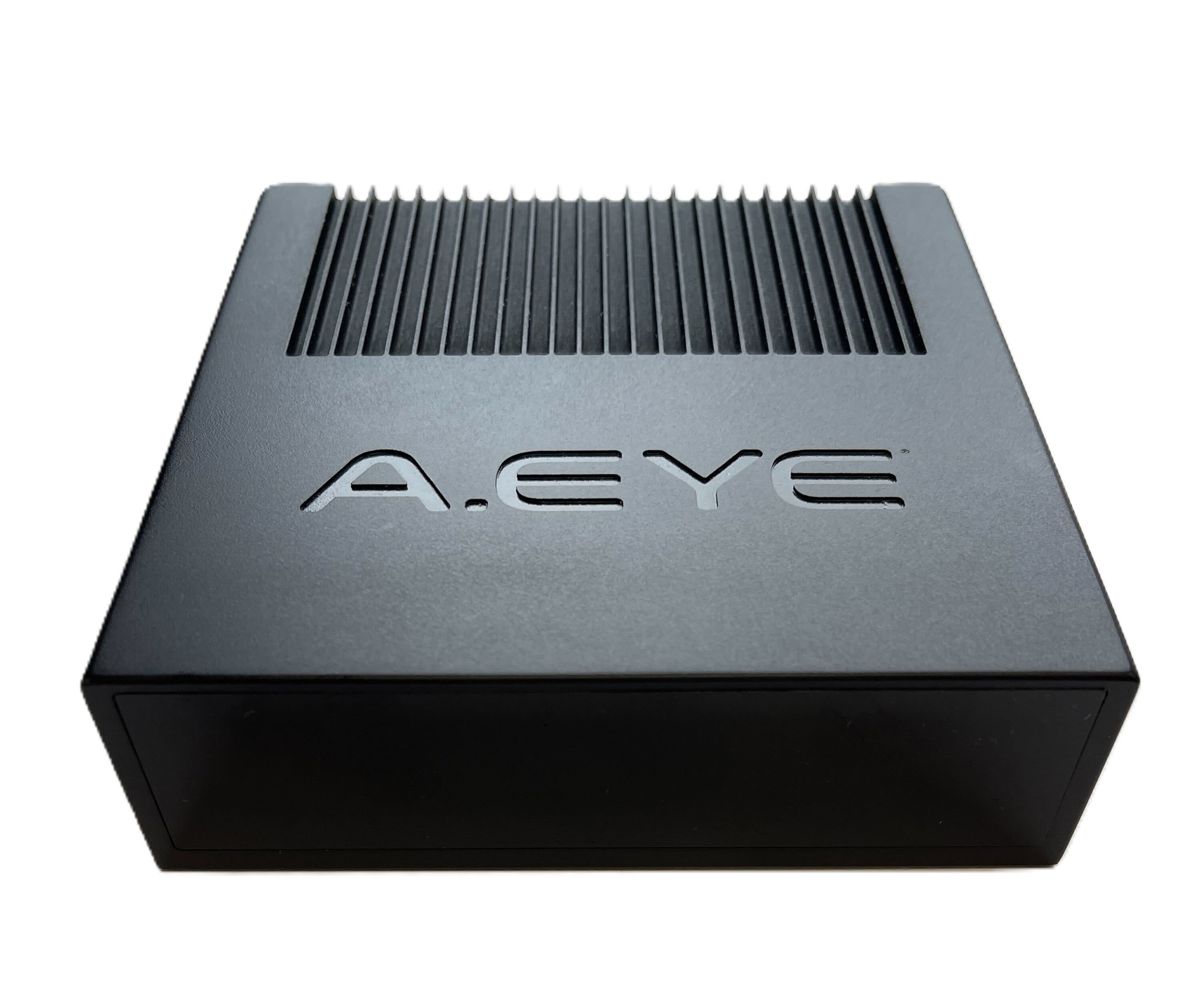
One of the more striking aspects of Stratos™ is its physical form. Despite its ultra long range capability, the sensor is housed in a compact package not much larger than a typical smartphone. This small footprint significantly broadens the range of viable deployment scenarios.
In automotive and commercial trucking applications, Stratos™ can be positioned behind the windshield, where it is capable of detecting objects at distances of up to 500 metres. This placement offers practical benefits, including protection from environmental exposure and simplified vehicle integration. At the same time, the sensor retains its full long range capability for applications where external mounting and extended visibility are required.
Enabling Safer High Speed Mobility
As vehicle speeds increase and automation advances, perception systems are being asked to operate further ahead of the vehicle than ever before. Highway autonomy, long haul trucking, and advanced driver assistance systems all benefit from extended sensing range, particularly when dealing with small or low contrast objects.
By detecting objects much earlier, Stratos™ enables smoother and more predictable system responses. Instead of abrupt braking or evasive manoeuvres, vehicles can plan gradual adjustments, improving passenger comfort and reducing secondary risks. In complex traffic environments, earlier awareness also supports better coordination with other road users and infrastructure systems.
Applications Beyond the Road
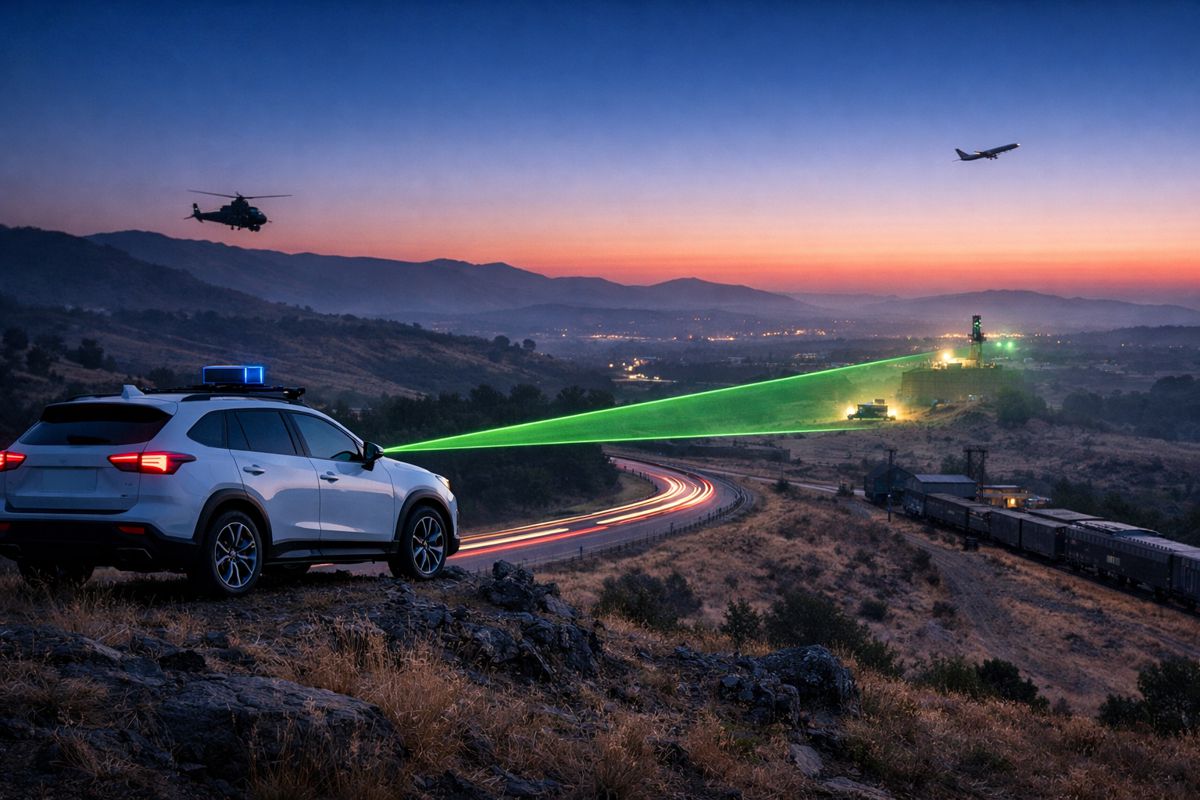
While automotive and trucking remain central markets for lidar innovation, Stratos™ has been designed with a much broader application landscape in mind. Its ability to detect objects at distances of up to 1.5 kilometres opens new possibilities across aviation, defence, rail, security, and logistics.
In aviation, extended range perception can support ground operations, obstacle detection, and situational awareness in low visibility conditions. Rail operators can benefit from earlier detection of track obstructions, animals, or infrastructure anomalies, particularly on high speed corridors. Defence and security applications gain enhanced surveillance capability without the need for bulky or power intensive sensor systems.
A Strategic Leap for Physical AI
AEye positions Stratos™ as a key enabler of what it describes as physical AI, systems that perceive, interpret, and act within the physical world in real time. Long range perception is a foundational requirement for such systems, particularly where operational environments are dynamic and unforgiving.
Matt Fisch, Chief Executive Officer of AEye, underscored the strategic importance of the new sensor: “Stratos™ represents a significant leap forward in long range lidar capability, bringing the ultimate perception capability to the realm of physical AI. By extending detection out to 1.5 kilometres while maintaining precision and system efficiency in a small form factor, we’re providing a cost disruptive solution that enables our customers to detect the smallest objects much earlier, react sooner, and operate more safely in real world conditions, even at high speeds.”
Building on a Proven Portfolio
Stratos™ does not arrive in isolation. It builds on AEye’s established portfolio of software defined lidar solutions, each designed to address specific real world challenges. The company’s flagship Apollo sensor has already gained recognition for its compact design and its ability to detect objects at distances of up to one kilometre.
By introducing Stratos™, AEye extends that portfolio upward, offering customers a clear performance progression without abandoning a common architectural philosophy. This continuity simplifies system development and allows customers to scale capability as operational requirements evolve.
The Role of the OPTIS Platform
Beyond individual sensors, AEye offers a full stack perception solution through its OPTIS™ platform. OPTIS™ captures a high resolution three dimensional representation of the environment, interprets that data, and provides actionable guidance in real time.
When paired with Stratos™, the platform benefits from richer and earlier data, enhancing its ability to model complex scenes and anticipate future states. For applications such as autonomous driving, smart infrastructure, and security monitoring, this integrated approach reduces latency and improves decision quality across the entire perception pipeline.
Market Implications and Competitive Dynamics
The introduction of Stratos™ has implications that extend beyond AEye’s own product roadmap. Ultra long range lidar has historically been associated with high cost, large form factors, and limited scalability. By delivering extended range in a compact and cost disruptive package, AEye challenges those assumptions.
For system developers and infrastructure planners, this shifts the economic equation. Advanced perception is no longer confined to premium platforms or experimental deployments. Instead, it becomes a viable option for broader adoption across transport networks, industrial sites, and critical infrastructure.
Looking Ahead, Literally
As autonomy, automation, and intelligent infrastructure continue to converge, perception technology will remain a decisive differentiator. Sensors that can see further, interpret more accurately, and adapt intelligently will shape the next generation of safety and efficiency improvements.
With Stratos™, AEye has signalled its intent to lead that transition. By combining ultra long range capability, software defined flexibility, and practical deployability, the company has delivered a sensor that does more than extend detection distance. It reshapes expectations around what lidar can achieve in real world conditions.