Inside the Foldable Steering Wheel Changing Autonomous Mobility
Autonomous mobility has long promised safer roads, fewer collisions, and more productive travel time. Yet the physical reality inside the vehicle has lagged behind the software revolution. Steering wheels, dashboards, and fixed layouts remain rooted in a driving-centric past, even as vehicles increasingly take control themselves. Against this backdrop, Autoliv and Tensor have introduced a development that signals a decisive shift in how vehicle interiors are conceived.
By co-developing the world’s first foldable steering wheel for the Tensor Robocar, the two companies are challenging one of the most entrenched components of automotive design. Rather than treating the steering wheel as an immovable constant, the system recognises that control itself is now dynamic. Sometimes the human drives. Sometimes the vehicle does. The hardware, finally, is catching up.
Redefining the Role of the Steering Wheel
At the heart of the innovation lies a simple but powerful idea. In highly automated driving modes, a conventional steering wheel becomes redundant. It occupies valuable cabin space and constrains how occupants can use the interior. In a Level 4 autonomous vehicle, where the car manages all driving tasks within defined operational conditions, the steering wheel no longer needs to sit permanently in front of the driver.
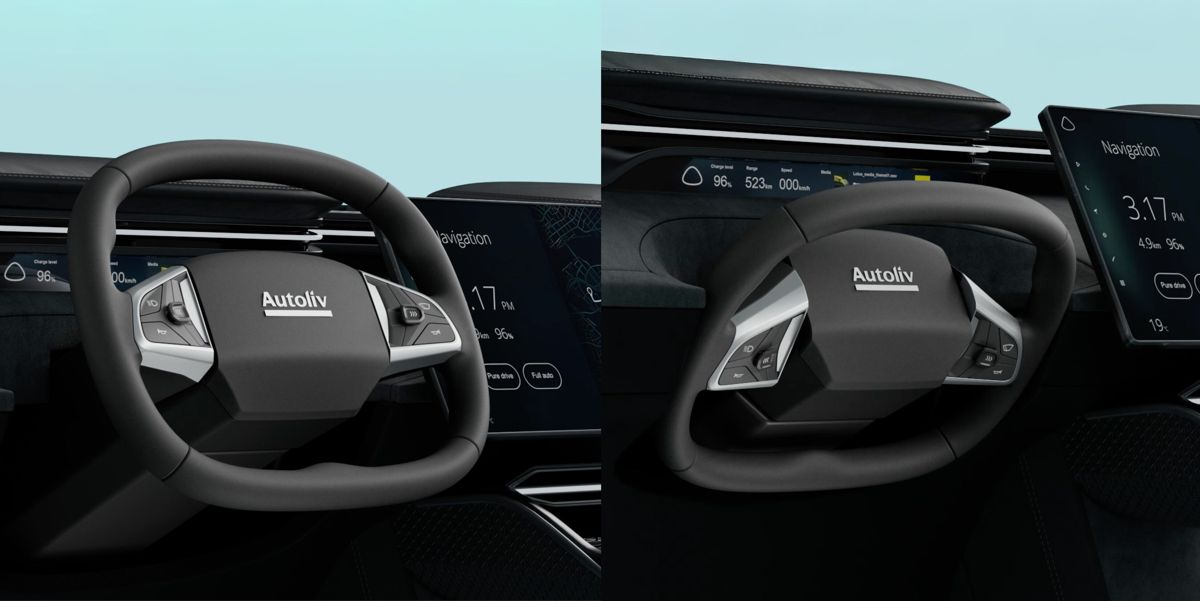
The foldable steering wheel developed by Autoliv and Tensor addresses this mismatch directly. When manual control is required, the steering wheel functions as expected. When the vehicle transitions into autonomous mode, the wheel retracts seamlessly, clearing the driver’s area entirely. The result is not merely a cleaner dashboard but a cabin that can evolve from driving environment to living space within seconds.
Cabin Space as a Design Opportunity
Interior flexibility has become a key battleground for manufacturers developing autonomous vehicles. As driving tasks recede, passengers expect more comfort, more legroom, and more personal freedom. Fixed controls stand in the way of that ambition. By removing the steering wheel when it is not needed, the Tensor Robocar opens up possibilities for new seating positions, work-oriented layouts, or simply a more relaxed travel experience.
This shift is particularly relevant in urban and shared mobility scenarios, where vehicles may alternate frequently between autonomous operation and manual control. The foldable steering wheel allows designers to rethink how space is allocated without compromising the option of human driving. It is a pragmatic response to real-world use cases rather than a speculative concept exercise.
Safety That Adapts With the Driving Mode
Removing a steering wheel raises an obvious and critical question. What happens to safety systems that traditionally rely on it? Autoliv’s answer lies in adaptive restraint technology that changes configuration depending on how the vehicle is being operated.
When the Tensor Robocar is in autonomous mode and the steering wheel is retracted, a passenger airbag integrated into the instrument panel is activated. In manual driving mode, the airbag housed within the steering wheel itself is used. Both systems are designed to deliver the same high level of protection, ensuring that safety performance is not compromised by flexibility.
This dual-airbag approach reflects a broader evolution in automotive safety thinking. Rather than designing for a single seating position and posture, modern restraint systems increasingly account for variable occupant behaviour, seating arrangements, and driving modes. The foldable steering wheel becomes part of a wider safety ecosystem rather than an isolated component.
Intelligent Safety by Design
For Autoliv, the project represents more than a novel piece of hardware. It underscores a strategic shift towards intelligent, adaptive safety systems that respond to context rather than applying uniform solutions in every scenario. As vehicles gain new capabilities, safety architectures must evolve in parallel.
Fabien Dumont, Executive Vice President and Chief Technology Officer of Autoliv, framed the thinking behind the collaboration with clarity: “Automotive safety can no longer follow a one-size-fits-all philosophy. We asked ourselves how to make safety intelligent and adaptive, creating a system that seamlessly aligns with the driver’s needs. Our collaboration with Tensor delivers precisely that: a steering solution that enhances both safety and comfort by adapting to the vehicle’s mode.”
The statement reflects an industry-wide recognition that safety innovation is no longer limited to crash performance alone. It now encompasses usability, ergonomics, and how systems behave across multiple operational states.
Balancing Autonomy and Human Preference
Despite rapid progress in autonomous driving technology, full automation remains a nuanced proposition for many consumers. Trust, situational awareness, and personal preference all play a role in whether drivers are willing to relinquish control completely. Tensor’s approach acknowledges this reality rather than attempting to bypass it.
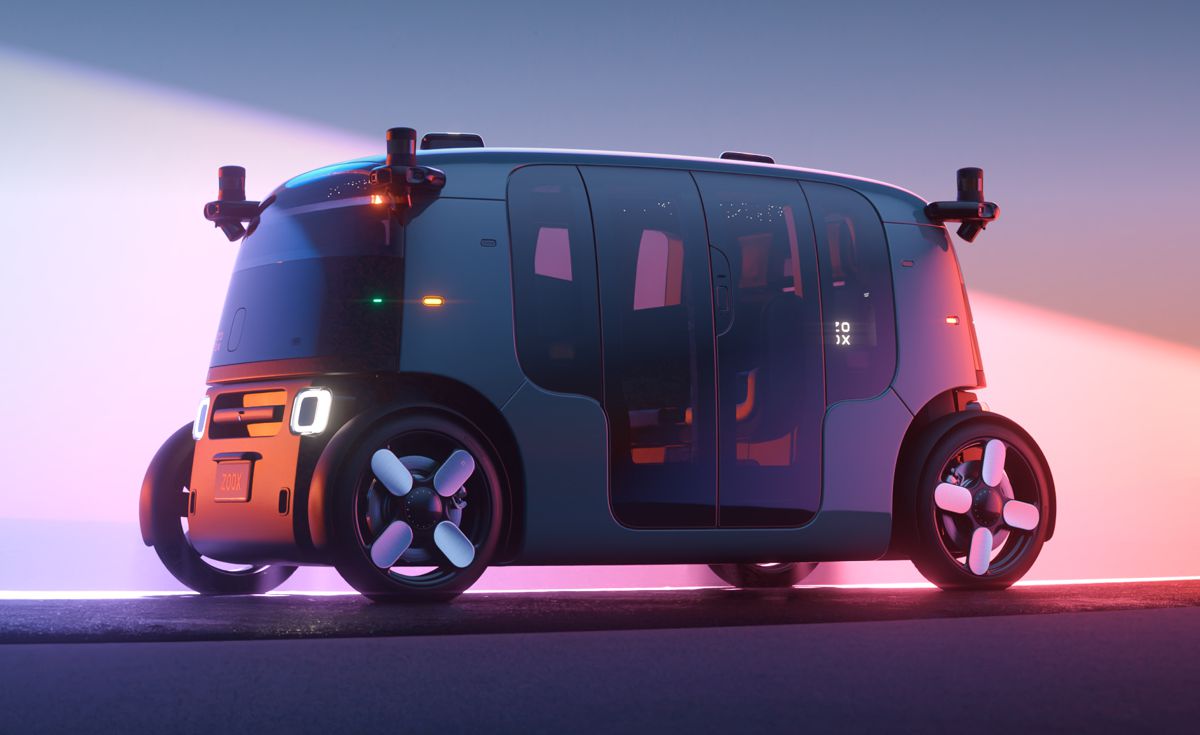
The Tensor Robocar is designed to support both autonomous and manual driving in a seamless manner. The foldable steering wheel is central to that philosophy, enabling a clear distinction between modes without forcing users to commit permanently to one or the other. It preserves the familiarity of conventional driving while enabling a radically different experience when autonomy is engaged.
Jay Xiao, Chief Executive Officer of Tensor, articulated this balance succinctly: “Fully self-driving technology provides a groundbreaking user experience, but manual driving in certain scenarios is still desired by many people. Our dual-mode approach with a foldable steering wheel combines the best of both worlds and gives customers the freedom to choose.”
He also highlighted the significance of moving beyond conceptual demonstrations: “Foldable steering wheels previously existed only in concept cars. Now we are bringing this innovation to volume-production vehicles for everyday use.”
From Concept to Volume Production
One of the most striking aspects of the project is its proximity to market readiness. The Tensor Robocar, equipped with the foldable steering wheel, is expected to be ready for volume production during the second half of 2026. This timeline places the technology firmly in the realm of near-term deployment rather than distant experimentation.
Historically, many radical interior concepts have failed to progress beyond auto show prototypes due to regulatory, safety, or manufacturing constraints. The Autoliv and Tensor solution has been developed with production feasibility in mind from the outset, aligning advanced mechanical design with established automotive safety standards.
Global Market Ambitions
The Tensor Robocar is planned for introduction across major global markets, including the United States, the European Union, and the Middle East. These regions present diverse regulatory environments and user expectations, particularly around autonomous driving functionality. A flexible, dual-mode steering system offers a valuable degree of adaptability in meeting those varied requirements.
From a policy perspective, the ability to support both autonomous and manual operation may ease regulatory acceptance during transitional phases of deployment. Vehicles can comply with existing driver control regulations while still delivering the benefits of high-level automation where permitted.
A Milestone for Autonomous Interiors
Beyond its immediate technical merits, the foldable steering wheel represents a broader shift in how the industry defines leadership in mobility safety. The focus is moving away from isolated components towards holistic systems that integrate hardware, software, and human factors into a coherent whole.
By introducing a steering solution that physically adapts to the driving scenario, Autoliv and Tensor are setting a benchmark for user-centric design in autonomous vehicles. The cabin is no longer a static shell built around a single task. It becomes an adaptive environment, capable of responding intelligently to how the vehicle is being used at any given moment.
Industry Showcase at CES 2026
The foldable steering wheel will be publicly showcased at the Consumer Electronics Show in Las Vegas from 6 to 9 January 2026, with media days taking place on 4 and 5 January. The technology will be exhibited at the Tensor booth, number 5701, located in the LVCC West Hall.
CES has increasingly become a key platform for automotive innovation, particularly at the intersection of mobility, software, and consumer technology. Presenting the foldable steering wheel in this environment underscores its relevance not just as a safety component, but as part of a broader transformation in how people interact with vehicles.
Autoliv’s Expanding Safety Mandate
Autoliv’s involvement in the project builds on its long-standing position as the world’s leading automotive safety supplier. Through its group companies, Autoliv develops, manufactures, and markets protective systems including airbags, seatbelts, and steering wheels for virtually all major vehicle manufacturers worldwide. Its portfolio also extends into safety solutions for commercial vehicles and electrical safety systems.
The scale of Autoliv’s impact is reflected in its reported 2024 figures, with products estimated to have saved approximately 37,000 lives and reduced around 600,000 injuries. As mobility evolves, the company continues to challenge and redefine safety standards, ensuring that new vehicle architectures do not outpace the protections designed to safeguard their occupants.
Looking Ahead Without Standing Still
The collaboration between Autoliv and Tensor illustrates how incremental mechanical innovation can unlock significant shifts in user experience and safety philosophy. By allowing the steering wheel itself to adapt, the industry moves closer to interiors that reflect how autonomous vehicles are actually used rather than how they have historically been driven.
As the Tensor Robocar approaches production readiness, the foldable steering wheel stands as a tangible example of how thoughtful design can bridge the gap between autonomy and human agency. In doing so, it offers a glimpse of a future where safety systems are not only robust, but responsive, intuitive, and quietly transformative.