Sony AFEELA and the Creative Entertainment Future of Mobility
Sony Honda Mobility stepped onto the global stage at CES 2026 with a message that was deliberate rather than dramatic. Mobility, in the company’s view, is no longer defined purely by driving. It is becoming a space for creativity, entertainment, productivity and emotional connection. That vision framed a press conference held in Las Vegas on 5 January, where they set out near-term production plans and longer-term technological direction, while unveiling both the AFEELA 1 pre-production model and the new AFEELA Prototype 2026.
The announcements mattered not because they chased novelty, but because they showed how software, entertainment and vehicle engineering are being fused into a coherent commercial roadmap. With customer deliveries now scheduled to begin in California during 2026, AFEELA is shifting from concept to reality at a moment when the automotive sector is reassessing what value really means inside a vehicle.
From Vehicle To Creative Entertainment Space
Sony Honda Mobility’s central idea is deceptively simple. Time spent in a vehicle should be useful, engaging and emotionally responsive rather than tolerated. Under the banner of mobility as a creative entertainment space, the company is positioning its vehicles as intelligent partners that adapt to people, rather than machines that demand constant attention.
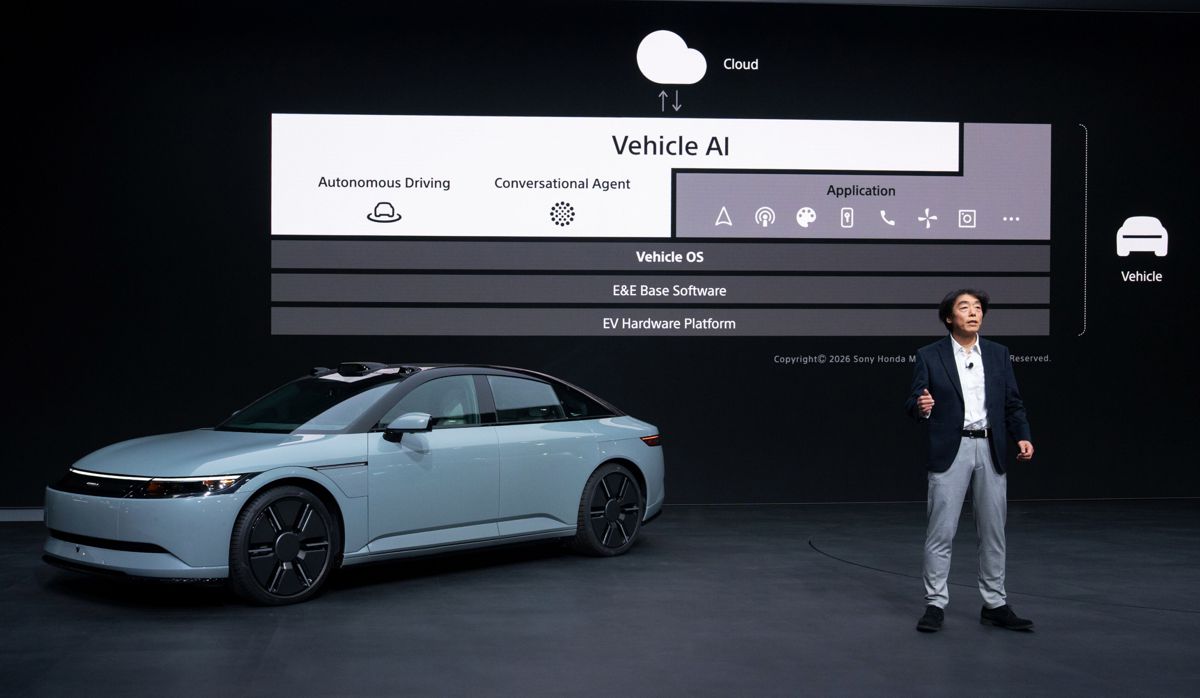
This approach treats artificial intelligence not as an add-on, but as a foundational layer. Vehicle AI is intended to understand preferences, interpret context and respond naturally, transforming the cabin into an environment that evolves throughout a journey. In practical terms, that means entertainment that feels intentional rather than distracting, and interfaces that feel conversational rather than instructional.
AFEELA 1 Moves Into Production Reality
AFEELA 1 represents the first tangible expression of this philosophy. Presented at CES 2026 as a pre-production model, it is scheduled to become the brand’s first production vehicle, with customer deliveries in California beginning later in 2026 and expansion to Arizona planned for 2027. Deliveries in Japan are expected to follow in the first half of 2027.
Interest in the vehicle has been substantial. Reservations opened in California in January 2025, followed by the launch of AFEELA Studio showrooms and exhibition events. Within the first year, more than 100,000 visitors engaged with the brand, and over 24,000 in-vehicle demonstrations were completed. Those figures suggest curiosity that goes beyond early adopters and into a broader audience interested in how mobility is changing.
Manufacturing And Delivery Infrastructure Takes Shape
Behind the scenes, the transition from prototype to production has already progressed. During autumn 2025, trial production runs of AFEELA 1 were carried out at Honda’s East Liberty Auto Plant in Ohio. These trials were part of the preparation for mass production and culminated in the pre-production vehicles displayed at CES 2026.
To support customer delivery and brand experience, Sony Honda Mobility plans to open combined AFEELA Studio and Delivery Hubs in Torrance and Fremont, California, during spring 2026. These locations are designed to integrate showroom engagement with delivery and after-sales interaction. Early reservation holders will be invited into a phased experiential programme known as AFEELA Advanced Access, with demonstration drives planned for later in the year.
Intelligent Drive And The Path Toward Drive-Less Space
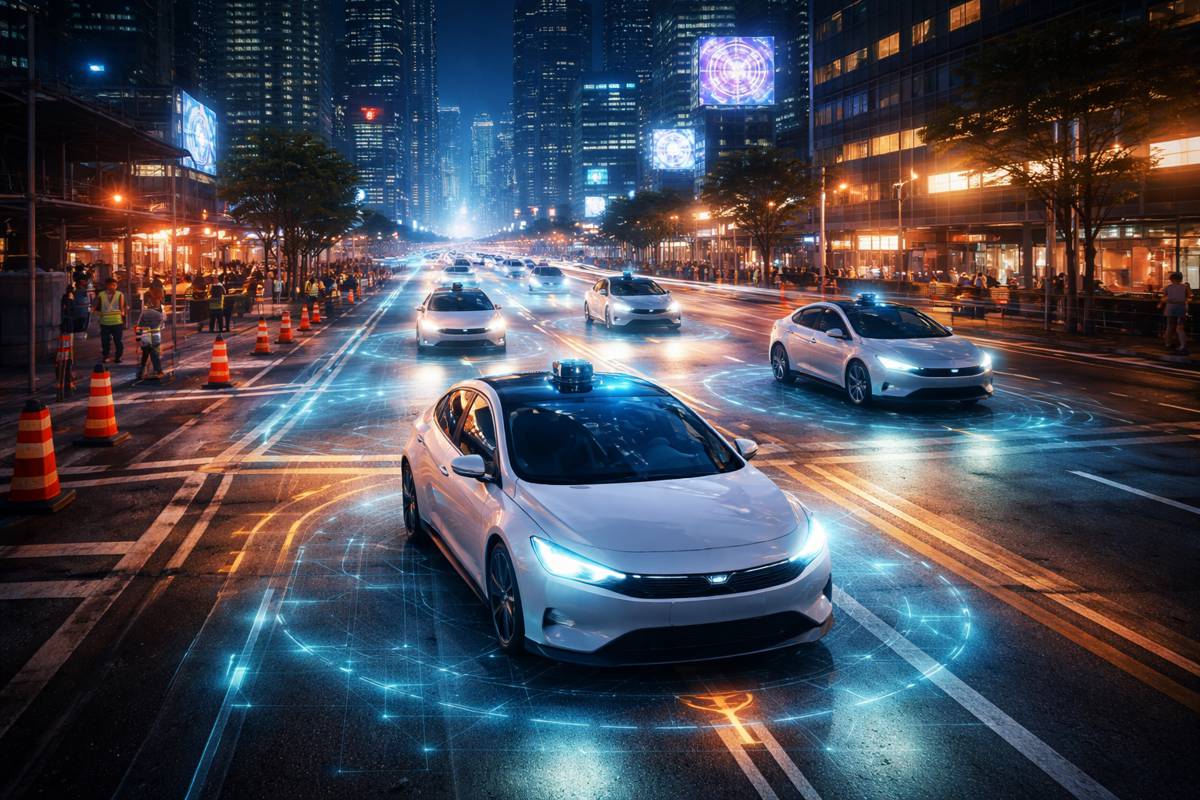
A defining technical pillar of AFEELA is its advanced driver assistance system, AFEELA Intelligent Drive. The system currently targets Level 2 plus driver assistance, supporting journeys from departure to destination while reducing cognitive load on the driver. Sony Honda Mobility has made clear, however, that this is only the starting point.
The longer-term ambition is to evolve the system into an end-to-end AI model that integrates vision language capabilities. By moving towards Level 4 equivalent functionality, the company aims to create periods where the vehicle effectively drives itself, allowing occupants to engage with entertainment, communication or work in a genuinely drive-less environment. The implication is not the removal of driving pleasure, but the optionality to reclaim time when conditions allow.
The Role Of The AFEELA Personal Agent
Interaction inside the cabin is anchored by the AFEELA Personal Agent, an interactive conversational AI developed using Microsoft Azure OpenAI Service. Rather than relying on rigid voice commands, the system is designed to support natural dialogue that adapts to individual users over time.
This personal agent is intended to strengthen the relationship between people and vehicle by making interactions feel intuitive and responsive. Adjusting settings, accessing content or managing journeys becomes part of an ongoing conversation rather than a sequence of instructions, aligning closely with Sony Honda Mobility’s ambition to humanise technology.
Snapdragon Digital Chassis And Next Generation Architecture
Delivering this level of integration requires a robust electrical and electronic foundation. Sony Honda Mobility confirmed its intention to adopt solutions from Qualcomm Technologies’ Snapdragon Digital Chassis within its next-generation E E architecture. This suite of automotive platforms supports high-performance computing, connectivity and in-vehicle experiences.
By continuously integrating advanced platforms with a future-oriented perspective, the company aims to keep AFEELA vehicles adaptable over time. The emphasis is on software-defined mobility, where capabilities can evolve through updates rather than being fixed at the point of manufacture.
Opening The Cabin Through Co-Creation
A notable announcement at the press conference was the introduction of the AFEELA Co-Creation Program. This initiative provides creators and developers with access to development documentation for in-vehicle entertainment content, including themes and applications.
Sony Honda Mobility is also building cloud APIs and a development environment for Android applications on the in-vehicle infotainment platform. By lowering barriers to entry, the company hopes to encourage experimentation and diversity in applications, allowing the cabin experience to expand in ways that a single manufacturer could not achieve alone.
An On-Chain Mobility Service Platform
Looking further ahead, Sony Honda Mobility outlined plans to develop an open, on-chain mobility service platform using a token-based incentive model. Powered by crypto technologies, the platform is framed around an X-to-Earn concept that connects ideation, development, and experience and evaluation.
The intention is to create an ecosystem where contributors are rewarded for participation and innovation. Importantly, the platform is envisioned as open to other automakers and service providers, signalling an ambition to influence the broader mobility landscape rather than operate in isolation.
AFEELA Prototype 2026 And The Next Chapter
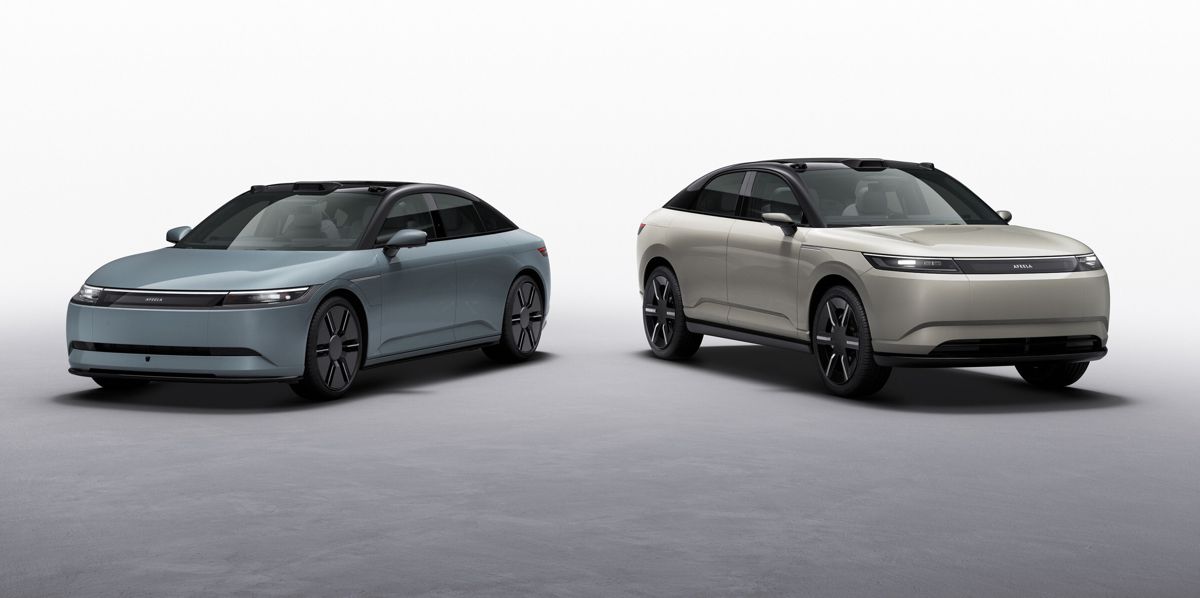
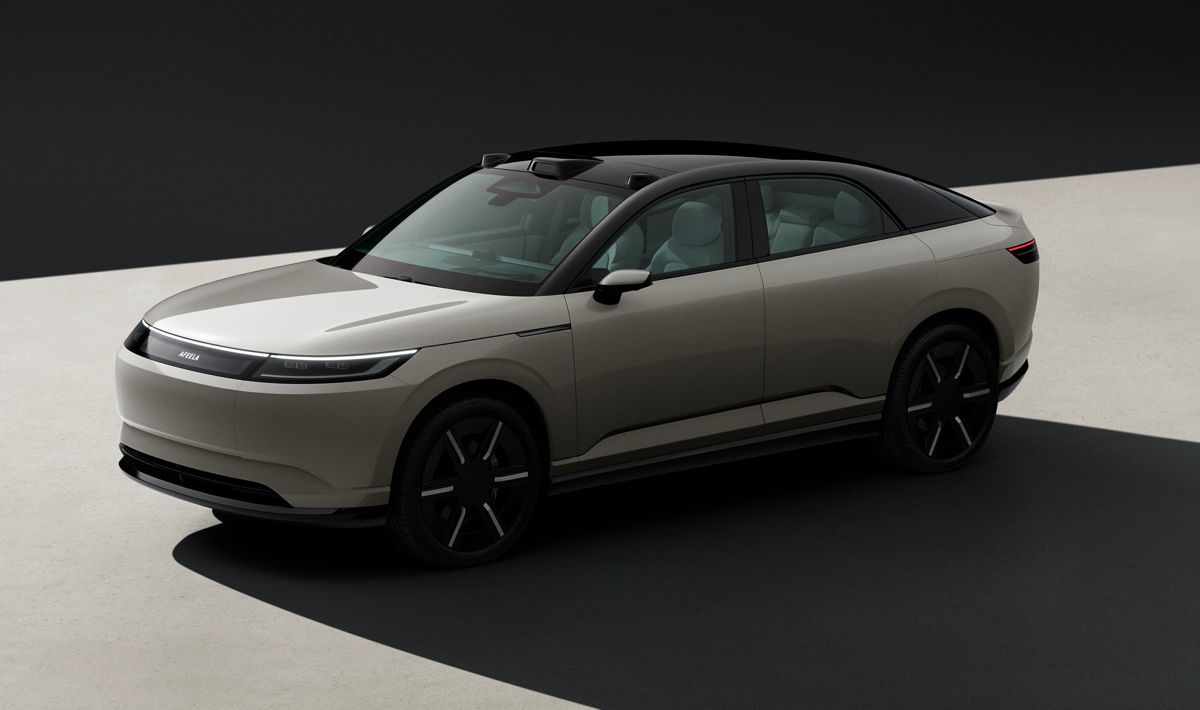
Alongside AFEELA 1, the company unveiled the AFEELA Prototype 2026, making its world debut at CES. While building on the core concept of the production model, the prototype introduces greater spatial flexibility and accessibility.
The design aims to deliver value to a broader range of users by rethinking how interior space is configured and used. A production model based on this prototype is planned for the United States market as early as 2028, extending the brand’s roadmap well into the next decade.
Inside The Cabin Experience
At a hardware level, AFEELA 1 combines advanced software with high-performance components to create what the company describes as intelligent mobility. Advanced driver assistance systems are designed to reduce stress and enhance safety, while the interactive personal agent supports seamless communication between occupant and vehicle.
The cabin itself features a bespoke sound system and optimised displays intended to support a wide range of applications and entertainment content. Vehicle dynamics have also been carefully tuned to balance agility and stability, delivering a sense of unity with the driver alongside a high-quality ride for passengers.
Leadership Voices And Creative Perspectives
The press conference featured speakers from across the Sony Honda Mobility ecosystem, including Yasuhide Mizuno, Representative Director, Chairperson and CEO, and Izumi Kawanishi, Representative Director, President and COO. They were joined by J Thongnop, Senior Director of Marketing at Sony Honda Mobility of America.
Guest speakers from technology, entertainment and music underscored the multidisciplinary nature of the project, reinforcing the idea that AFEELA sits at the intersection of mobility, creativity and digital experience rather than within a traditional automotive silo.
Defining AFEELA’s Identity
The name AFEELA reflects a deliberate blend of intelligence and emotion in motion. It represents mobility that senses its occupants and responds in ways that feel personal. Built on advanced sensing, interactive technology and human-centred design, the brand is positioned to challenge assumptions about what a vehicle should be.
Sony Honda Mobility, established in 2022 by Sony Group Corporation and Honda Motor Co, has framed its purpose clearly: move people through the pursuit of innovation with diverse inspirations. As AFEELA 1 moves towards production and delivery, that purpose is being tested in the real world, where expectations are high and differentiation is hard won.
Will AFEELA Redefine The Industry
AFEELA’s significance extends beyond a single model. It offers a glimpse into how partnerships across technology, entertainment and manufacturing can reshape mobility at a systemic level. For policymakers, it raises questions about regulation in increasingly autonomous and software-defined vehicles. For investors, it highlights new value chains rooted in data, content and services. For the wider construction and infrastructure ecosystem, it reinforces the growing convergence between physical assets and digital experience.
As deliveries approach and prototypes evolve into production vehicles, AFEELA will be judged not on concepts but on execution. What is clear already is that Sony Honda Mobility is attempting to redefine the vehicle as a living platform rather than a finished product, and that shift could echo far beyond the show floors of Las Vegas.