Innoviz and Vueron to Fast Track LiDAR AI for Roads and Autonomous Mobility
The rapid evolution of autonomous driving and smart infrastructure has placed unprecedented pressure on perception systems to mature faster, perform better, and scale reliably. Against that backdrop, Innoviz Technologies Ltd. and Vueron Technology Co. Ltd. have formalised a partnership that squarely targets one of the industry’s most stubborn bottlenecks. Data. More precisely, the time and effort required to transform raw LiDAR data into production-ready artificial intelligence models.
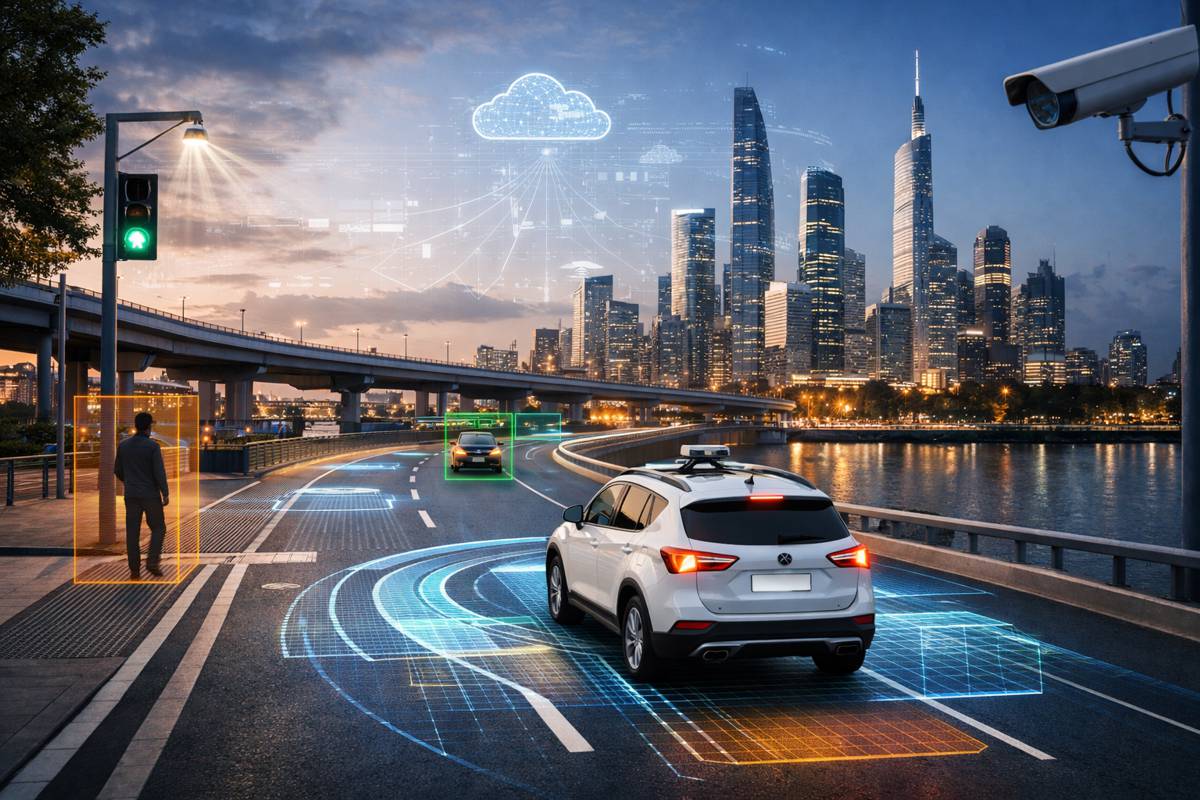
Under a newly signed memorandum of understanding, the two companies have agreed to jointly establish a cloud-based development environment where LiDAR data captured by Innoviz sensors can be seamlessly integrated into Vueron’s VueX AI development platform. The collaboration brings together automotive-grade sensing hardware and an AI-driven perception pipeline designed to automate annotation, training, validation, and deployment. The joint solution is being demonstrated live at CES 2026, signalling a move from concept to commercial readiness.
Turning LiDAR Data into Usable Intelligence
At the heart of the partnership lies the integration of data from InnovizTwo and InnovizSMART LiDAR systems into the VueX platform. This integration allows automotive manufacturers and smart infrastructure operators to upload LiDAR point clouds directly into a cloud-based environment where AI-driven tools take over much of the heavy lifting traditionally performed by human annotators.
VueX applies advanced machine learning techniques to automatically annotate LiDAR point clouds with bounding boxes and object classifications. Vehicles, pedestrians, cyclists, road furniture, and infrastructure elements are identified with a level of consistency that is difficult to maintain through manual processes alone. The result is a substantial reduction in development time without sacrificing the precision demanded by safety-critical automotive and infrastructure applications.
Automation Where It Matters Most
LiDAR-based perception has long promised higher reliability than camera-only systems, particularly in poor lighting or adverse weather. However, its adoption has been slowed by the cost and complexity of preparing high-quality training datasets. Manual annotation is not only time-consuming but also prone to inconsistency across large teams and long projects.
By automating this workflow, the Innoviz and Vueron integration addresses a critical industry pain point. Engineers can focus on refining perception models rather than wrestling with data preparation. The cloud-based nature of VueX further enables distributed teams to collaborate on the same datasets, accelerating iteration cycles and shortening the path from prototype to deployment.
Building on a Proven Technical Relationship
This partnership is not a first encounter between the two companies. Vueron previously validated Innoviz’s first-generation automotive-grade LiDAR, InnovizOne, within its autonomous driving platform. That earlier collaboration laid the technical groundwork for today’s broader integration.
The current agreement expands the scope significantly. InnovizTwo, designed for series production automotive programmes, and InnovizSMART, aimed at fixed smart infrastructure deployments, are now both supported within VueX. Together, they form an end-to-end AI environment encompassing data storage, visualisation, processing, labelling, training, validation, and deployment. For developers, this continuity across vehicle and infrastructure use cases is increasingly valuable as cities and transport networks converge around connected and automated mobility strategies.
Accelerating Time to Market for OEMs and Operators
Automotive original equipment manufacturers and Tier 1 suppliers face intense competitive pressure to deliver advanced driver assistance and autonomous capabilities on tight timelines. Delays in perception development can ripple across entire vehicle programmes, driving up costs and eroding first-mover advantages.
The joint Innoviz Vueron solution is positioned as a way to mitigate those risks. By reducing manual effort and simplifying data workflows, development timelines can be compressed. Complexity is lowered, and teams gain greater confidence that perception systems will meet regulatory and safety expectations when deployed at scale.
Omer Keilaf, Chief Executive Officer and Co-Founder of Innoviz, framed the collaboration as a practical step towards wider adoption of advanced LiDAR technology: “Our collaboration with Vueron represents an important step in making advanced LiDAR technology more accessible and easier to deploy. By integrating our automotive-grade sensors with Vueron’s powerful AI development tools, we’re enabling our customers to accelerate their development timelines and potentially reduce the complexity of bringing perception systems to market.”
One Platform Across Automotive and Infrastructure
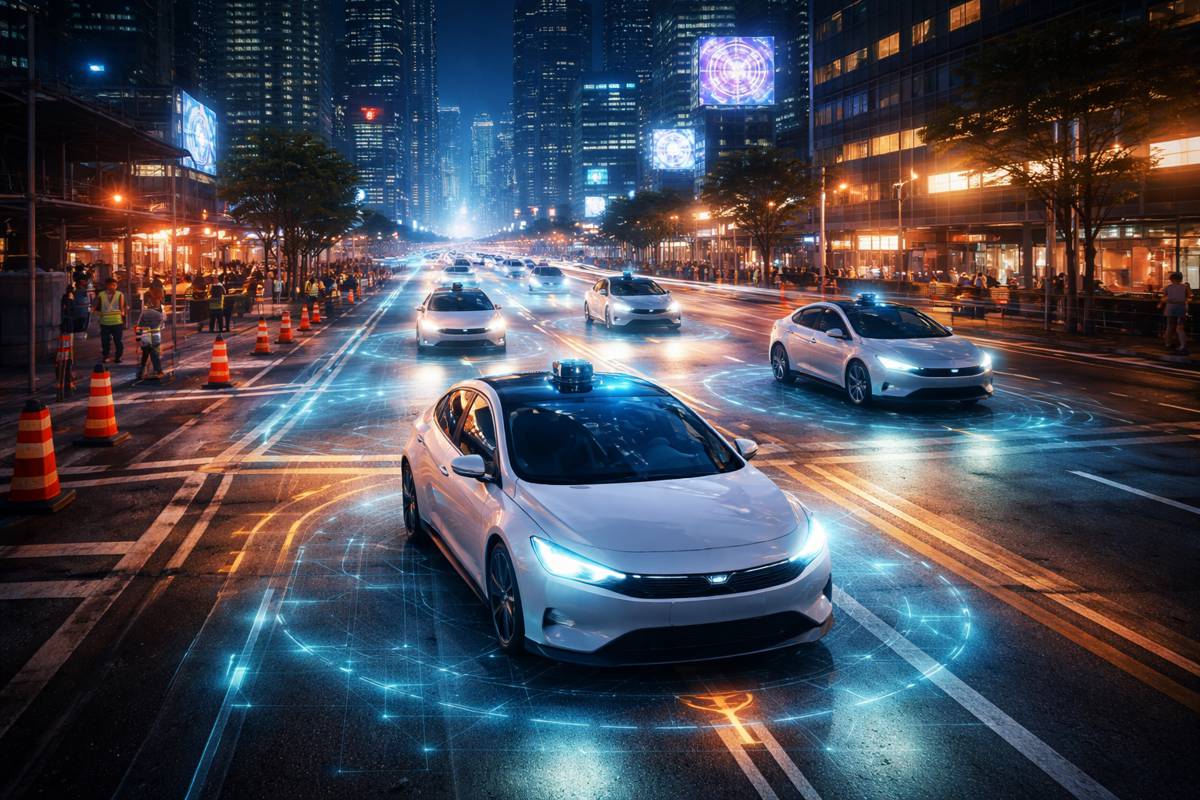
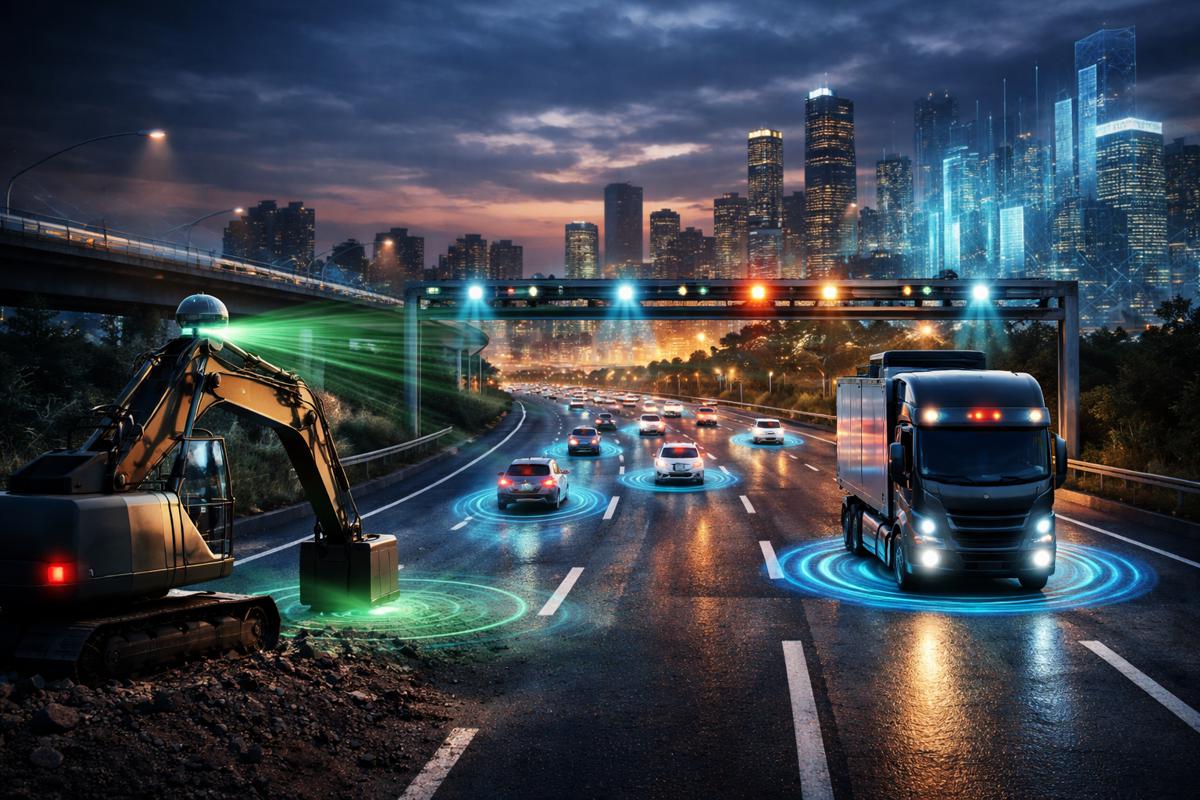
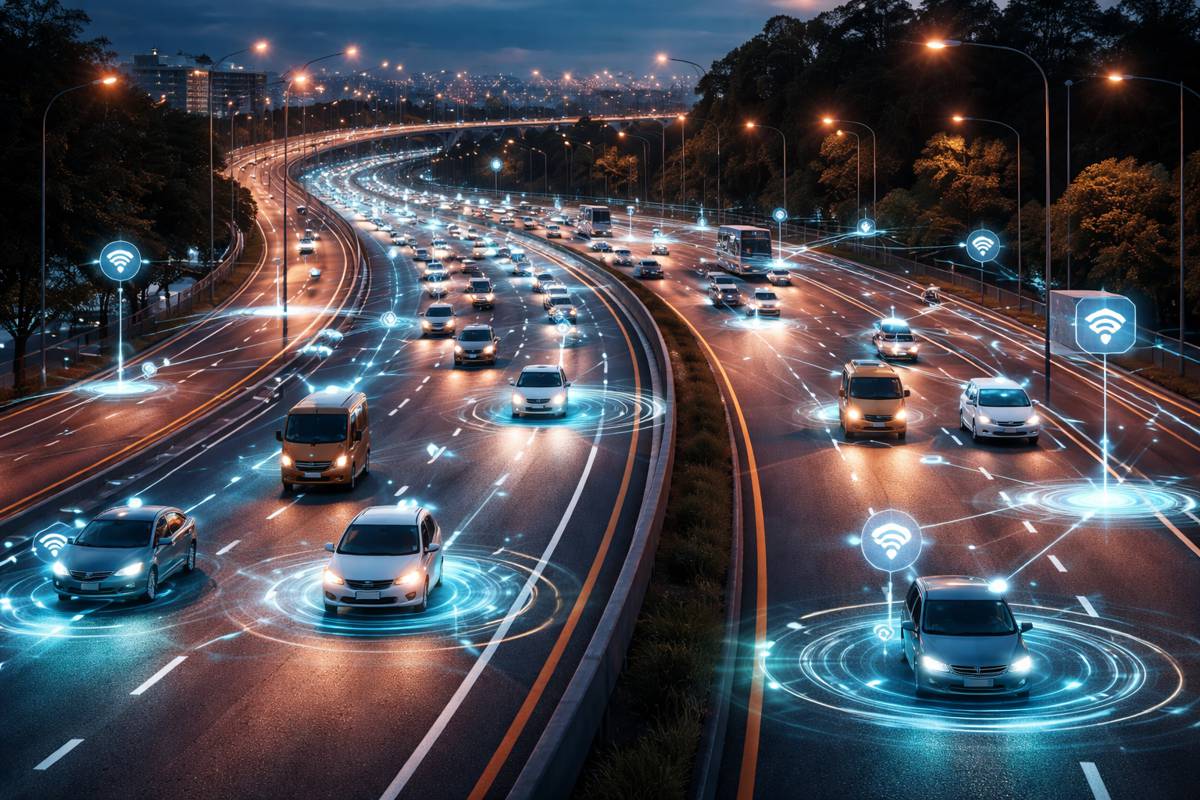
While autonomous vehicles often dominate headlines, smart infrastructure is emerging as an equally important application for LiDAR-based perception. Fixed sensors deployed at intersections, ports, logistics hubs, and along highways can enhance traffic management, improve safety, and support connected vehicle ecosystems.
Vueron’s VueX platform has been designed with this dual-use reality in mind. The same automated annotation and training capabilities that support vehicle perception can be applied to infrastructure deployments, enabling consistent AI models across environments. This convergence reduces duplication of effort and allows operators to reuse validated datasets and models.
Noah Jang, Senior Vice President of Global Business at Vueron, highlighted this cross-domain value: “Integrating Innoviz’s high-performance LiDAR data into our VueX platform allows us to offer customers a comprehensive AI-based solution across automotive and infrastructure applications. The combination of Innoviz’s proven sensor technology with our automated annotation and training capabilities creates a powerful toolset that addresses real pain points in perception development.”
Meeting Safety and Regulatory Expectations
Safety remains the defining requirement for any perception system deployed on public roads or critical infrastructure. Automotive-grade LiDAR must meet stringent performance standards while delivering consistent outputs across millions of kilometres of operation.
Innoviz positions its LiDAR and perception software as exceeding human visual capabilities under many conditions, reducing the likelihood of perception errors. Combined with automated yet auditable AI training workflows within VueX, the partnership supports traceability and validation, both of which are essential for regulatory approval and large-scale deployment.
For policymakers and regulators, such integrated solutions may offer clearer lines of accountability. Data provenance, model training history, and validation results can be centrally managed, simplifying oversight while encouraging innovation.
A Global Footprint Aligned with Market Demand
Both companies bring a strong international presence to the partnership. Innoviz operates across the United States, Europe, and Asia, supplying leading automotive manufacturers and commercial operators. Vueron likewise works with partners and customers across Asia, Europe, and the United States, drawing on deep expertise in autonomous driving, robotics, and AI.
This global reach is particularly relevant as autonomous and smart infrastructure initiatives progress at different speeds across regions. A flexible, cloud-based AI development environment allows local teams to adapt solutions to regional requirements while maintaining a common technological foundation.
Positioning for the Next Phase of Autonomy
As the industry moves beyond pilot projects towards scaled deployment, the emphasis is shifting from experimentation to efficiency and reliability. Partnerships like the one between Innoviz and Vueron reflect that maturation. Rather than focusing solely on sensor performance or algorithmic novelty, the collaboration addresses the full lifecycle of perception development.
By streamlining how LiDAR data is annotated, trained, validated, and deployed, the joint solution supports faster innovation without compromising safety. For automotive manufacturers, infrastructure operators, and investors watching the autonomous mobility space, this pragmatic approach may prove more consequential than incremental hardware upgrades alone.