Manganese Redefines the Economics of Acidic Water Electrolysis
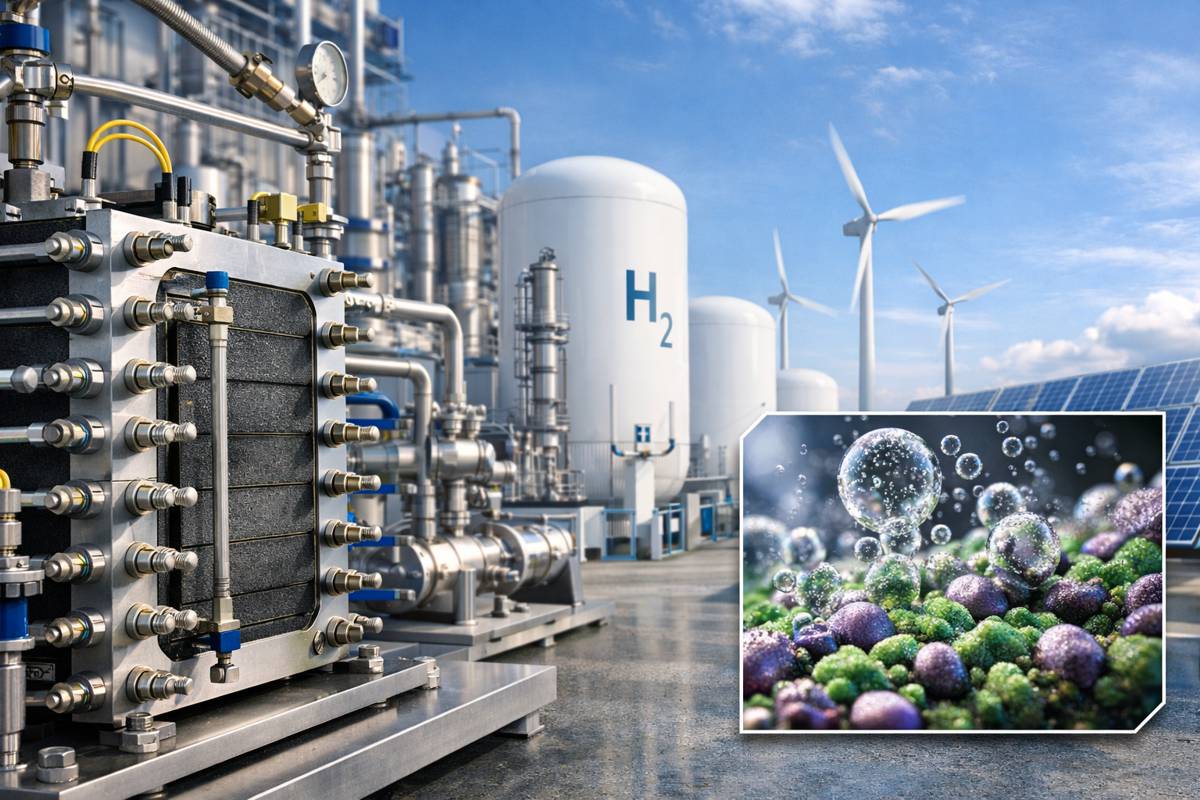
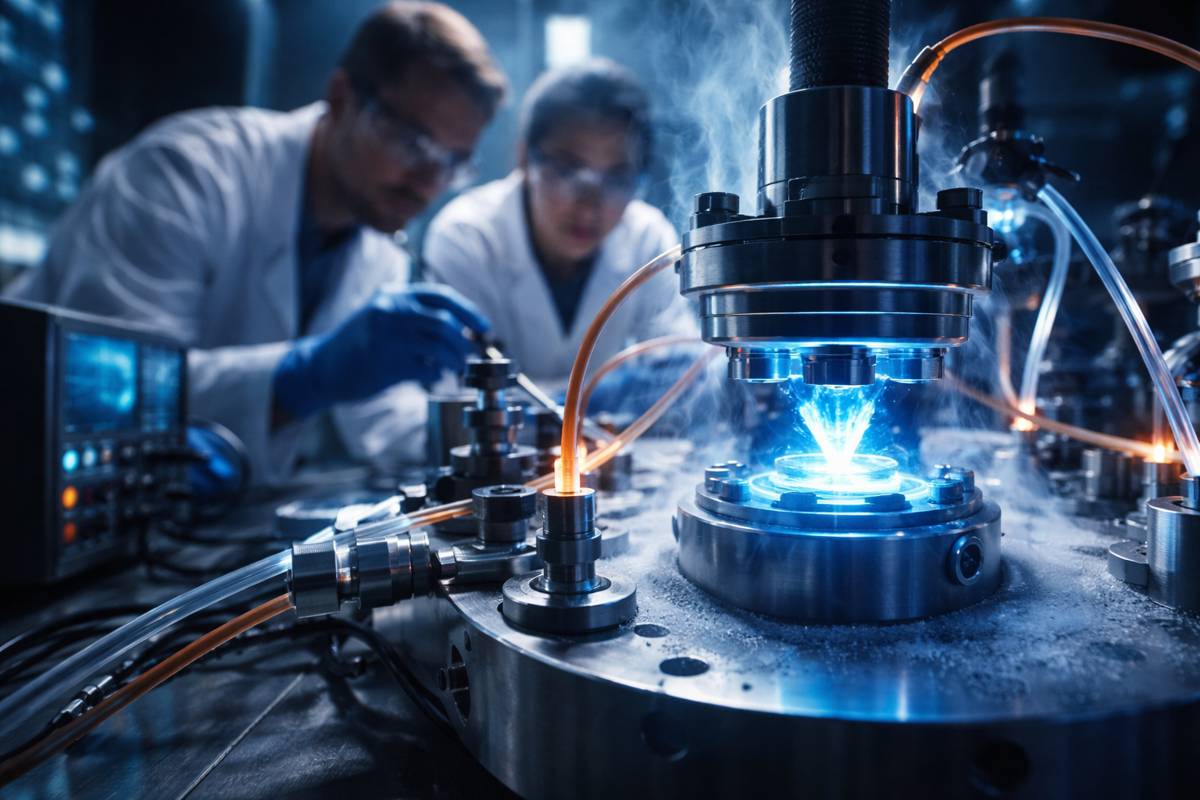
The race to scale green hydrogen has moved well beyond ambition and into the realm of hard engineering constraints. Proton exchange membrane (PEM) water electrolysis sits at the centre of that challenge. Its ability to operate at high current densities, respond rapidly to fluctuating renewable power, and deliver high-purity hydrogen makes it the technology of choice for many large-scale projects. Yet a stubborn bottleneck remains. The oxygen evolution reaction (OER) at the anode depends heavily on iridium and ruthenium, two of the scarcest and most expensive elements in the global supply chain. For an industry aiming at terawatt-scale deployment, that reliance is increasingly untenable.
Against this backdrop, new research from Nankai University offers a reframing of how catalyst design for acidic electrolysis might evolve. Published in 2025 in eScience, the review takes a deep and systematic look at manganese-containing electrocatalysts for acidic oxygen evolution. Rather than presenting manganese as a simple low-cost substitute for precious metals, the authors argue for a more nuanced role. Manganese, they suggest, functions as a structural stabiliser, an electronic regulator, and a mechanism-shaping component that could fundamentally alter how PEM electrolyser catalysts are engineered.
The implications extend well beyond laboratory curiosity. If manganese can be deployed intelligently to reduce precious metal loadings while maintaining, or even improving, performance and durability, it could reshape the economics and scalability of green hydrogen infrastructure worldwide.
Why PEM Electrolysis Still Depends on Precious Metals
PEM electrolysers operate under uniquely harsh conditions. Highly acidic electrolytes, elevated potentials, and aggressive oxidative environments combine to eliminate most transition metals from consideration. Many dissolve rapidly, others form unstable surface phases, and some deactivate before meaningful performance data can even be gathered. Iridium and ruthenium survive where others fail, which explains their near-monopoly in commercial PEM anodes.
That dominance, however, comes at a cost. Global iridium production is measured in single-digit tonnes per year, tightly linked to platinum mining and geopolitically concentrated. Even modest growth in electrolyser manufacturing places severe strain on supply, driving price volatility and long-term uncertainty. Industry roadmaps consistently identify catalyst material availability as a critical risk factor for large-scale hydrogen deployment.
This is where manganese becomes interesting. It is abundant, inexpensive, and already central to natural water oxidation in photosynthesis. The challenge has never been availability but performance. In acidic OER environments, manganese oxides typically exhibit moderate activity, lagging well behind iridium-based benchmarks. Understanding how to extract value from manganese without compromising efficiency has therefore become a central research question.
Lessons from Nature and the Role of Structure
The review draws inspiration from Photosystem II, the protein complex responsible for splitting water during photosynthesis. At its core sits a manganese-calcium-oxo cluster that catalyses water oxidation with remarkable efficiency under ambient conditions. While biological systems and industrial electrolysers operate worlds apart, the underlying chemistry offers valuable clues.
Manganese oxides display a wide range of crystal structures, oxidation states, and coordination environments. These structural variations have a direct influence on catalytic behaviour. Across multiple studies analysed in the review, Mn³⁺ species repeatedly emerge as a critical contributor to OER activity. Their presence appears to facilitate key reaction intermediates while maintaining structural integrity under oxidative stress.
Equally important is manganese’s unusual stability mechanism. Unlike many transition metals that dissolve irreversibly under acidic conditions, manganese oxides can undergo a form of self-healing. Dissolved Mn ions are capable of redepositing onto the catalyst surface during operation, partially restoring lost material. This dynamic equilibrium does not eliminate degradation, but it slows it in ways that are rare among non-precious metals.
While intrinsic activity remains modest, these stability traits position manganese oxides as attractive catalyst supports rather than primary active materials. That distinction becomes critical when considering composite catalyst architectures.
Manganese as a Catalyst Enabler, Not a Replacement
One of the most compelling arguments in the review is that manganese’s real value lies in how it interacts with precious metals rather than how it competes with them. When combined with iridium or ruthenium, manganese oxides can induce lattice strain, generate oxygen vacancies, and enhance electron transfer at interfacial regions. These effects, taken together, improve both catalytic activity and operational durability.
Lattice strain alters bond lengths and electronic distributions at active sites, subtly lowering energy barriers for oxygen evolution. Oxygen vacancies can modify adsorption behaviour, improving reaction kinetics without destabilising the bulk structure. Meanwhile, enhanced electronic coupling between manganese oxides and noble metal particles improves charge transfer efficiency during high-current operation.
Crucially, these benefits are achieved while reducing the overall loading of precious metals. Rather than dispersing iridium onto inert supports, manganese-based materials actively participate in shaping catalytic behaviour. The result is a composite system where each component plays a defined and complementary role.
Electronic Regulation and Reaction Pathways
Beyond structural effects, manganese exerts a more subtle influence at the electronic level. The review highlights manganese’s ability to act as an electron reservoir, modulating the oxidation states of adjacent active metals during operation. This electronic buffering stabilises reactive intermediates and reduces the likelihood of catastrophic surface degradation.
Spin polarisation effects further complicate, and enrich, the picture. Manganese’s electronic configuration can influence spin states at the catalyst surface, subtly steering reaction pathways. These changes are not easily observed experimentally, yet theoretical studies increasingly suggest they play a role in determining both activity and stability under acidic OER conditions.
Perhaps most significant is manganese’s ability to alter reaction mechanisms themselves. In some composite systems, manganese shifts oxygen evolution away from pathways that involve excessive lattice oxygen participation. By reducing lattice oxygen loss, the catalyst avoids one of the primary drivers of long-term degradation. In effect, manganese does not just make catalysts cheaper. It makes them last longer.
Surface Reconstruction and Self-Healing in Action
Catalyst surfaces are not static during operation. Under the high potentials required for oxygen evolution, surfaces reconstruct, dissolve, and reform in complex cycles. The review documents several systems where manganese actively promotes beneficial surface reconstruction, leading to the in situ formation of highly active and stable surface phases.
In these cases, initial degradation is not purely destructive. Instead, it triggers a reorganisation that results in improved catalytic performance over time. Combined with manganese’s inherent self-healing behaviour, this dynamic evolution offers a pathway to catalysts that adapt rather than fail under operational stress.
Such behaviour is particularly valuable for PEM electrolysers, where downtime and maintenance costs carry significant economic penalties. A catalyst that can tolerate, and even exploit, structural change becomes a powerful asset in industrial settings.
Implications for PEM Electrolyser Design
The findings outlined in the review have immediate relevance for next-generation PEM electrolyser development. Incorporating manganese into catalyst architectures offers a credible route to reducing reliance on iridium and ruthenium without sacrificing performance. That reduction, even if incremental at first, eases pressure on fragile supply chains and improves cost predictability for large-scale projects.
For manufacturers, manganese-enabled catalysts could support higher operating lifetimes under acidic conditions, reducing replacement intervals and total cost of ownership. For project developers, they offer a degree of insulation against commodity price shocks that have historically plagued precious metal markets.
Beyond hydrogen production, the design principles identified in this work extend into broader electrocatalysis and energy conversion applications. Electronic regulation, surface reconstruction, and self-healing behaviour are desirable traits across a wide range of electrochemical systems, from carbon dioxide reduction to advanced battery technologies.
A Strategic Material for a Scaling Industry
The authors are careful to position manganese not as a silver bullet but as a strategic design element. Its abundance, chemical flexibility, and electrochemical resilience make it particularly well suited to acidic water electrolysis, yet its full value emerges only when integrated thoughtfully into composite systems.
As renewable energy deployment accelerates and hydrogen demand grows across industry, transport, and power sectors, material efficiency becomes inseparable from technological success. Manganese-containing catalyst strategies offer a pathway toward more resilient, scalable, and economically viable PEM electrolysers.
In an industry where progress is often constrained by what is rare and expensive, manganese represents something different. It is common, adaptable, and, as this research shows, far more influential than its modest reputation might suggest.