How to Prepare Your Old Pickup Truck for Cross-Country Travel
Though Americans have always been car-obsessed, it is the pickup truck that truly captures the heart and defines their deepest vehicular loyalty.
About half of American adults drive pickup trucks. For many owners, these trucks aren’t disposable machines. Rather, they are long-term partners that rack up miles, memories, and stories over decades.
That loyalty is especially strong when it comes to older pickups. They are trusted, familiar, and often built with a level of mechanical simplicity that modern vehicles no longer offer.
So, when the idea of a cross-country road trip comes up, many drivers instinctively think of taking their pickup truck.
While older pickups are tough, they aren’t invincible. Long highway stretches, extreme weather, and sustained engine loads can expose weaknesses that daily driving never reveals. Preparing it beforehand can save you from stressful breakdowns later and help ensure your trip is memorable for all the right reasons.
Below are a few tips that can help you prepare your old pickup for cross-country travel.

#1 Deep Dive Under the Hood
The first thing you should do is open the hood and do a thorough inspection. This is where small, overlooked issues often turn into trip-ending failures.
Visually check for oil seepage, coolant residue, or fuel leaks around the engine block, valve covers, and hoses. Even minor leaks can worsen under sustained heat and vibration.
Inspect belts for glazing, cracking, or fraying, and check that pulleys spin smoothly without wobble or noise. A failed serpentine belt can quickly disable critical systems like the alternator, water pump, and power steering.
Wiring is another common weak point in older trucks. Look for brittle insulation, exposed copper, or loose connectors that could cause intermittent electrical problems.
Pay close attention to the air intake system. Clogged filters or restrictive factory components can reduce airflow and increase engine temperatures, especially under load.
Older Duramax models, particularly the LLY, experience overheating due to restrictive factory intakes and aging cooling system hardware. Diesel Power Products advises replacing the stock turbo inlet with a high-flow alternative and installing a reinforced water pump to enhance thermal management and cooling efficiency.
Upgrading worn or outdated Duramax parts before a long trip can significantly enhance reliability, thermal efficiency, and peace of mind on the road.

#2 Inspect the Tires
Tires represent the only point of contact between the vehicle and the road. Their condition is the most important factor in the vehicle’s safety profile.
For high-mileage trucks, the age of the rubber is often a more significant risk factor than simple tread wear. Check the sidewalls for tiny cracks, known as dry rot. Even if the tread looks deep, the rubber becomes brittle over time.
Look for the Department of Transportation (DOT) date code (a four-digit number representing the week and year of manufacture). If your tires are more than 6 or 7 years old, you should consider a new set before a long-distance trek.
Tire tread depth is just as important. The legal minimum tread depth is generally 2/32 inches. But for transcontinental travel through varied weather patterns, it should be a minimum of 4/32 inches to prevent hydroplaning.
Uneven tire wear, such as cupping or edge wear, often highlights how closely tires and suspension work together. When a pickup is carrying cargo or cruising for hours at highway speeds, components like the upper control arm play an important role in maintaining proper alignment and consistent tire contact with the road. A well-sorted suspension helps improve load handling, steering feel, and straight-line stability, which is especially noticeable during long stretches of 65–75 mph driving. Having the alignment checked and the wheels balanced before departure helps preserve tire life and ensures a smoother, more controlled ride throughout your trip.
#3 Don’t Overlook the Cooling System
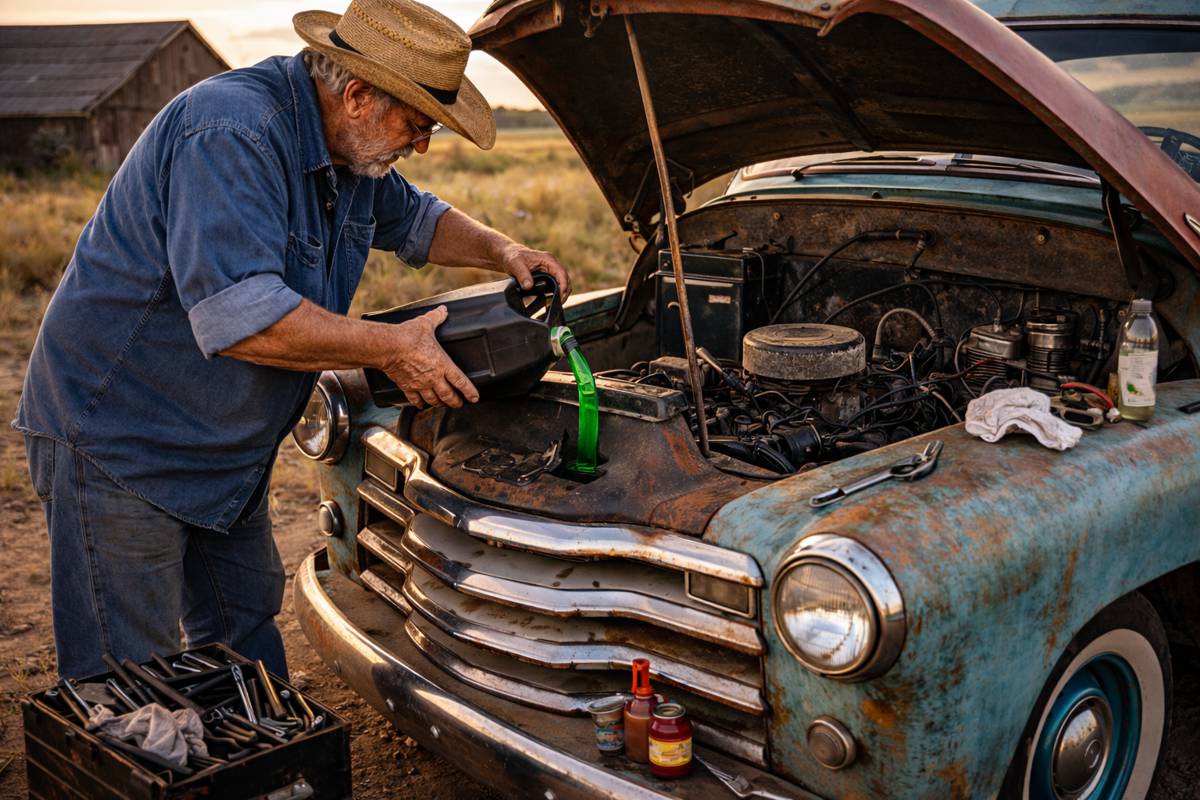
Older pickup trucks are vulnerable to overheating, particularly in hot climates or during long uphill drives.
In 2025, for instance, a significant heatwave gripped the eastern half of the U.S. Dangerous levels of heat and humidity were spreading from the Mississippi River Valley through the Southeast and up the Mid-Atlantic coast.
Such weather can push cooling systems to their limits, leaving little margin for failure. Inspect the radiator for leaks, corrosion, or clogged fins that can restrict airflow. Even minor blockages can significantly reduce cooling efficiency during sustained highway driving.
Pay close attention to hoses and clamps, which tend to become brittle with age and may fail suddenly under pressure. Squeeze hoses gently to check for softness or cracking, and replace any that feel weak.
The radiator cap, thermostat, and cooling fan are small components, but a malfunction in any one of them can quickly trigger overheating. A faulty cap can reduce system pressure, a stuck thermostat can block coolant flow, and a failing fan can prevent proper cooling at low speeds.
Addressing these components proactively can prevent breakdowns and protect the engine during long-distance travel.

Your Truck is Ready for the Road
Preparing your old pickup truck for cross-country travel isn’t just about maintenance but about building confidence. When you know your truck has been checked, tuned, and cared for, you can relax and enjoy the ride.
Follow these tips, and you can reduce the chances of unexpected breakdowns while extending the life of your vehicle. More importantly, you turn the journey into an experience rather than a test of endurance.
Old trucks may not have modern tech, but they make up for it with character and reliability when properly prepared. Take your time, respect the machine, and listen to what it tells you along the way. With the right preparation, your pickup won’t just get you across the country, but also make every mile memorable.