Inside CLNB 2026 and the Future of the Clean Energy Supply Chain
The acceleration of the global energy transition has moved well beyond policy aspiration and into the realm of industrial reality. As renewable energy edges steadily towards becoming a dominant force within national energy systems, the supporting infrastructure underpinning storage, materials, logistics and manufacturing has become just as strategically important as generation itself.
CLNB 2026, the 11th New Energy Industry Chain Expo, arrives at a moment when decisions taken across the battery and energy storage value chain will shape industrial competitiveness for decades. Scheduled to take place from 8 to 10 April 2026 at the Suzhou International Expo Center in China, the event positions itself not as a technology showcase alone, but as a convergence point for policy, capital, manufacturing and resource strategy.
With renewable energy projected to exceed 30 percent of the global energy mix by 2030, the implications for grid stability, storage capacity and raw material security are profound. The exhibition reflects this shift, focusing squarely on the industrial backbone required to sustain large-scale decarbonisation rather than the optics of clean power alone.
At a time when Europe is accelerating its energy transition and China continues to align industrial policy with its dual carbon goals, the relevance of a globally oriented supply chain platform has rarely been clearer. CLNB 2026 is framed as a response to this reality, bringing together the upstream and downstream actors whose decisions increasingly influence everything from infrastructure resilience to national energy security.
Why Energy Storage Now Sits at the Heart of Infrastructure Planning
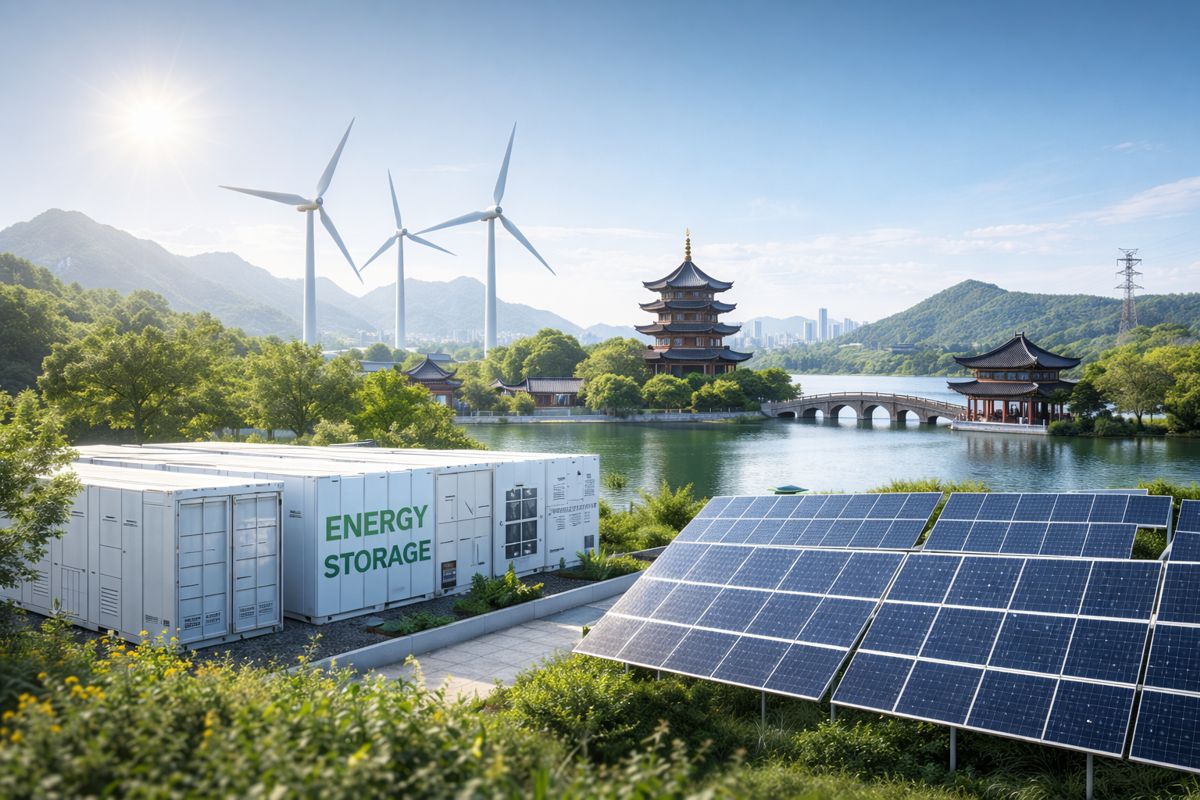
Energy storage has quietly become one of the most critical components of modern infrastructure planning. As intermittent renewable generation expands, the ability to stabilise grids, balance demand and manage peak loads has shifted from an engineering challenge to a strategic necessity. Governments, utilities and investors are now treating storage capacity as a form of national infrastructure, comparable in importance to transmission networks or transport corridors.
This shift has direct implications for the construction and infrastructure sectors. Grid-scale battery installations, energy storage hubs and integrated renewable projects are becoming core elements of infrastructure investment programmes across Asia, Europe and North America. The technologies showcased at CLNB 2026 reflect this evolution, with a strong emphasis on scalability, durability and lifecycle efficiency rather than incremental performance gains alone.
The focus on storage also intersects with industrial policy. Countries seeking to localise clean energy supply chains are increasingly scrutinising access to materials, recycling capabilities and manufacturing capacity. Events such as CLNB 2026 provide a rare opportunity to examine how these priorities align across regions, and where tensions may emerge between supply security, cost and sustainability.
Mapping the Full Battery and Energy Storage Value Chain
One of the defining characteristics of CLNB 2026 is its deliberate coverage of the entire battery and energy storage value chain. Rather than isolating individual technologies, the exhibition is structured around five interconnected zones designed to reflect the real-world interdependencies shaping the industry.
The Innovative Battery Zone focuses on next-generation battery technologies, including solid-state and high-energy-density solutions. These developments are increasingly viewed as enablers for heavy-duty transport, grid-scale storage and industrial applications where safety, longevity and performance are non-negotiable. Their progress has implications well beyond consumer electronics, influencing how infrastructure assets are designed and financed.
The Mining and Raw Materials Zone addresses one of the most sensitive aspects of the clean energy transition. As demand for lithium, nickel, cobalt and other critical minerals accelerates, questions around ESG compliance, supply concentration and geopolitical exposure have moved to the forefront. By highlighting mineral suppliers with sustainability credentials, the exhibition reflects a broader industry effort to reconcile growth with responsible sourcing.
Advanced materials, including cathodes, anodes and electrolytes, occupy a dedicated zone that speaks directly to performance, cost and manufacturability. Incremental improvements in materials science can translate into substantial gains at system level, particularly for large infrastructure projects where efficiency losses scale rapidly.
Battery recycling and closed-loop systems form another core pillar. As early generations of batteries reach end-of-life, recycling capacity is becoming a strategic asset rather than a regulatory afterthought. Efficient material recovery not only reduces environmental impact but also mitigates exposure to volatile raw material markets.
The Integrated Energy Solutions Zone brings these strands together, focusing on grid-scale storage, renewable integration and system-level optimisation. This is where technology meets infrastructure planning, and where the implications for utilities, cities and industrial operators become most tangible.
Industry Leadership and Policy Signals from the Global Market
Beyond the exhibition floor, CLNB 2026 places significant emphasis on knowledge exchange through more than ten high-level forums featuring over 130 industry leaders. These sessions span battery technologies, mining, new energy systems and applied technologies, reflecting the increasingly blurred boundaries between sectors.
For infrastructure stakeholders, these discussions provide more than technical insight. Policy signals, regulatory trends and market forecasts shared by senior executives and experts often influence investment decisions long after the event concludes. In a sector where capital allocation is closely tied to long-term policy stability, the ability to interpret these signals carries real commercial value.
The international composition of speakers and delegates also highlights the globalisation of the clean energy supply chain. While regional priorities differ, common challenges around cost reduction, scalability and sustainability create shared ground for collaboration. The forums are positioned as spaces where these convergences and divergences can be examined candidly.
Commercial Connectivity Through Structured Business Matching
In an industry characterised by long development cycles and complex supplier relationships, informal networking alone rarely delivers tangible outcomes. CLNB 2026 addresses this through a structured programme of more than 120 one-on-one business matchmaking meetings, involving purchasing delegations from over 30 countries and regions.
These sessions are designed to connect exhibitors with buyers efficiently, reducing the friction typically associated with cross-border sourcing. For manufacturers and suppliers, the opportunity to engage directly with procurement decision-makers can accelerate market entry and partnership formation. For buyers, it offers a more transparent view of supplier capabilities and reliability.
The emphasis on efficiency reflects broader changes in how industrial partnerships are formed. As supply chains become more scrutinised and lead times more critical, structured engagement is increasingly favoured over speculative outreach.
Media Reach and the Visibility Economy of Clean Energy
Visibility remains a powerful currency in the clean energy sector, particularly as competition intensifies across technologies and regions. CLNB 2026 leverages partnerships with more than 100 media outlets, alongside Shanghai Metals Market’s extensive cross-channel reach, to amplify exposure for participating companies.
For infrastructure and technology firms, this level of visibility is not merely about brand recognition. Media coverage influences investor perception, policy engagement and talent attraction, all of which feed into long-term competitiveness. The event’s multi-platform approach reflects an understanding that influence now extends well beyond the exhibition hall.
The emphasis on content diversity, from technical reporting to market analysis, also aligns with the information needs of a global audience that spans engineers, financiers and policymakers.
Reducing Risk Through Vetted Supply Chain Access
Supply chain reliability has emerged as a defining concern for infrastructure projects worldwide. Delays, quality issues and supplier failures can derail projects with significant economic and political consequences. CLNB 2026 addresses this through access to a Tier 1 Supplier List curated by Shanghai Metals Market.
Suppliers included in this list are evaluated against criteria such as production capacity, quality standards, reliability and market reputation. For buyers, this vetting process reduces procurement risk and shortens due diligence timelines. In an environment where speed and certainty increasingly matter, such mechanisms can offer a competitive edge.
The approach also reflects a broader trend towards transparency and accountability within industrial supply chains, driven by both regulatory pressure and investor scrutiny.
Factory Tours and Ground-Level Insight into Manufacturing Capability
While exhibitions and forums provide strategic perspective, first-hand exposure to manufacturing operations often delivers the most tangible insight. CLNB 2026 complements its formal programme with exclusive factory tours to leading Chinese battery manufacturers.
These visits offer participants a direct view of production processes, quality control systems and innovation practices. For infrastructure developers and investors, such insight can inform assessments of supplier capability and scalability. The opportunity to engage directly with technical teams adds depth to relationships that might otherwise remain transactional.
In a global market where manufacturing excellence increasingly differentiates winners from laggards, this behind-the-scenes access carries practical value.
A Strategic Platform for the Next Phase of Energy Infrastructure
CLNB 2026 positions itself as more than a trade event. By bringing together mineral sourcing, materials science, manufacturing, recycling and system integration under one roof, it reflects the interconnected nature of the modern clean energy ecosystem. For construction, infrastructure and industrial stakeholders, the event offers a lens through which to understand how technological progress, policy direction and commercial strategy are converging.
As the energy transition moves from ambition to implementation, platforms that facilitate this level of integration are likely to play a growing role in shaping outcomes. CLNB 2026 sits squarely within this space, offering participants the opportunity to engage with the forces redefining energy infrastructure at a global scale.