Offshore Energy Supply Chains Converge in Shanghai for OEEG 2026
The global offshore energy sector is entering a decisive period. Investment is shifting, project pipelines are expanding into deeper waters, and supply chains are being reconfigured under pressure from decarbonisation targets and geopolitical realities.
The 2026 OEEG Offshore Energy and Equipment Global Conference will take place from 17 to 19 November 2026 at the Shanghai World Expo Exhibition & Convention Center, positioning itself as a focal point for industry alignment at a time when coordination is no longer optional.
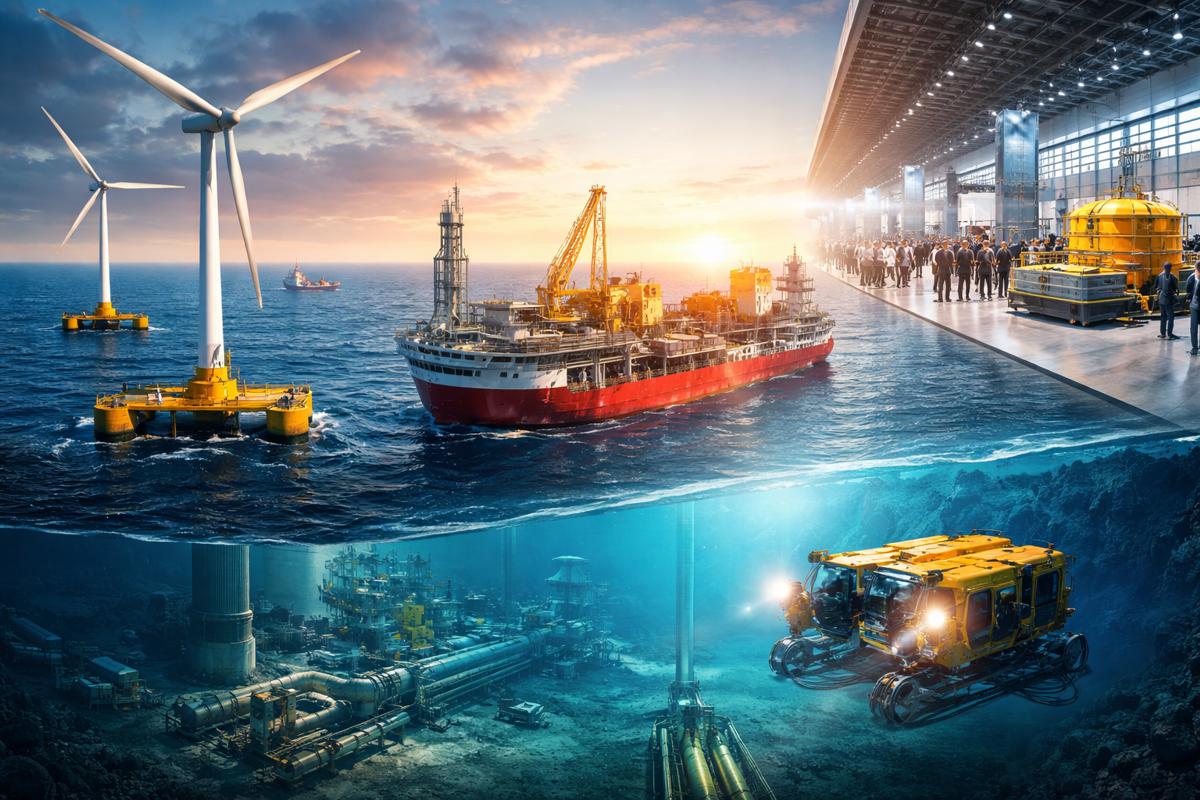
Co-hosted by the Shanghai Association of Shipbuilding Industry, the China Offshore Deepsea Industry Alliance and CDMC, the event brings together stakeholders spanning offshore oil and gas, floating wind, subsea engineering and maritime infrastructure. Its timing reflects broader shifts in the energy mix, where offshore wind capacity is scaling rapidly while hydrocarbons remain essential to energy security in many regions.
The Asia-Pacific region, and China in particular, has become a cornerstone of offshore engineering. According to the International Energy Agency, offshore wind alone is expected to grow significantly through the 2030s, with Asia accounting for a substantial share of new installations. That growth relies heavily on shipbuilding capacity, fabrication yards, specialised vessels and integrated supply chains, all areas where regional players have built considerable strength. It is this industrial depth that gives the Shanghai gathering its strategic weight.
Briefing
- The 2026 OEEG Offshore Energy and Equipment Global Conference will take place 17 to 19 November in Shanghai
- The event focuses on supply chain integration, international collaboration and technological advancement
- It includes strategic forums, technical seminars, a full-chain exhibition and targeted business matchmaking
- Offshore wind, floating production systems and deep-sea technologies form core thematic areas
- The conference reflects broader global shifts in offshore energy investment and industrial capability
Supply Chain Realignment Drives Strategic Dialogue
Offshore energy projects have always depended on complex, international supply chains. What has changed is the scale and urgency. Floating wind platforms, subsea systems and LNG infrastructure demand coordination across multiple continents, often under tight timelines and regulatory scrutiny. Disruptions over recent years have exposed vulnerabilities, prompting companies to rethink sourcing strategies, localisation and risk management.
The Shanghai conference places this issue front and centre. One of its primary themes is the restructuring of offshore engineering supply chains, with dedicated forums examining procurement models, supplier integration and regional manufacturing ecosystems. Discussions are expected to address how companies can balance cost efficiency with resilience, particularly as projects move into harsher environments and deeper waters.
There is also a growing emphasis on standardisation and interoperability. As offshore wind scales globally, developers are seeking ways to streamline design, fabrication and installation processes. That requires closer collaboration between turbine manufacturers, vessel operators, fabricators and engineering firms. Events like OEEG provide a platform for those conversations, bringing technical and commercial stakeholders into the same room.
Offshore Wind and Floating Technologies Take Centre Stage
Offshore wind continues to dominate the energy transition narrative, and its influence is evident across the conference agenda. Dedicated sessions such as the Floating Wind Energy Forum and the AI plus Offshore Wind Energy Forum highlight the sector’s rapid evolution. Floating wind, in particular, is gaining traction as developers look to unlock deeper water sites with stronger and more consistent wind resources.
According to the Global Wind Energy Council, floating wind capacity could increase substantially over the next decade, driven by projects in Europe and Asia. However, scaling this technology presents engineering and logistical challenges, from mooring systems to installation vessels and grid integration. The Shanghai event offers a venue for addressing these issues through both technical seminars and strategic discussions.
At the same time, traditional offshore oil and gas remains a significant part of the programme. Forums covering FPSO, FLNG and FSRU systems reflect continued investment in floating production and storage solutions. These assets are increasingly being designed with decarbonisation in mind, incorporating electrification, carbon capture readiness and digital monitoring systems to reduce emissions and improve efficiency.
Deep-Sea Innovation and Subsea Engineering Expand the Frontier
Beyond energy generation, the offshore sector is pushing further into deep-sea exploration and infrastructure. The conference’s technical seminars include sessions on underwater technology, deep-sea mining and research vessels, all of which point to expanding industrial activity below the surface.
Deep-sea operations demand highly specialised equipment and advanced materials capable of withstanding extreme pressure and corrosive environments. Innovations in robotics, autonomous systems and sensor technology are enabling more precise and safer operations. These developments are not confined to energy extraction but extend to telecommunications, environmental monitoring and scientific research.
There is also increasing scrutiny around environmental impact. Deep-sea mining, for example, has sparked debate over ecological risks and regulatory frameworks. Industry gatherings such as OEEG provide a forum for balancing commercial ambition with environmental responsibility, bringing regulators, operators and researchers into dialogue.
Exhibition Reflects Full Industrial Chain Integration
Running alongside the conference is the third OEEG Global Offshore Engineering Chain Exhibition, which aims to showcase the breadth of the offshore ecosystem. The exhibition is structured into six zones, covering everything from oil and gas exploration equipment to offshore wind technologies, subsea systems and core components.
This full-chain approach mirrors how offshore projects are delivered in practice. No single company can execute these projects in isolation. Fabrication yards, equipment manufacturers, logistics providers and service companies all play interdependent roles. By presenting these segments together, the exhibition highlights the interconnected nature of the industry.
For suppliers, it offers visibility in a competitive market. For developers and contractors, it provides a consolidated view of available technologies and partners. In an environment where project timelines are tightening and margins are under pressure, such efficiency can be a decisive advantage.
Data, Intelligence and Project Mapping Gain Importance
One notable feature of the event is its focus on data-driven decision-making. The release of industry reports, supplier directories and global project maps reflects a growing demand for actionable intelligence in offshore development.
As projects become more capital intensive, investors and operators require clearer visibility into market trends, regional opportunities and supply chain capabilities. Reports presented at the conference are expected to cover areas such as supply chain evolution, floating offshore engineering and regional investment patterns.
This aligns with a broader shift towards digitalisation in the offshore sector. From predictive maintenance to digital twins, data is increasingly central to project planning and execution. By integrating research outputs into the event, OEEG reinforces the link between information and investment decisions.
Business Matchmaking and International Partnerships
While technical content is a major draw, the commercial dimension of the conference is equally significant. Structured matchmaking sessions, procurement briefings and one-to-one meetings are designed to facilitate direct business engagement.
For international companies, the Asia-Pacific market presents both opportunity and complexity. Local partnerships are often essential for navigating regulatory frameworks, accessing supply chains and securing project participation. The conference’s matchmaking activities aim to bridge these gaps, connecting global firms with regional stakeholders.
There is also a strong emphasis on cross-regional cooperation. Forums focused on China-Latin America and China-Southeast Asia collaboration reflect growing investment flows between these regions. Offshore energy projects are increasingly global in scope, with financing, engineering and supply chains spanning multiple continents.
Decarbonisation Pressures Reshape Offshore Engineering
The offshore sector is under increasing pressure to reduce emissions, not only in energy production but across the entire project lifecycle. This includes vessel operations, fabrication processes and logistics. Decarbonisation forums at the conference are expected to explore strategies for achieving these goals without compromising project viability.
Technologies such as electrified vessels, alternative fuels and digital optimisation are gaining traction. At the same time, regulatory frameworks are evolving, with stricter emissions standards and reporting requirements. Companies that can adapt quickly stand to gain a competitive edge.
The integration of renewable and conventional offshore energy is another emerging theme. Hybrid projects that combine wind, hydrogen production and traditional hydrocarbons are being explored as a way to balance energy security with sustainability. Events like OEEG provide a platform for examining these complex, multi-faceted developments.
A Platform Reflecting Industry Transition
The 2026 OEEG Offshore Energy and Equipment Global Conference arrives at a moment when the offshore sector is redefining itself. It is no longer solely about extracting resources from beneath the sea. It is about managing a diverse portfolio of energy sources, technologies and partnerships in an increasingly interconnected world.
By bringing together strategic discussions, technical expertise and commercial engagement, the Shanghai event reflects the direction in which the industry is heading. It offers a snapshot of a sector in transition, shaped by innovation, collaboration and the practical realities of delivering large-scale offshore projects.
Registration for the event is now open, with organisers positioning it as a key meeting point for companies seeking to navigate the next phase of offshore development. As the industry continues to evolve, gatherings of this scale and scope are likely to play an increasingly important role in shaping its future.