Resourcing Tomorrow 2026 Sets the Stage for Delivery in a Changing Resource Landscape
The global mining and resources sector is entering a decisive phase. Demand is surging, not just incrementally, but structurally, driven by electrification, digital infrastructure, defence priorities and the reshaping of global supply chains.
Resourcing Tomorrow 2026, taking place in London from 1 to 3 December, is positioning itself less as a forum for discussion and more as a platform for execution.
The newly announced agenda, themed “Beyond the Echo Chamber: Turning Talk Into Action,” signals a deliberate shift in tone. For years, the industry has been adept at identifying challenges and debating pathways forward. Now, with capital intensifying and geopolitical pressures mounting, the emphasis is firmly on delivery. As Nick Rastall, Portfolio Director, puts it: “The industry has proven it can talk. Now, the focus shifts to execution.”
Briefing
- Focus shifts from industry dialogue to measurable delivery across mining and resources
- Agenda centres on critical minerals, geopolitics, capital allocation and supply chain resilience
- Strong emphasis on aligning policy, investment and technology for long-term infrastructure needs
- New features include an Innovation Hub and expanded government engagement platforms
- Event connects global stakeholders to accelerate project readiness and operational performance
A Sector Under Pressure to Deliver
Mining has moved from being a background industry to a strategic pillar of national and economic security. The rise in demand for critical minerals such as lithium, copper, nickel and rare earths is closely tied to the global energy transition, which agencies like the International Energy Agency have identified as a major driver of mineral consumption growth over the coming decades.
At the same time, digitalisation is creating an entirely new layer of demand. Data centres, AI infrastructure and electrified transport systems are consuming vast quantities of materials, often sourced from increasingly complex and politically sensitive supply chains. Add to that the resurgence in defence spending across NATO-aligned countries and beyond, and the pressure on mining to deliver secure, scalable supply has never been greater.
Resourcing Tomorrow 2026 reflects this reality. Its agenda doesn’t simply catalogue trends; it focuses on the mechanisms required to turn strategy into tangible outcomes. That includes financing models, regulatory frameworks and operational capabilities that can withstand long project timelines and volatile market conditions.
Bridging the Execution Gap
One of the central themes of the 2026 programme is the persistent gap between ambition and implementation. The industry has no shortage of commitments, from net-zero targets to supply chain diversification strategies. The challenge lies in translating those commitments into projects that are permitted, funded and operational.
This is where alignment becomes critical. Mining projects are inherently multi-stakeholder endeavours, involving governments, investors, original equipment manufacturers and local communities. Misalignment at any stage can delay or derail progress entirely. Resourcing Tomorrow aims to bring these groups into closer coordination, creating an environment where policy and capital are better synchronised with operational realities.
The agenda’s focus on “From Dialogue to Delivery” underscores this point. It highlights the need for practical solutions rather than theoretical frameworks, encouraging participants to engage with the constraints that define real-world project development.
The Geopolitics of Critical Minerals
Few areas illustrate the changing dynamics of the sector more clearly than critical minerals. Governments are increasingly defining certain materials as strategic assets, linking them directly to national security and industrial policy.
In the United States, the U.S. Department of Energy has expanded its list of critical materials, while the European Union has introduced its Critical Raw Materials Act to reduce dependency on external suppliers. Similar initiatives are emerging in Australia, Canada and across Asia.
Resourcing Tomorrow 2026 will explore how these policies are reshaping global trade flows and investment patterns. Questions around mineral sovereignty, value addition and supply chain resilience are no longer abstract. They are influencing where projects are developed, how they are financed and who ultimately controls production.
This shift also raises complex questions about market access and collaboration. While countries seek greater independence, the mining industry remains inherently global, relying on cross-border partnerships to function effectively.
Capital Allocation in a Long-Cycle Industry
Mining projects are capital-intensive and often take years, if not decades, to move from exploration to production. That long horizon can deter investment, particularly in uncertain economic conditions.
Yet, the scale of demand means capital must flow. According to analysis from organisations such as the World Bank, achieving global climate goals will require a significant increase in mineral production, particularly for energy transition technologies.
Resourcing Tomorrow’s focus on capital allocation addresses this challenge head-on. The agenda examines how investment can be deployed more effectively across the value chain, from early-stage exploration to processing and refining. It also considers the role of public-private partnerships and innovative financing mechanisms in reducing risk and unlocking new opportunities.
By bringing investors into direct dialogue with project developers and policymakers, the event aims to create a more coherent investment landscape, one that supports both short-term returns and long-term sustainability.
Innovation Moves from Concept to Application
Technological innovation has long been touted as a solution to many of the industry’s challenges, from improving productivity to reducing environmental impact. However, adoption has often been uneven, with promising technologies struggling to scale.
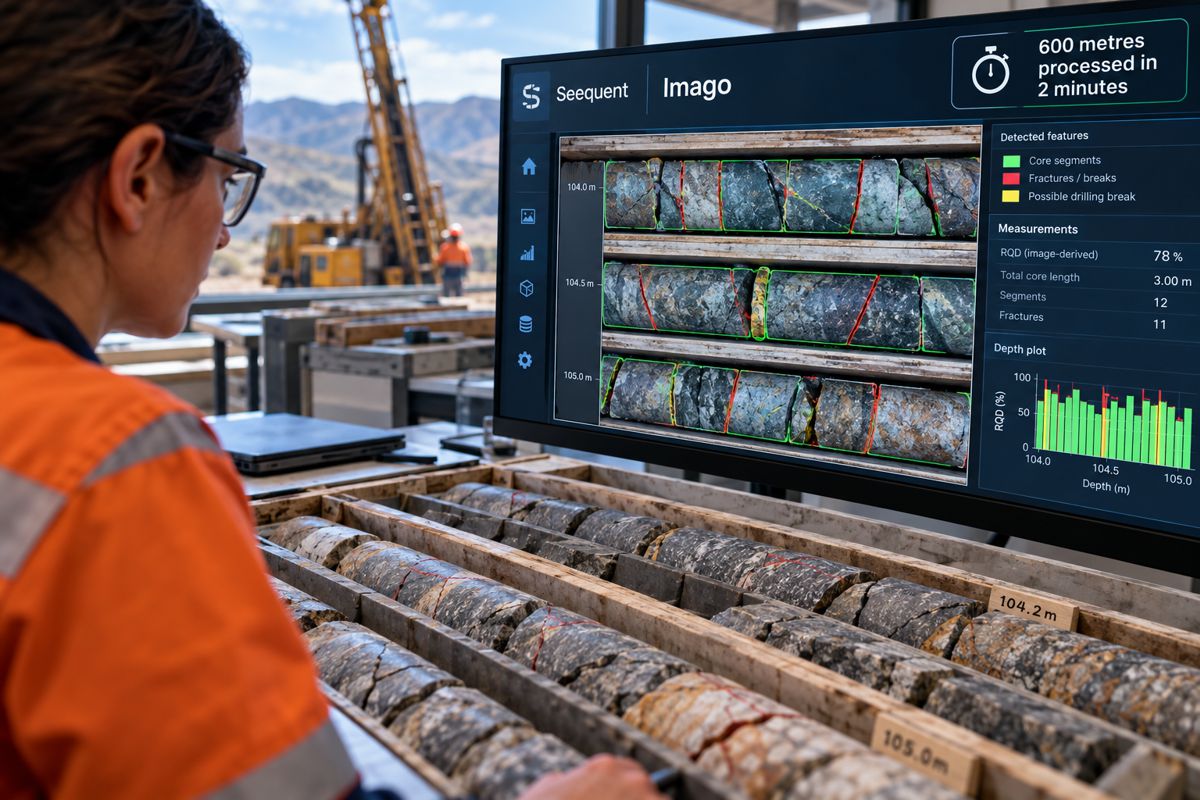
The introduction of the Innovation Hub at Resourcing Tomorrow 2026 is designed to address this gap. By showcasing technologies across exploration, processing, automation and sustainability, the Hub provides a space for practical engagement rather than abstract discussion.
This is particularly relevant in areas such as artificial intelligence and automation, where the potential benefits are significant but require integration into existing workflows. Mining companies are increasingly looking to digital tools to optimise operations, reduce costs and enhance safety, but successful implementation depends on collaboration between technology providers and end users.
The emphasis on live demonstrations and direct interaction reflects a broader shift towards experiential learning, allowing stakeholders to evaluate technologies in a more tangible context.
Sustainability Reframed for Operational Reality
Sustainability remains a central concern, but the conversation is evolving. Rather than focusing solely on compliance and reporting, there is growing interest in how sustainability can be embedded into core operational processes.
The concept of “Sustainability 2.0” within the event’s agenda captures this shift. It suggests a move towards more disruptive thinking, exploring how mining processes themselves can be reimagined to reduce environmental impact while maintaining economic viability.
This includes advances in energy efficiency, water management and waste reduction, as well as the integration of renewable energy into mining operations. It also reflects increasing scrutiny from investors and regulators, who are demanding more transparent and measurable outcomes.
Government and Industry in Closer Dialogue
Policy plays a decisive role in shaping the mining landscape. Permitting processes, environmental regulations and fiscal regimes all influence the feasibility of projects.
Resourcing Tomorrow’s expanded government engagement, including the Houses of Parliament Breakfast Briefing and the Government Roundtable, highlights the importance of direct dialogue between policymakers and industry leaders. These sessions provide a platform for addressing regulatory challenges and identifying opportunities for collaboration.
By situating these discussions within the context of London Mining Week, the event reinforces its role as a bridge between policy and practice, connecting decision-makers at multiple levels.
Building the Next Generation of the Industry
While much of the focus is on current challenges, the future workforce remains a critical factor. The Next Generation Programme aims to connect students and early-career professionals with the mining sector, providing exposure to industry opportunities and encouraging new talent to enter the field.
This is particularly important as the industry faces a skills gap in areas such as engineering, digital technologies and environmental management. Attracting and retaining talent will be essential to sustaining growth and innovation over the coming decades.
Connecting Capital, Capability and Policy
Resourcing Tomorrow 2026 brings together a wide range of stakeholders, from miners and investors to governments and technology providers. Its role is not simply to facilitate conversation, but to enable connections that lead to action.
The inclusion of features such as Mining Pitch Battles, regional pavilions and leadership roundtables reflects a deliberate effort to create opportunities for collaboration. These formats encourage participants to engage directly with projects, technologies and investment opportunities, rather than remaining in theoretical discussions.
In doing so, the event positions itself as a catalyst for progress, helping to align the various elements required to deliver the next phase of the mining sector’s development.
A Practical Path Forward for Global Resources
As the industry navigates a period of significant change, the need for clarity and coordination has become more pressing. Resourcing Tomorrow 2026 acknowledges this reality, focusing on the practical steps required to move from ambition to achievement.
The challenges facing the sector are complex and interconnected, spanning geopolitics, economics, technology and sustainability. Addressing them will require sustained collaboration and a willingness to adapt.
By centring its agenda on execution, the event reflects a broader shift within the industry. The conversation is no longer about what needs to be done, but how it will be delivered.