3D Printed Turbines Could Unlock America’s Hidden Hydropower Network
America’s ageing dam network may be sitting on one of the country’s most overlooked renewable energy opportunities. While solar farms and wind projects continue to dominate headlines and investment strategies, thousands of existing dams across the United States remain largely unused for electricity generation despite holding substantial untapped hydropower potential.
The numbers are difficult to ignore. Of roughly 90,000 dams spread across the country, fewer than three percent currently generate electricity. Yet around 51,000 of those structures are considered suitable for micro-hydropower systems capable of producing up to 100 kilowatts each. Combined, the untapped potential is estimated at around 29 gigawatts, enough to meaningfully support local energy resilience, remote infrastructure, agricultural operations and distributed grid stability.
The stumbling block has never been the physics. Small-scale hydropower is a mature technology with decades of operational history. The real problem has been economics. Unlike utility-scale projects where costs can be spread across massive energy output, micro-hydro installations are often highly site-specific. Variations in flow rates, water depth, seasonal conditions and civil infrastructure mean components frequently need custom engineering. That pushes manufacturing costs to levels many small projects simply cannot justify.
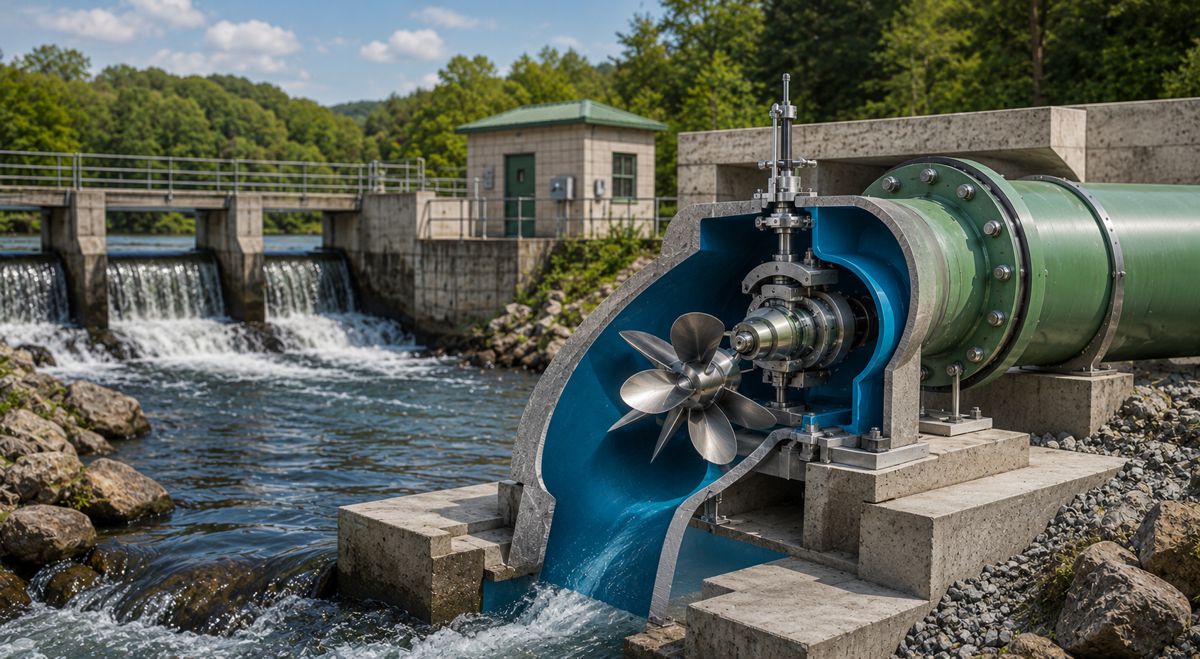
Now, a collaboration between Wisconsin-based startup Cadens and the U.S. Department of Energy’s Manufacturing Demonstration Facility at Oak Ridge National Laboratory is showing how additive manufacturing could dramatically reshape the economics of low-head hydropower systems. By combining standard industrial materials with large-scale 3D printing, the project demonstrates a pathway toward faster, cheaper and more adaptable turbine production without sacrificing durability or long-term performance.
Briefing
- Additive manufacturing is being used to lower the cost of custom micro-hydropower systems
- Around 51,000 U.S. dams are believed to have viable micro-hydropower potential
- Oak Ridge National Laboratory partnered with Cadens to develop 3D-printed turbine components
- A prototype Fixed-Kaplan S-turbine has operated continuously for more than six years
- The project could help accelerate distributed renewable energy deployment in rural and industrial regions
A Vast Renewable Energy Opportunity Hidden in Plain Sight
Hydropower has traditionally been associated with colossal infrastructure projects such as Hoover Dam or the Grand Coulee Dam. Yet small-scale hydropower has quietly remained one of the most dependable forms of renewable generation available, particularly for isolated communities, industrial facilities and water infrastructure operators.
Unlike solar and wind generation, hydropower can offer relatively stable output around the clock where water flows remain predictable. That consistency gives micro-hydro an important role in balancing local energy systems, especially in areas where grid reliability is becoming increasingly strained by rising electricity demand and climate-related disruptions.
In the United States alone, the Department of Energy has repeatedly highlighted the potential of “non-powered dams”, existing dam infrastructure that performs flood control, irrigation, navigation or water management functions without generating electricity. Retrofitting these structures avoids many of the environmental and permitting challenges associated with building entirely new dams.
Still, the economics have stubbornly resisted change. Traditional manufacturing approaches rely heavily on machining, casting and bespoke fabrication processes. For small hydro projects producing modest energy output, the upfront costs can quickly become prohibitive. Many installations simply never progress beyond feasibility studies. That economic barrier is precisely where additive manufacturing enters the picture.
Reimagining Turbine Manufacturing Through Additive Technology
Cadens had already developed its “Turbine Builder” software platform to simplify hydropower system specification and design. The software could configure systems tailored to specific site conditions, but manufacturing remained a bottleneck. Producing robust components economically, particularly for varied and changing environments, proved difficult using conventional fabrication methods.
The company partnered with Oak Ridge National Laboratory’s Manufacturing Demonstration Facility to explore whether large-scale additive manufacturing could close the gap between customisation and affordability.
Researchers quickly recognised that the answer did not lie in printing entire hydropower systems outright. Instead, the project focused on combining standardised industrial materials with selectively customised printed components. That balance between modularity and bespoke engineering became central to the project’s success.
A large PVC pipe was used as the primary waterway structure, reducing costs and simplifying installation logistics. Around that standardised core, specialised 3D-printed polymer components were developed to suit the exact dimensions and operating requirements of the system.
The approach dramatically reduced fabrication complexity while still allowing engineers to tailor designs to site-specific flow conditions.
Engineering Components Built for Harsh Conditions
Hydropower equipment lives a hard life. Components operate under constant water pressure, endure fluctuating temperatures and must survive years of continuous exposure to moisture, debris and sediment. Any additive manufacturing solution would need to prove long-term durability, not simply rapid prototyping capability.
One of the most significant developments involved the draft tube, a critical component used to maximise turbine efficiency by recovering kinetic energy from water exiting the turbine runner.
Researchers manufactured the draft tube in two sections using 20 percent carbon-fibre reinforced acrylonitrile-butadiene-styrene polymer, more commonly known as ABS. The two halves were sealed together to create a single 688-pound structure capable of handling operational loads while maintaining structural integrity.
For the runner housing, the engineering challenge became even more precise. Turbine housings demand tight tolerances to ensure hydraulic efficiency and minimise performance losses. Rather than directly printing the final component, researchers opted to print a highly accurate mould which was subsequently used to cast the housing in fibreglass.
The finished housing then underwent CNC machining and spray-coat sealing to achieve the required dimensional accuracy and environmental protection.
This hybrid manufacturing strategy reflects a growing trend across industrial sectors. Rather than viewing additive manufacturing as a complete replacement for traditional production, engineers are increasingly combining digital fabrication with established manufacturing techniques to improve efficiency, reduce tooling costs and accelerate deployment.
Big Area Additive Manufacturing Comes of Age
The project also highlights the growing maturity of large-format additive manufacturing technologies within heavy industry applications.
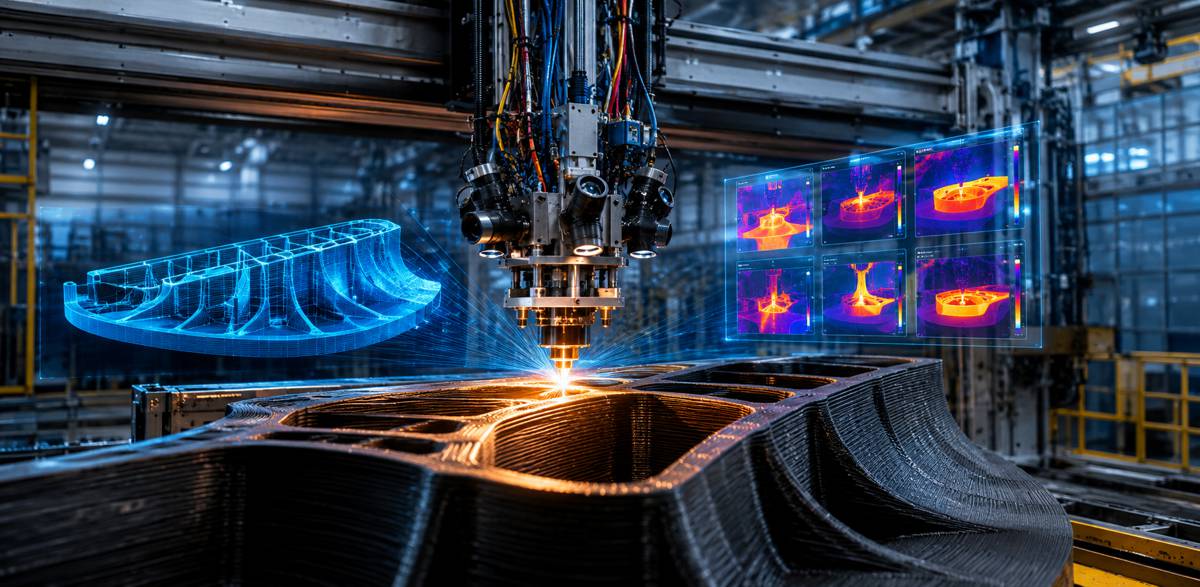
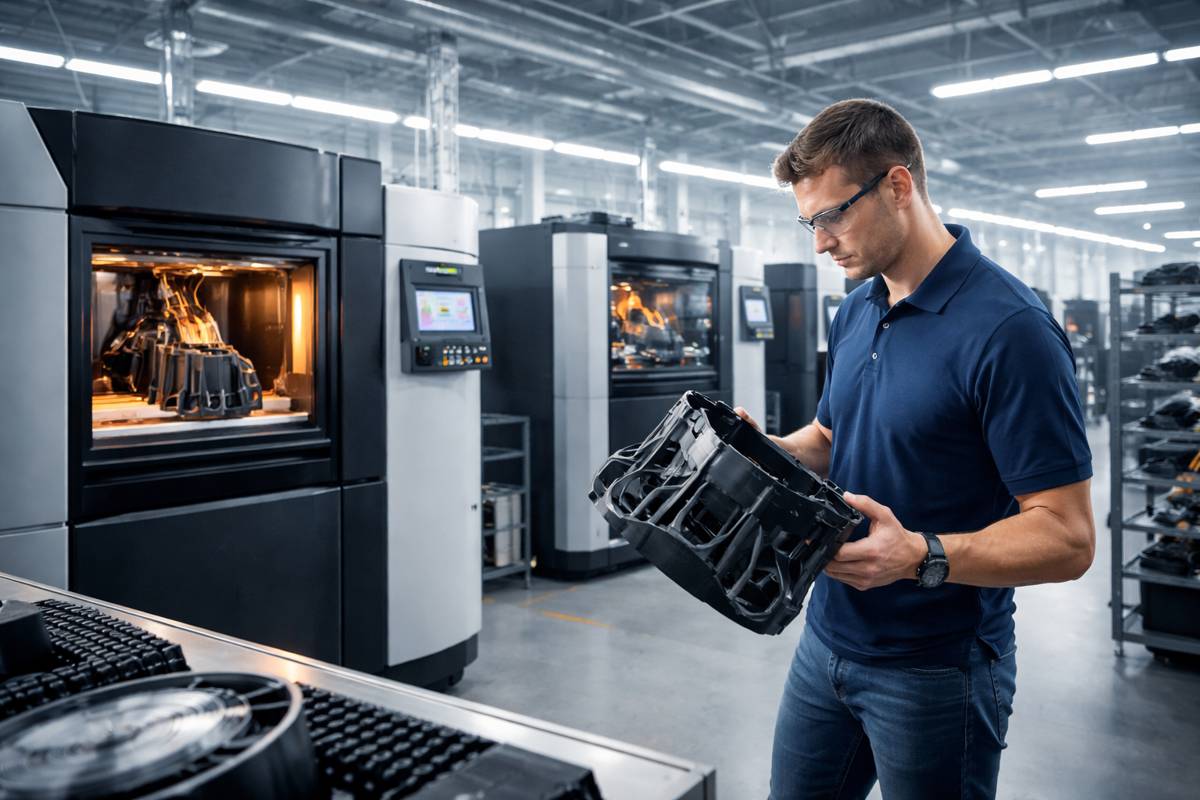
Researchers used big area additive manufacturing systems, advanced computer-aided design workflows and a 3D Platform Workbench 400 Series System to fabricate critical components including pipe supports, PVC end fittings, wall thimbles and the runner system itself for the Fixed-Kaplan S-turbine.
Large-scale additive manufacturing has evolved rapidly during the past decade, particularly at Oak Ridge National Laboratory, which has become a global centre for industrial-scale 3D printing research. Initially associated primarily with prototyping and aerospace experimentation, the technology is now increasingly being applied to tooling, construction systems, transport infrastructure and energy components.
The attraction is straightforward. Traditional manufacturing often demands expensive tooling, long lead times and large minimum production runs. Additive manufacturing allows engineers to produce low-volume customised parts without incurring those penalties.
For industries such as micro-hydropower, where every installation may require slightly different dimensions or flow configurations, that flexibility changes the commercial equation entirely.
Six Years of Continuous Operation Provides Real World Proof
Laboratory success means little without operational validation, particularly in infrastructure sectors where equipment is expected to operate reliably for decades.
The Cadens prototype has now operated continuously for more than six years at the company’s Wisconsin facility, generating long-term performance data and supporting ongoing research into turbine efficiency, material durability and system optimisation.
That longevity matters enormously. Many emerging energy technologies struggle to move beyond pilot demonstrations because durability concerns undermine investor confidence. Continuous operation over such a long period provides a far stronger indication that additive manufacturing can meet the demands of real-world infrastructure deployment.
The testbed has also evolved into a broader research platform supporting investigations into material performance, simulation model refinement and energy storage integration. Researchers continue examining how turbine systems can better manage debris, resist biofouling and maintain performance under varying environmental conditions.
These operational insights are particularly valuable for remote installations where maintenance access may be limited and lifecycle reliability becomes critical to project economics.
Distributed Energy Systems Need Flexible Infrastructure
The broader significance of this project stretches beyond hydropower alone. Distributed energy systems are becoming increasingly important as governments and utilities seek to strengthen grid resilience while integrating more renewable generation.
Large centralised power stations still dominate electricity production, but decentralised energy infrastructure is gaining strategic importance. Rural communities, industrial facilities, agricultural operations and municipal water systems are all exploring localised generation technologies capable of reducing dependence on vulnerable transmission networks.
Micro-hydropower fits naturally within that transition because many sites already possess existing civil infrastructure. Irrigation canals, flood control systems, water treatment facilities and small dams all represent potential energy assets waiting to be utilised more effectively. Lower-cost manufacturing could unlock thousands of projects previously considered economically marginal.
There is also a wider industrial implication. Infrastructure sectors have often been slower than aerospace or automotive industries to adopt additive manufacturing technologies. Projects such as this demonstrate that digital manufacturing is no longer confined to niche experimentation. It is beginning to influence how core infrastructure systems are designed, fabricated and maintained.
Building Momentum for Next Generation Hydropower
Cadens continues refining the technology with an emphasis on scalability, cost reduction and adaptation to more demanding field conditions. Debris management and biofouling resistance remain major priorities, particularly for installations operating in rivers or heavily sedimented waterways.
At the same time, policymakers are paying closer attention to the role smaller renewable systems can play in national energy security strategies. Hydropower often receives less public attention than wind or solar, yet its ability to provide dependable baseload and balancing support makes it increasingly valuable as electricity systems become more complex.
The collaboration between Cadens and Oak Ridge National Laboratory illustrates how manufacturing innovation can revive technologies that have long been commercially constrained rather than technically impossible.
For decades, thousands of dams have quietly held unrealised energy potential because conventional production methods could not make small-scale systems financially viable. Additive manufacturing may finally be shifting that balance, turning overlooked infrastructure into a practical source of distributed renewable power.
As energy systems continue evolving, it’s becoming clear that the future of infrastructure will depend not only on new technologies, but also on smarter ways of building the equipment that supports them.