3D Printed Housing Gains Ground in Colombia’s Rural Construction Push
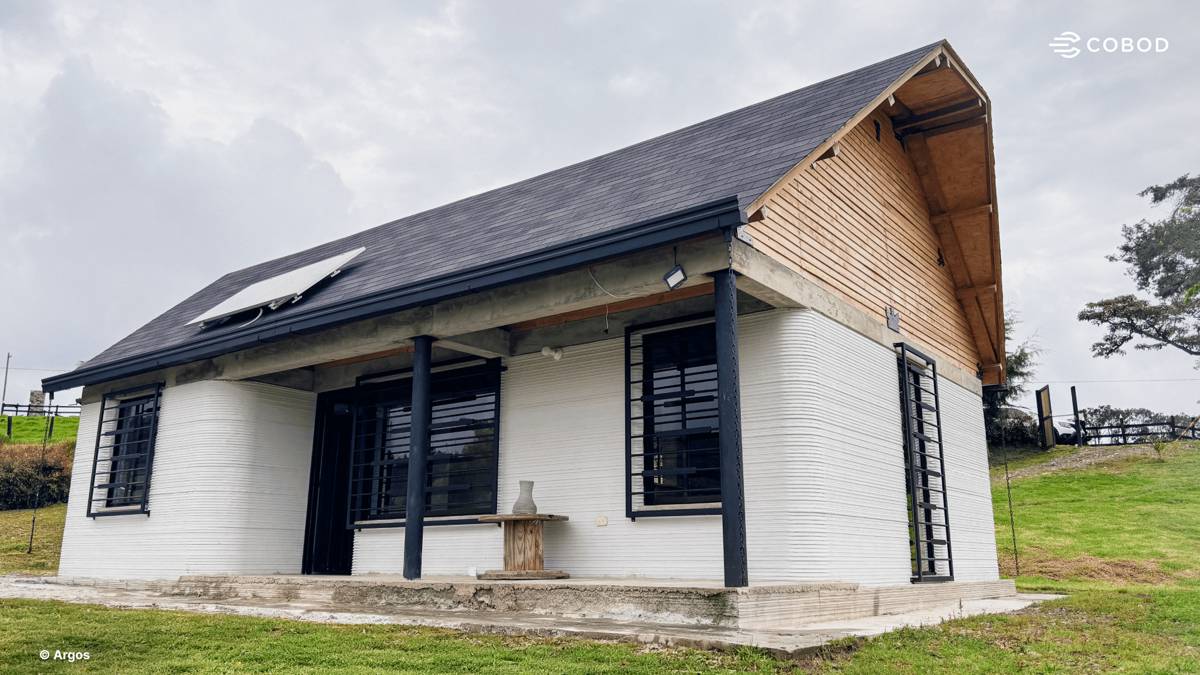
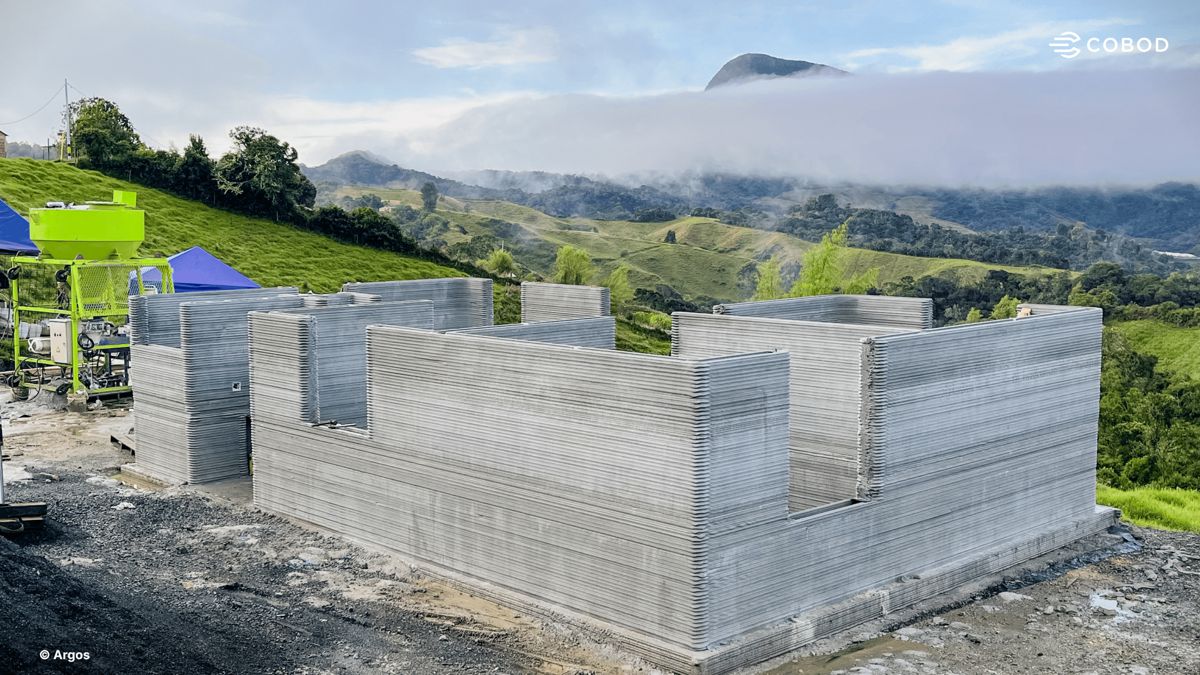
In the hills of La Unión, a modest pair of homes is quietly signalling a shift in how the construction industry might tackle one of its most persistent challenges. Built using large-scale additive manufacturing, these newly completed social houses mark one of the first real-world deployments of 3D construction printing for rural housing in South America.
The project, delivered by Cementos Argos using technology from COBOD International, offers a glimpse into a future where speed, efficiency and resilience are no longer trade-offs but aligned outcomes.
Completed with on-site printing over a matter of days, the two single-storey homes reflect a growing convergence between material science, digital fabrication and social infrastructure delivery. Each house spans 63 square metres and has been designed with the practical needs of families in mind, while also responding to the environmental and seismic realities of the region. It’s not a laboratory experiment or a one-off prototype. It’s housing that people are already moving into.
What makes this development stand out isn’t simply the novelty of robotic construction. Rather, it’s the measurable gains in efficiency and resource use, coupled with its direct application to affordable housing. With construction time reduced by roughly a third and material consumption trimmed significantly, the project demonstrates how emerging construction technologies are beginning to move beyond demonstration and into meaningful deployment.
Briefing
- 3D printed social housing completed in rural Colombia using large-scale robotic construction
- Construction time reduced by around 30 percent, with material use lowered by approximately 20 percent
- Specialised mortar mix delivers structural strength suitable for seismic environments
- Project demonstrates viability of 3D printing under challenging terrain and weather conditions
- Marks a step towards scalable, affordable housing solutions across South America
Accelerating Construction Without Compromising Quality
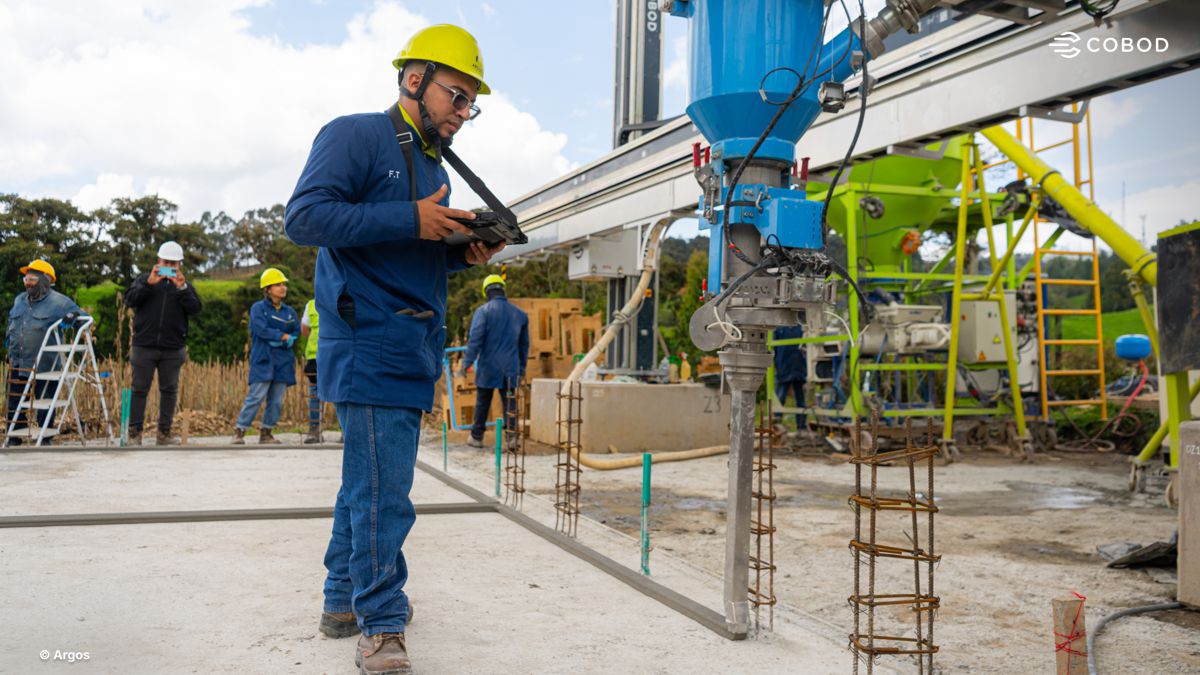
Speed has long been a defining constraint in construction, particularly in rural or logistically challenging regions. Traditional methods often rely on labour-intensive processes, fragmented supply chains and weather-dependent schedules. In contrast, the deployment of a BOD2 3D construction printer enabled the structural walls of both homes to be completed in just 16 hours of active printing time spread over three days.
This reduction in build time translates directly into cost savings and improved project viability, especially for social housing initiatives operating within tight financial constraints. Labour requirements are reduced, material waste is minimised and the overall construction timeline becomes more predictable. That predictability alone can be transformative for public and private stakeholders managing large-scale housing programmes.
Yet speed without durability would be a hollow gain. The project addresses this by combining digital precision with engineered materials designed to meet structural demands. Rather than cutting corners, the approach tightens control over execution, ensuring consistency in wall geometry, material placement and curing conditions. The result is a building envelope that meets performance expectations while being delivered faster than conventional masonry.
Material Innovation Driving Structural Performance
At the heart of the project lies a purpose-developed mortar mix engineered by Cementos Argos. Achieving compressive strength above 35 MPa and flexural strength of 8 MPa, the material provides the structural integrity required for housing in earthquake-prone regions. These figures place it comfortably within the range of conventional structural concrete used in residential construction.
What sets the mix apart is not only its strength but its composition. By incorporating calcined clay, the formulation reduces reliance on traditional clinker, one of the most carbon-intensive components of cement production. This aligns with a broader industry shift towards supplementary cementitious materials aimed at lowering embodied carbon without compromising performance.
Globally, the cement sector accounts for an estimated 7 to 8 percent of carbon dioxide emissions, according to data from the International Energy Agency. Innovations in material composition, such as the use of calcined clay and alternative binders, are increasingly seen as critical to decarbonising construction. In that sense, the Argos mix reflects not just a project-specific solution but part of a wider transition in construction materials.
COBOD’s open material platform also plays a role here, allowing contractors to adapt mixes based on locally available resources and environmental conditions. This flexibility is particularly relevant in emerging markets, where material supply chains can vary significantly and cost efficiency is paramount.
Building for Climate and Seismic Resilience
Colombia’s geography presents a complex set of challenges for housing development. From seismic activity along the Andean fault lines to high humidity and heavy rainfall in many regions, buildings must be designed to withstand a wide range of environmental stresses. The homes in La Unión have been engineered with these conditions in mind.
The layered printing process allows for controlled wall geometries that can enhance structural behaviour under load. Combined with the mechanical properties of the mortar mix, the resulting structures are designed to resist seismic forces while maintaining long-term durability. This is particularly important in rural housing, where maintenance resources may be limited and buildings must remain serviceable over extended periods.
Climate resilience is equally important. The construction process demonstrated that printing could continue uninterrupted even in humid, tropical conditions with periods of heavy rain. This ability to maintain productivity under adverse weather conditions offers a significant advantage over traditional methods, which often face delays and quality issues when exposed to similar environments.
Logistics and Deployment in Challenging Terrain
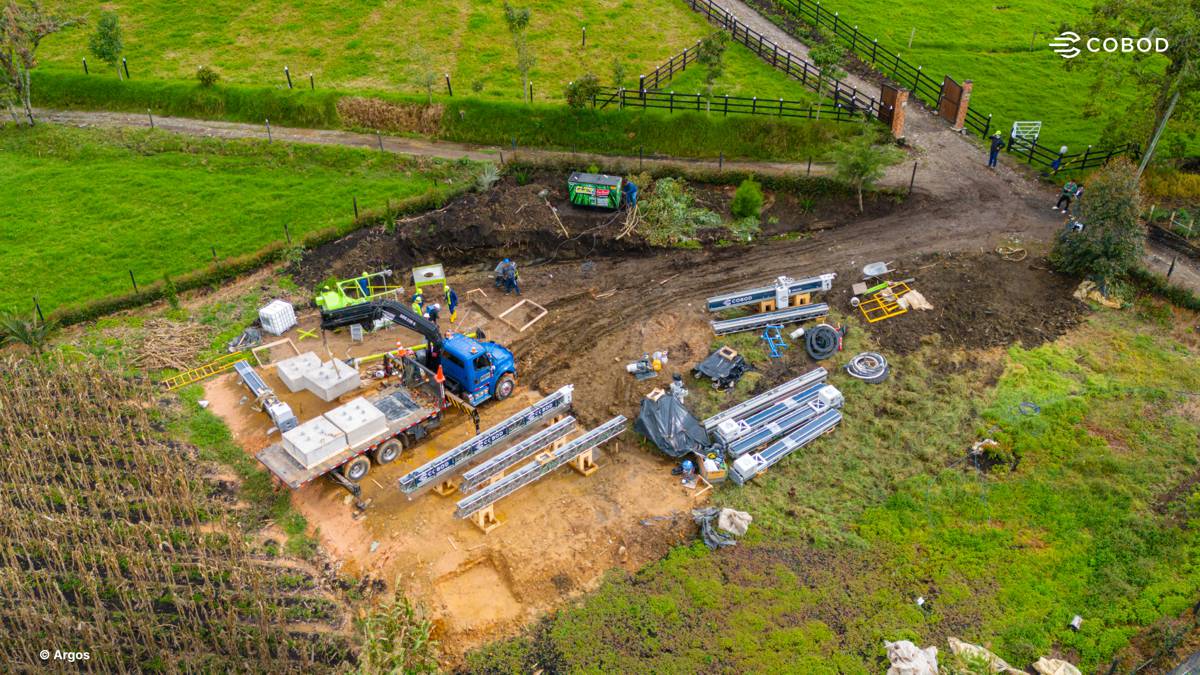
One of the less visible but equally significant aspects of the project lies in its logistics. Transporting and assembling a large-scale 3D printer in mountainous terrain is no small feat. The BOD2 system was delivered in multiple smaller loads using five trucks, enabling it to navigate narrow and winding rural roads.
Once on site, the printer was assembled and calibrated under real-world conditions, including variable ground stability and high humidity. This demonstrates that the technology is not confined to controlled environments or urban testbeds. It can be deployed in locations where infrastructure is limited, provided that planning and coordination are handled effectively.
This mobility opens up new possibilities for decentralised construction. Instead of transporting large volumes of prefabricated components or relying on extensive on-site labour, projects can bring the manufacturing capability directly to where it is needed. For regions with limited access to skilled labour or industrial facilities, this could prove to be a decisive advantage.
Addressing Housing Shortages Through Scalable Solutions
Colombia, like many countries in Latin America, faces a persistent housing deficit, particularly in rural and peri-urban areas. According to estimates from organisations such as the World Bank, millions of households across the region lack access to adequate housing, with deficits driven by population growth, urbanisation and economic inequality.
Projects such as the one in La Unión do not solve this challenge overnight, but they do provide a viable pathway towards scaling up delivery. By reducing construction time and material use, 3D printing can lower the overall cost per unit, making housing programmes more financially sustainable. When combined with public-private partnerships and social initiatives, the model becomes even more compelling.
The collaboration behind this project illustrates that point. Alongside Cementos Argos and COBOD, partners included social and community-focused organisations, local authorities and contractors. This multi-stakeholder approach ensures that technological innovation is aligned with social objectives, rather than operating in isolation.
From Demonstration to Deployment
What distinguishes this initiative from earlier experiments in 3D printed housing is its transition from proof of concept to practical application. Families have already received the keys and are moving into homes designed for everyday living. That shift, from prototype to occupancy, is a crucial milestone for any emerging construction technology.
“Through this project, we reaffirm our leadership in innovation and adoption of new construction methods, contributing to the development of sustainable products and solutions for the industry. Helping to close Colombia’s housing gap and making housing dreams a reality” said Juan Esteban Calle, President of Cementos Argos.
“It is inspiring to see 3D construction printing being used for social housing in rural Colombia. Cementos Argos has shown how our technology can be applied under challenging conditions to provide homes that are constructed faster, more affordable, and resilient. This project demonstrates the potential of 3D printing to address the housing needs of underserved communities across South America.” said Philip Lund-Nielsen, Co-Founder and Head of Americas at COBOD International.
These statements reflect a broader industry sentiment. Around the world, construction firms, technology providers and policymakers are exploring how additive manufacturing can be integrated into mainstream building practices. From pilot projects in Europe and North America to large-scale developments in Asia and the Middle East, the technology is gradually building a track record.
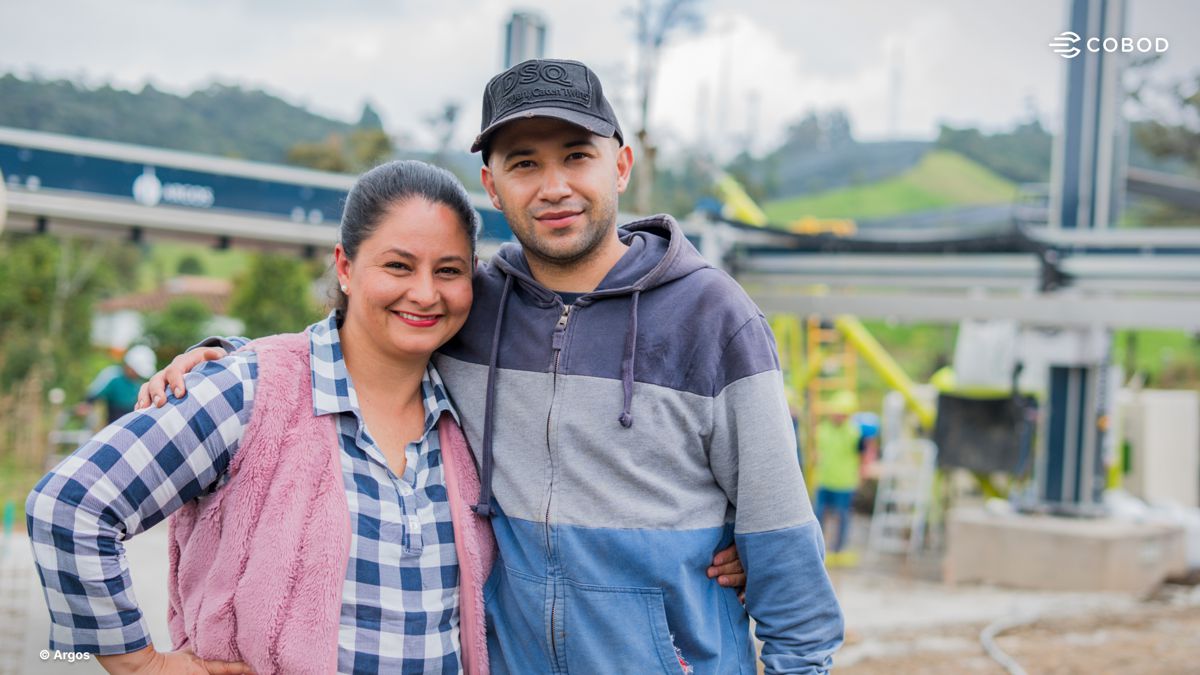
Future homeowners in La Unión, Colombia, in front of the COBOD BOD2 printer used to build their 3D printed home.
A Practical Step Towards Industrialised Construction
For decades, the construction sector has struggled with low productivity growth compared to other industries. Reports from institutions such as McKinsey & Company have repeatedly highlighted inefficiencies, fragmented processes and limited adoption of industrialised methods as key barriers to progress.
3D construction printing sits within a broader movement towards industrialisation, where digital design, automated production and advanced materials come together to streamline delivery. It doesn’t replace all aspects of construction, nor does it eliminate the need for skilled labour. Instead, it shifts the balance towards more controlled, repeatable and efficient processes.
In La Unión, that shift is already visible. What would once have taken weeks of manual work has been condensed into a matter of days, without sacrificing structural performance or design quality. For an industry under pressure to deliver more with less, that’s not just an incremental improvement. It’s a signal of change.
Expanding the Role of 3D Printing in Infrastructure
While the current project focuses on residential housing, the implications extend further. The same principles can be applied to a range of infrastructure assets, from small public buildings to elements of transport infrastructure. As materials and printer capabilities continue to evolve, the scope of applications is likely to broaden.
Cementos Argos has already indicated that it is evaluating additional opportunities for deploying this technology in rural housing projects. If scaled effectively, such initiatives could contribute to a more resilient and sustainable built environment, particularly in regions where conventional construction faces persistent challenges.
For now, the homes in La Unión stand as a tangible example of what’s possible. Not a futuristic concept, but a practical solution delivered under real conditions. It’s a reminder that innovation in construction doesn’t have to be abstract. Sometimes, it’s as simple as handing over the keys to a family and knowing the building behind that door was made differently.