Generative AI Moves Into Traffic Engineering With Miovision Mateo
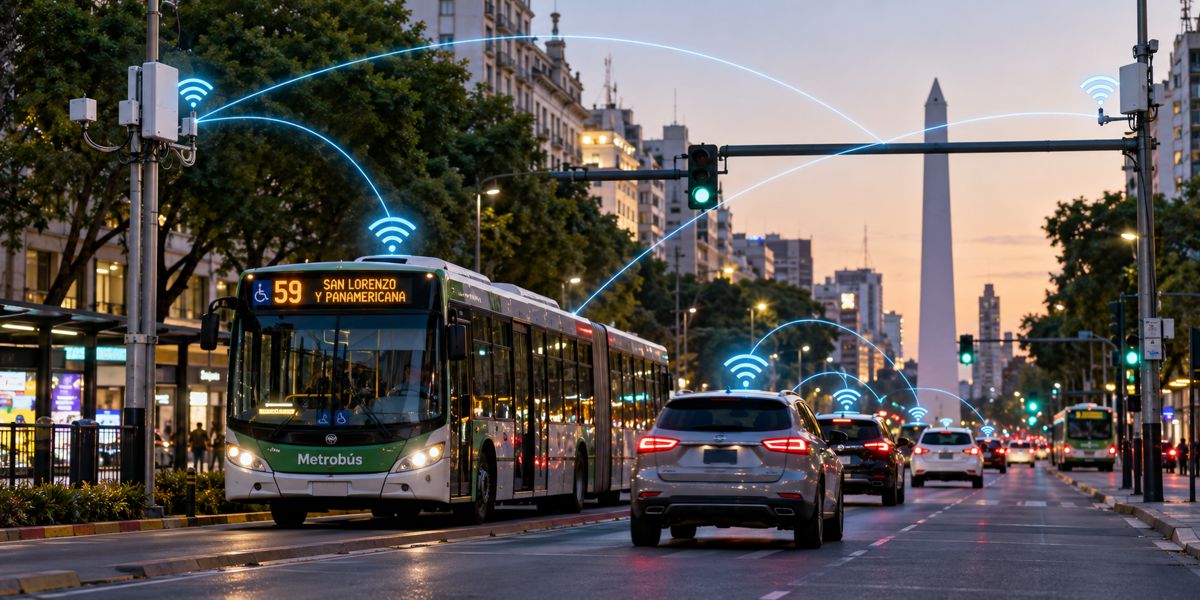
Traffic engineering has never suffered from a lack of data. If anything, the problem has been the opposite. Cities today are awash with telemetry from sensors, cameras, connected vehicles and signal controllers, yet much of that information sits fragmented across systems, waiting for someone to make sense of it. That bottleneck, quietly draining time and budgets, has become one of the defining operational challenges for modern transport departments.
Into that gap steps Miovision with the launch of Mateo, a purpose-built generative AI agent designed specifically for traffic engineering workflows. Rather than adding another dashboard to the pile, the system aims to remove friction altogether by allowing engineers to query complex traffic datasets through natural language and receive structured, audit-ready answers in seconds.
The timing is no coincidence. Cities are under pressure to deliver measurable improvements in safety, congestion and emissions, often with constrained resources. As infrastructure becomes more instrumented, the ability to extract meaningful insights quickly is shifting from a nice-to-have to a core operational requirement. Mateo’s arrival signals a broader shift in how infrastructure data may be consumed, analysed and ultimately acted upon.
Briefing
- Introduces a purpose-built generative AI agent tailored to traffic engineering and mobility operations
- Reduces data analysis time from weeks to minutes through conversational interaction
- Integrates with existing mobility platforms to unify fragmented datasets
- Provides audit trails and standards-based reasoning to support engineering decisions
- Demonstrates potential to reshape how cities justify investment and manage transport networks
A Data Problem Decades in the Making
For years, transport authorities have invested heavily in data collection. From inductive loops and radar sensors to video analytics and connected vehicle feeds, the volume of available information has grown exponentially. Yet turning that raw input into actionable insight remains labour-intensive, often requiring engineers to cross-reference multiple systems manually.
Research from the National Cooperative Highway Research Program highlights the scale of the issue. According to one study, 78 percent of traffic professionals report that modern performance measures demand excessive time to analyse and manage. That’s not a marginal inefficiency. It represents a structural constraint on how quickly cities can respond to congestion, safety risks or public complaints.
The consequence is familiar across the industry. Engineers spend hours compiling reports instead of optimising intersections. Data sits in silos, limiting its value. Decisions are delayed, not because of a lack of evidence, but because extracting that evidence is too slow. In that context, automation isn’t just about convenience. It’s about unlocking the full potential of existing infrastructure investments.
From Dashboards to Dialogue
Mateo approaches the problem from a different angle. Rather than requiring users to navigate multiple interfaces, it introduces a conversational layer on top of existing traffic data systems. Engineers can ask questions in plain language and receive synthesised answers that draw from multiple datasets simultaneously.
At its core is a reasoning engine powered by a Large Language Model, combined with specialised tools designed for traffic engineering tasks. This combination allows the system to perform multi-step analysis, pulling in relevant data, applying established engineering standards and presenting the results in a coherent format.
That might sound like a modest shift, but it fundamentally changes how work gets done. Instead of exporting data into spreadsheets and building custom analyses, engineers can move directly from question to insight. Visual outputs such as charts, maps and safety metrics are generated automatically, along with summaries suitable for senior decision-makers.
Crucially, the system doesn’t operate as a black box. Each response includes an audit trail referencing the original data sources, allowing engineers to verify conclusions and maintain confidence in the results. In a field where decisions can have direct safety implications, that transparency is not optional.
Real-World Testing Under Municipal Conditions
Before its broader release, Mateo underwent extensive testing in live urban environments. The City of Coquitlam served as a primary partner, providing real-world scenarios to refine the system’s capabilities.
“At its most fundamental level, MATEO has saved us countless hours of complex data retrieval and analysis by leveraging generative AI and Miovision One. This efficiency alone makes the platform worthwhile, but its true value is in our ability to respond faster to complex queries and performance deficiencies. By synthesizing comprehensive results and insights in real-time, it has become an indispensable tool for maintaining a reliable traffic network,” said Bernard Tung, Representative from the City of Coquitlam.
The emphasis on operational testing is significant. Many AI solutions perform well in controlled environments but struggle with the variability and complexity of real-world infrastructure systems. By embedding the technology within an active municipal network, Miovision has been able to validate both performance and usability under genuine working conditions.
Early indications suggest that the most immediate benefit lies in time savings. Investigations that once required days or weeks of manual effort can now be completed in minutes. For traffic departments dealing with high volumes of citizen complaints or network alerts, that acceleration has tangible operational value.
Integration Over Reinvention
One of the persistent challenges in transport technology is system fragmentation. Cities often operate a patchwork of legacy platforms, each handling a specific aspect of traffic management. Introducing new tools can add complexity rather than reduce it.
Mateo takes a different approach by integrating directly into the Miovision One ecosystem. This allows it to access a wide range of data sources, including telemetry, hardware health metrics and safety indicators, without requiring extensive reconfiguration. The result is a unified analytical layer that sits above existing infrastructure rather than replacing it.
That design choice reflects a broader industry trend. According to the International Transport Forum, the future of intelligent mobility lies in interoperability and data sharing rather than isolated systems. Solutions that can bridge data silos are likely to deliver the greatest value, particularly in complex urban environments.
By focusing on integration, Mateo positions itself as an enabler rather than a disruptor. It doesn’t ask cities to rebuild their technology stack. Instead, it aims to make better use of what they already have.
Shifting the Role of the Traffic Engineer
Perhaps the most interesting implication of this development lies in how it reshapes the role of traffic engineers themselves. Traditionally, a significant portion of their time has been devoted to data preparation and analysis. With that workload reduced, the focus can shift towards higher-value activities.
“Traffic professionals have long spent hours sifting through mountains of data when they’d prefer to be tackling real mobility challenges,” said Kurtis McBride, CEO of Miovision. “The Miovision GenAI Agent is the next step in our mission to transform ordinary intersections into intelligent systems that save time and empower traffic experts to work more proactively.”
This transition mirrors changes seen in other data-intensive industries. As analytical tasks become automated, professionals are freed to concentrate on strategy, design and optimisation. In the context of urban mobility, that could translate into faster implementation of safety improvements, more responsive traffic management and better long-term planning.
There’s also a financial dimension. By enabling quicker and clearer demonstration of outcomes, tools like Mateo may help transport departments justify investment more effectively. Instead of relying on lengthy reports, they can present concise, data-backed evidence of improvements in safety and efficiency.
Aligning With Broader Smart City Trends
The introduction of generative AI into traffic engineering aligns with wider developments in smart city infrastructure. Around the world, cities are exploring digital twins, predictive analytics and automated control systems to improve urban mobility.
The World Bank has noted that data-driven transport systems can significantly enhance both efficiency and safety, particularly in rapidly growing urban areas. However, the success of these initiatives depends on the ability to process and interpret large volumes of data effectively.
Mateo addresses a key piece of that puzzle. By simplifying data analysis, it lowers the barrier to entry for advanced traffic management techniques. Smaller municipalities, which may lack extensive analytical resources, stand to benefit alongside larger cities.
Looking ahead, Miovision has indicated plans to expand the system’s capabilities into areas such as traffic planning and engineering design. If realised, that would move the platform beyond operational analysis into the realm of strategic decision-making.
A Practical Step Towards Intelligent Mobility
The launch of Mateo doesn’t represent a wholesale reinvention of traffic management. Instead, it offers a pragmatic solution to a well-established problem. By reducing the time and effort required to analyse traffic data, it enables cities to make better use of the information they already collect.
In an industry often characterised by incremental change, that kind of efficiency gain can have outsized impact. Faster analysis leads to quicker decisions. Quicker decisions lead to more responsive networks. Over time, those improvements accumulate, shaping how cities function on a daily basis.
For construction professionals, investors and policymakers, the implications extend beyond traffic engineering. As generative AI finds its way into infrastructure workflows, similar approaches may emerge in areas such as asset management, project planning and maintenance. The underlying principle remains the same: turning complex data into actionable insight, without the bottlenecks that have historically slowed progress.