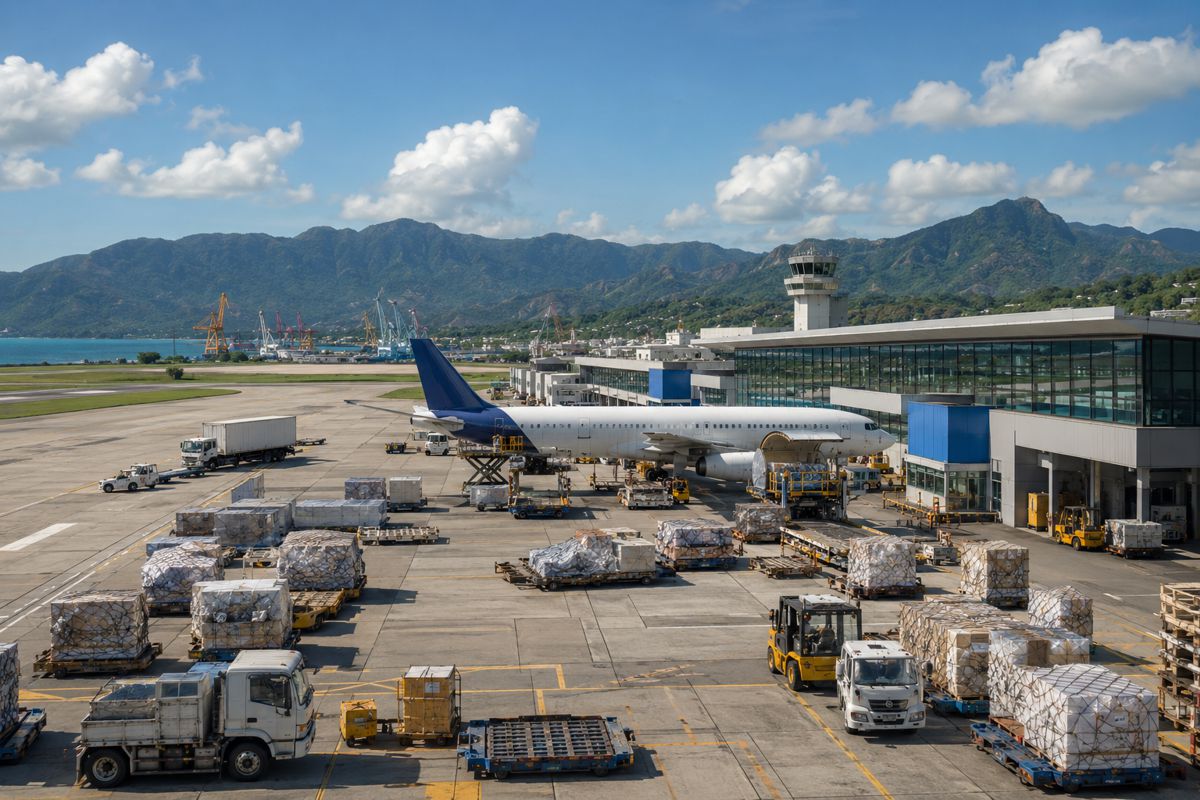
Philippines Expanding Cargo Aviation Strategy Through Subic Bay Airport Upgrade
The race to modernise logistics infrastructure across Southeast Asia has intensified, and the Philippines is positioning itself firmly in that conversation. In a move that could reshape regional cargo operations and strengthen trade connectivity across the archipelago, the Subic Bay Metropolitan Authority has formally opened the competitive challenge process for the redevelopment of Subic Bay International Airport.
At the centre of the project is an unsolicited proposal submitted by US-based Cerberus Asia Pacific Investments to manage, operate, rehabilitate and expand the airport under an operate-add-transfer arrangement. The proposal, now valued at approximately PHP 7 billion or roughly US$114 million, marks a substantial increase from earlier estimates and reflects the growing commercial importance of logistics infrastructure in the Philippines.
Rather than focusing primarily on passenger traffic, the project is aimed squarely at cargo aviation and industrial logistics. The plan seeks to transform Subic Bay International Airport into a modern freight and shipment hub capable of supporting rising manufacturing output, regional trade activity and integrated supply chain operations throughout Southeast Asia.
The decision by the Subic Bay Metropolitan Authority to open the project to comparative bidding through a Swiss challenge process introduces another layer of significance. Infrastructure investors, airport operators and logistics firms now have a 90-day window to submit competing proposals, with challengers required to complete their bids by 17 August 2026. That process could ultimately determine how one of the Philippines’ most strategically located aviation assets evolves over the next several decades.
Briefing
- The Subic Bay Metropolitan Authority has launched a Swiss challenge for the redevelopment of Subic Bay International Airport
- The unsolicited proposal from Cerberus Asia Pacific Investments is now valued at approximately PHP 7 billion
- The project focuses on cargo aviation, logistics capacity and industrial growth rather than passenger expansion
- Plans include rehabilitation of existing airport infrastructure and construction of new cargo handling facilities
- Competing bidders have until 17 August 2026 to submit comparative proposals
Repositioning Subic as a Strategic Cargo Gateway
Subic Bay occupies a unique position in the Philippines’ economic geography. Located northwest of Manila and built around the former United States naval base, the area has long been viewed as one of the country’s most promising industrial and logistics corridors. Its deep-water port, freeport status and established manufacturing zones already provide a foundation for integrated transport operations.
Yet despite those advantages, aviation infrastructure within the Subic Bay Freeport has remained underutilised compared with regional competitors. Airports in Singapore, Bangkok, Kuala Lumpur and Ho Chi Minh City have continued expanding cargo handling capabilities while Philippine logistics networks have struggled with congestion, fragmented transport systems and ageing facilities.
The redevelopment of Subic Bay International Airport is therefore about far more than terminal upgrades or runway maintenance. It reflects a broader attempt to strengthen the Philippines’ role within regional manufacturing and trade supply chains at a time when global companies are increasingly diversifying production away from traditional single-country sourcing strategies.
For exporters, manufacturers and industrial operators, cargo infrastructure has become a critical competitive factor. Efficient freight movement now directly influences inventory management, production planning and delivery reliability. Governments across Asia are investing heavily in airports capable of supporting integrated multimodal logistics systems, and the Philippines clearly does not want to be left behind.
Cargo Aviation Becomes a Strategic Infrastructure Priority
Cargo aviation rarely attracts the public attention associated with passenger terminals or high-profile airline expansions, yet it plays a central role in industrial development. Modern manufacturing sectors increasingly depend on rapid freight connectivity for electronics, automotive components, pharmaceuticals, perishables and high-value industrial goods.
The Subic Bay proposal specifically targets this opportunity by aiming to create a high-performing cargo transport hub aligned with international operational standards. According to the project outline, the concession would include rehabilitation of existing airport assets alongside construction of new facilities intended to increase operational capacity and attract additional locators into the economic zone.
That last point matters enormously. Industrial zones do not thrive solely because of tax incentives or land availability. Investors increasingly examine how efficiently products can move between factories, ports, airports and international markets. Airports capable of handling dedicated cargo flows can substantially improve the attractiveness of surrounding industrial areas.
Subic’s proximity to both maritime infrastructure and major manufacturing centres gives it the potential to function as a logistics bridge between air freight and seaborne trade. If executed effectively, the redevelopment could strengthen supply chain resilience while reducing pressure on Manila’s heavily congested transport infrastructure.
The Philippines has faced persistent logistics bottlenecks for years. According to the World Bank’s Logistics Performance Index, infrastructure quality and customs efficiency have historically constrained broader trade competitiveness in the country. Aviation cargo improvements alone will not solve those issues, but strategic hubs such as Subic can form part of a wider logistics modernisation effort.
Swiss Challenge Process Draws Infrastructure Attention
The use of a Swiss challenge framework is particularly notable within the Southeast Asian infrastructure market. Under this model, governments evaluate unsolicited proposals while allowing competing parties the opportunity to submit rival bids. The original proponent retains the right to match competing offers under defined conditions.
Supporters argue that Swiss challenge systems encourage private sector innovation while still preserving competitive safeguards. Critics, meanwhile, often question whether unsolicited proposals provide sufficient transparency or deliver optimal value for governments. Either way, the mechanism has become increasingly common across infrastructure procurement in emerging markets.
For the Subic airport project, the process signals that Philippine authorities are attempting to balance investor interest with competitive oversight. By opening the proposal to challengers, the SBMA is effectively testing market appetite for large-scale logistics and airport investments within the freeport zone.
International infrastructure investors are likely to watch closely. Airport concessions across Asia have become increasingly attractive to private capital groups, pension funds and infrastructure operators seeking long-term revenue-generating assets. Cargo-focused facilities, in particular, have gained attention following the rapid growth in e-commerce, regional manufacturing and cross-border logistics demand.
The project’s operate-add-transfer structure also reflects broader trends in infrastructure financing. Governments facing budgetary limitations are increasingly relying on public-private partnership models to fund major transport upgrades without placing the full financial burden on public resources.
Expanding Infrastructure Beyond Passenger Travel
Much of the aviation industry’s public discussion revolves around passenger travel recovery, airline fleet expansion and tourism growth. Freight infrastructure, however, often delivers more direct industrial and economic value than passenger terminals alone.
Cargo airports support manufacturing ecosystems, industrial exports, warehousing operations and distribution networks. They also create multiplier effects across trucking, customs brokerage, cold chain logistics and industrial property development.
Subic Bay already hosts a range of industrial activities including shipbuilding support services, logistics firms, manufacturing operations and warehousing facilities. Expanding airport cargo capability could reinforce those sectors while attracting additional investment into the freeport.
There is also a growing geopolitical dimension to logistics infrastructure development across Southeast Asia. As supply chains continue shifting in response to global trade tensions and manufacturing diversification strategies, countries capable of offering reliable multimodal logistics systems stand to benefit significantly.
The Philippines has historically struggled to fully capitalise on some of those shifts due to infrastructure gaps. Projects such as the Subic airport redevelopment therefore carry strategic implications beyond aviation alone. They form part of a larger contest for regional investment, trade competitiveness and industrial growth.
Rehabilitation and Expansion Will Define Long Term Success
Infrastructure projects often generate excitement during procurement stages, but long-term operational delivery ultimately determines success. For Subic Bay International Airport, rehabilitation of ageing assets may prove just as important as construction of new facilities.
Existing airports across developing markets frequently suffer from operational inefficiencies caused by outdated cargo systems, insufficient warehousing, limited apron capacity and weak digital integration. Modern cargo hubs increasingly rely on automation, real-time tracking systems and integrated logistics technologies to maintain competitiveness.
The project’s emphasis on achieving international operational standards suggests recognition that physical upgrades alone will not be enough. Efficient cargo handling, customs coordination, security systems and turnaround times all influence whether freight operators choose one hub over another.
Attracting additional locators to the freeport zone will also depend heavily on execution quality. Manufacturers and logistics firms typically seek operational certainty above all else. Delays, inconsistent infrastructure performance or regulatory inefficiencies can quickly undermine investment attractiveness.
The Philippine government has launched numerous infrastructure initiatives under wider national development programmes in recent years, particularly through transport modernisation and logistics improvement strategies. Subic now represents an opportunity to demonstrate whether airport redevelopment can effectively support broader industrial ambitions.
A Defining Opportunity for Philippine Logistics Infrastructure
Subic Bay International Airport has sat in the shadow of larger regional aviation hubs for years, but the current redevelopment process could alter that trajectory. The combination of strategic location, freeport integration and cargo-focused expansion places the project firmly within the wider transformation of Southeast Asian logistics infrastructure.
The coming months will reveal whether competing bidders emerge during the Swiss challenge period and how aggressively investors pursue the concession opportunity. Regardless of the eventual operator, the broader message is already clear. The Philippines is actively seeking to strengthen its logistics backbone and reposition critical infrastructure assets for modern trade realities.
For the construction, infrastructure and transport sectors, the project highlights the continuing evolution of airports from simple transport facilities into integrated industrial platforms. Cargo aviation, once treated as a secondary component of airport development, is increasingly becoming a strategic economic priority in its own right.
If the redevelopment succeeds in delivering efficient cargo operations, improved connectivity and stronger industrial integration, Subic Bay International Airport could become a far more influential player within the regional logistics landscape than many observers once expected.