Europe Accelerates Bosnia and Herzegovina Road Modernisation Drive
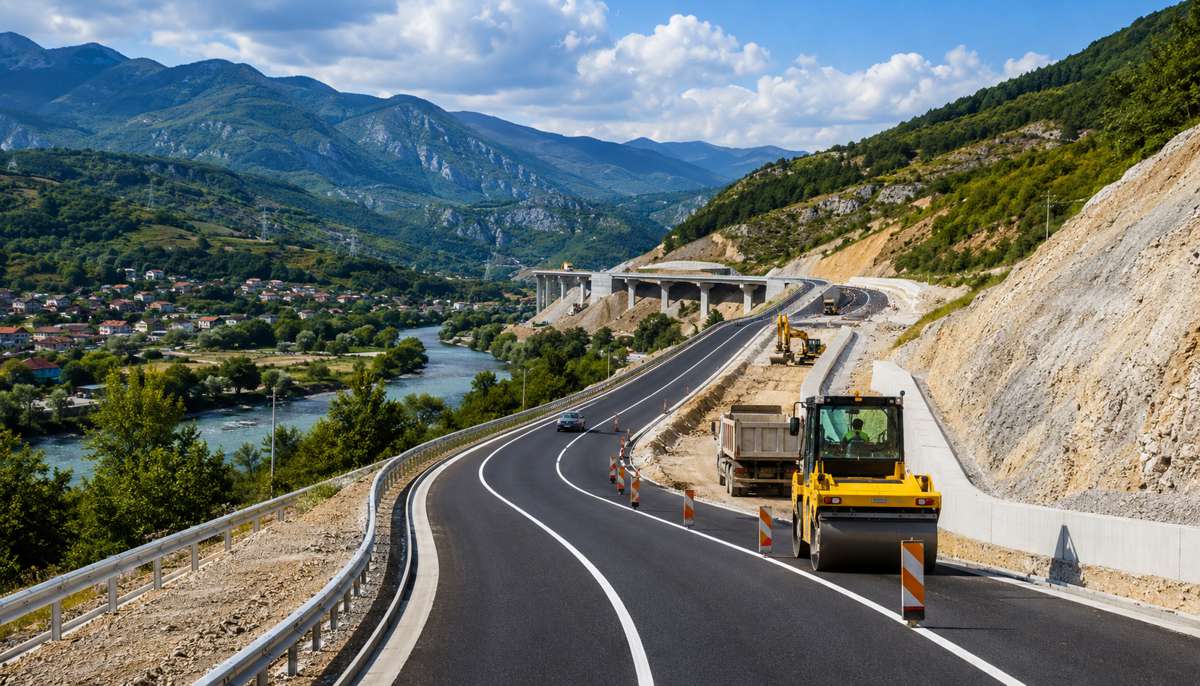
Bosnia and Herzegovina’s ageing and fragmented road network is moving closer to a long-awaited overhaul following the launch of a major project preparation initiative backed by the European Bank for Reconstruction and Development and the European Union. While much of the international attention has centred on the strategic Corridor Vc motorway, transport planners and financial institutions have increasingly recognised that large parts of the country’s wider road system remain underdeveloped, vulnerable to climate impacts and poorly connected to regional trade routes.
The newly announced Roads Modernisation Action aims to bridge one of the most persistent infrastructure gaps in the Western Balkans, namely the shortage of investment-ready transport projects. Too often, governments across Southeast Europe have struggled to move beyond political announcements because of weak project preparation, incomplete feasibility studies, environmental compliance issues or fragmented institutional coordination. This latest initiative seeks to tackle those bottlenecks head-on by funding technical preparation work before construction financing is committed.
At its core, the programme is designed to help Bosnia and Herzegovina prepare a pipeline of strategically important road schemes capable of attracting large-scale international financing. The initiative is backed by a €10 million EU grant that will fund studies, technical documentation, environmental assessments and procurement preparation for priority road corridors across both the Federation of Bosnia and Herzegovina and Republika Srpska.
The broader ambition stretches far beyond paperwork. International lenders including the European Investment Bank, the World Bank and the EBRD expect the prepared projects to unlock as much as €300 million in infrastructure investment over the coming years. The EBRD alone has signalled its intention to provide up to €100 million in future lending tied directly to projects emerging from the programme.
For Bosnia and Herzegovina, where infrastructure development remains central to economic integration with Europe, the move could prove particularly significant. Better roads are not simply about cutting journey times. They affect freight efficiency, cross-border trade, tourism growth, regional labour mobility and, crucially, road safety in a country where many transport corridors still suffer from outdated engineering standards and accident-prone alignments.
Briefing
- The EBRD and EU have launched a new road project preparation facility for Bosnia and Herzegovina
- A €10 million EU grant will fund studies, designs and procurement preparation for priority road schemes
- International lenders aim to mobilise up to €300 million for future road upgrades
- The initiative focuses heavily on road safety, climate resilience and EU-standard connectivity
- Up to 1,160 kilometres of roads could eventually benefit from the programme across both entities
Building Investment Ready Infrastructure
One of the biggest obstacles facing infrastructure development across emerging European markets has little to do with construction capacity or financing appetite. Instead, it often comes down to project readiness. International lenders require detailed feasibility studies, environmental safeguards, procurement transparency and robust engineering documentation before funding can be approved. Without those foundations in place, major transport schemes can sit idle for years.
Bosnia and Herzegovina has frequently faced those exact challenges. The country’s political structure, divided between state-level institutions, the Federation of Bosnia and Herzegovina and Republika Srpska, has historically complicated strategic infrastructure planning. Transport projects have sometimes progressed unevenly, with different standards, procurement approaches and investment priorities emerging across jurisdictions.
The new Roads Modernisation Action attempts to create a more structured and coordinated framework. The programme will support JP Ceste Federacije BiH and JP Putevi Republike Srpske in identifying priority road sections and advancing them toward financing readiness. That includes technical studies, detailed engineering design, environmental and social assessments and the preparation of tender documentation.
Equally important is the programme’s emphasis on transparent project prioritisation. International lenders have become increasingly cautious about politically motivated infrastructure spending that lacks economic justification or long-term resilience planning. By introducing structured prioritisation mechanisms aligned with EU standards, the initiative aims to ensure investment flows into projects with measurable regional value and sustainable operational outcomes.
Corridor Vc Cannot Carry the Burden Alone
The development of Corridor Vc has dominated transport infrastructure discussions in Bosnia and Herzegovina for years. The pan-European corridor links Budapest to the Adriatic port of Ploče in Croatia and forms one of the country’s most strategically important transport arteries. Construction activity along the corridor has accelerated significantly in recent years, supported by international lenders and EU funding mechanisms.
Still, motorway development alone cannot modernise an entire national transport system. Large areas of Bosnia and Herzegovina continue to rely on secondary and regional roads that suffer from poor pavement conditions, inadequate drainage systems, weak slope protection and outdated safety features. In mountainous terrain especially, climate-related damage from flooding, landslides and extreme weather has become an increasingly serious issue.
The latest programme recognises that reality. Rather than concentrating solely on flagship motorway infrastructure, the initiative expands attention toward rehabilitating and upgrading wider road connections that support regional mobility and local economic activity. According to the EU Delegation, the programme could ultimately support investment preparation covering up to 800 kilometres of roads in the Federation of Bosnia and Herzegovina and a further 360 kilometres in Republika Srpska.
That scale matters. Many businesses operating in logistics, manufacturing, mining and tourism across the Western Balkans have long argued that secondary road deficiencies create hidden economic costs. Slow freight movements, vehicle damage, seasonal disruptions and safety concerns all undermine regional competitiveness and investment attractiveness.
Climate Resilience Moves Up the Agenda
Transport infrastructure planners across Europe are increasingly being forced to rethink road design assumptions as climate pressures intensify. Flooding events, heatwaves, unstable slopes and extreme rainfall patterns are placing growing strain on ageing road networks, particularly in mountainous regions such as the Balkans.
Bosnia and Herzegovina has experienced repeated climate-related transport disruptions in recent years. Severe floods in 2014 caused extensive damage to roads, bridges and rail infrastructure across the country, exposing the vulnerability of transport assets to extreme weather. Since then, resilience planning has become a more prominent requirement within international infrastructure financing frameworks.
The new road preparation facility places climate resilience at the centre of project development rather than treating it as a secondary consideration. Future schemes prepared under the initiative are expected to incorporate modern drainage systems, slope stabilisation measures, flood mitigation strategies and engineering approaches designed to withstand increasingly volatile weather conditions.
This reflects a broader shift within European transport financing. Institutions such as the EBRD and EIB have increasingly aligned lending strategies with climate adaptation goals under the EU Green Deal framework and wider sustainable investment objectives. Infrastructure resilience is now viewed not simply as an environmental concern but as an economic necessity tied directly to asset longevity and operational reliability.
Road Safety Remains a Critical Concern
Road safety improvements form another major pillar of the initiative. Bosnia and Herzegovina continues to face significant traffic safety challenges compared with many EU member states. According to European transport safety data, Western Balkan countries generally experience higher road fatality rates than the EU average, often linked to road geometry deficiencies, inconsistent maintenance standards and ageing infrastructure.
Improving safety requires more than resurfacing roads. Modern transport engineering increasingly incorporates safer junction layouts, barrier systems, pedestrian protections, intelligent traffic management and clearer lane design. The project preparation work funded under the programme is expected to integrate those principles from the outset.
Safer roads also carry wider economic implications. High accident rates create major financial burdens through healthcare costs, insurance claims, freight disruption and productivity losses. For countries seeking closer economic integration with the European Union, aligning transport safety standards with broader European norms has become increasingly important.
Matteo Patrone, EBRD Vice President, Banking, said: “This project will help Bosnia and Herzegovina turn priority road sections into ready-to-finance projects. By strengthening preparation and prioritisation, we are supporting safer, more resilient roads and building the pipeline for future investment in both entities.”
International Financing Signals Long Term Confidence
The coordinated involvement of the EBRD, EIB and World Bank sends a strong signal regarding long-term confidence in Bosnia and Herzegovina’s infrastructure sector. International financial institutions have become more selective about where they allocate transport investment capital, particularly as global economic pressures tighten public financing conditions.
The willingness to collectively support road modernisation in Bosnia and Herzegovina reflects the strategic importance of improving connectivity across the Western Balkans. The region sits at a critical geographic crossroads between Central Europe, the Adriatic and Southeast Europe, making transport reliability increasingly important for regional supply chains and trade corridors.
Infrastructure investment has also become closely linked to broader EU accession ambitions within the Western Balkans. Although Bosnia and Herzegovina continues to face political and institutional hurdles on its European integration pathway, infrastructure alignment with EU standards remains one of the more tangible areas of progress.
Head of EU Delegation and EU Special Representative Ambassador Luigi Soreca noted: “It is my great pleasure to announce the launch of this important programme for the modernisation of road infrastructure in Bosnia and Herzegovina. Through an EU grant of € 10 million, we will support the preparation of priority road sections, detailed technical documentation and ready-to-launch investments covering up to 800 kilometres of roads in the Federation of BiH and up to 360 kilometres in Republika Srpska. With this programme, the European Union reaffirms its long-term commitment to Bosnia and Herzegovina, through concrete improvements that will improve road safety, connectivity and economic opportunities for citizens across the country.”
A Strategic Step Towards Regional Integration
For Bosnia and Herzegovina, the launch of the Roads Modernisation Action represents more than another transport initiative. It marks an attempt to build the institutional and technical foundations needed for sustained infrastructure investment over the long term.
The Western Balkans continue to face an infrastructure deficit compared with much of the European Union, particularly in transport connectivity and network resilience. Closing that gap requires more than isolated construction projects. It depends on creating stable pipelines of well-prepared, financeable schemes capable of attracting international capital while meeting modern environmental and engineering standards.
That process is often less visible than bridge launches or motorway openings, yet it remains essential. Without detailed preparation, transparent procurement and credible technical documentation, large infrastructure ambitions rarely progress beyond announcements and political speeches.
Bosnia and Herzegovina’s new partnership with the EU, EBRD, EIB and World Bank suggests a more structured approach is beginning to take shape. If successfully implemented, the programme could accelerate not only road upgrades but also broader economic integration, safer transport corridors and stronger regional connectivity throughout Southeast Europe.