Saudi Arabia Accelerates the Future of Mobility at Global Transport Expo 2026
Saudi Arabia’s transport and mobility sector is moving through one of the most ambitious transformation programmes seen anywhere in the world. Backed by more than USD 150 billion in planned investment linked to Vision 2030, the Kingdom is reshaping everything from urban mobility and rail infrastructure to electric vehicle charging networks, logistics corridors and digitally connected transport systems.
The scale of the transition is hard to ignore. Across Riyadh, Jeddah, NEOM and other rapidly expanding economic zones, transport infrastructure has become central to Saudi Arabia’s wider economic diversification strategy. Roads, metro systems, autonomous mobility projects, freight hubs and smart-city technologies are no longer being treated as isolated developments. Instead, they are increasingly integrated into a broader framework designed to support population growth, improve urban efficiency and reduce long-term reliance on oil revenues.
The upcoming Global Transport Expo 2026 is positioning itself as a significant commercial and strategic meeting point for the regional mobility industry. Co-located with the Saudi Intermobility Expo and Saudi Parking Expo, the event aims to connect transport authorities, infrastructure developers, operators, consultants, logistics firms, technology companies and investors involved in shaping the Kingdom’s next generation of mobility systems.
Rather than functioning purely as a trade exhibition, the event reflects the changing dynamics of transport procurement and infrastructure planning across the Gulf region. Saudi Arabia’s transport ecosystem now spans traditional civil engineering, data-driven infrastructure management, intelligent transport systems, AI-enabled traffic control and sustainable urban mobility initiatives. That convergence is creating new opportunities across multiple industrial sectors simultaneously.
Briefing
- Saudi Arabia is investing more than USD 150 billion into transport and mobility projects under Vision 2030
- Riyadh aims to increase public transport usage from 2% to 15% through metro, rail and bus expansion
- Global Transport Expo 2026 will unite transport authorities, developers, OEMs, consultants and technology providers
- Key sectors include intelligent transport systems, EV infrastructure, logistics, AI and connected mobility
- The event reflects growing regional demand for integrated and digitally enabled transport infrastructure
Saudi Arabia Pushes Ahead with Urban Mobility Expansion
Saudi Arabia’s mobility ambitions are closely tied to the rapid expansion of its urban centres. Riyadh alone is projected to grow significantly over the next decade as government-led investment accelerates commercial development, residential construction and infrastructure delivery. With that growth comes mounting pressure on existing road networks and urban transport systems.
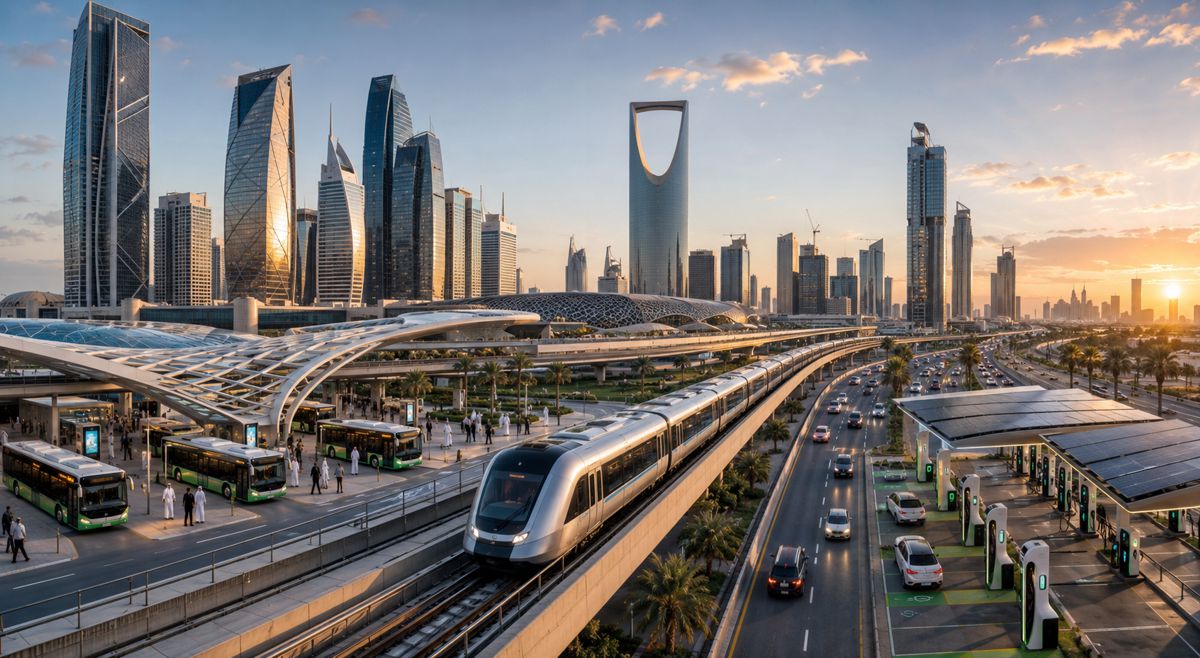
The Riyadh Metro project has become one of the flagship components of the Kingdom’s mobility strategy. Once fully operational, the network is expected to become one of the largest automated metro systems in the world, designed to reduce congestion while improving urban accessibility. Alongside the metro, extensive bus network upgrades and integrated transport planning initiatives are intended to encourage a substantial shift away from private vehicle dependence.
Authorities are targeting a rise in public transport use from just 2% to 15% in Riyadh. That target represents far more than a statistical adjustment. It signals a major behavioural and infrastructure shift requiring advanced traffic management systems, digital ticketing, passenger analytics, real-time monitoring platforms and integrated mobility services capable of operating across rapidly expanding urban environments.
For suppliers and contractors, the implications are considerable. Demand is increasing not only for large-scale civil engineering capability, but also for specialist expertise in intelligent transport infrastructure, mobility software, automation systems, sensor networks and data integration platforms.
Smart Infrastructure is Becoming Central to Regional Development
The transport sector across the Gulf is no longer focused solely on adding physical capacity. Increasingly, governments are prioritising efficiency, sustainability and operational intelligence as core infrastructure objectives. Saudi Arabia’s investment strategy reflects that wider trend.
Smart mobility technologies are becoming deeply embedded within transport planning frameworks. Intelligent transport systems capable of analysing traffic flows in real time are now being viewed as essential infrastructure rather than optional add-ons. AI-driven congestion management, predictive maintenance systems, connected parking technologies and digital freight optimisation are all moving closer to mainstream deployment across the region.
This shift is also being influenced by the rise of large-scale smart-city developments such as NEOM, where transport infrastructure is expected to operate as part of fully integrated digital ecosystems. Autonomous mobility concepts, electrified transport systems and connected infrastructure platforms are increasingly being tested within these new urban environments.
For global transport technology providers, Saudi Arabia has become one of the most commercially attractive markets currently emerging in the infrastructure sector. The combination of state-backed funding, large-scale development programmes and relatively young urban infrastructure creates opportunities that are difficult to replicate elsewhere.
Logistics and Supply Chain Infrastructure Continue to Expand
Transport investment in Saudi Arabia extends well beyond passenger mobility. The Kingdom is also positioning itself as a major logistics and supply chain hub linking Asia, Europe and Africa through expanded port infrastructure, freight corridors and multimodal transport systems.
Logistics has become a cornerstone of the Vision 2030 diversification strategy. Saudi Arabia’s National Transport and Logistics Strategy aims to increase the sector’s contribution to GDP while strengthening the Kingdom’s role in international trade and industrial distribution.
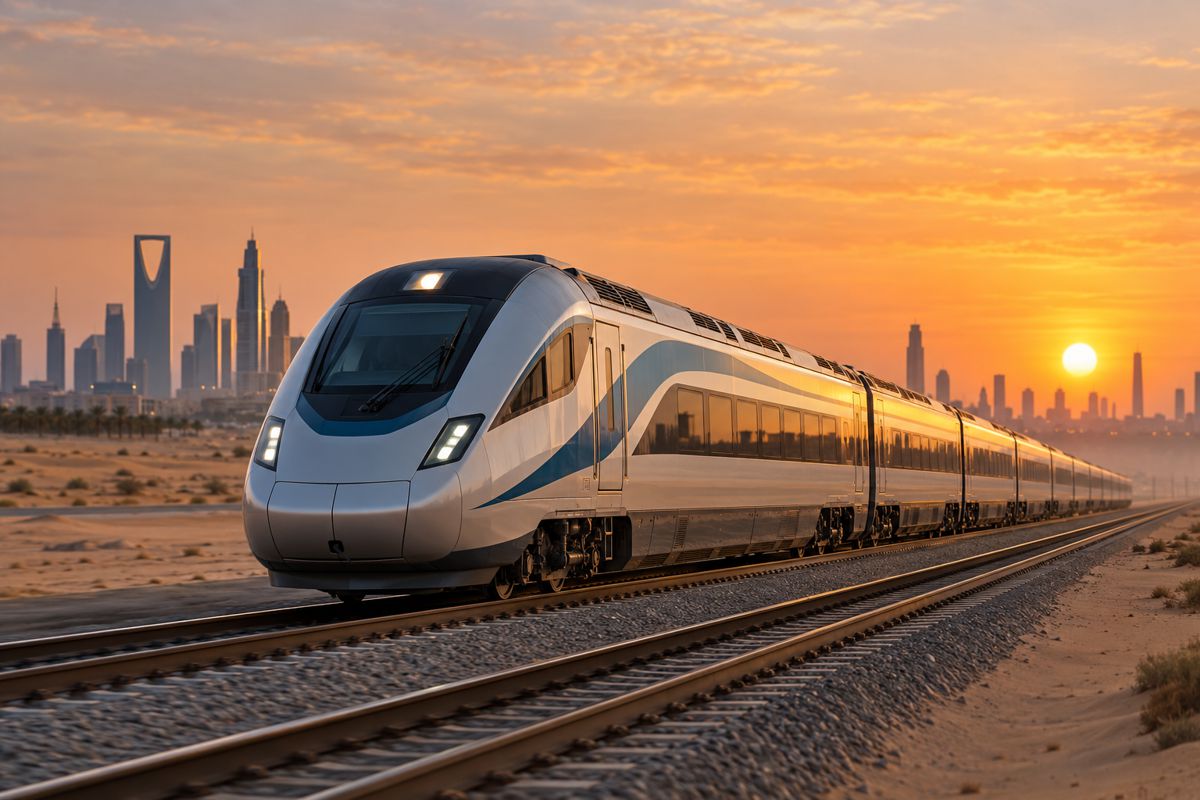
Major investment continues to flow into road infrastructure, inland logistics hubs, port modernisation and rail freight connectivity. The expansion of transport corridors is designed not only to improve domestic mobility, but also to support industrial development, manufacturing growth and export capacity.
That creates growing demand for freight management technologies, warehouse automation systems, fleet management platforms and connected logistics infrastructure capable of improving operational visibility across increasingly complex supply chains.
Events such as Global Transport Expo 2026 are likely to play an important role in facilitating commercial partnerships between infrastructure developers, logistics operators and international technology providers seeking regional market access.
EV Infrastructure Gains Momentum Across the Kingdom
Electric mobility is gradually becoming a more visible component of Saudi Arabia’s transport strategy. While the Kingdom has traditionally been associated with oil production, investment in EV infrastructure and alternative mobility solutions has accelerated considerably over recent years.
Saudi Arabia has already announced several initiatives linked to domestic EV manufacturing, charging infrastructure development and clean mobility adoption. The Public Investment Fund has supported multiple mobility-related ventures as part of broader economic diversification efforts.
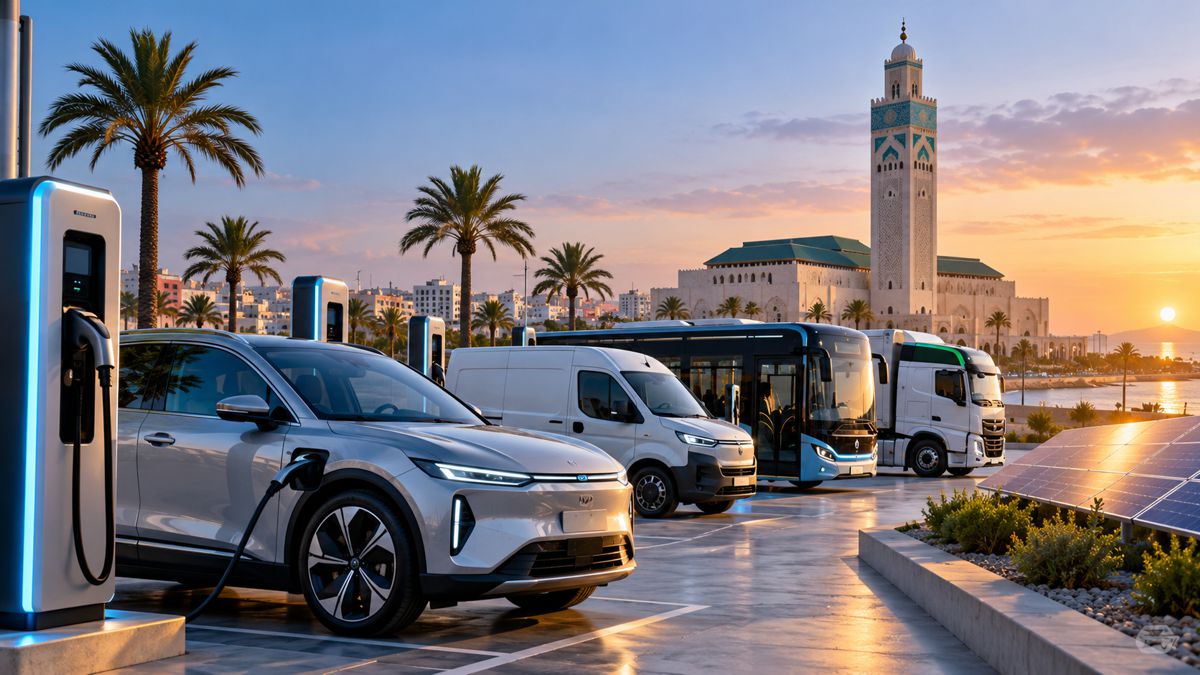
The expansion of EV charging networks presents substantial infrastructure challenges and commercial opportunities simultaneously. Delivering reliable charging coverage across dense urban environments, major highways and remote regions requires coordinated investment across power distribution, grid management and digital infrastructure systems.
Transport planners are also facing the increasingly complex task of integrating EV infrastructure into existing urban networks while balancing energy demand, parking requirements and long-term sustainability objectives.
As a result, exhibitions focusing on mobility infrastructure are becoming broader in scope. The discussion is no longer confined to vehicles alone. It increasingly encompasses energy systems, software integration, charging management platforms and urban planning frameworks that support electrified mobility at scale.
Technology Companies Target Regional Market Growth
Saudi Arabia’s transport expansion is attracting growing international interest from technology firms, engineering companies and OEMs looking to establish stronger regional positions. The Kingdom’s scale of investment, combined with relatively fast-moving procurement cycles, has elevated its importance within the global infrastructure sector.
For many international companies, Saudi Arabia now represents a gateway into wider Gulf Cooperation Council markets. Large-scale infrastructure projects frequently create secondary demand across neighbouring countries pursuing similar urban mobility and logistics modernisation strategies.
This is particularly relevant for businesses operating in sectors such as:
- Intelligent transport systems
- AI-driven mobility platforms
- Connected infrastructure technologies
- Smart parking systems
- Autonomous transport solutions
- EV charging infrastructure
- Rail technologies
- Urban traffic management systems
The co-location of transport, intermobility and parking exhibitions under one umbrella reflects the increasingly interconnected nature of modern mobility infrastructure. Parking systems, traffic management platforms, autonomous mobility technologies and public transport networks are now being planned as part of integrated urban ecosystems rather than standalone infrastructure assets.
That integration is reshaping procurement models, partnership structures and long-term infrastructure planning throughout the region.
Regional Mobility Investment Continues to Reshape the Industry
Saudi Arabia’s transport ambitions are helping redefine the competitive landscape for infrastructure and mobility companies operating across the Middle East. The sheer volume of planned investment is creating sustained demand across construction, engineering, digital infrastructure and transport technology sectors.
The emergence of large-scale exhibitions such as Global Transport Expo 2026 reflects how rapidly the regional market is evolving. Infrastructure projects increasingly require multidisciplinary collaboration involving civil engineering firms, data specialists, mobility operators, automation providers and software developers working within the same delivery ecosystem.
For investors and international suppliers, the Kingdom’s transport sector offers access to one of the world’s most active infrastructure pipelines. For policymakers and transport authorities, the challenge now lies in ensuring these systems remain scalable, connected and operationally resilient as urban populations continue to expand.
What’s unfolding in Saudi Arabia is not simply a transport upgrade. It represents a long-term restructuring of how mobility, logistics and urban infrastructure interact within one of the fastest-transforming economies in the world.