Smarter Motor Control Chips Drive the Next Wave of Automotive Electrification
The steady electrification of vehicle subsystems is quietly reshaping the engineering priorities of the global automotive and infrastructure ecosystem. From cooling circuits to lubrication systems, components that were once mechanically driven are now powered by compact electric motors. That shift is forcing manufacturers to rethink efficiency, packaging, noise, and system complexity all at once.
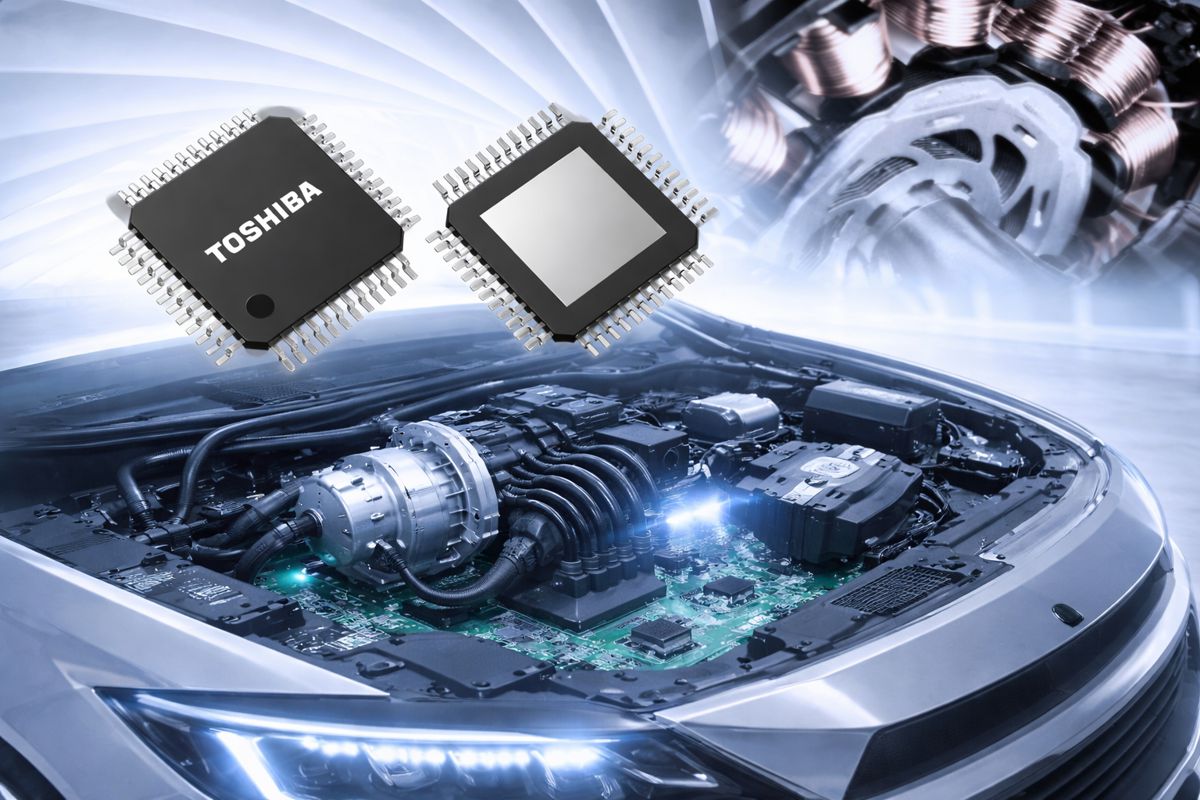
Toshiba Electronic Devices & Storage Corporation has now introduced a new motor control device that speaks directly to those pressures.
At first glance, the newly released TB9M030FG may appear to be just another incremental semiconductor update. In reality, it reflects a deeper trend towards tighter system integration and smarter control architectures. By combining a microcontroller and a motor driver in a single package, while also enabling stable sensorless operation at low speeds, the device addresses several persistent challenges in automotive electrification. For engineers tasked with designing increasingly compact and efficient systems, those capabilities are far from trivial.
Briefing
- Integrates MCU, motor driver, and communication interface into a compact automotive-grade package
- Enables stable sensorless control of three-phase brushless DC motors, including low-speed operation
- Reduces ECU size, component count, and system complexity in modern vehicles
- Supports quieter motor performance by avoiding harmonic noise associated with conventional methods
- Aligns with growing demand for electrified subsystems such as pumps, fans, and blowers
Integration Becomes the New Battleground
The automotive sector has entered a phase where incremental gains in efficiency and packaging can translate into significant competitive advantages. Modern vehicles, particularly electrified and hybrid platforms, rely on dozens of electric motors performing critical functions. Electric water pumps regulate thermal management, oil pumps maintain lubrication, and fans ensure airflow across increasingly dense systems.
Traditionally, these motors required separate control units, discrete drivers, and additional sensing hardware. That approach not only increased component count but also consumed valuable space within already crowded engine bays and chassis layouts. With the number of electronic control units continuing to rise, manufacturers are under pressure to streamline architectures without compromising performance.
This is where highly integrated motor control devices are gaining traction. By embedding control logic, power management, and communication capabilities into a single chip, suppliers are enabling a new generation of compact ECUs. The TB9M030FG follows this trajectory, combining an Arm Cortex M0-based microcontroller with a three-phase motor driver and communication interface in a single 9×9mm package. For design engineers, that kind of integration simplifies layouts, reduces wiring complexity, and shortens development cycles.
Sensorless Control Moves Into the Spotlight
While integration addresses hardware complexity, motor control itself remains a technically demanding discipline. One of the most persistent challenges lies in accurately determining rotor position, particularly at low speeds. Conventional systems often rely on physical sensors, which add cost, increase failure points, and complicate assembly.
Sensorless control offers a compelling alternative, using electrical signals to infer rotor position. However, achieving stable performance at low speeds has historically been difficult. Signal detection becomes less reliable, and many systems resort to high-frequency injection techniques that can introduce unwanted noise and inefficiency.
Toshiba’s latest device incorporates a sensorless field oriented control approach designed to operate effectively from zero speed through low-speed ranges. By eliminating the need for position sensors and avoiding the harmonic noise associated with traditional methods, the system delivers smoother and quieter operation. In practical terms, that translates into reduced acoustic noise in components such as electric pumps and fans, a factor that is becoming increasingly important as vehicles become quieter overall.
Efficiency Gains Extend Beyond the Motor
Motor efficiency is only one part of the equation. The broader system benefits from reduced computational overhead and simplified software design. The inclusion of a dedicated vector engine within the device offloads processing tasks from the main CPU, allowing for more efficient execution of control algorithms.
This architectural choice has tangible implications. Lower CPU workload means reduced power consumption and smaller firmware footprints, both of which are valuable in resource-constrained automotive environments. It also opens the door to more sophisticated control strategies without requiring more powerful and costly microcontrollers.
In an industry where every watt and every millimetre counts, these efficiencies accumulate quickly. For large-scale vehicle production, even marginal improvements can lead to meaningful reductions in cost, weight, and energy consumption across entire fleets.
Supporting the Shift to Electrified Subsystems
The transition towards electrified subsystems is not limited to fully electric vehicles. Internal combustion engine platforms are also adopting electric auxiliaries to improve efficiency and reduce emissions. Electric water pumps, for instance, allow for more precise thermal management compared to mechanically driven alternatives, improving engine performance and fuel economy.
Similarly, electric oil pumps enable variable flow control, reducing parasitic losses and supporting advanced lubrication strategies. Fans and blowers benefit from variable speed operation, enhancing both efficiency and noise performance. Each of these applications relies on robust motor control, particularly in demanding automotive environments where temperature, vibration, and reliability are critical considerations.
Devices like the TB9M030FG are designed to meet these requirements. Compliance with the AEC-Q100 qualification standard ensures that the device can withstand the harsh conditions typical of automotive operation. That level of reliability is non-negotiable for components embedded deep within vehicle systems.
Communication and System Integration
Modern vehicles are not just collections of mechanical and electrical components; they are networked systems where data flows continuously between subsystems. Communication protocols play a central role in this architecture, enabling coordination between ECUs and central control units.
The integration of a Local Interconnect Network transceiver within the device reflects this reality. Local Interconnect Network, commonly known as LIN, is widely used for low-cost communication between sensors, actuators, and controllers. By embedding this capability directly into the motor control device, Toshiba reduces the need for additional communication components, further simplifying system design.
This approach aligns with broader industry trends towards domain-based and zonal architectures, where distributed intelligence is consolidated into fewer, more capable control units. As vehicles continue to evolve into software-defined platforms, such integration will only become more important.
Packaging Matters More Than Ever
Physical space within vehicles is at a premium, particularly as new features and systems are added. The compact QFP48 package used in this device is not just a technical detail; it is a response to real-world design constraints. Smaller packages enable more flexible PCB layouts and allow engineers to place components closer to the motors they control, reducing losses and improving overall efficiency.
Thermal management is another critical factor. Integrated devices must dissipate heat effectively while maintaining performance and reliability. Advances in semiconductor packaging and materials are making it possible to achieve higher levels of integration without compromising thermal performance, a balance that is essential for automotive applications.
Quiet Progress with Wide Implications
What stands out about this development is not any single feature, but the way multiple improvements converge into a cohesive solution. Integration reduces complexity, sensorless control improves reliability and noise performance, and embedded processing capabilities enhance efficiency. Together, these elements contribute to a more streamlined and capable motor control system.
For the construction and infrastructure sectors, the implications extend beyond passenger vehicles. Electrified machinery, smart equipment, and autonomous systems all rely on efficient motor control. From electric pumps in heavy equipment to ventilation systems in tunnels and buildings, the same underlying technologies are being applied across industries.
As electrification continues to gather pace, the demand for compact, efficient, and intelligent control solutions will only grow. Semiconductor innovations such as this one are quietly enabling that transition, providing the building blocks for more advanced and sustainable systems.
A Step Towards Smarter, Leaner Systems
The evolution of motor control technology is often overshadowed by more visible innovations, yet it plays a fundamental role in shaping modern engineering systems. By addressing longstanding challenges in integration, control accuracy, and noise reduction, Toshiba’s latest device contributes to a broader shift towards leaner and more efficient designs.
For engineers and decision-makers, the message is clear. The future of automotive and infrastructure systems will be defined not just by electrification, but by how intelligently that electrification is implemented. Devices that combine functionality, reduce complexity, and enhance performance are set to become essential components in that journey.